
Loading, please wait...
_900x900.jpg "Roman Red Jasper Gemstone with Cupid")
_200x200.jpg "Roman Red Jasper Gemstone with Cupid")
.jpg "Roman Red Jasper Gemstone with Cupid")
LOT 0009
Roman Red Jasper Gemstone with Cupid
2ND-3RD CENTURY A.D.
5/8 in. (1.16 grams, 15.66 mm).
With intaglio Cupid holding his bow beneath the curved branch of an olive tree; supplied with a museum-quality impression. [No Reserve]
ProvenanceFrom the private collection of a European gentleman (1942-2024), formed since the 1970s.
CONDITIONTimeLine Auctions follows a vetting process to ensure the authenticity and legality of all items, reinforcing our commitment to integrity and responsible trading. Each antiquity, antique, and coin lot undergoes thorough examination by a vetting committee of at least ten external specialists, professional trade association members, scientists, and archaeologists: Our Vetting Process
AUCTIONS:
TimeLine is a leading auction house specialising in antiquities, ancient art, collectables, natural history, coins, medals, and books. Our auctions offer museums, collectors, historians, and enthusiasts the opportunity to acquire unique and historically significant pieces.
-
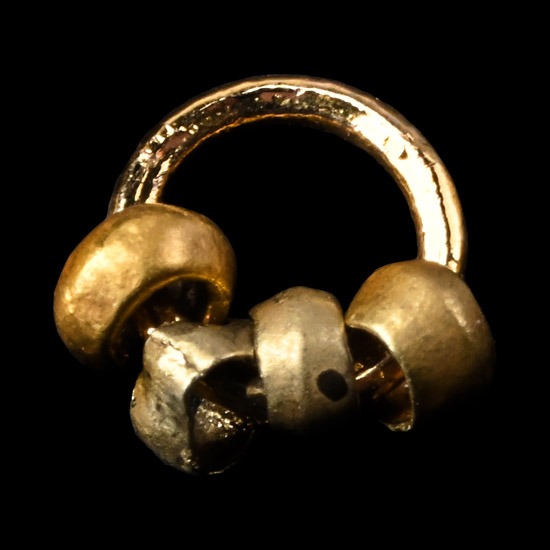
Eastern Roman Gold Bead Group on Loop
3rd century B.C.-3rd century A.D.Sold for (Inc. bp): £46
Comprising four annular beads on a later gold-coloured loop. 0.21 grams, 5 mm
Ex private British collection, formed in the 1980s. Property of a West Northamptonshire, UK, gentleman. -
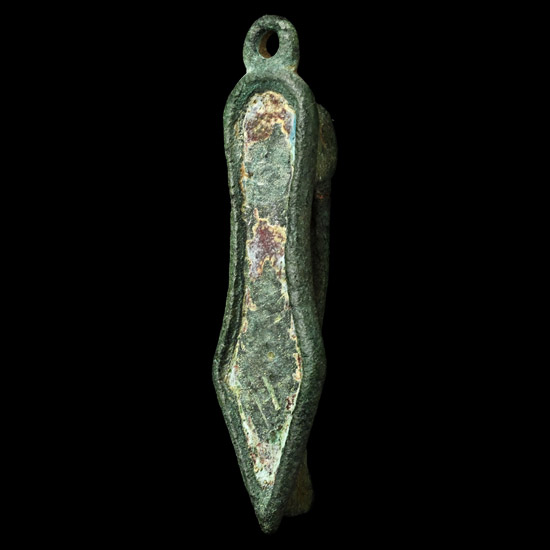
Roman Enamelled Bronze Sandal Brooch
Circa 2nd century A.D.Sold for (Inc. bp): £163
Formed as the sole of a sandal with raised edges and a small loop to the rear; underside with remains of a catchplate and a pin. 4.41 grams, 39.8 mm
Ex Manchester collection, 1990s. Accompanied by a previous typed catalogue information card. -
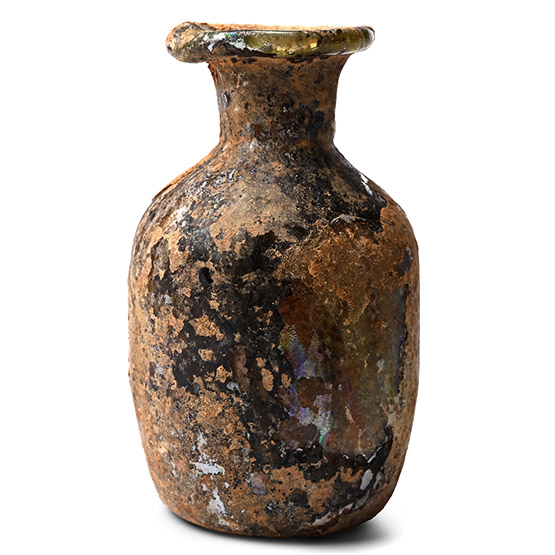
Roman Glass Flask
Circa 1st-4th century A.D.Sold for (Inc. bp): £91
Comprising a barrel-shaped body with a dimpled base, short tubular neck and an everted rim. 33 grams, 72 mm
From a London, UK, collection of glass, 1970-2000s.
