
Loading, please wait...
LOT 0307
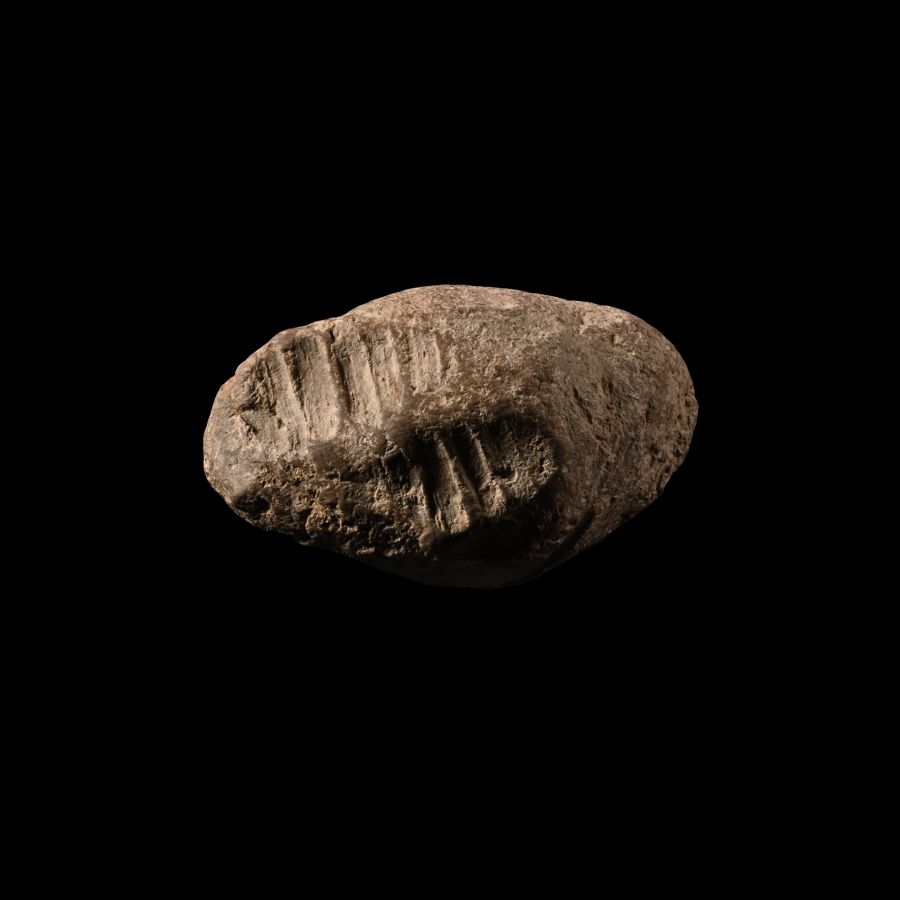
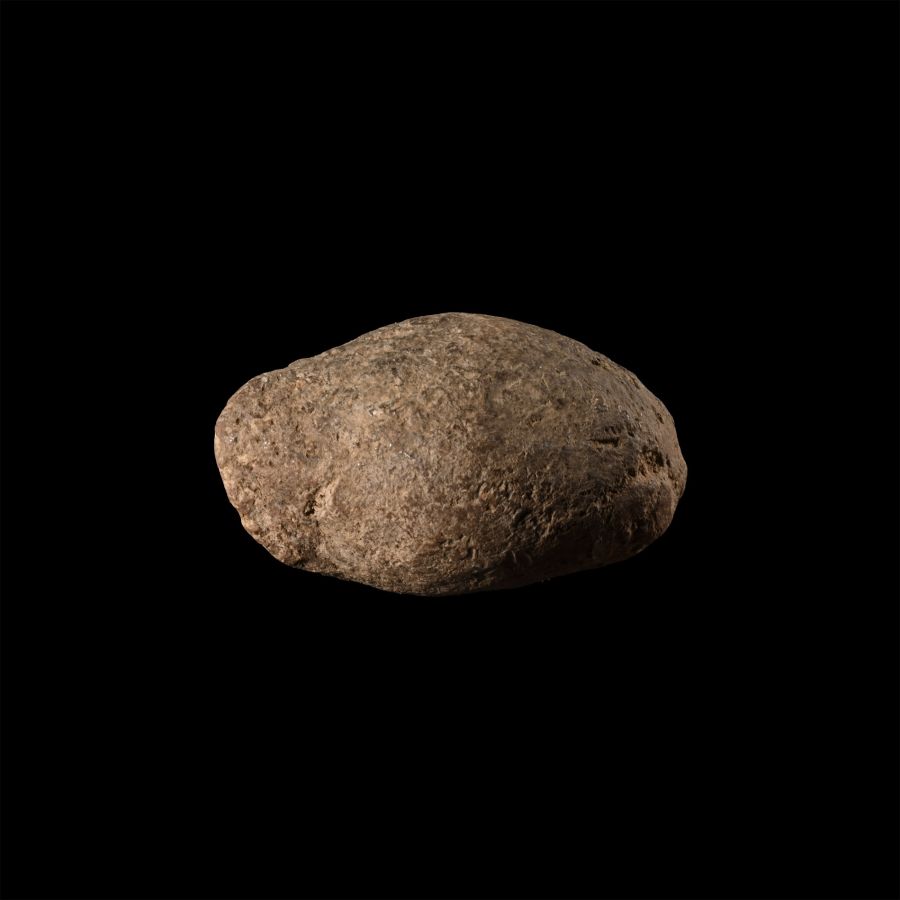
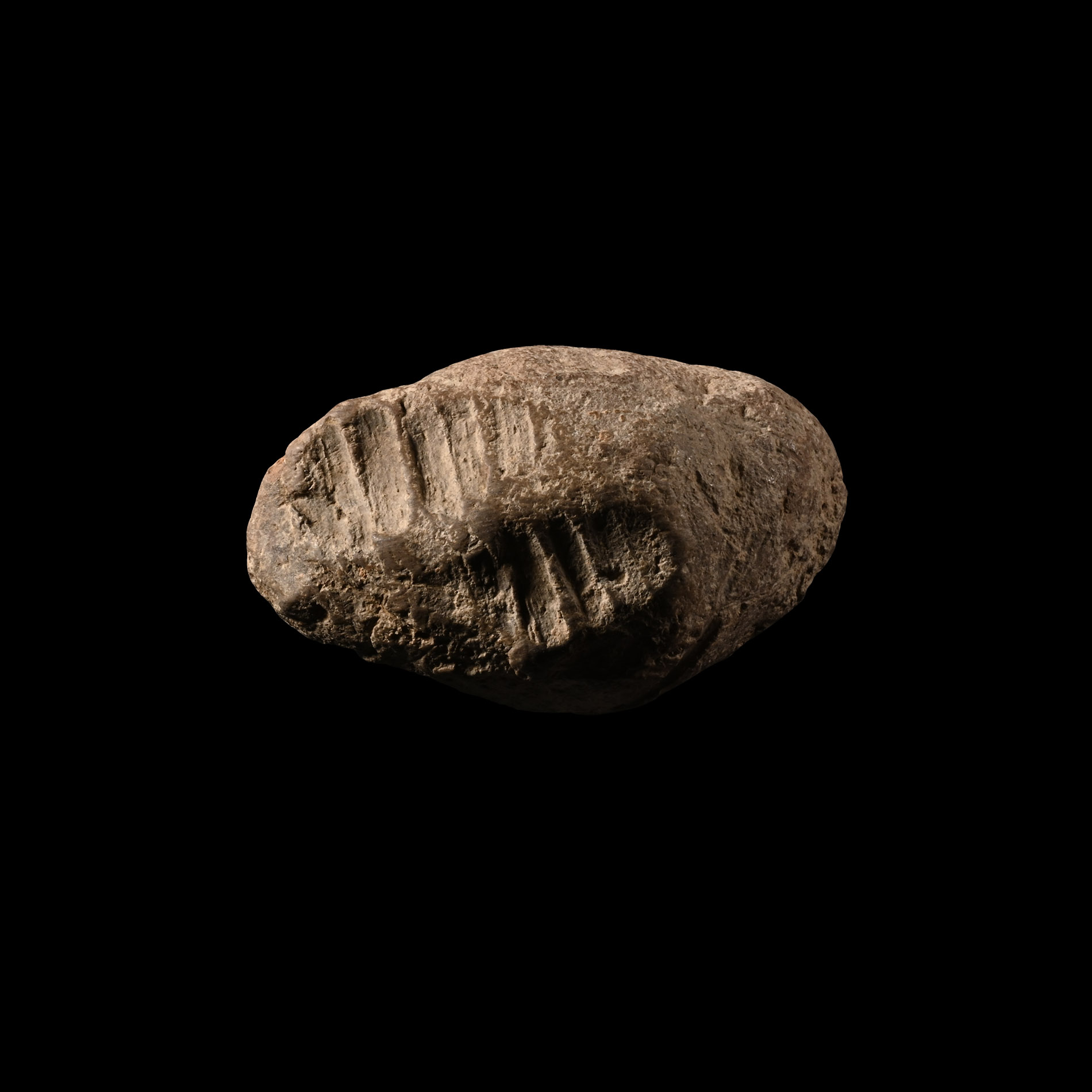
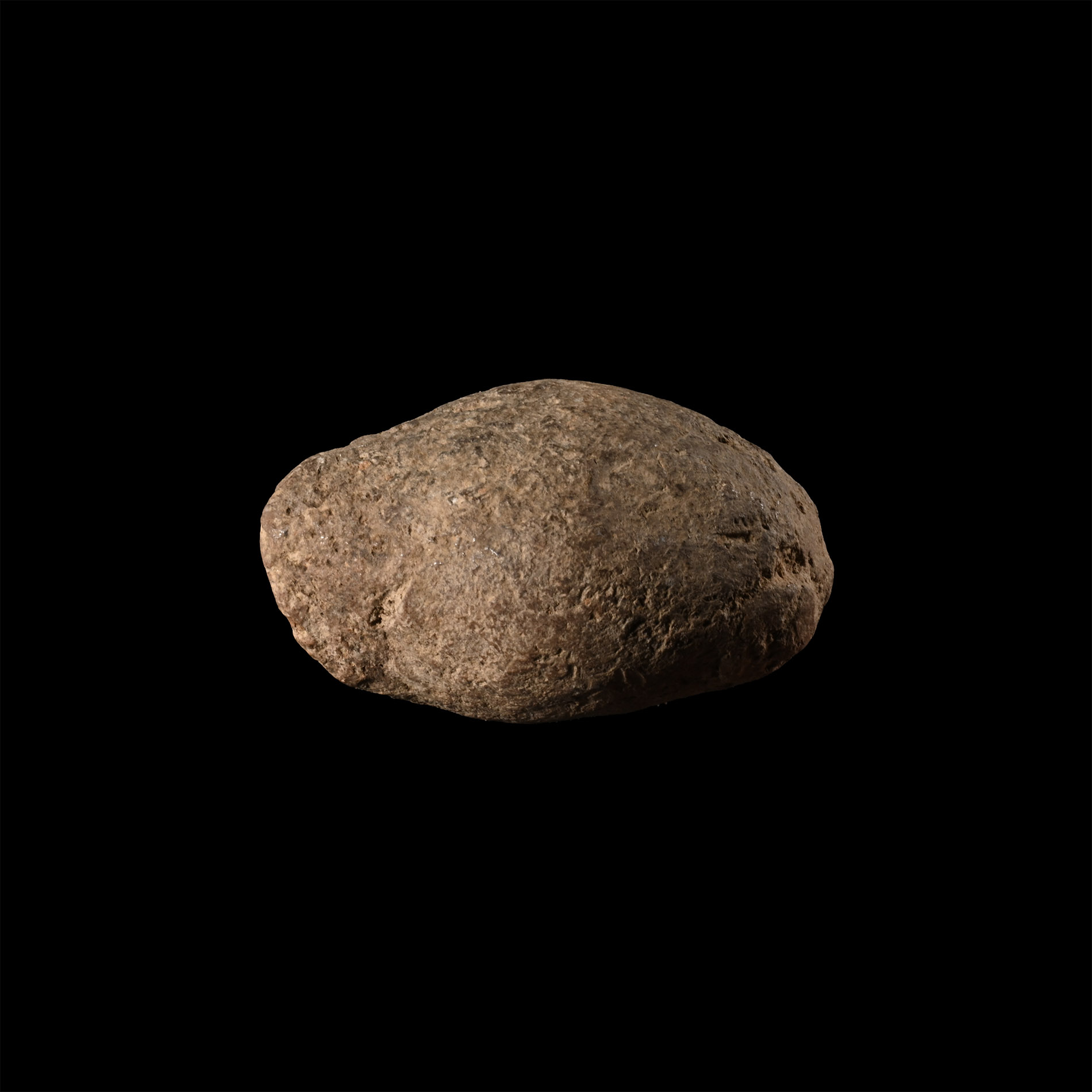
Roman Praetorian Guard Terracotta Sling Shot with Scorpion
1ST CENTURY A.D.
1 3/4 in. (25.75 grams, 43 mm).
Lentoid section with a raised 'keel' to one end, depicting a stylised scorpion. [No Reserve]
ProvenanceEx Simmons Gallery, London E11, UK, in the 1990s.
From a North London collection.
Cf. Schinco, G., Small, A.M., 'A previously unknown siege of Botromagno/Silvium: the evidence of slingshots from Gravina in Puglia (Provincia di Bari, Puglia)' in Papers of the British School at Rome, 2019, pp.1-52, figs.38.
FootnotesThe sling (funda) with its lead (plumbea pondera) and stone missiles was used by special funditores, illustrated on Trajan’s Column where they are dressed in broad tunics with no armour, but carry a shield. Interestingly, this glans has the emblem usually associated with the Praetorian Guard - the scorpion. It was an emblem also used in Ptolemaic Egypt, and it is not impossible that this bullet could be Ptolemaic or Romano-Egyptian. We believe this bullet could be associated with the Praetorian regiments which means this could be one of the first pieces of evidence for their use.
CONDITIONTimeLine Auctions follows a vetting process to ensure the authenticity and legality of all items, reinforcing our commitment to integrity and responsible trading. Each antiquity, antique, and coin lot undergoes thorough examination by a vetting committee of at least ten external specialists, professional trade association members, scientists, and archaeologists: Our Vetting Process
AUCTIONS:
TimeLine is a leading auction house specialising in antiquities, ancient art, collectables, natural history, coins, medals, and books. Our auctions offer museums, collectors, historians, and enthusiasts the opportunity to acquire unique and historically significant pieces.
LOT 0307
Roman Praetorian Guard Terracotta Sling Shot with Scorpion
Sold for (Inc. bp): £286
-
Luristan Bronze Short Sword
Circa 1000 B.C.Sold for (Inc. bp): £312
The blade with a tapering profile, triangular in overall form, with slender shoulders, penannular guard with strong midrib, flanged hilt with crenellated grip, widening slightly into a fan-shaped pommel, cracked. 421 grams, 42 cm
Acquired 1980-2015. Ex Abelita family collection.
These types of short sword or dirks were usually cast in one piece, and the penannular rib in relief was cast on at the same time with the handle of the blade. In some cases, however, the penannular rib was later cast on the dagger, possibly to strengthen a weak point at the junction of hilt and blade. The flanged hilt was originally inlaid with organic material such as bone. -
Western Asiatic Bronze Dagger Blade
Early 1st millennium B.C.Sold for (Inc. bp): £117
With a narrow tapering blade, slightly enlarged in the guard area and narrowing again towards the 'ear' pommel. 61 grams, 33 cm
Acquired 1980-2015. Ex Abelita family collection.
The techniques used by Luristan craftsmen to create bronze weapons were highly sophisticated. They used a wide variety of surface finishes: repoussé work, chasing and engraving. The fact that the mountains of Luristan were particularly rich in copper and tin, both required for making bronze, was a significant advantage to the metalworking industry. The weapons produced developed into a plethora of different forms in the 2nd millennium B.C. to at least 800 B.C. These objects include axes and adzes, pick axes, daggers and dirks, spears, swords, helmets and shields. Weapons were usually cast, but armour parts were also made by the hammering process. -
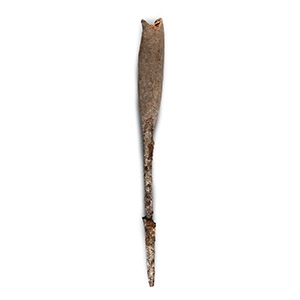
Roman Iron Military Plumbata Head
4th-5th century A.D.Sold for (Inc. bp): £65
Missile weapon with short iron shaft and square-section barbed head, lead sleeve to the lower end of the shaft. 116 grams, 19 cm
From the collection of B. Posey, UK, 1990s.
The lead-weighted darts known as plumbatae mamillatae, (or breasted javelin) were short darts mounted upon a shaft, of the same shape, and thrown from a short distance. A Roman soldier would typically carry around 5-6 of these darts at any one time, fastened to the back of his shield. They could be thrown overhand or underhand, with an effective throwing range of up to 60 meters by trained soldiers. They could also be fixed upon longer shafts.
