
Loading, please wait...
LOT 0923
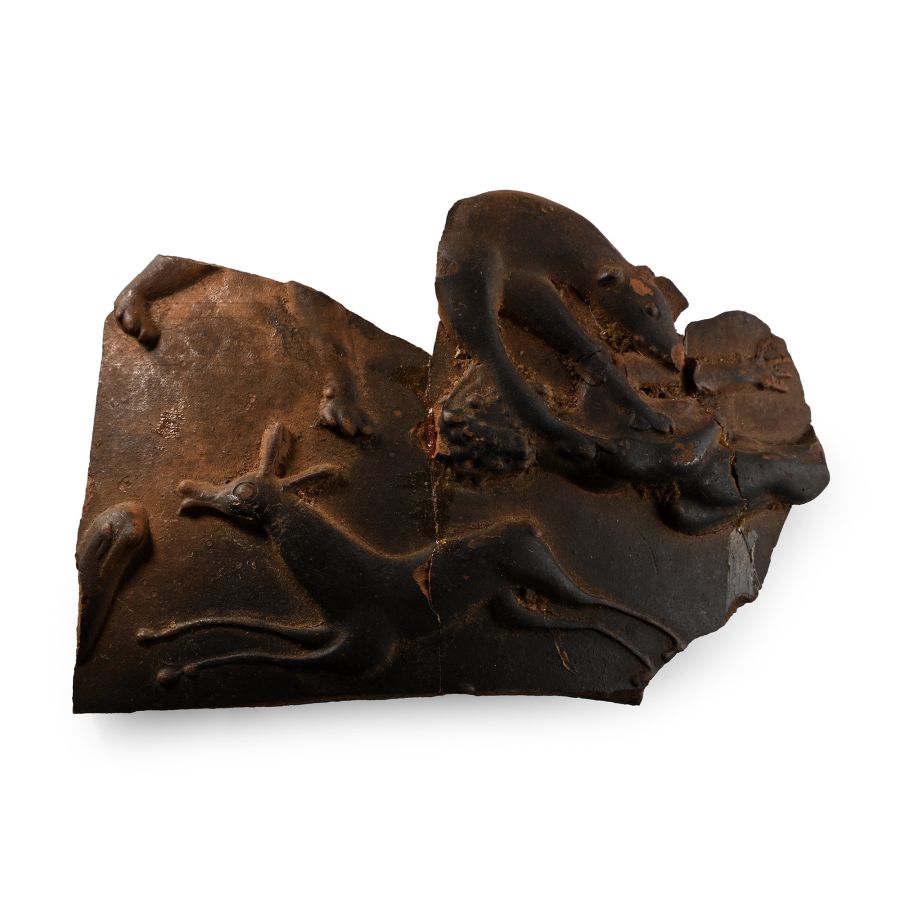
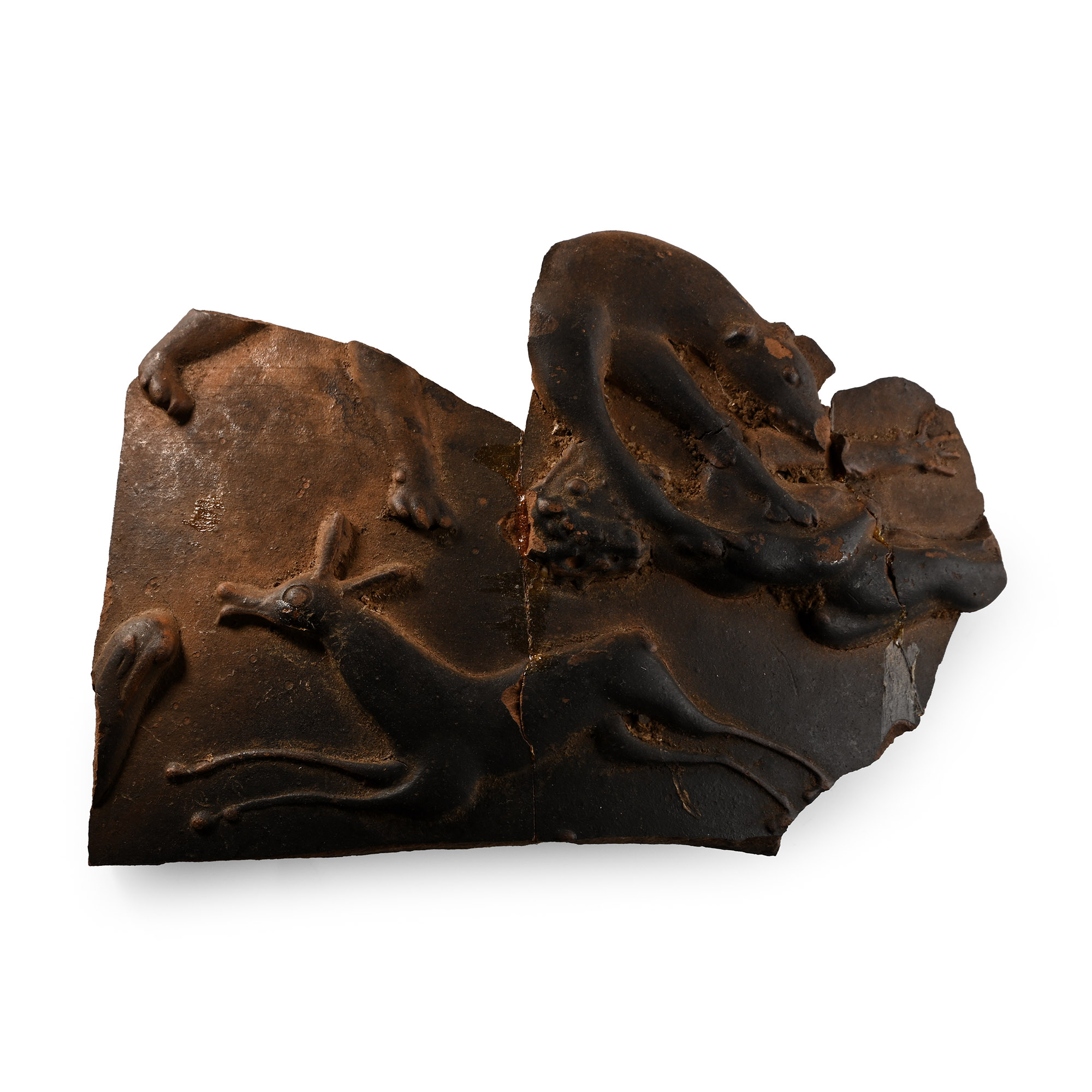
Roman Pottery Sherd with Hunting Dog Scene
1ST CENTURY A.D.
4 3/8 in. (53 grams, 11.1 cm).
Fragment of the curved shoulder of a vessel with high-relief scene depicting a dog attacking a human (child?) lying nude and supine, a deer or fawn running past below. [No Reserve]
ProvenanceFound Colchester, Essex.
From the private collection of a Colchester, UK, lady, since the 1980s.
This lot is accompanied by an illustrated lot declaration signed by the Head of the Antiquities Department, Dr Raffaele D'Amato.
TimeLine Auctions follows a vetting process to ensure the authenticity and legality of all items, reinforcing our commitment to integrity and responsible trading. Each antiquity, antique, and coin lot undergoes thorough examination by a vetting committee of at least ten external specialists, professional trade association members, scientists, and archaeologists: Our Vetting Process
AUCTIONS:
TimeLine is a leading auction house specialising in antiquities, ancient art, collectables, natural history, coins, medals, and books. Our auctions offer museums, collectors, historians, and enthusiasts the opportunity to acquire unique and historically significant pieces.
-
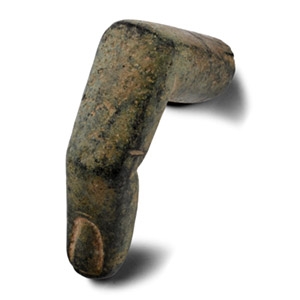
Roman Bronze Bent Finger
1st-4th century A.D.Sold for (Inc. bp): £176
From a life-sized statue, slender forefinger bent in gripping configuration. 63.7 grams, 43 mm
From the collection of a gentleman, acquired on the London art market in the 1990s. This lot is accompanied by an illustrated lot declaration signed by the Head of the Antiquities Department, Dr Raffaele D'Amato. -
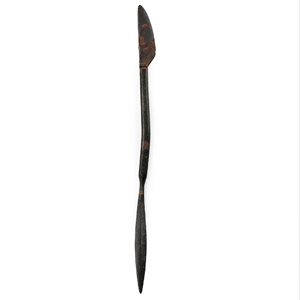
Roman Bronze Medical Scalpel Implement
1st-4th century A.D.Sold for (Inc. bp): £143
Single-edged blade with scooped forward edge attached to an octagonal-section shank with lanceolate probe to the other end. 12 grams, 14 cm
Ex German art market, 2000s. Acquired from an EU collector living in London. From the collection of a Surrey, UK, gentleman. This lot is accompanied by an illustrated lot declaration signed by the Head of the Antiquities Department, Dr Raffaele D'Amato. -
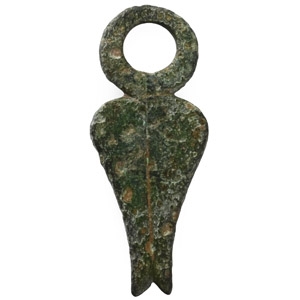
Romano-British Bronze Cosmetic Nail Cleaner
43-410 A.D.Sold for (Inc. bp): £39
Flat teardrop-shaped with round loop to the top, narrow bifurcated tip. 2.66 grams, 37 mm
Found near Bainton, East Riding of Yorkshire, UK, on Monday 23rd August 2021. Accompanied by a copy of the British Museum's Portable Antiquities Scheme (PAS) report no.NLM-7712AE. This lot is accompanied by an illustrated lot declaration signed by the Head of the Antiquities Department, Dr Raffaele D'Amato.
