
Loading, please wait...
LOT 0669
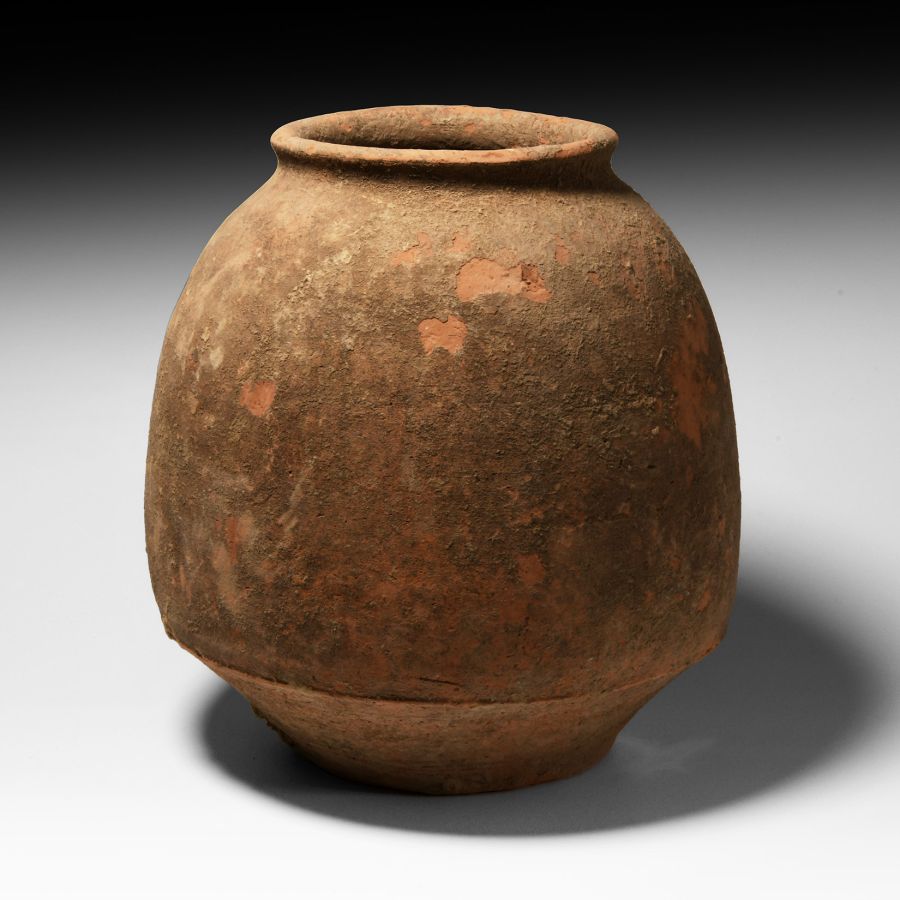
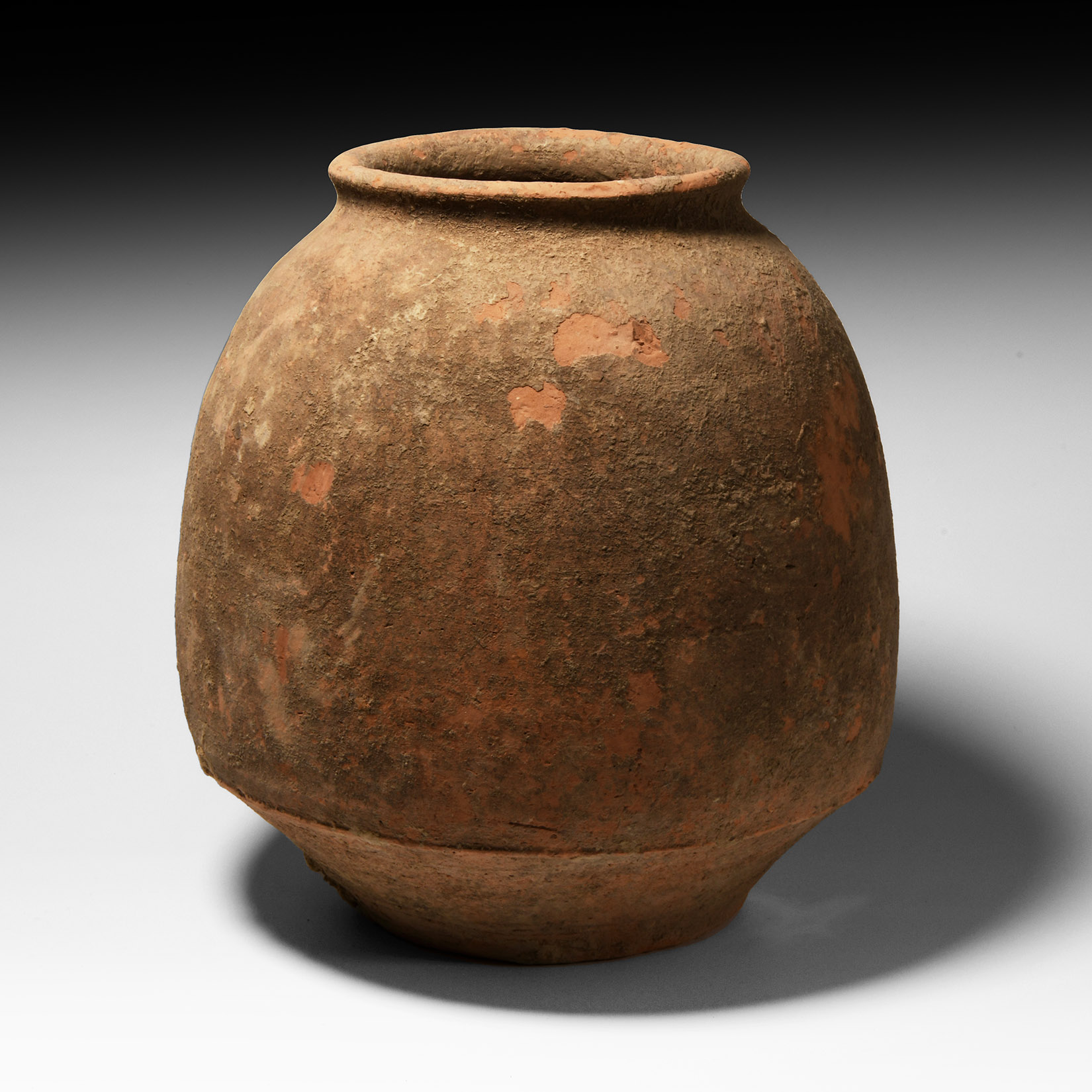
Roman Pottery Jar
4TH-5TH CENTURY A.D.
8 7/8 in. (2.07 kg, 22.5 cm high).
A ceramic jar with a carinated body and rolled rim. [No Reserve]
ProvenanceAcquired 1980-2015.
Ex Abelita family collection.
TimeLine Auctions follows a vetting process to ensure the authenticity and legality of all items, reinforcing our commitment to integrity and responsible trading. Each antiquity, antique, and coin lot undergoes thorough examination by a vetting committee of at least ten external specialists, professional trade association members, scientists, and archaeologists: Our Vetting Process
AUCTIONS:
TimeLine is a leading auction house specialising in antiquities, ancient art, collectables, natural history, coins, medals, and books. Our auctions offer museums, collectors, historians, and enthusiasts the opportunity to acquire unique and historically significant pieces.
-
.jpg)
Roman Decorated Glass Bowl
3rd-5th century A.D.Sold for (Inc. bp): £234
A transparent glass bowl with gently tapering sidewalls and iridescent surfaces; base displaying a geometric motif with cut or engraved shallow dimples at centre surrounded by curved, radiating lines, circular dimples around the perimeter, with possible shallow ovals to the exterior wall. 131 grams, 14.3 cm wide
Fine condition, repaired.
Acquired in the 1980s-1990s. Previously with Mansour Gallery, London W1. Property of a North West London gentleman. -
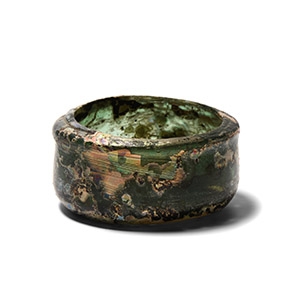
Roman Glass Cosmetic Dish
1st-3rd century A.D.Sold for (Inc. bp): £169
A green glass cosmetic dish or jar with a squat body and inverted rim; iridescent surfaces. 60 grams, 56 mm wide
French collection, 1960s-early 2000s. From an important Paris gallery, France. -
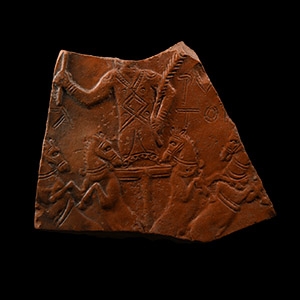
Roman Auriga in Quadriga Redware Sherd
4th century A.D.Sold for (Inc. bp): £130
A redware ceramic fragment with moulded low-relief decoration of a victorious Auriga (chariot-driver) standing in his chariot with four rearing horses yoked to it; geometric detail to his tunic, a frond in his bent left arm and a whip in his raised right hand; incised bilinear lettering '-TA' to the left and 'PV- / TO[V?]-' to the right in Greek letters; modern mounting loop to the reverse. 74 grams, 90 mm
Acquired 1960s-1990s. From the late Alison Barker collection, a retired London barrister.
The pottery fragment shows an image of a charioteer in the moment of victory, with his left hand carrying a palm branch. The iconography is visible in the monument of Porphyrios in Constantinople and the charioteers of the Baccano mosaics. The detailed representation of the Auriga shows the attributes of his work: he wears a close-fitting undershirt with sleeves (γυμναστικiον) and an ornamented sleeveless tunic over it, leaving the knees exposed as is typical for charioteers (αυριγαριον).
