
Loading, please wait...
LOT 0613
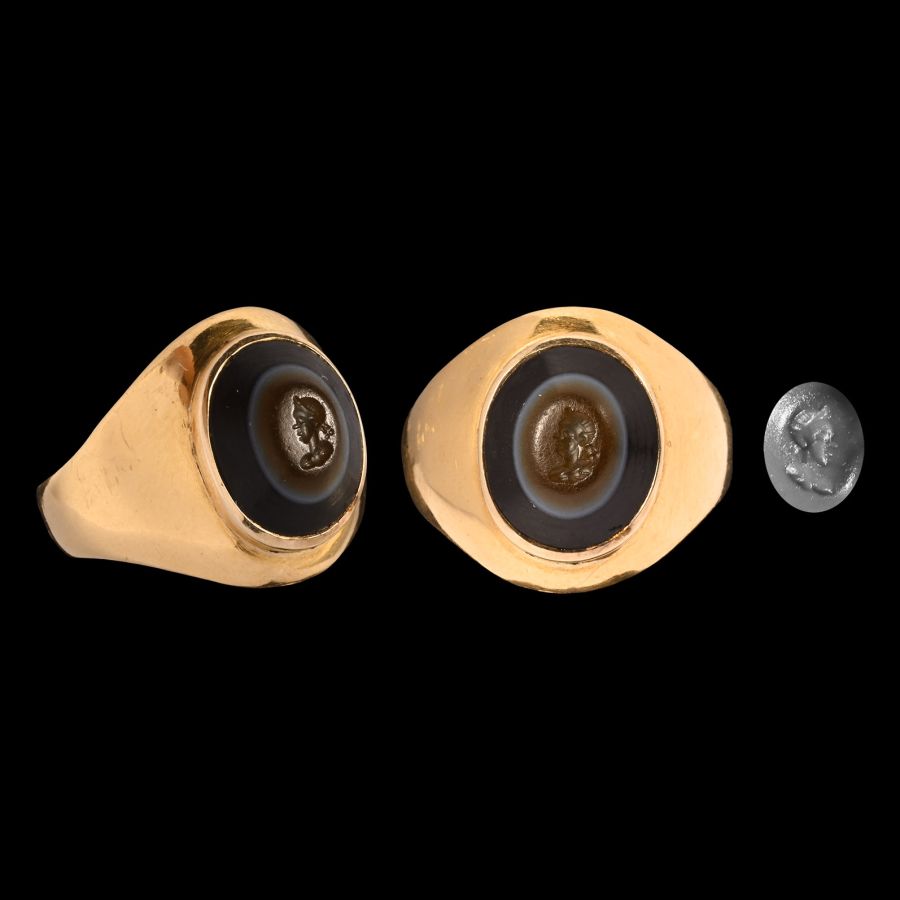
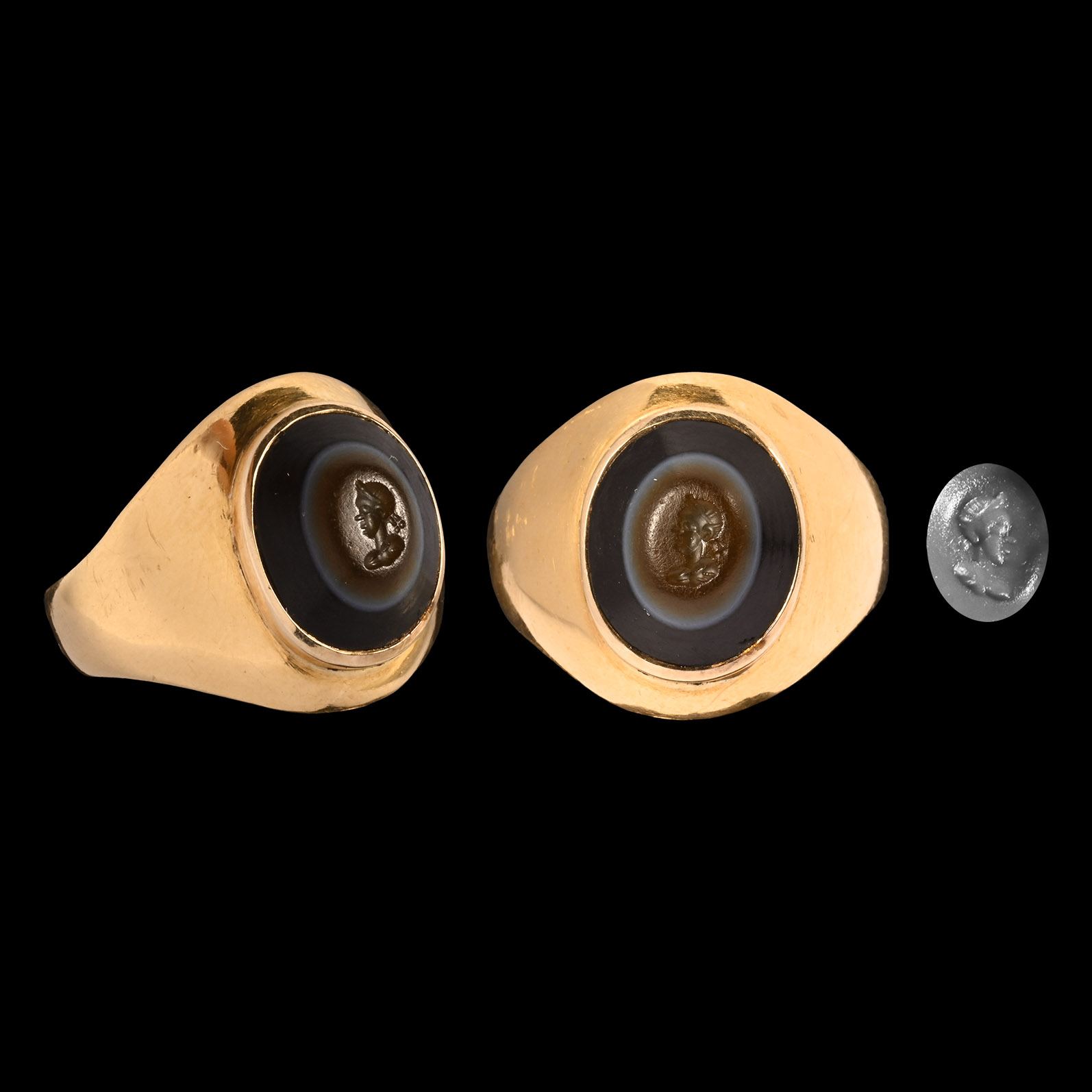
Roman Portrait Gemstone in Gold Ring
2ND-3RD CENTURY A.D. AND LATER
1 1/8 in. (12.89 grams, 30.12 mm overall, 22.07 mm internal diameter (approximate size British X, USA 11 1/2, Europe 26.29, Japan 25)).
A sardonyx cabochon gemstone with intaglio portrait bust of a male wearing a diadem, possibly Apollo; set in a later gold ring.
ProvenanceEx Dr. A.R., Leipzig, 1980-1980s.
with Gorny and Mosch, 13 December 2017, lot 424.
English private collection.
TimeLine Auctions follows a vetting process to ensure the authenticity and legality of all items, reinforcing our commitment to integrity and responsible trading. Each antiquity, antique, and coin lot undergoes thorough examination by a vetting committee of at least ten external specialists, professional trade association members, scientists, and archaeologists: Our Vetting Process
AUCTIONS:
TimeLine is a leading auction house specialising in antiquities, ancient art, collectables, natural history, coins, medals, and books. Our auctions offer museums, collectors, historians, and enthusiasts the opportunity to acquire unique and historically significant pieces.
-
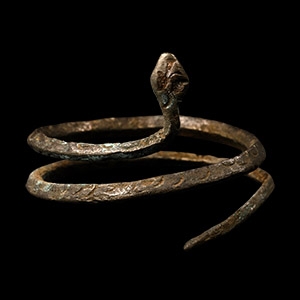
Romano-Egyptian Coiled Snake Ring
1st century B.C.-1st century A.D.Sold for (Inc. bp): £312
A zoomorphic copper-alloy ring composed of a slender, square-section coiled body with one tapering terminal and one terminal formed as a stylised snake's head with simple punched detailing. 2.40 grams, 24.19 mm overall, 19.91 mm internal diameter (approximate size British R, USA 8 1/2, Europe 18 3/4, Japan 18)
Acquired before 2000. From the collection of a European gentleman living in the UK. -
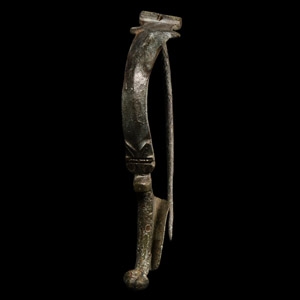
Large Roman Aucissa Bow Brooch with Wolf's Face
1st-2nd century A.D.Sold for (Inc. bp): £91
A large bronze Aucissa variant type bow brooch with annulet decoration to the head, narrow half-round cross-section bow; the lower bow and foot forming a stylised wolf's face with pellet eyes and curved muzzle; hinged pin and catch to the reverse. 36 grams, 94 mm
German art market before 2000. With a European gentleman living in the UK. Property of a Surrey gentleman.
The fibula belongs to the series C of the Buchem classification of variant Aucissa fibulae. According to Kovrig, these military fibulae were produced in specific centres like Siscia (Sisak) in Pannonia and distributed throughout the Empire because of the mobility of the army. -
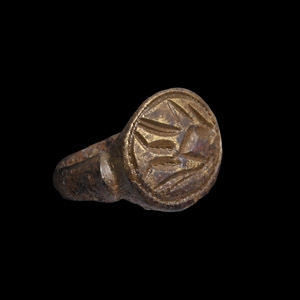
Late Roman Ring with Man Catching Fish
3rd century A.D.Sold for (Inc. bp): £70
A silvered bronze finger ring with stepped shoulders, large ellipsoid bezel with incuse ropework border and stylised figure raising a fish. 6.43 grams, 24.13 mm overall, 17.48 mm internal diameter (approximate size British O, USA 7, Europe 14.98, Japan 14)
Fine condition.
with M. Labarbe, Toulouse, France, 27 November 2011, lot 228. Property of a London gentleman
