
Loading, please wait...
LOT 0308
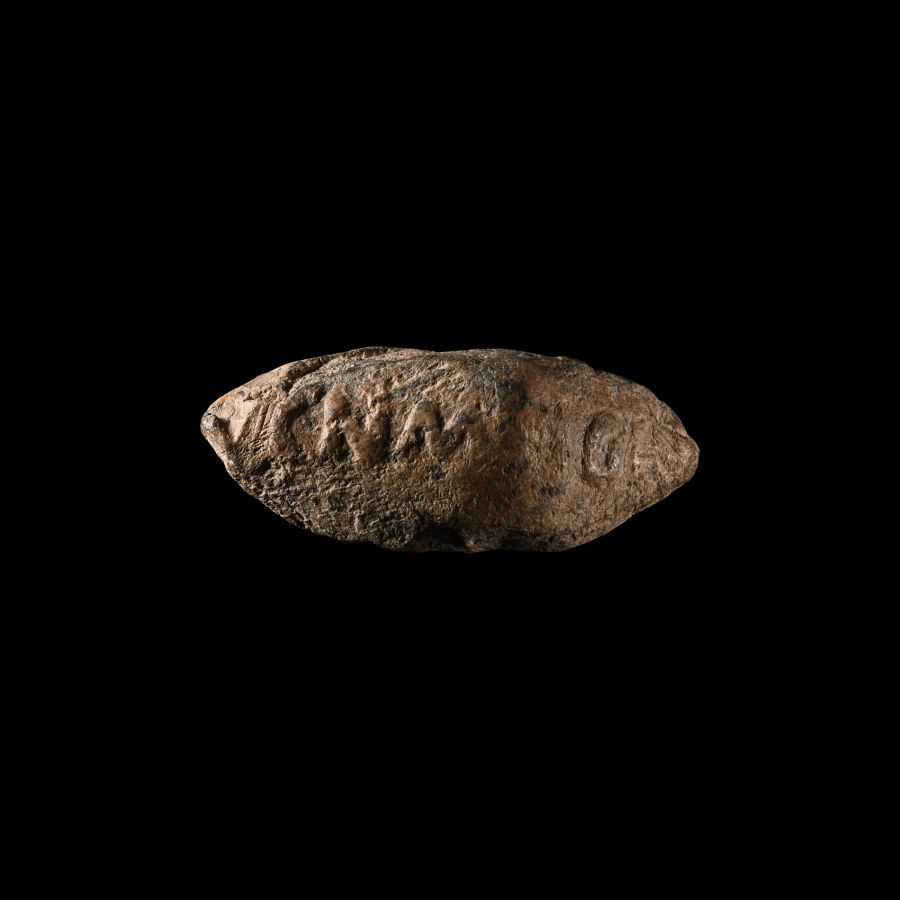
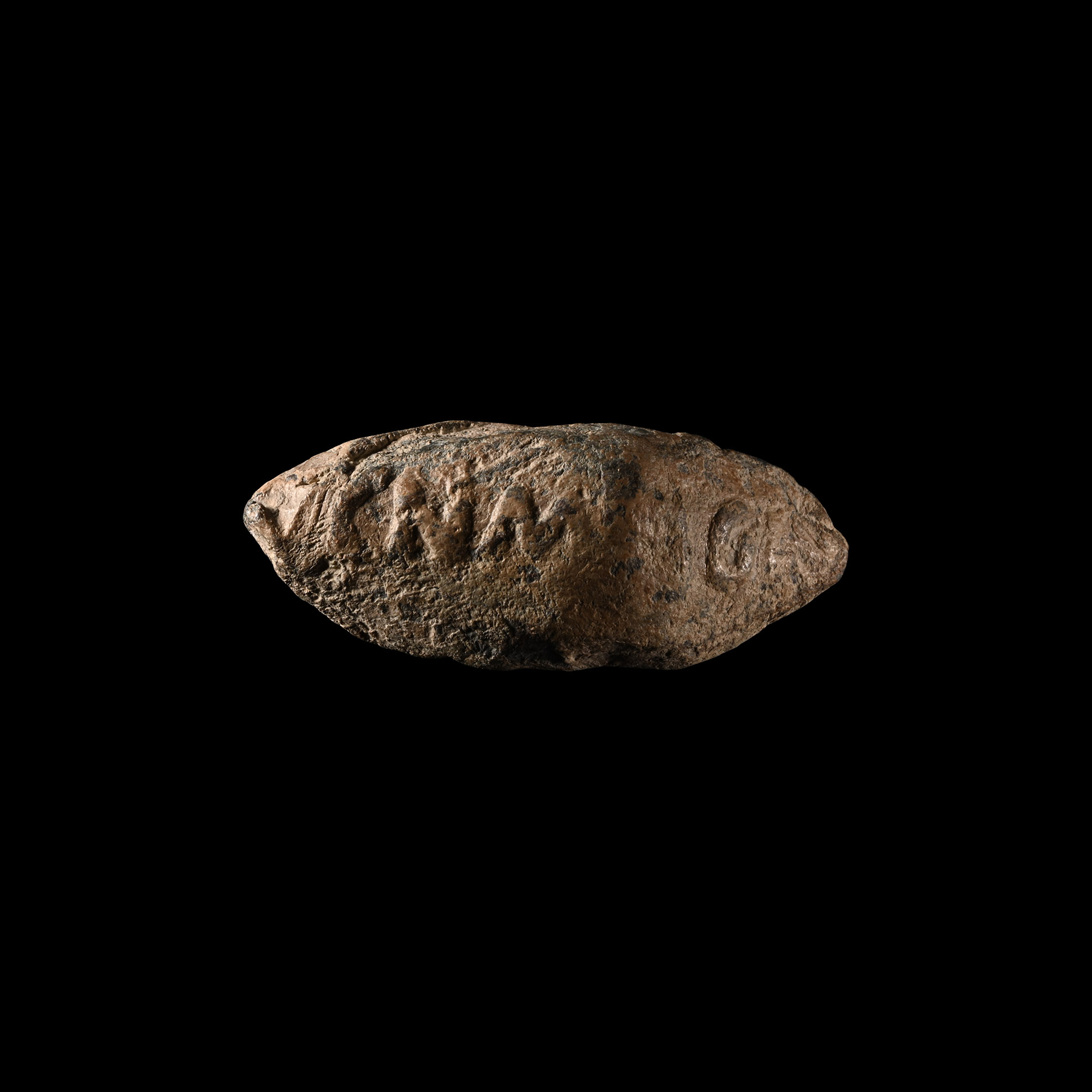
Roman 'Pompey the Great' Lead Slingshot
1ST CENTURY B.C.
1 1/2 in. (47 grams, 39 mm).
Biconical lead slingshot (glans) with inscription in Latin letters 'CN' (Cneius) 'MAG' (Magnus) on one side, and 'IMP' for 'IMPERATOR' (victorious general) to the other side, i.e Gnaeus Pompeius Magnus Imperator (Pompey the Great the victorious general). [No Reserve]
ProvenanceEx M.Cummings, UK, 1990s.
LiteratureCf. D'Amato, R. and Sumner, G., Arms and Armour of the Imperial Roman Soldier: From Marius to Commodus, 112 BC-AD 192, London, 2009, fig.32, p.45, for a similar glandes from Zaragoza Museum, the one with the name of Pompey inscribed coming from Munda battlefield.
FootnotesThe shot (Völling type 1C) is marked with the abbreviated name of Gnaeus Pompey; it was used in quantity at the Battle of Monda (or Munda) against Julius Caesar, 17th March 45 BC. The projectiles were made of different materials: lead (glandes) or in pottery or stone (lapides missiles). Sometimes they were signed with the name of the general, like our specimen.
CONDITIONTimeLine Auctions follows a vetting process to ensure the authenticity and legality of all items, reinforcing our commitment to integrity and responsible trading. Each antiquity, antique, and coin lot undergoes thorough examination by a vetting committee of at least ten external specialists, professional trade association members, scientists, and archaeologists: Our Vetting Process
AUCTIONS:
TimeLine is a leading auction house specialising in antiquities, ancient art, collectables, natural history, coins, medals, and books. Our auctions offer museums, collectors, historians, and enthusiasts the opportunity to acquire unique and historically significant pieces.
-
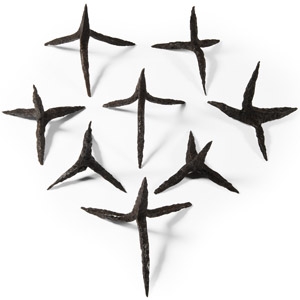
Medieval Iron Anti-Cavalry Caltrop Group
13th-15th century A.D.Sold for (Inc. bp): £221
Comprising eight caltrops, hand-forged with square-section spikes. 398 grams total, 76-95 mm
From the private collection of a London gentleman, from his grandfather's collection formed before the early 1970s. -
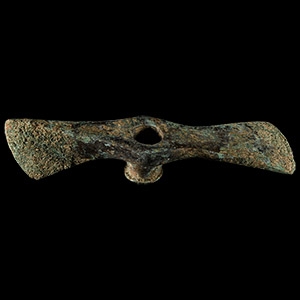
Large Luristan Socketted Adze-Axehead
13th-7th century B.C.Sold for (Inc. bp): £208
With central socket and shaft; cutting blade set vertically at a right-angle; the short pick-adze blade arranged horizontally. 1.43 kg, 26 cm
Acquired 1980-2015. Ex Abelita family collection.
The earliest axes-adzes from the 3rd millennium B.C. were weapons and tools furnished with socket holes. Usually the socket is a more secure way of attaching the object to a wooden haft than having a tang. These weapons developed into a plethora of different forms in the 2nd millennium B.C., and the numerous new forms and were used until at least 800 B.C. -
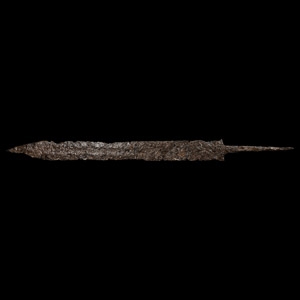
Roman Iron Gladius
1st-2nd century A.D.Sold for (Inc. bp): £1,300
Or semi-spatha blade with parallel-sided lentoid-section body and a long rectangular-section tang; Mainz type, Wederath-Canterbury-Kopki variant; repaired and surface treated. 557 grams, 83 cm
Ex South London collection, acquired 1970-1990. The Kusmirek Collection, UK. Accompanied by an academic report by Dr Raffaele D'Amato.
In contrast to the average length of the Roman Pompeii type gladius, some Roman swords, continuing the typology of the Mainz gladius, tend to be longer and transform themselves into a semi-spatha. Both the weapon from Eich (Miks, 2001, AI43), and especially a gladius from Korytnica with approximate blade length of 548mm (total length 762mm) is very close to the length limit of a semi-spatha. The same can be said of a blade from Godmanchester (Miks, 2001, no.A824) for its dimensions and proportions, where the tip of the blade already gives a significantly shorter impression, showing a certain relationship to 'Lauriacum-Hrornöwka', 'Mainz-Canterbury' variant type spathae.
