
Loading, please wait...
LOT 0656
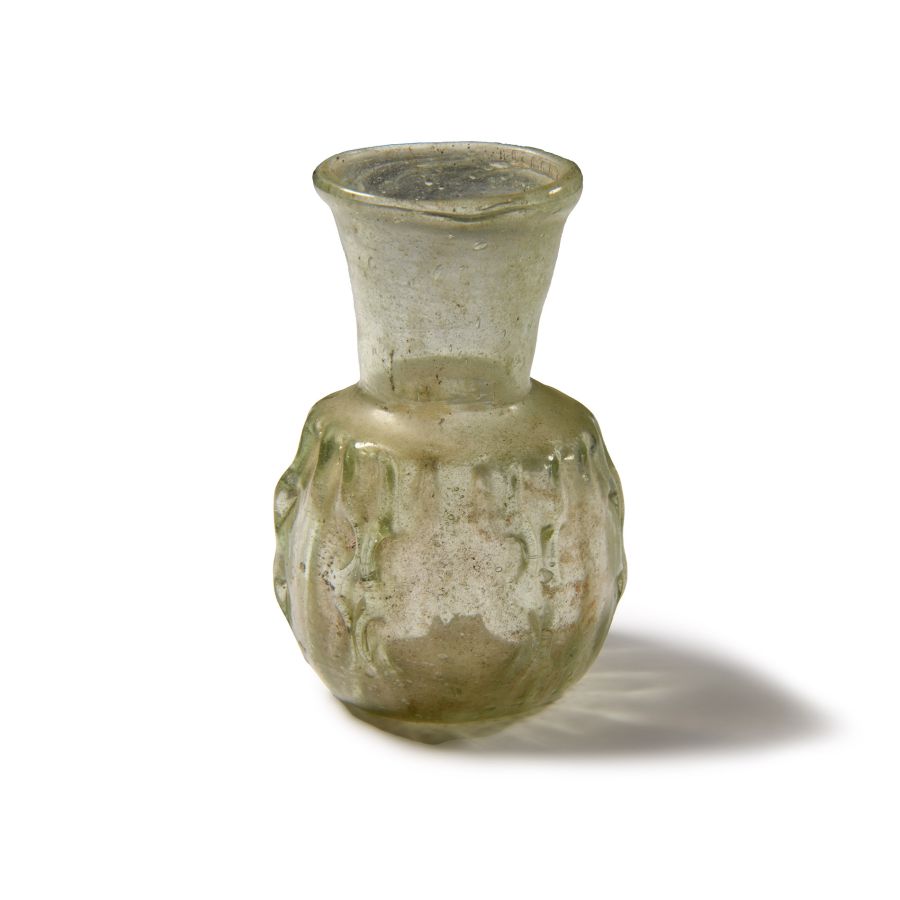
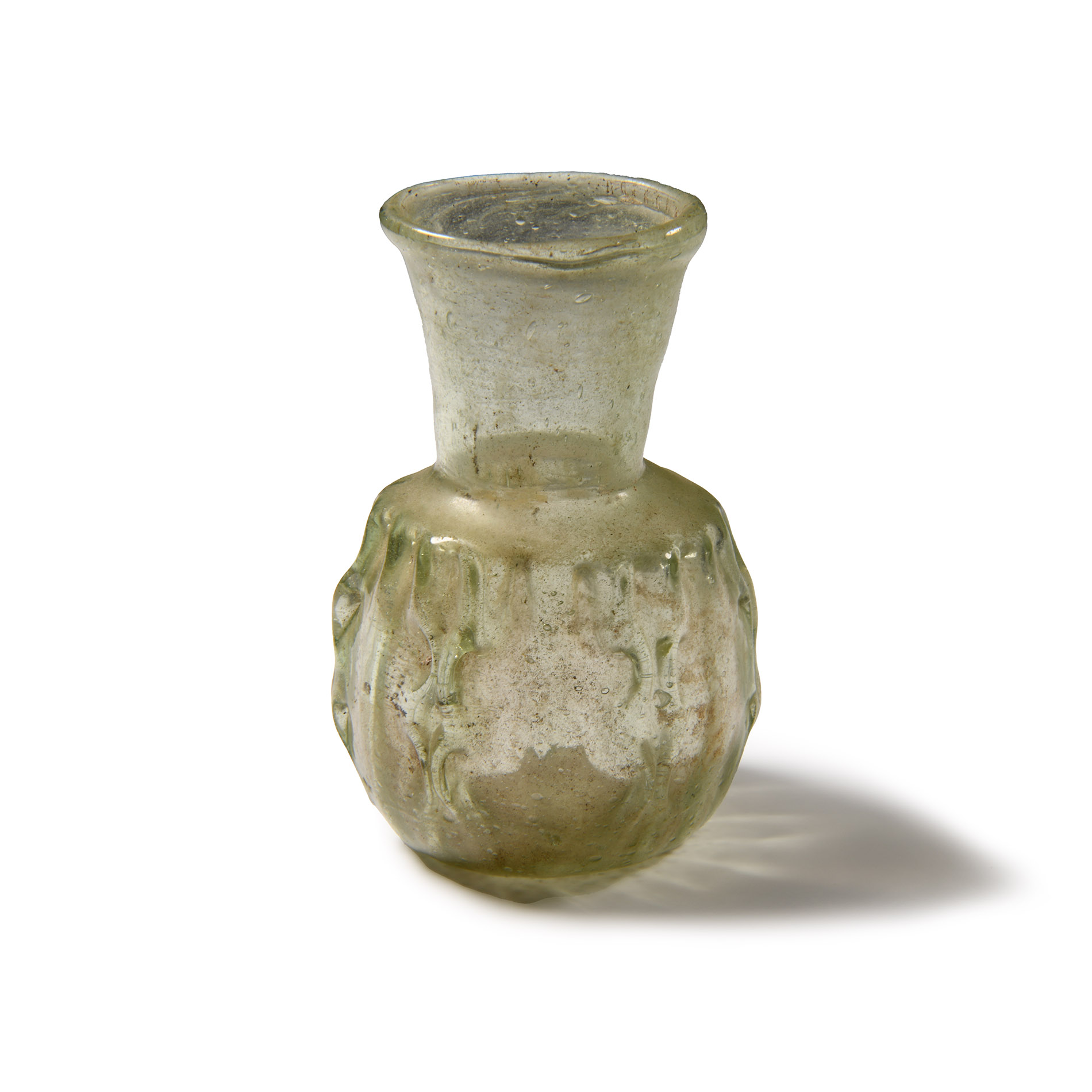
Roman Pinch-Decorated Glass Bottle
2ND-3RD CENTURY A.D.
3 in. (39.4 grams, 78 mm high).
In translucent light green glass, rounded body with six pinched decorative bands, funicular neck. [No Reserve]
ProvenanceFrom the deceased estate of a private UK gentleman.
with Fieldings Auctioneers, Stourbridge, West Midlands.
Property of an East Sussex, UK, gentleman.
TimeLine Auctions follows a vetting process to ensure the authenticity and legality of all items, reinforcing our commitment to integrity and responsible trading. Each antiquity, antique, and coin lot undergoes thorough examination by a vetting committee of at least ten external specialists, professional trade association members, scientists, and archaeologists: Our Vetting Process
AUCTIONS:
TimeLine is a leading auction house specialising in antiquities, ancient art, collectables, natural history, coins, medals, and books. Our auctions offer museums, collectors, historians, and enthusiasts the opportunity to acquire unique and historically significant pieces.
-
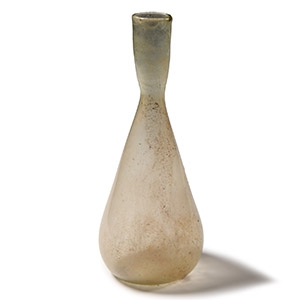
Roman Tall Glass Unguentarium
2nd-4th century A.D.Sold for (Inc. bp): £117
With piriform body and dimpled base; slender tubular neck expanding slightly towards the rim; in pale green glass. 42.6 grams, 15.5 cm high
Acquired in the 1970s, thence by descent 2012. Private UK collection, Cambridge, UK. Property of an East Sussex, UK, gentleman. -

Roman Yellow Glass Necklace Bead Group
1st century A.D. and laterSold for (Inc. bp): £78
Comprising a group of mostly small beads, with some cylindrical and oblate forms, in a pale yellow glass; pierced for stringing. 27 grams total, 3-19 mm
UK gallery, early 2000s. -

Roman Glass Intaglio Showing Two Gryphons Attacking a Deer
2nd-3rd century A.D.Sold for (Inc. bp): £416
Ellipsoid glass cloison with incuse image of two gryphons attacking a deer; set in a later silver ring. 18.57 grams, 30.95 mm overall, 22.99 mm internal diameter (approximate size British N 1/2, USA 6 3/4, Europe 14.35, Japan 13)
From the collection of a North American gentleman, formed in the 1990s.
The subject of griffins attacking a deer has a long history and remained popular during the Hellenistic and Roman period throughout the Mediterranean area and beyond. It may be a symbol of the inevitability of death.
