
Loading, please wait...
LOT 0787
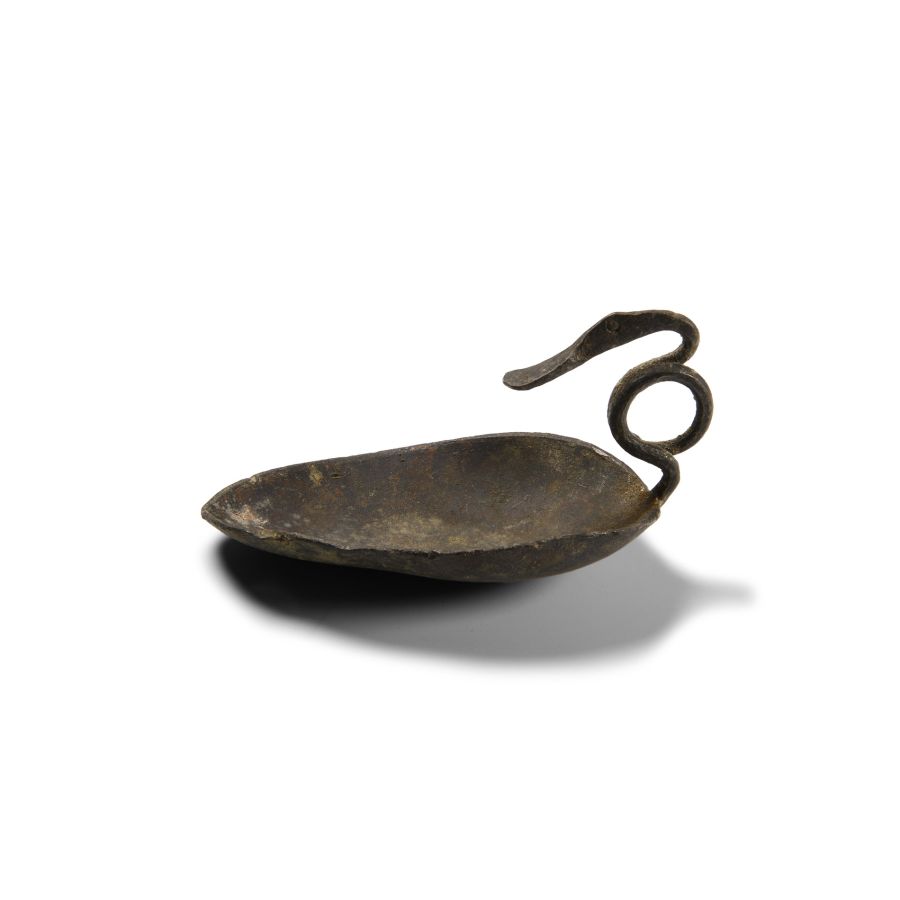
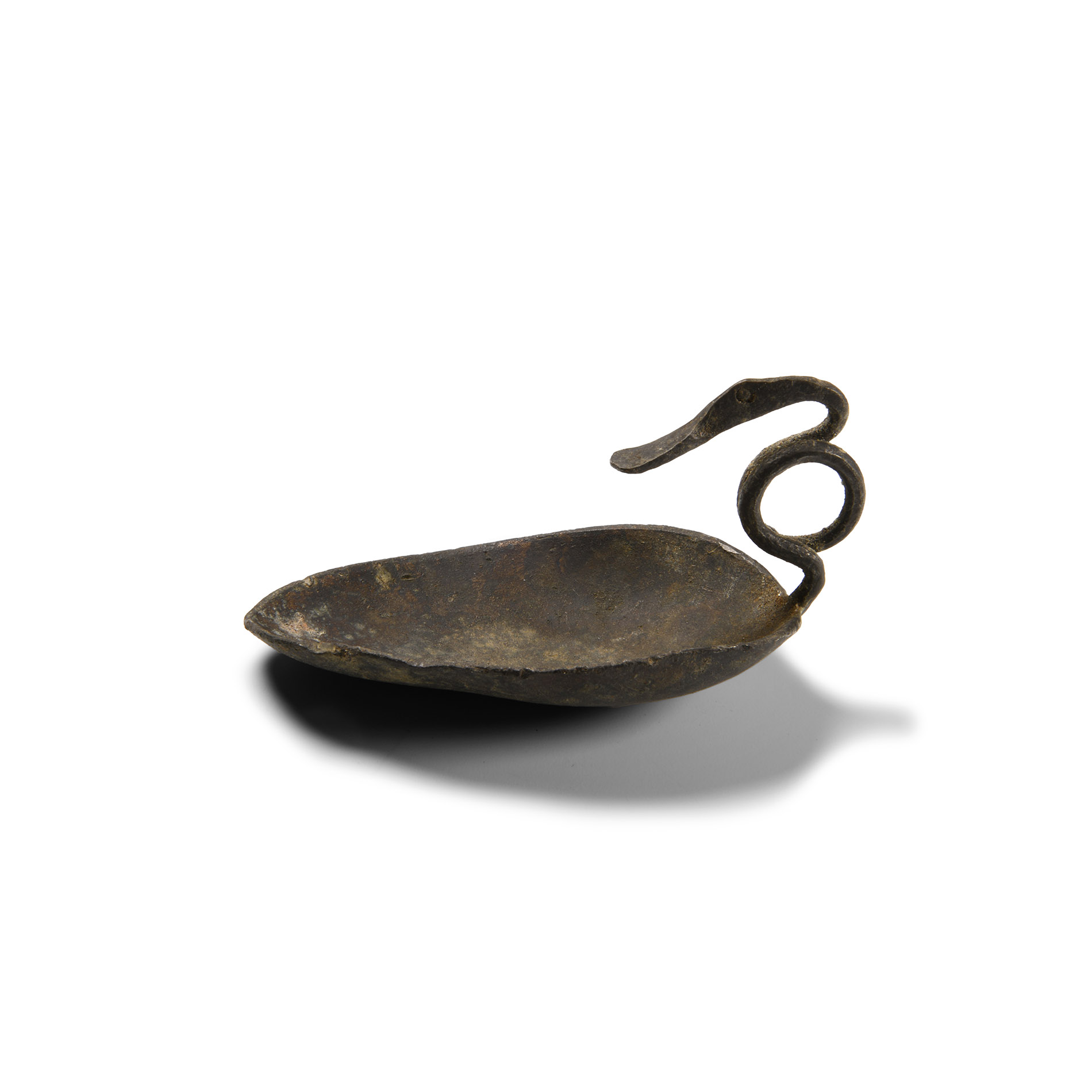
Roman Pewter Cignus Spoon with Coiled Swan-Neck Handle
4TH CENTURY A.D.
3 3/8 in. (42.4 grams, 85 mm).
With large oval bowl and a long, slender handle, compressed into S-shape and terminating in a stylised bird’s head.
ProvenanceFound near Welney, Cambridgeshire, in 1985.
LiteratureCf. Johns, C.M., The Hoxne Late Roman Treasure: Gold Jewellery and Silver Plate, London, 2010, no.81, for identical.
FootnotesSimilar silver spoons (cygni), were found within a set of ten spoons (today at the British Museum with inventory nos. 1994,0408.81-90) with ownership inscriptions. The handle attachment of such spoons had some decorative profiling, and the name 'AVRVRSICINI' within the bowl was inlaid with niello. The spoons seems to have been produced by a Romano-British workshop of Late Antiquity (4th-5th centuries A.D.). The cygnus was a particular type of ligula. This type was characterised by a large, oval-shaped bowl, but was equipped, unlike the common ligula, with a shortened, recurved handle which terminated in a stylised water bird or swan's head (swan = cygnus in Latin).
CONDITIONTimeLine Auctions follows a vetting process to ensure the authenticity and legality of all items, reinforcing our commitment to integrity and responsible trading. Each antiquity, antique, and coin lot undergoes thorough examination by a vetting committee of at least ten external specialists, professional trade association members, scientists, and archaeologists: Our Vetting Process
AUCTIONS:
TimeLine is a leading auction house specialising in antiquities, ancient art, collectables, natural history, coins, medals, and books. Our auctions offer museums, collectors, historians, and enthusiasts the opportunity to acquire unique and historically significant pieces.
LOT 0787
Roman Pewter Cignus Spoon with Coiled Swan-Neck Handle
Estimate £400 - 600€460 - 700 (for guidance only)$540 - 810 (for guidance only)
-
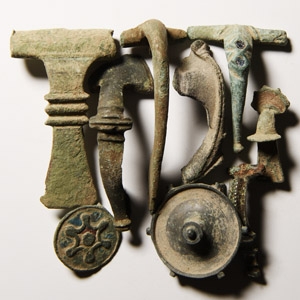
Roman Hampshire Bronze Brooch Collection
1st-4th century A.D.Sold for (Inc. bp): £91
Comprising various types of brooches, including examples with trace remains of silvering and enamelled decoration. 72.3 grams total, 21-60 mm
Found Hampshire, UK. -
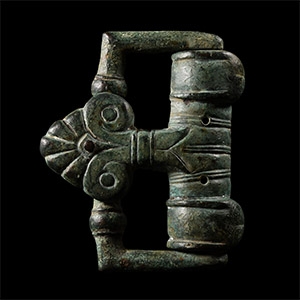
Huge Roman Bronze Buckle-Shaped Fitting
1st-2nd century A.D.Sold for (Inc. bp): £390
With rectangular loop and two bulbs flanking the rest for the tongue; robust hinged tongue integral with the hinge, terminating in a palmette; hollow to the underside. 471 grams, 11.3 cm
Acquired 1980-2015. Ex Abelita family collection.
The buckle is too large and heavy for normal use; it was probably created for an oversized statue of an emperor. -
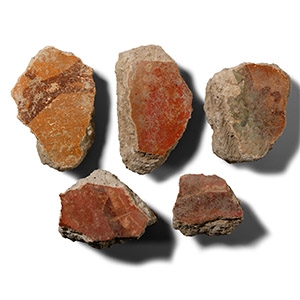
Roman Fresco Painted Wall Plaster Collection
1st century A.D.Sold for (Inc. bp): £46
With painted designs in white, orange, claret, crimson and blue. 600 grams total, 5.5-10.4 cm
Acquired in the 19th century. Ex Jeger collection, Switzerland.
