
Loading, please wait...
LOT 0623
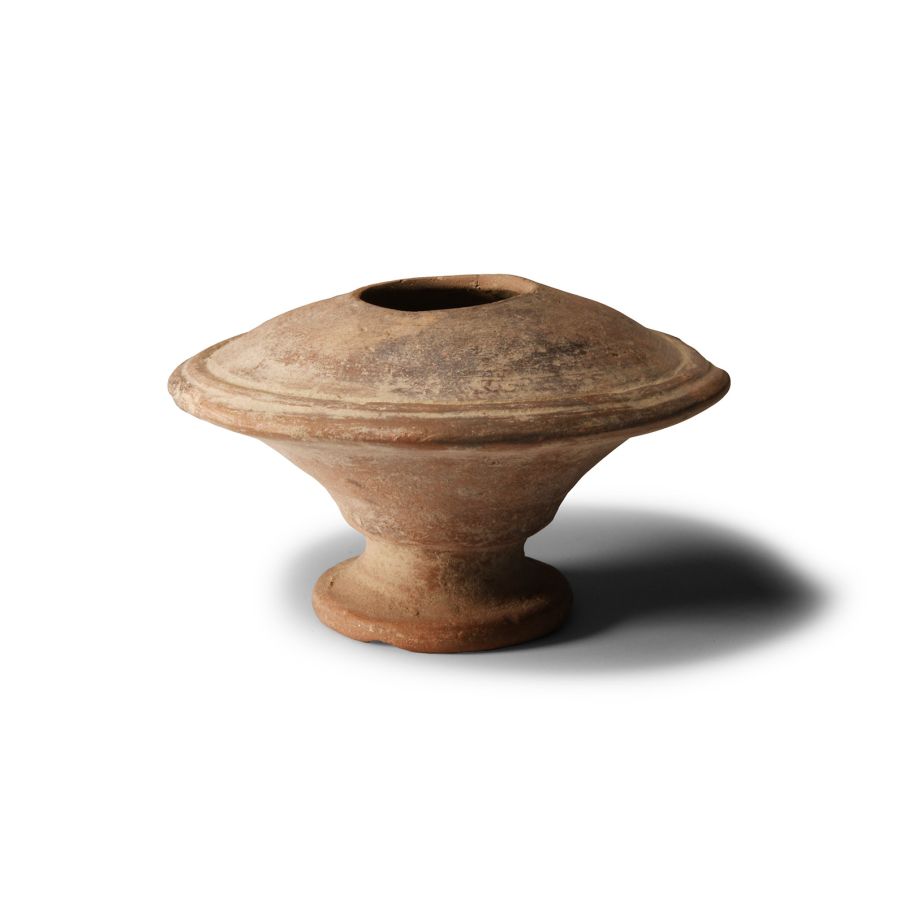
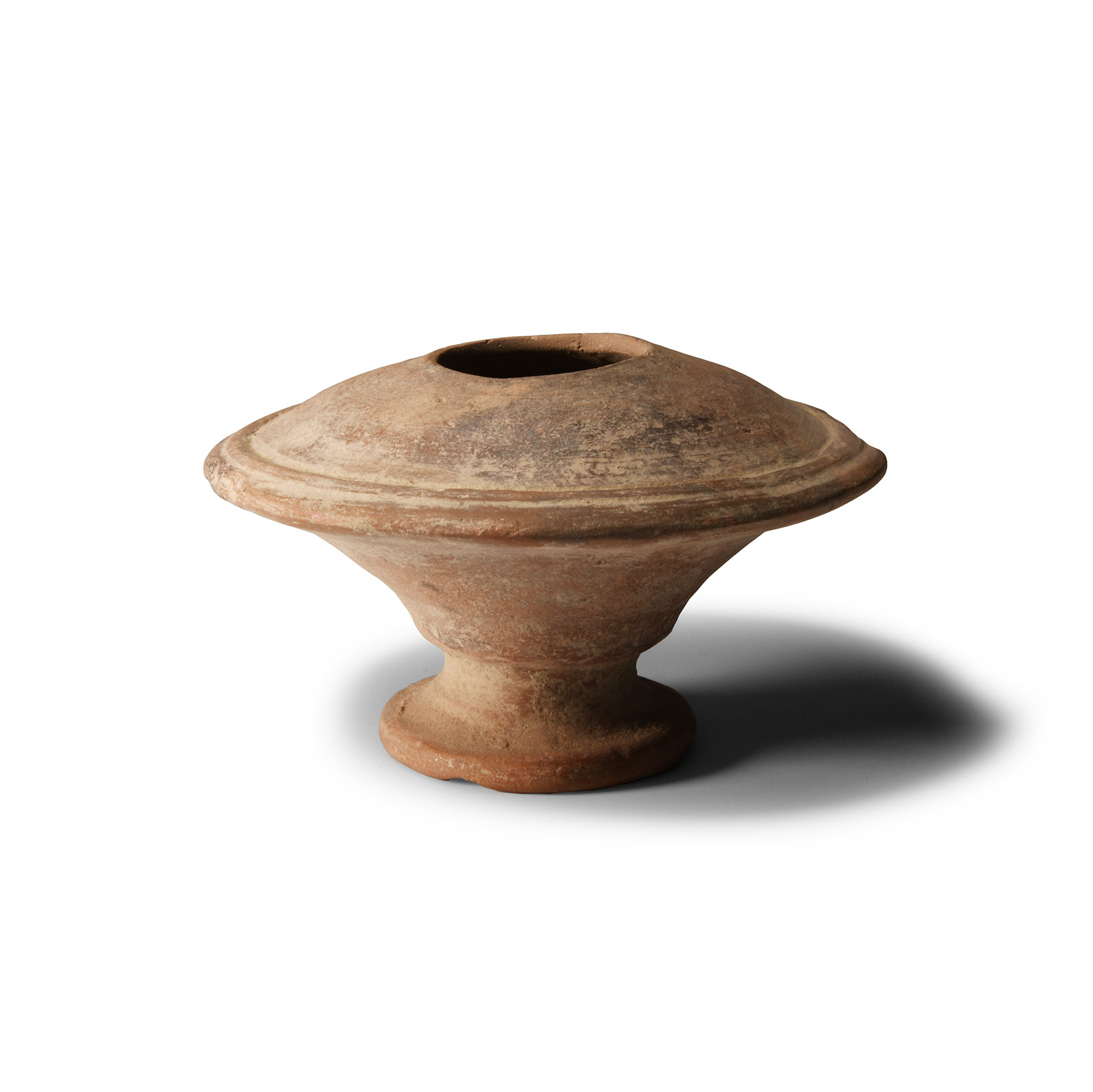
Roman Period Terracotta Footed Vessel
CIRCA 1ST-4TH CENTURY A.D.
5 1/8 in. (401 grams, 13.1 cm wide).
Comprising a broad carinated bowl with central hole and hatching to the rim, stepped stem and flared base with rolled rim. [No Reserve]
ProvenanceAcquired on the UK art market.
Property of a Ruislip, UK, gentleman, by inheritance.
Cf. Marney, P.T., Roman & Belgic Pottery, from excavations in Milton Keynes, 1972-1982, Aylesbury, 1989, fig.29, no.29, for similar profile.
FootnotesMaybe a vessel used for the holy libations, as could be deduced from the central aperture. The Romans had adopted the Etruscan rituals for the sacred libations called aisna or eisna, and they essentially consisted of prayers and offerings. Most of the offerings took place during the morning (thesan), and vacl thesnin was the 'morning libation'. The practice included a threefold offering, to heaven, earth and the gods.
CONDITIONTimeLine Auctions follows a vetting process to ensure the authenticity and legality of all items, reinforcing our commitment to integrity and responsible trading. Each antiquity, antique, and coin lot undergoes thorough examination by a vetting committee of at least ten external specialists, professional trade association members, scientists, and archaeologists: Our Vetting Process
AUCTIONS:
TimeLine is a leading auction house specialising in antiquities, ancient art, collectables, natural history, coins, medals, and books. Our auctions offer museums, collectors, historians, and enthusiasts the opportunity to acquire unique and historically significant pieces.
-
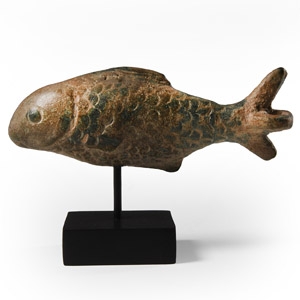
Roman Bronze Fish Vessel Lid
1st-4th century A.D.Sold for (Inc. bp): £455
Modelled in the half-round with naturalistic detailing, between the tail a hinge loop, probably the lid from a high status fish-shaped vessel. 44 grams, 75 mm
‘The Ancient Menagerie Collection’ formerly the property of a Cambridgeshire lady, collected since the 1990s and acquired from auctions and dealers throughout Europe and the USA, now ex London collection. -
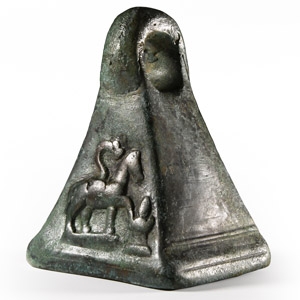
Roman Bronze Bell
Circa 2nd-3rd century A.D.Sold for (Inc. bp): £208
Rectangular in shape with heavy loop, a snake riding a horse stepping on an altar to one face, trident motif to verso; chipped, clanger absent. 370 grams, 10.3 cm high
Ex old English collection. London art market, 1980s. -
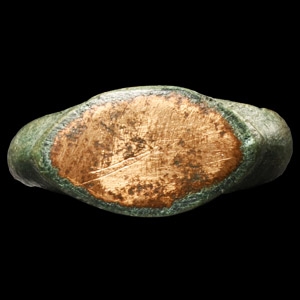
Roman Bronze Ring
1st century B.C.Sold for (Inc. bp): £52
With carinated hoop, elliptical bezel. 3.62 grams, 20.42 mm overall, 15.13 mm internal diameter (approximate size British H 1/2, USA 4, Europe 6.81, Japan 6)
Acquired from Den of Antiquity, Cambridgeshire, UK. Ex private Merseyside, UK, collection.
