
Loading, please wait...
LOT 0710
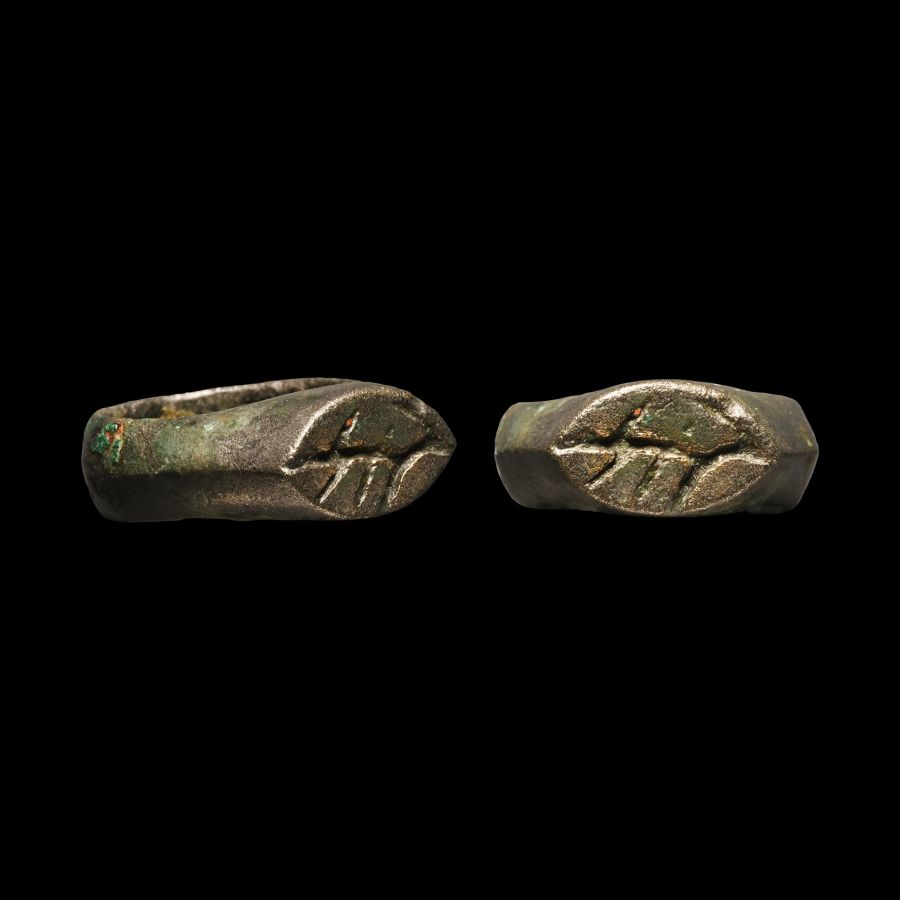
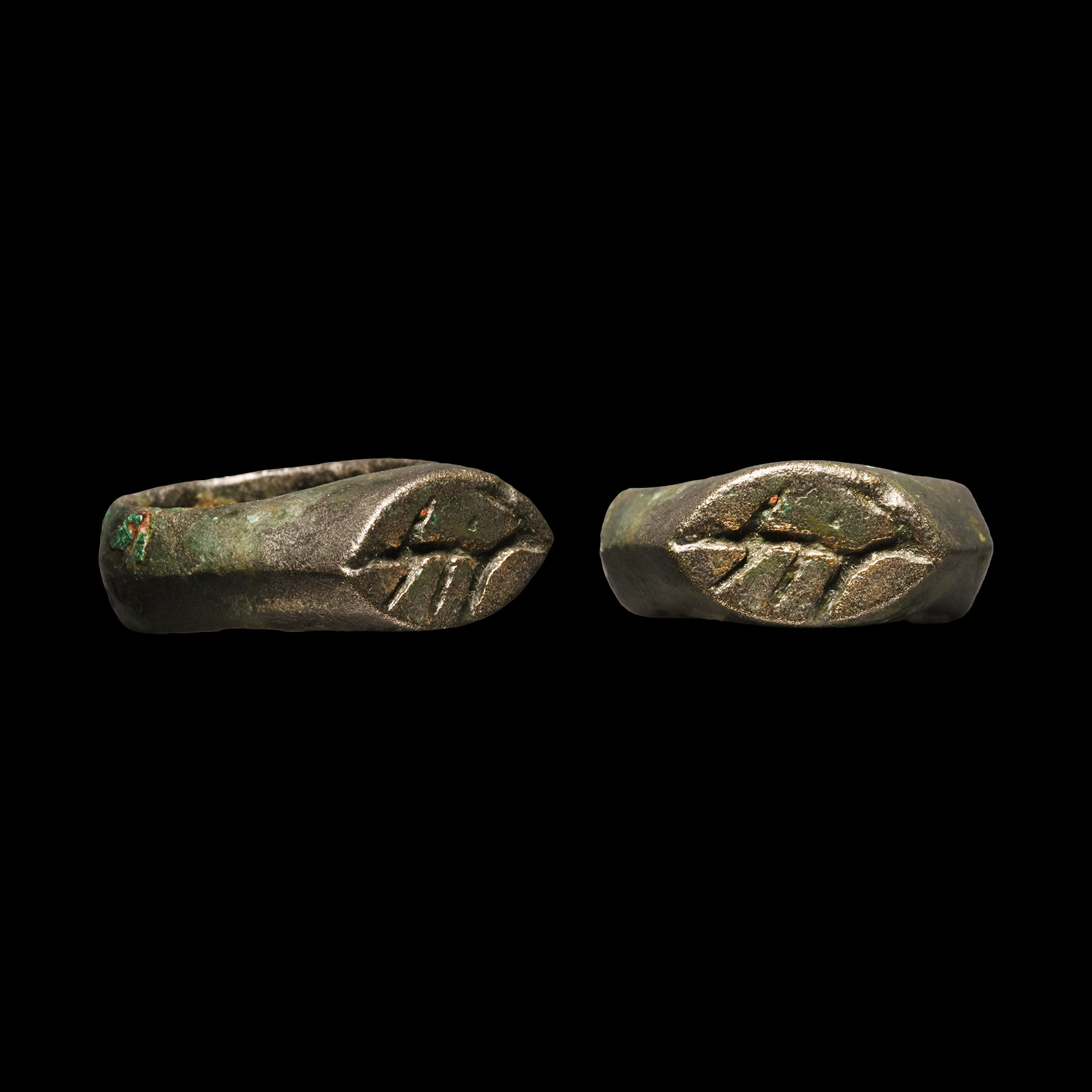
Roman Period Bronze Ring with Antelope
1ST CENTURY B.C.
1 in. (10.82 grams, 26.08 mm overall, 15.94 mm internal diameter (approximate size British K, USA 5 1/4, Europe 9.95, Japan 9)).
D-section hoop and tall scaphoid bezel, intaglio design of an antelope. [No Reserve]
ProvenanceEx old English collection.
London art market, pre 2000.
Property of a London, UK, gentleman.
TimeLine Auctions follows a vetting process to ensure the authenticity and legality of all items, reinforcing our commitment to integrity and responsible trading. Each antiquity, antique, and coin lot undergoes thorough examination by a vetting committee of at least ten external specialists, professional trade association members, scientists, and archaeologists: Our Vetting Process
AUCTIONS:
TimeLine is a leading auction house specialising in antiquities, ancient art, collectables, natural history, coins, medals, and books. Our auctions offer museums, collectors, historians, and enthusiasts the opportunity to acquire unique and historically significant pieces.
-
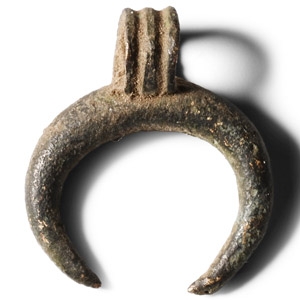
Roman Bronze Lunar Pendant
Circa 1st-3rd century A.D.Sold for (Inc. bp): £111
The crescentic body with tapering round-section arms and an integral ribbed suspension loop. 3.7 grams, 23 mm
Acquired on the UK art market before 2000. Property of a Surrey, UK, collector. -
.jpg)
Roman Banded Agate Gemstone with Apollo
Circa 1st century B.C.-1st century A.D.Estimate: £300 - 400 (+bp*)
Opening Bid: £150
Advancing and holding a frond, a tripod behind; supplied with a museum-quality impression. 0.4 grams, 12 mm
From the collection of a Swiss gentleman formed in Europe from 1970-1980s; thence by descent from the family in London. -
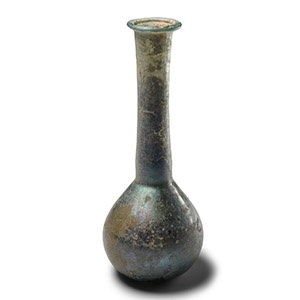
Roman Iridescent Green Glass Ampulla
1st-3rd century A.D.Sold for (Inc. bp): £117
Featuring a bottle of a wide form, free blown from translucent glass of a soft turquoise hue, defined by a slightly concave base, a piriform body with a tapered shoulder, a lightly corseted neckline beneath a cylindrical neck, and a splayed rim with an in-folded lip. 23 grams, 11.6 cm high
Acquired 1980-2015. Ex Abelita family collection.
The ampulla was a small round vessel, usually made of glass and used for sacred purposes. The word is used in archaeology, also for flasks that are often handle-less and much flatter. Materials include glass, ceramics and metal. The unguentarium was a term for a bottle believed to have been used to store perfume.
