
Loading, please wait...
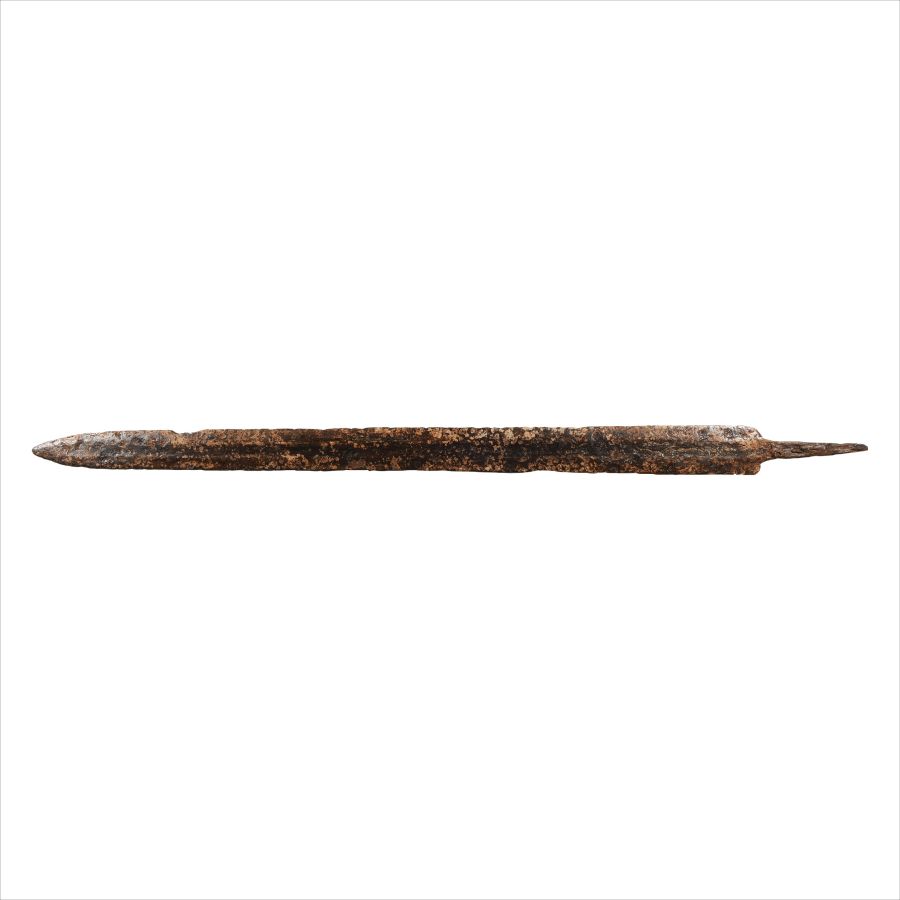
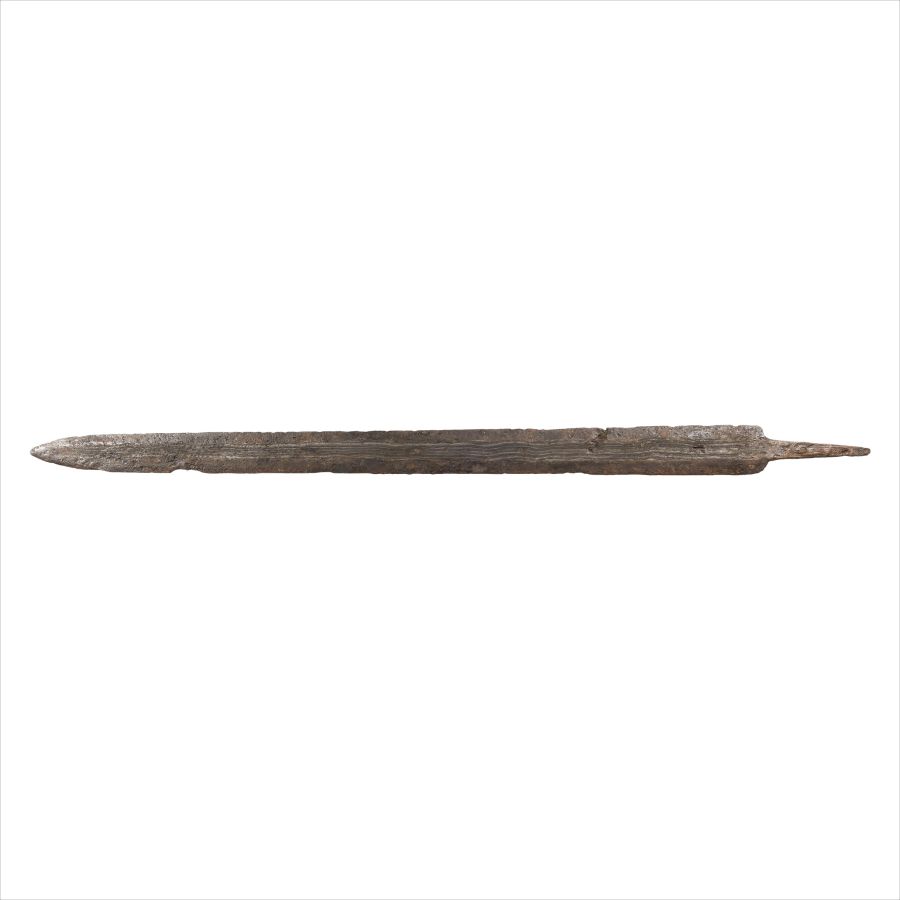
LOT 0305
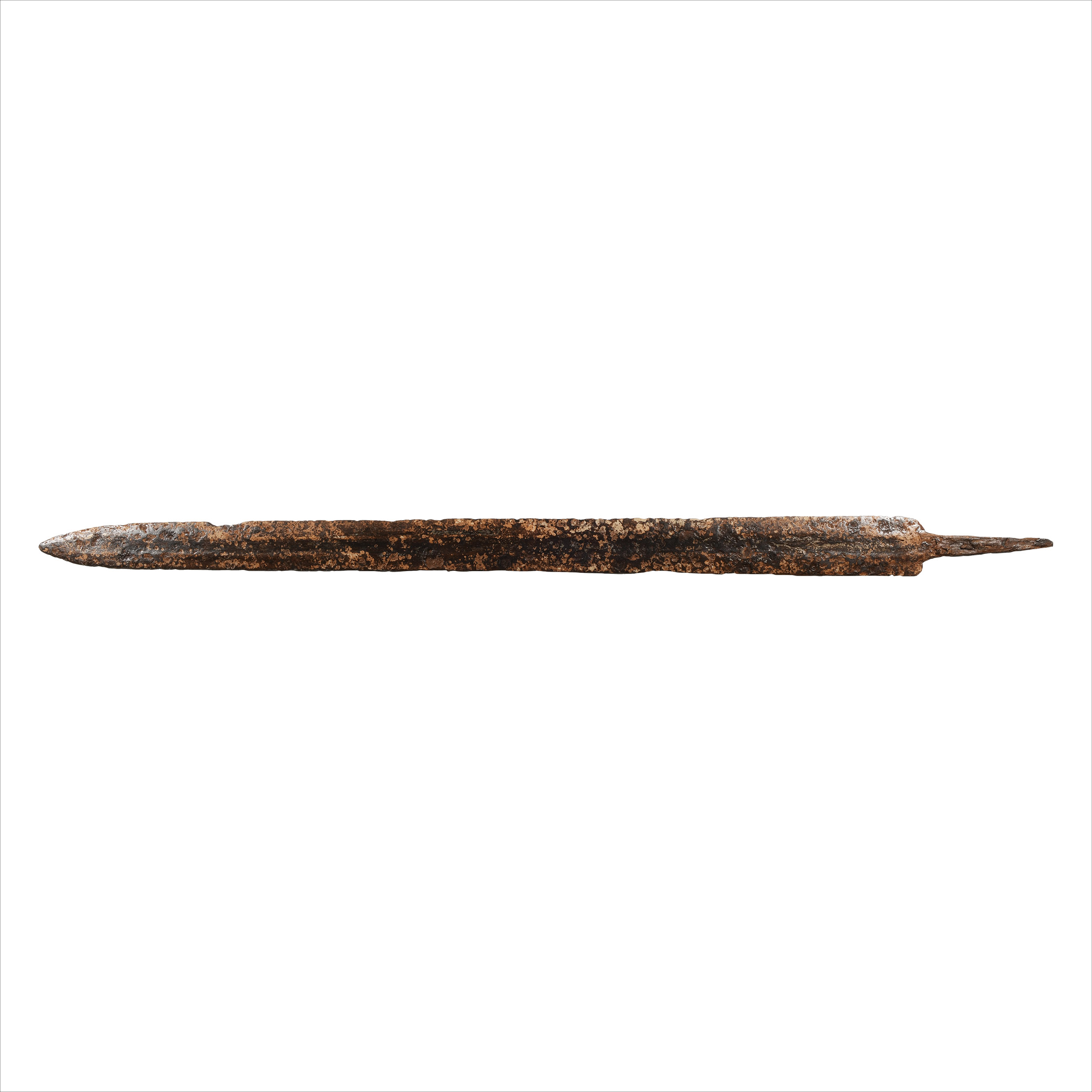
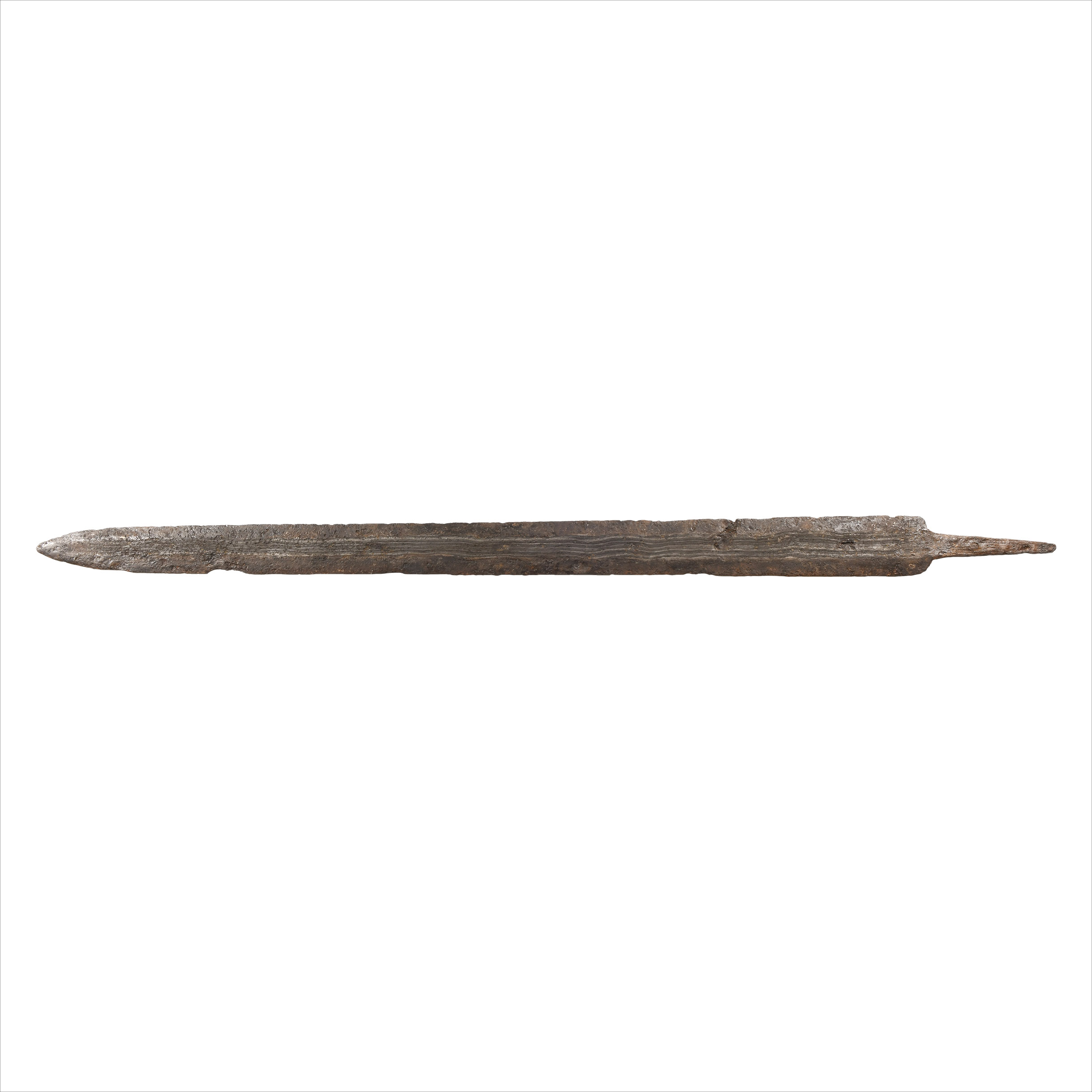
Roman Pattern-Welded Iron Spatha
3RD-4TH CENTURY A.D.
33 3/4 in. (659 grams, 85.5 cm).
With double-edged blade of Osterburken-Kemathen Type, fullers with damask pattern (rosette damask technique B.II.I.2), sturdy tang with remains of wood; the blade cleaned and conserved on one side.
ProvenanceFrom the private collection of a London gentleman, from his grandfather's collection formed before the early 1970s.
Accompanied by an academic report by Dr Raffaele D’Amato.
This lot has been checked against the Interpol Database of stolen works of art and is accompanied by search certificate number no. 11923-209660.
See Miks, C., Studien zur Romischen Schwertbewaffnung in der Kaiserzeit, I-II Banden, Rahden, 2007; for similar specimens see Miks, 2007, nos. A533, p.680, pl.137, from Nowa Cerekiew; A766, p.755, pl.141, from Vrasselt.
CONDITIONTimeLine Auctions follows a vetting process to ensure the authenticity and legality of all items, reinforcing our commitment to integrity and responsible trading. Each antiquity, antique, and coin lot undergoes thorough examination by a vetting committee of at least ten external specialists, professional trade association members, scientists, and archaeologists: Our Vetting Process
AUCTIONS:
TimeLine is a leading auction house specialising in antiquities, ancient art, collectables, natural history, coins, medals, and books. Our auctions offer museums, collectors, historians, and enthusiasts the opportunity to acquire unique and historically significant pieces.
LOT 0305
Roman Pattern-Welded Iron Spatha
Estimate £3,000 - 4,000€3,480 - 4,640 (for guidance only)$4,050 - 5,400 (for guidance only)
-
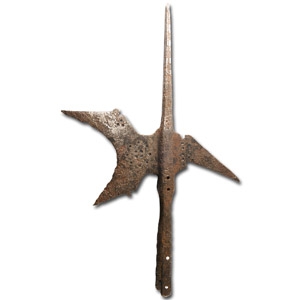
German Socketted Iron Halberd
15th-16th century A.D.Sold for (Inc. bp): £390
With square-section body and tapering spike, lateral languets pierced for attachment to the haft, hook to the rear and thick blade with crescent recess, pierced. 756 grams, 45 cm
Ex California, USA, collection formed since the late 1960s. European art market before the late 1990s. -
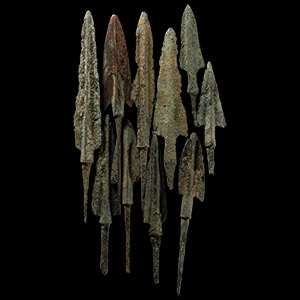
Western Asiatic Bronze Arrowhead Group
14th-10th century B.C.Sold for (Inc. bp): £117
Comprising ten triangular arrowheads with tangs. 203 grams total, 8.1-15 cm
Acquired 1980-2015. Ex Abelita family collection.
Some of these arrowheads seem to belong to the type V, subcategory types A and C according to the classification of Khorasani and Negahban. In the four categories of triangular bronze arrowheads from Luristan, Marlik and Northern Iran described by Negahban, subtypes A and C of type V are larger arrow heads with barbed shoulders and triangular heads. These types of arrowheads were commonly used in Anatolia and Mesopotamia from the 2nd millennium B.C., but apparently their employment began earlier in this area, where types like these occur alongside the non-barbed, predominantly ribbed and tanged types. -
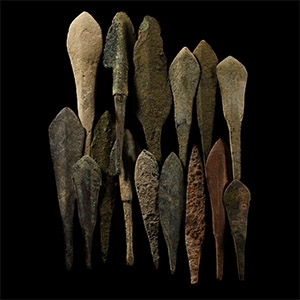
Western Asiatic Bronze Arrowhead Group
2nd-1st millennium B.C.Estimate: £100 - 140 (+bp*)
Opening Bid: £50
Comprising fifteen tanged examples, including one slender arrowhead in iron. 112 grams total, 44-75 mm
Acquired 1980-2015. Ex Abelita family collection.
