
Loading, please wait...
LOT 0681
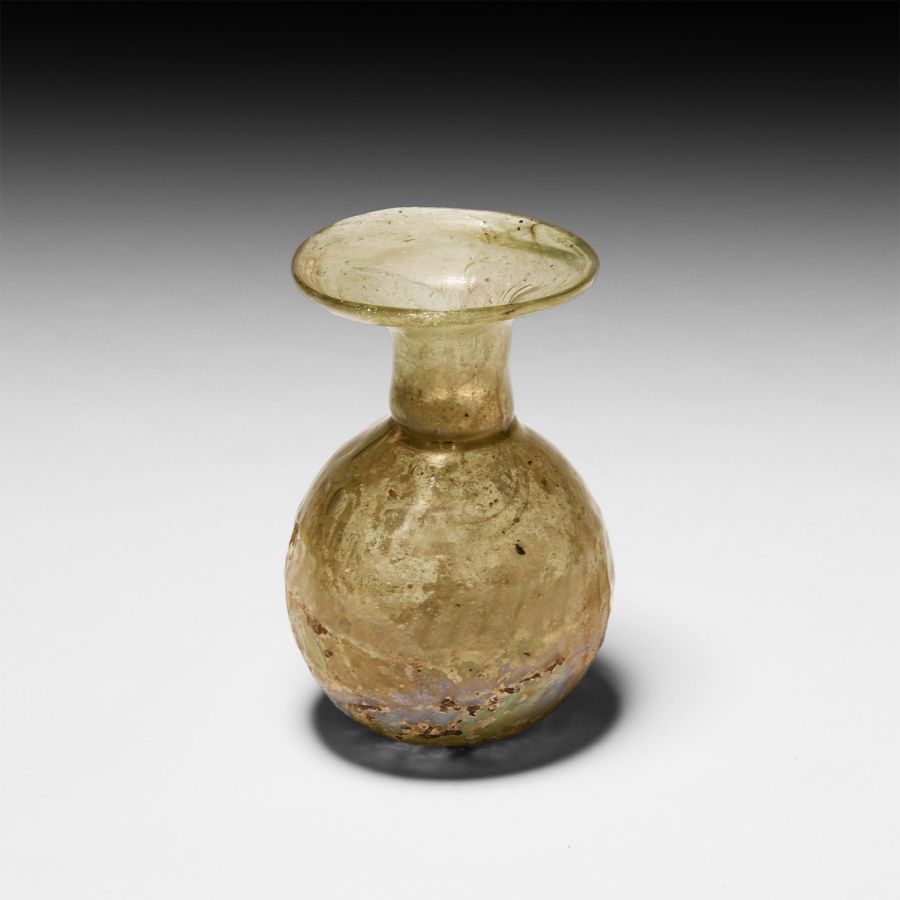
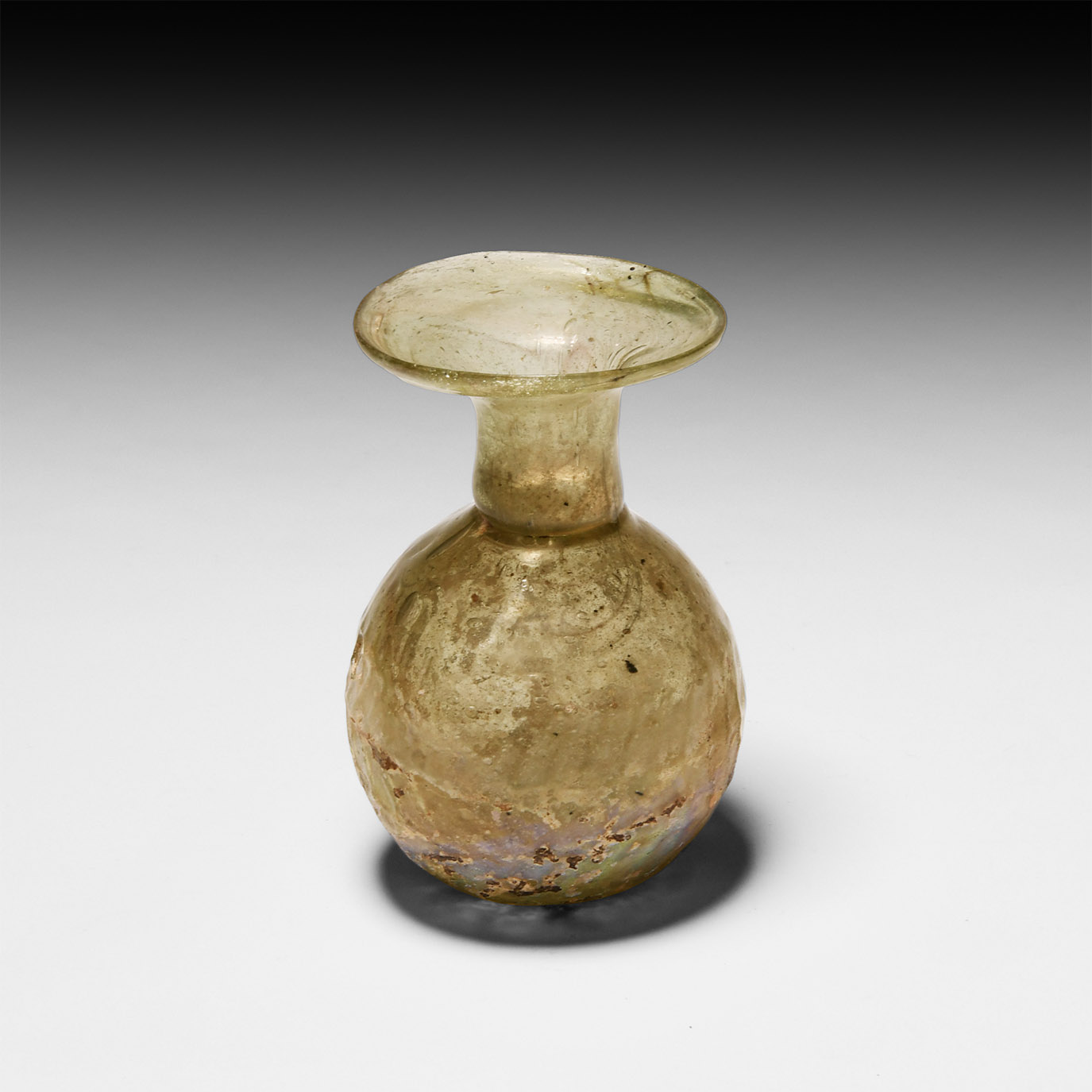
Roman Pale Green Mould Blown Glass Flask
3RD-5TH CENTURY A.D.
9 5/8 in. (55 grams, 91 mm high).
With bulbous-bodied bearing a chevron motif in relief to the body; the vessel has a short cylindrical neck and broad flange rim; iridescent surfaces.
ProvenanceParis collection, 1990s.
From an important Paris gallery, France.
Ex private Parisian collection.
TimeLine Auctions follows a vetting process to ensure the authenticity and legality of all items, reinforcing our commitment to integrity and responsible trading. Each antiquity, antique, and coin lot undergoes thorough examination by a vetting committee of at least ten external specialists, professional trade association members, scientists, and archaeologists: Our Vetting Process
AUCTIONS:
TimeLine is a leading auction house specialising in antiquities, ancient art, collectables, natural history, coins, medals, and books. Our auctions offer museums, collectors, historians, and enthusiasts the opportunity to acquire unique and historically significant pieces.
LOT 0681
Roman Pale Green Mould Blown Glass Flask
Estimate £250 - 350€290 - 410 (for guidance only)$340 - 470 (for guidance only)
-
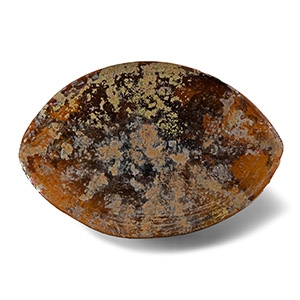
Roman Amber Glass Eye-Shaped Dish
1st-4th century A.D.Sold for (Inc. bp): £468
Shallow elliptical dish with stepped elliptical foot to base; iridescent surfaces. 194 grams, 21 cm wide
Acquired early 1990s. Ex private American collection; thence by descent. Private collection since 1998. -
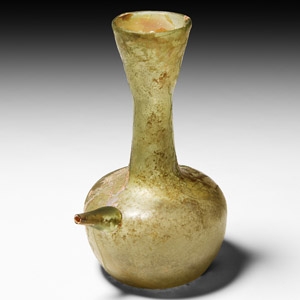
Roman Green Glass Nursing Bottle
4th-5th century A.D.Sold for (Inc. bp): £351
Composed of a squat bulbous body with broad shoulder, slender cylindrical neck with flared rim, conical spout to the shoulder; kick-up to base; iridescent surfaces. 50 grams, 13.7 cm high
Fine condition.
Paris collection, 1990s. From an important Paris gallery, France. Ex private Parisian collection. -
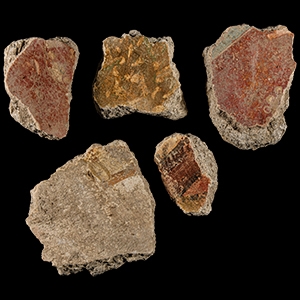
Roman Fresco Painted Wall Plaster Collection
1st century A.D.Sold for (Inc. bp): £65
Comprising five pieces in cream and red with sweeping and architectural motifs painted in contrasting colours. 539 grams total, 61-87 mm
Acquired in the 19th century. Ex Jeger collection, Switzerland.
