
Loading, please wait...
LOT 0748
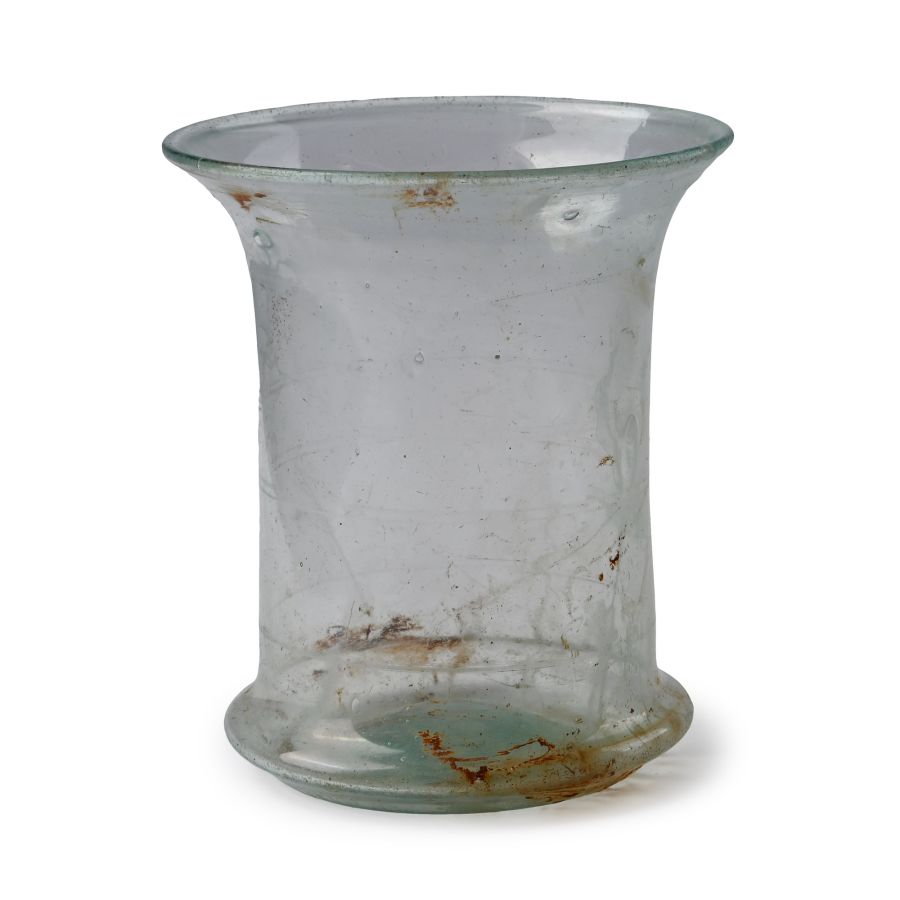
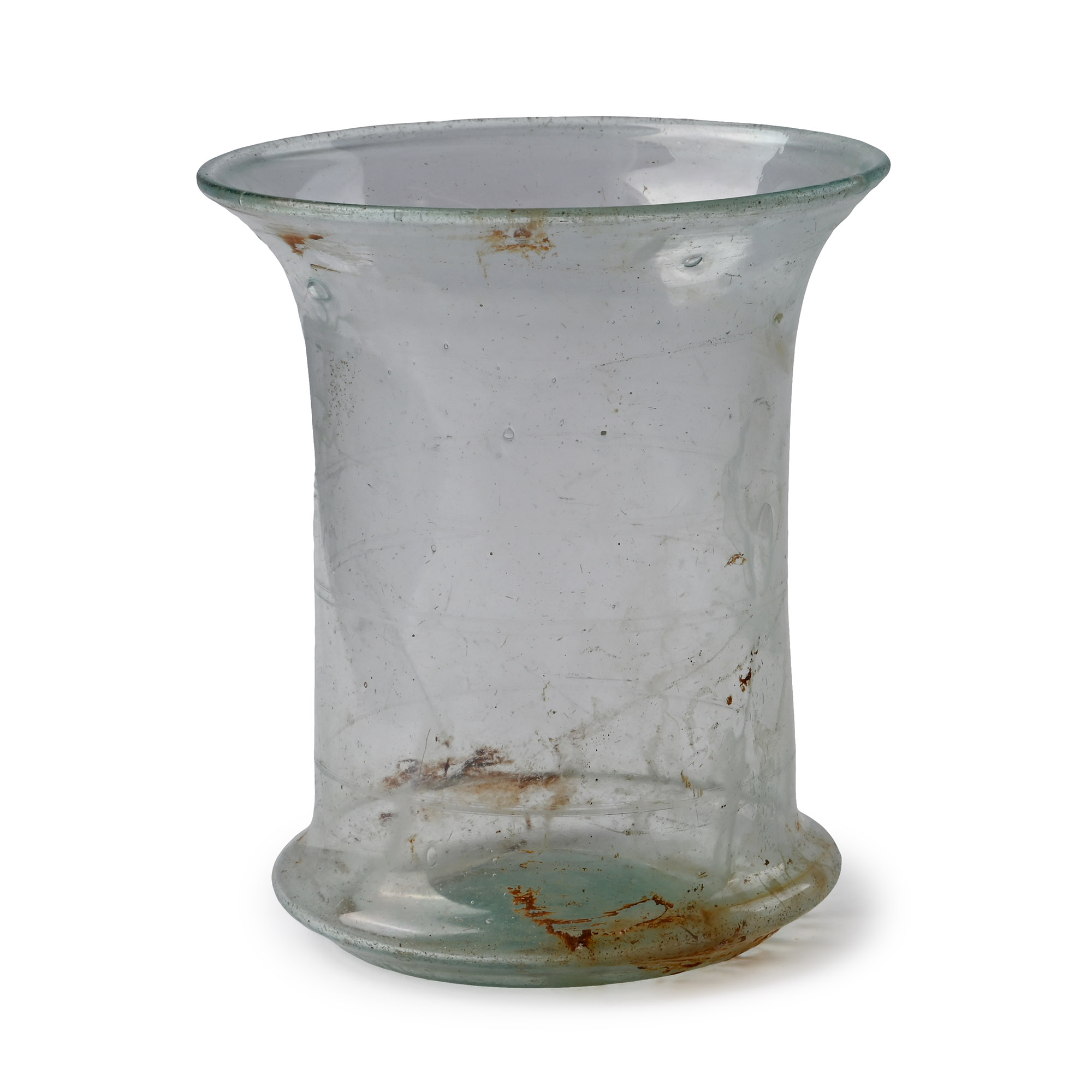
Roman Pale Green Glass Cup
CIRCA 1ST-4TH CENTURY A.D.
3 7/8 in. (59.8 grams, 97 mm).
With slightly dimpled base, carinated flange to foot and tubular body, flared rim, wheel-cut circumferential bands.
ProvenanceFrom a London, UK, collection of glass, 1970-2000s.
CONDITIONTimeLine Auctions follows a vetting process to ensure the authenticity and legality of all items, reinforcing our commitment to integrity and responsible trading. Each antiquity, antique, and coin lot undergoes thorough examination by a vetting committee of at least ten external specialists, professional trade association members, scientists, and archaeologists: Our Vetting Process
AUCTIONS:
TimeLine is a leading auction house specialising in antiquities, ancient art, collectables, natural history, coins, medals, and books. Our auctions offer museums, collectors, historians, and enthusiasts the opportunity to acquire unique and historically significant pieces.
-
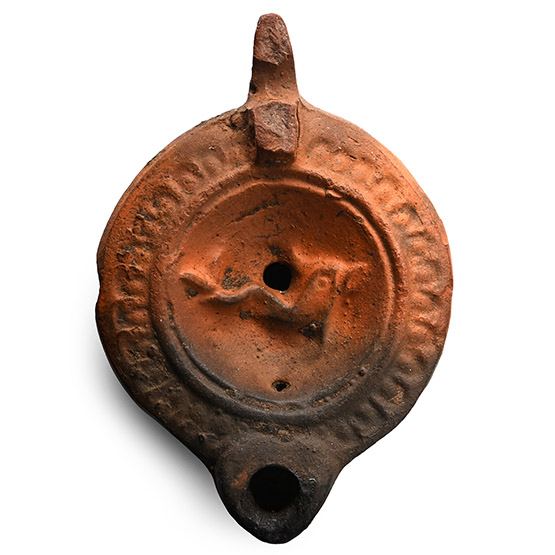
Roman Terracotta Oil Lamp with Dolphin
2nd century A.D.Sold for (Inc. bp): £182
Discoid in plan with short D-shaped nozzle, loop handle (top absent), discus with low-relief image of a dolphin; shoulder with radiating scales; base marked off with a circular groove. 46.3 grams, 89 mm
From the Lloyd and Jeanne Raport collection, Washington, D.C. and Florida, USA, formed between 1972-2000. Acquired through Bonhams, London, UK. -
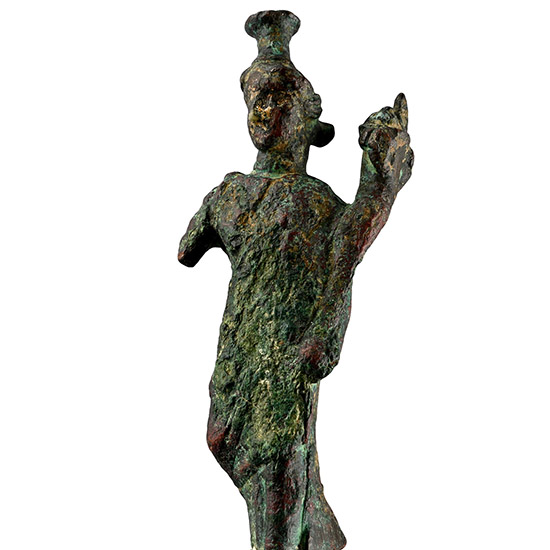
Roman Bronze Statue of Demeter with Cornucopia
1st-3rd century A.D.Estimate: £300 - 400 (+bp*)
Opening Bid: £150
Modelled in the round standing with legs advancing, left arm cradling a cornucopia; hair drawn back in a chignon, surmounted by a modius; attachment loop below feet. 145 grams, 10.5 cm
Acquired before 1990. Ex London gallery, 1990s. Private collection, London, UK.
The Roman Empire was one of the most powerful and influential civilisations of the ancient world, lasting for many centuries. It is known for its impressive cities, roads, engineering, art, and military strength, as well as its system of law and government. At its height, the empire brought together many different cultures, and its ideas and achievements continued to shape Europe and the wider world long after its fall. -
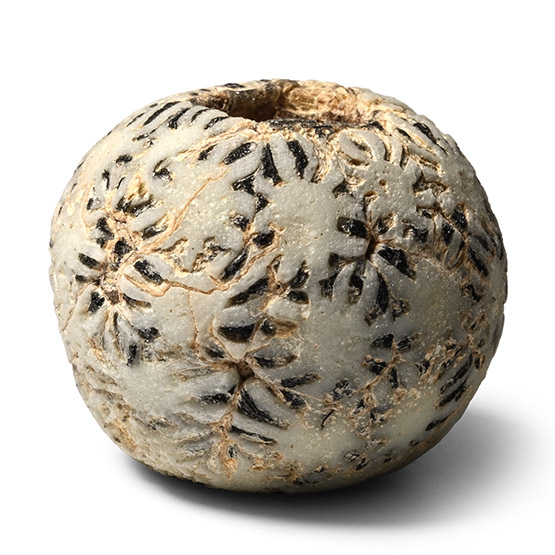
Roman Glass Bead with Millefiore Stars
1st-3rd century A.D.Sold for (Inc. bp): £59
Spherical in form with wide perforation; millefiore star designs in the glass surface. 16.34 grams, 25 mm
London collection, 1979-1983.
