
Loading, please wait...
LOT 0793
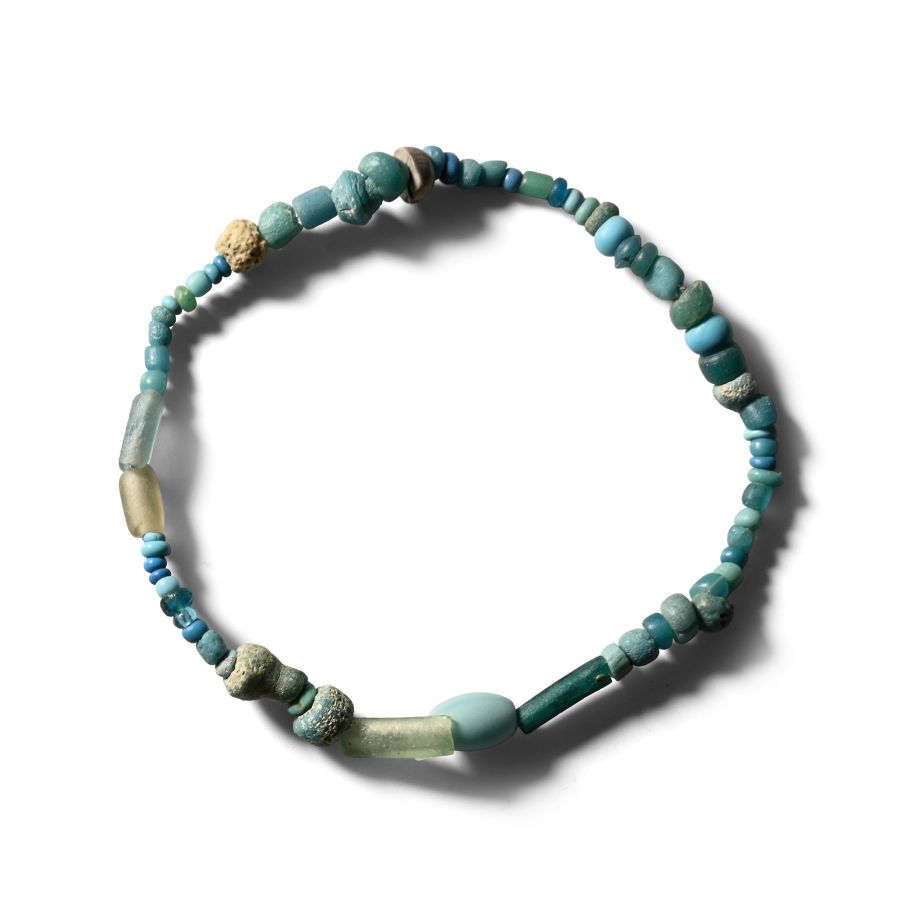
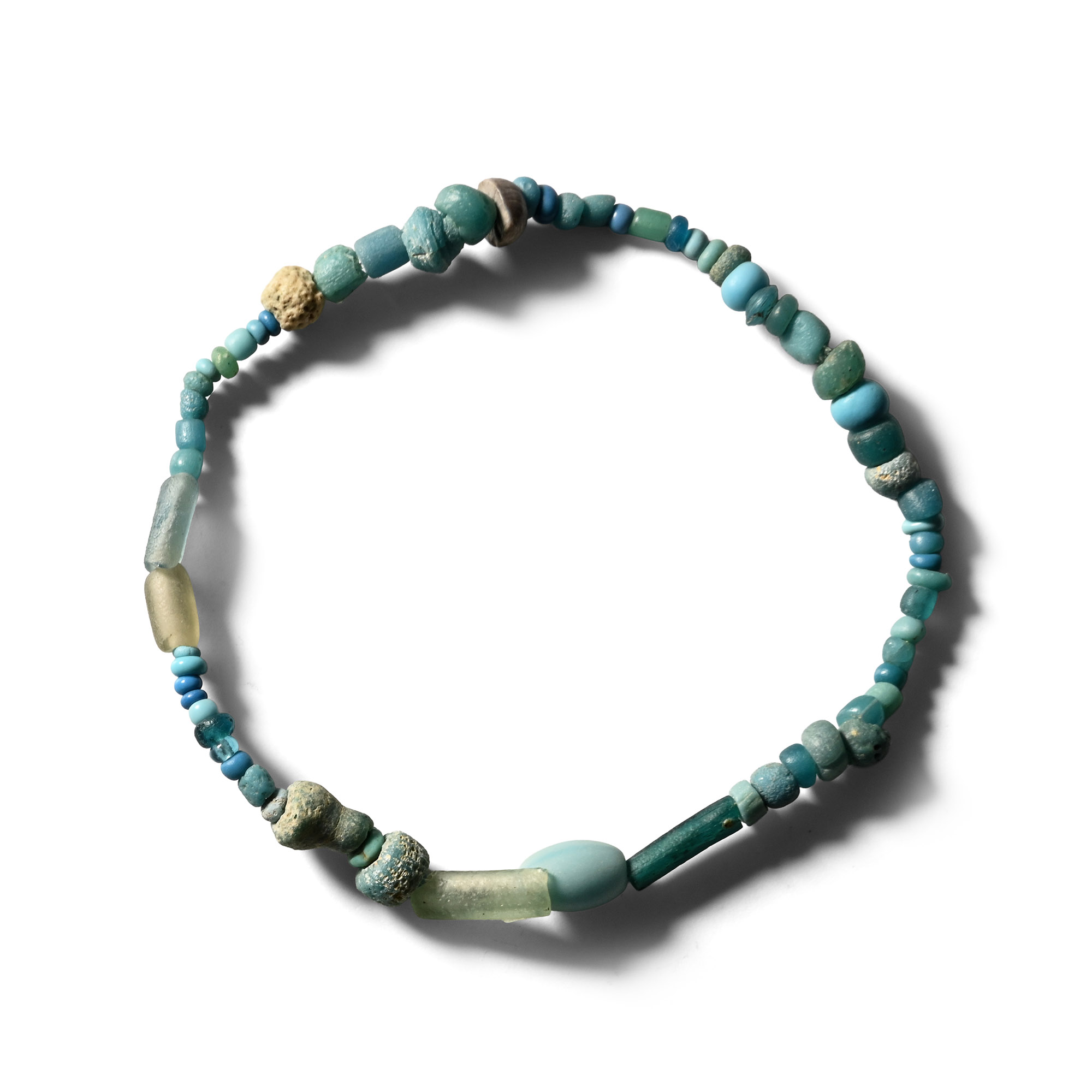
Roman Pale Blue Glass Bead Bracelet
1ST-4TH CENTURY A.D. AND LATER
6 3/4 in. (3.53 grams, 17 cm).
Composed mainly of pale blue and pale green beads with some larger feature beads, restrung with an elasticated string. [No Reserve]
ProvenanceEx Ancient Art Shop, Windsor, UK, 1990s.
Ex private collection.
TimeLine Auctions follows a vetting process to ensure the authenticity and legality of all items, reinforcing our commitment to integrity and responsible trading. Each antiquity, antique, and coin lot undergoes thorough examination by a vetting committee of at least ten external specialists, professional trade association members, scientists, and archaeologists: Our Vetting Process
AUCTIONS:
TimeLine is a leading auction house specialising in antiquities, ancient art, collectables, natural history, coins, medals, and books. Our auctions offer museums, collectors, historians, and enthusiasts the opportunity to acquire unique and historically significant pieces.
-
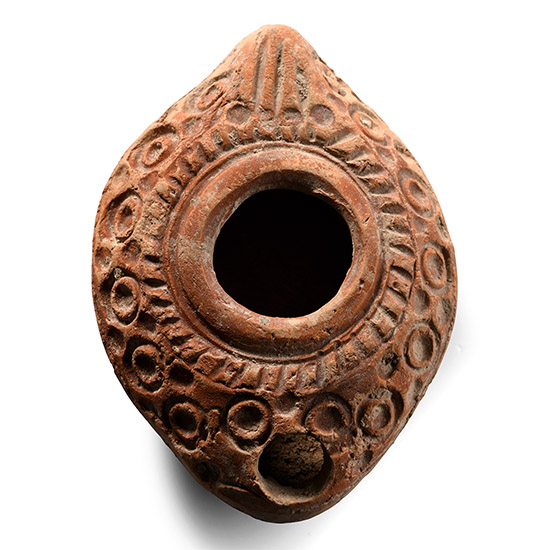
Roman Ovoid Lamp with Annular Decoration
Holy Land, circa 3rd-4th century A.D.Sold for (Inc. bp): £46
Low body with a large filler hole and ribbed thumb-pad, the body decorated with low-relief annulets. 59 grams, 81 mm
Ex Ancient Art Shop, Windsor, UK, 1990s. Ex private West County, UK, collection. -
.jpg)
Three Roman Gemstones in a Gold Ring
1st-2nd century A.D.Sold for (Inc. bp): £4,680
Featuring three intaglios: on the left, a carnelian intaglio of Minerva holding a winged figure of Victory in her hand, shield and spear on the field; at the centre, a green plasma intaglio of Omphale with club and lionskin; at the far right, a carnelian intaglio of a cupid stirring a bucket with a stick, a rare motif; set in a later Georgian-style gold ring. 8.92 grams, 25.35 mm overall, 19.62 x 17.86 mm internal diameter (approximate size British O 1/2, USA 7 1/4, Europe 15.61, Japan 15)
Acquired on the European art market. This lot has been checked against the Interpol Database of stolen works of art and is accompanied by search certificate number no.13364-257949.
Gems decorated with depictions of main deities of the Roman pantheon include gems with portraits of Jupiter or Jupiter Nikephoros, goddess Athena-Minerva or Minerva Romae, patron of Rome, Mars as Mars Ultor or Victor Tropaeophoros, and Victoria, goddess of victory. -
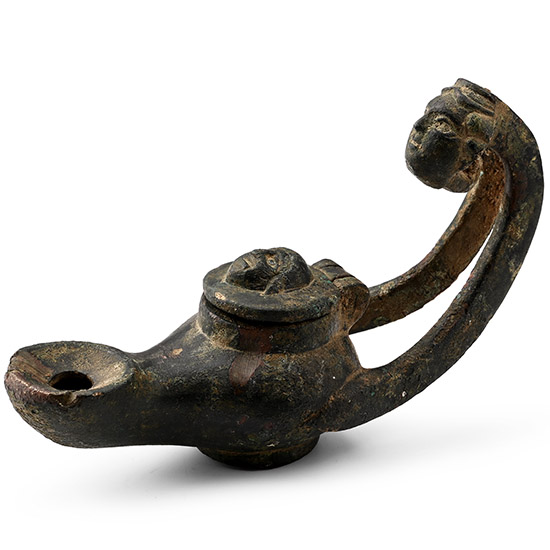
Roman Bronze Oil Lamp with Masks
1st-2nd century A.D.Sold for (Inc. bp): £1,170
With an elongated body, long nozzle with a rounded tip; raised rim to filling hole with hinged lid bearing a mask with sockets to the eyes for silver inserts; handle curved and terminating in a female mask with hair dressed in tiers, eyes recessed to be inlaid with silver; broad nozzle with cup and raised rim; socket to underside for mounting on a stand. 560 grams, 15.5 cm
From the collection of a gentleman, acquired on the London art market in the 1990s.
The lamp is crafted in a very fine style, probably in a classical form from the 1st or 2nd century. It belongs to a type known and widespread in the Mediterranean, with parallels in Paris, Madrid, the museums of Cadiz, Tarragona, and Aquileia.
