
Loading, please wait...
_900x900.jpg "Roman Pale Amethyst Gemstone with Bust of the God Silenus")
_200x200.jpg "Roman Pale Amethyst Gemstone with Bust of the God Silenus")
.jpg "Roman Pale Amethyst Gemstone with Bust of the God Silenus")
LOT 0011
Roman Pale Amethyst Gemstone with Bust of the God Silenus
1ST CENTURY A.D.
3/8 in. (0.39 grams, 11 mm).
Incuse profile bust of Silenus with full beard and bald head; below, gnarled walking stick made from a vine; supplied with a museum-quality impression.
ProvenancePrivate English collection, formed between the late 1970s and early 1990s.
Private collection, London, UK.
TimeLine Auctions follows a vetting process to ensure the authenticity and legality of all items, reinforcing our commitment to integrity and responsible trading. Each antiquity, antique, and coin lot undergoes thorough examination by a vetting committee of at least ten external specialists, professional trade association members, scientists, and archaeologists: Our Vetting Process
AUCTIONS:
TimeLine is a leading auction house specialising in antiquities, ancient art, collectables, natural history, coins, medals, and books. Our auctions offer museums, collectors, historians, and enthusiasts the opportunity to acquire unique and historically significant pieces.
LOT 0011
Roman Pale Amethyst Gemstone with Bust of the God Silenus
Sold for (Inc. bp): £1,300
-
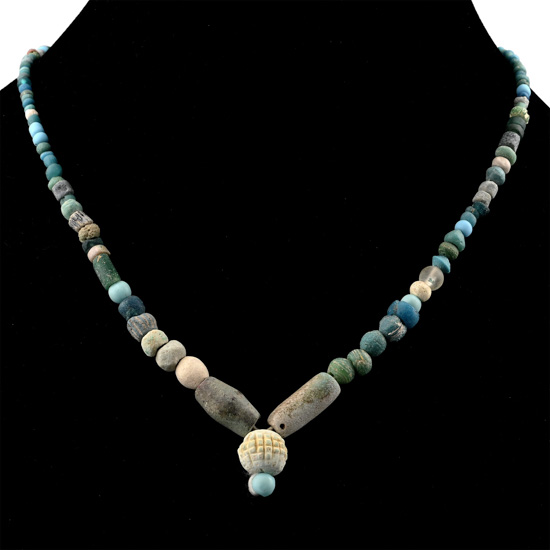
Roman Glass and Other Bead Necklace String
1st-4th century A.D. and laterSold for (Inc. bp): £72
A restrung designer necklace composed of graduated beads with larger beads as a central feature. 16.56 grams, 38.7 cm
From London, UK, gallery collection, 1990s. -
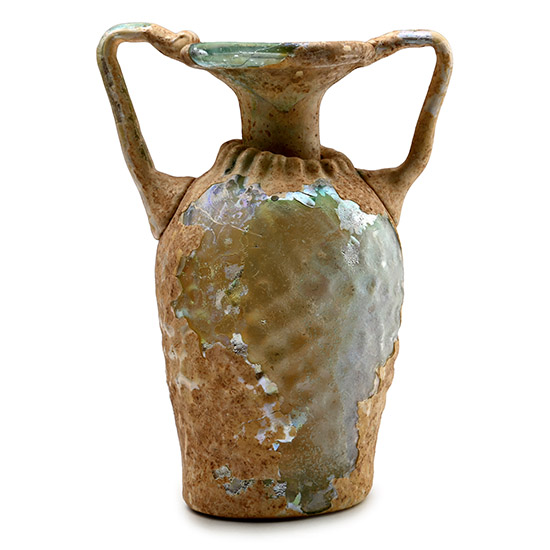
Roman Glass Two-Handled Jar
Circa 1st-4th century A.D.Estimate: £400 - 600 (+bp*)
Opening Bid: £200
With mould-blown tubular body decorated with raised ribs to the shoulder and impressed honeycomb effect to the sidewall, pontil base; milky patination and iridescent surface. 58 grams, 11cm
From a London, UK, collection of glass, 1970-2000s. -
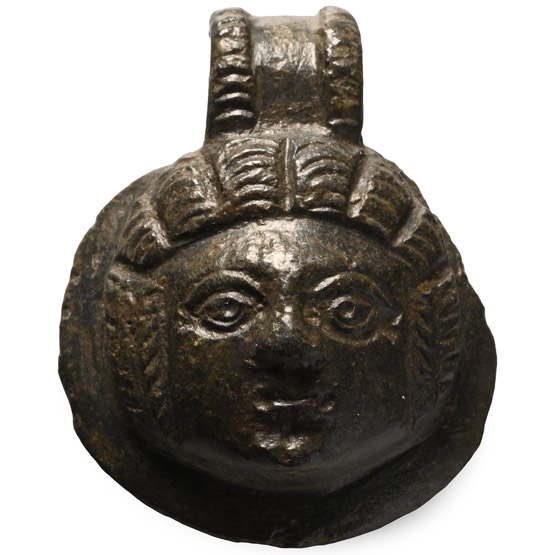
Roman Bronze Bowl Mount with Face
1st-2nd century A.D.Sold for (Inc. bp): £65
Discoid in plan and domed in profile with facing mask and strap above with lateral ribs. 9.8 grams, 30 mm
Found Norfolk, UK.
