
Loading, please wait...
LOT 0621
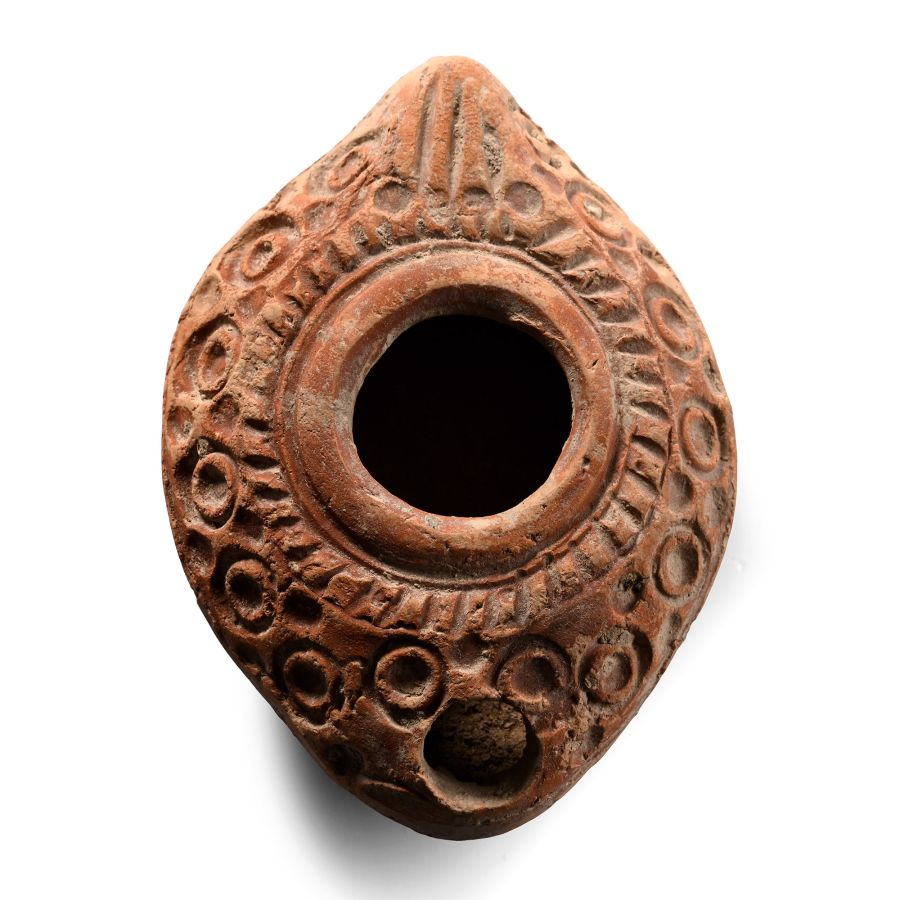
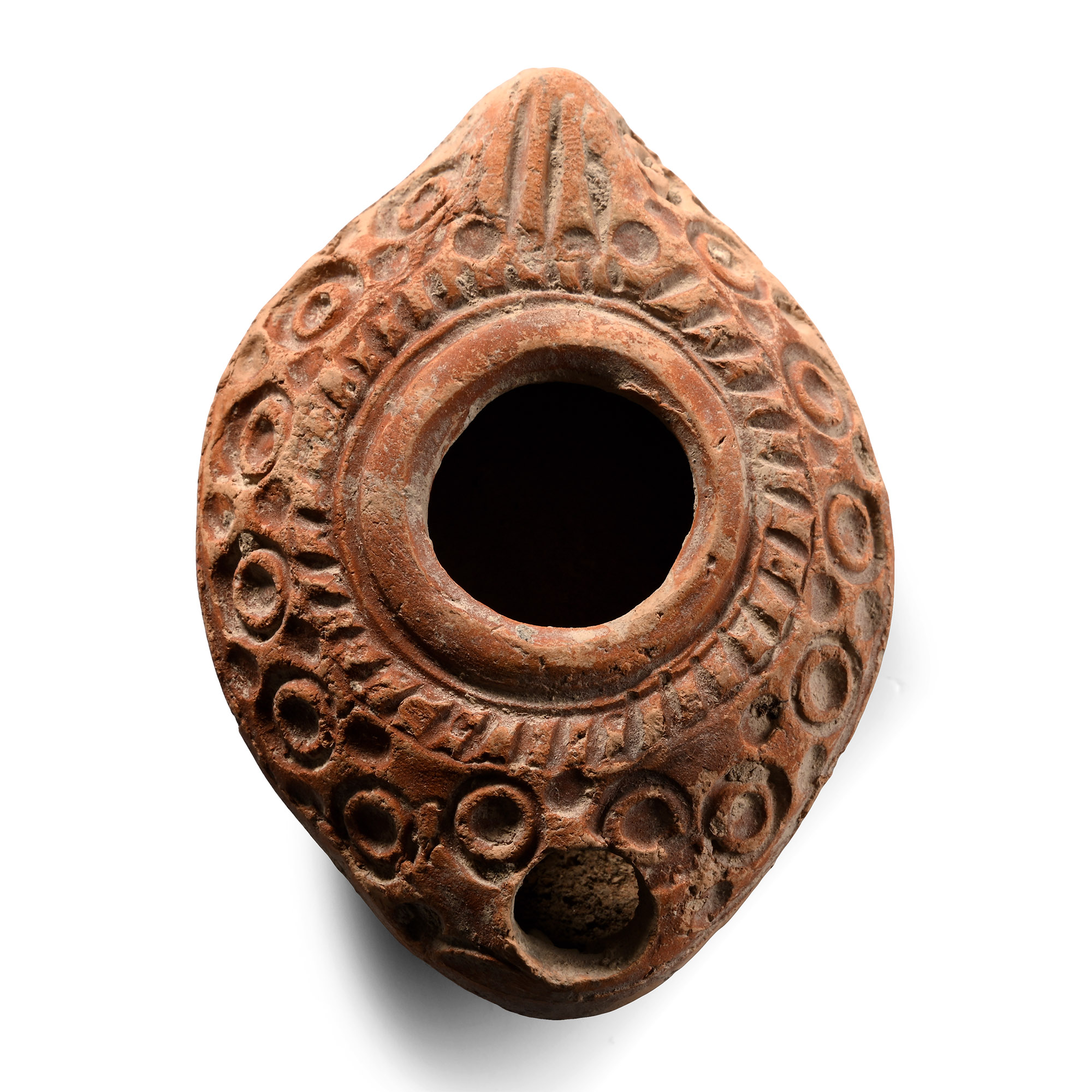
Roman Ovoid Lamp with Annular Decoration
HOLY LAND, CIRCA 3RD-4TH CENTURY A.D.
3 1/4 in. (59 grams, 81 mm).
Low body with a large filler hole and ribbed thumb-pad, the body decorated with low-relief annulets. [No Reserve]
ProvenanceEx Ancient Art Shop, Windsor, UK, 1990s.
Ex private West County, UK, collection.
Cf. Rosenthal R., Sivan, R., Ancient Lamps in the Schloessinger Collection, Jerusalem, 1978, no.450, p.111, for the type.
CONDITIONTimeLine Auctions follows a vetting process to ensure the authenticity and legality of all items, reinforcing our commitment to integrity and responsible trading. Each antiquity, antique, and coin lot undergoes thorough examination by a vetting committee of at least ten external specialists, professional trade association members, scientists, and archaeologists: Our Vetting Process
AUCTIONS:
TimeLine is a leading auction house specialising in antiquities, ancient art, collectables, natural history, coins, medals, and books. Our auctions offer museums, collectors, historians, and enthusiasts the opportunity to acquire unique and historically significant pieces.
-
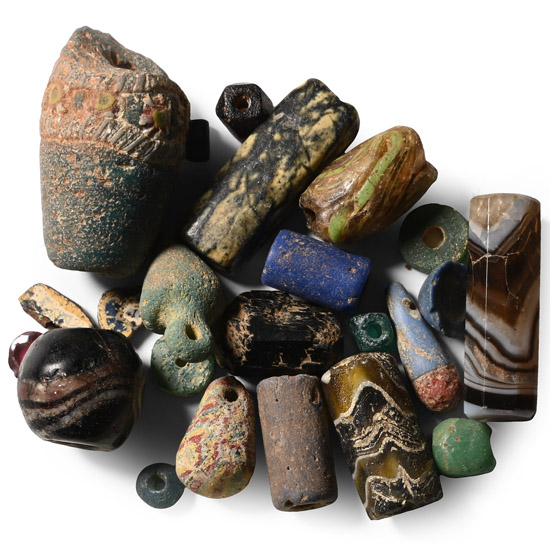
Roman Glass and Stone Bead and Pendant Collection
1st-4th century A.D. and laterSold for (Inc. bp): £208
Mixed group including cylindrical, spherical, teardrop-shaped, conical and other types. 31.2 grams total, 4-26 mm
From the private collection of a European gentleman (1942-2024), formed since the 1970s. -
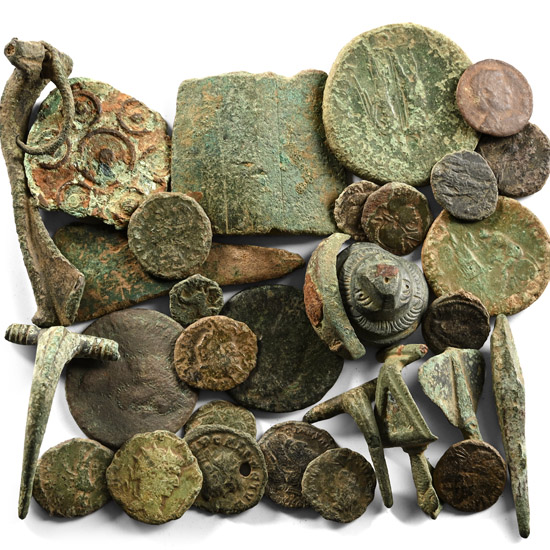
Bronze Age and Roman Artefacts and Coins
1st-4th century A.D.Sold for (Inc. bp): £169
Mixed group of items including a sestertius, brooch fragments, a large plate brooch fragment, a lion face mount, coins, and others. 183 grams total, 10-57 mm
Found Suffolk, UK. N.B. This lot is for UK buyers only. -
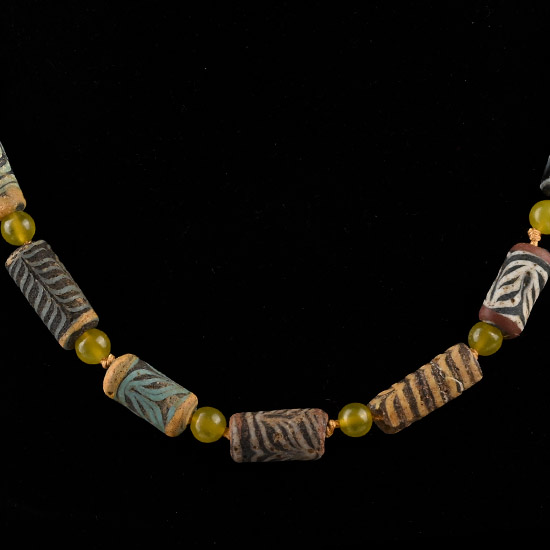
Roman Polychrome Glass Bead Necklace
3rd-4th century A.D.Estimate: £350 - 450 (+bp*)
Opening Bid: £158
Designer necklace composed of cylindrical glass beads with dragged trails, alternating with later spherical beads, hook-and-loop closure, restrung. 66 grams, 58 cm
London, UK gallery, 1971-early 2000s. Private collection, London, UK.
