
Loading, please wait...


LOT 0955
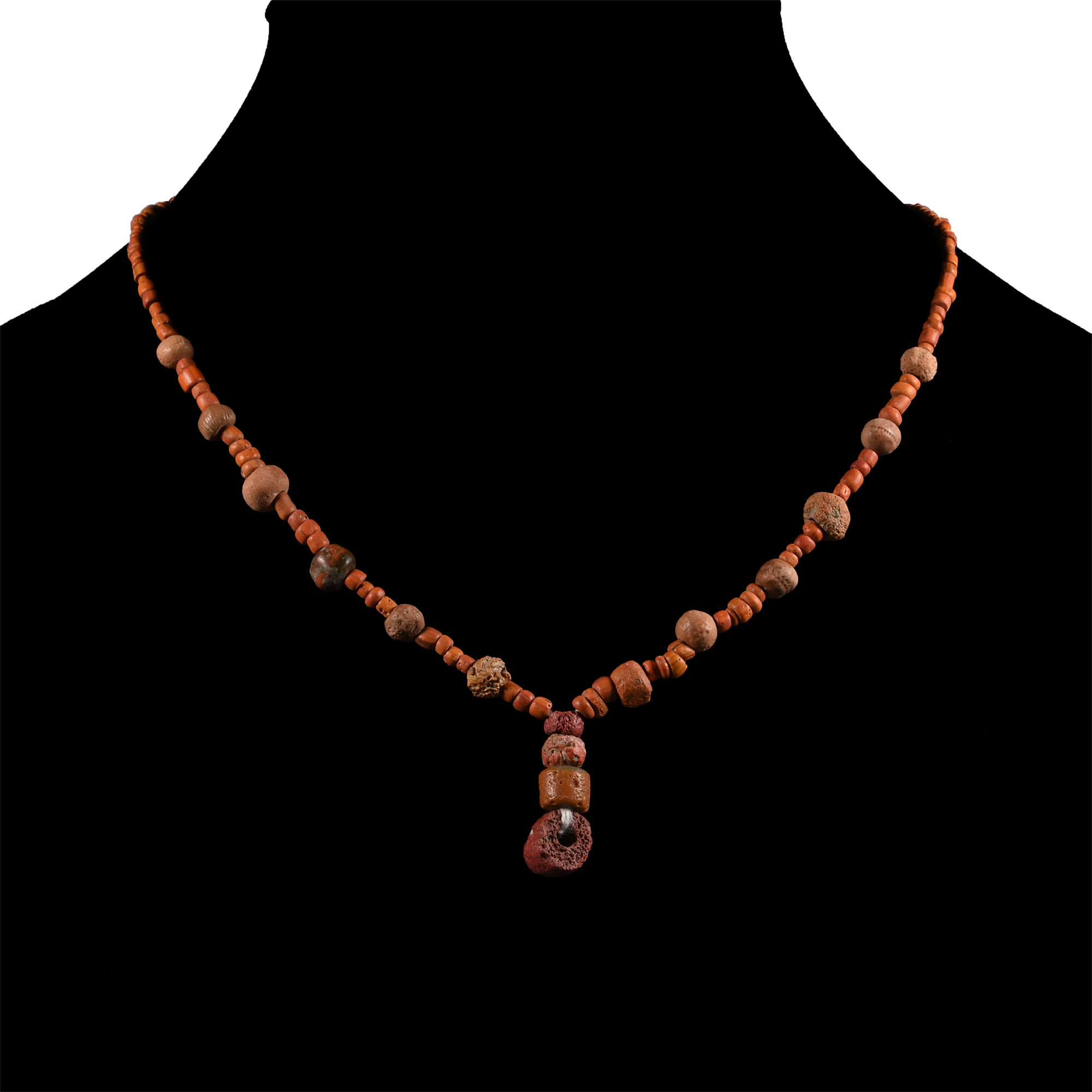
Roman Orange Glass Bead Necklace String
1ST-4TH CENTURY A.D. AND LATER
14 1/8 in. (13.3 grams, 36 cm).
Composed of annular beads interspersed with larger oblate beads; restrung to a Y-shape. [No Reserve]
ProvenanceAcquired 1980-2015.
Ex Abelita family collection.
This lot is accompanied by an illustrated lot declaration signed by the Head of the Antiquities Department, Dr Raffaele D’Amato.
TimeLine Auctions follows a vetting process to ensure the authenticity and legality of all items, reinforcing our commitment to integrity and responsible trading. Each antiquity, antique, and coin lot undergoes thorough examination by a vetting committee of at least ten external specialists, professional trade association members, scientists, and archaeologists: Our Vetting Process
AUCTIONS:
TimeLine is a leading auction house specialising in antiquities, ancient art, collectables, natural history, coins, medals, and books. Our auctions offer museums, collectors, historians, and enthusiasts the opportunity to acquire unique and historically significant pieces.
-
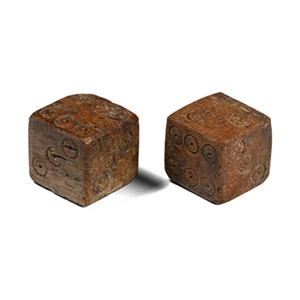
Roman Bone Dice Pair
1st-4th century A.D.Sold for (Inc. bp): £234
Each cuboid with ring-and-dot markings disposed 1:6, 2:5, 3:4. 6.66 grams total, 12.7-12.9 mm
Ex German art market, 2000s. Acquired from an EU collector living in London. From the collection of Surrey, UK, gentleman. This lot is accompanied by an illustrated lot declaration signed by the Head of the Antiquities Department, Dr Raffaele D’Amato. -
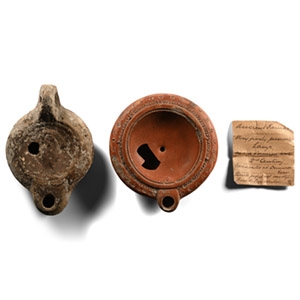
Roman Terracotta Oil Lamp Group
Circa 2nd century A.D.Sold for (Inc. bp): £130
Comprising: one in greyware with broad shoulder, facing mask to the discus; one squat with beaded rim to the discus, old collector's note 'Ancient Roman / very finely preserved lamp / in red "Samian" ware / 2nd century / Excavated at Dunnour Essex / Quite perfect + of rare style / From the Page collection'. 145 grams total, 9.9-10.7 cm
Believed to have been part of the Duke of Northumberland collection. From an early 20th century collection with reference no.67/6. From a Hampshire, UK, private collection. Accompanied be an early 20th century inked information packet. This lot is accompanied by an illustrated lot declaration signed by the Head of the Antiquities Department, Dr Raffaele D’Amato. -
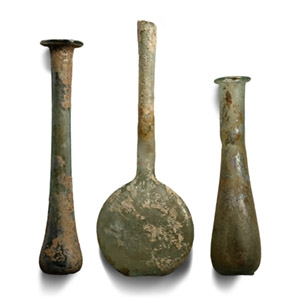
Roman Glass Vessel Group
1st-4th century A.D.Sold for (Inc. bp): £130
Comprising two small unguentaria with everted rim, a flask with discoid body. 43 grams total, 9.3-12.1 cm
Acquired from Ancient & Oriental, 1980s-1990s. Ian Wilkinson collection, Nottinghamshire, UK, formed since 1985. This lot is accompanied by an illustrated lot declaration signed by the Head of the Antiquities Department, Dr Raffaele D’Amato.
