
Loading, please wait...
_900x900.jpg "Roman Orange Agate Gemstone with Standing Figure")
_200x200.jpg "Roman Orange Agate Gemstone with Standing Figure")
.jpg "Roman Orange Agate Gemstone with Standing Figure")
LOT 0027
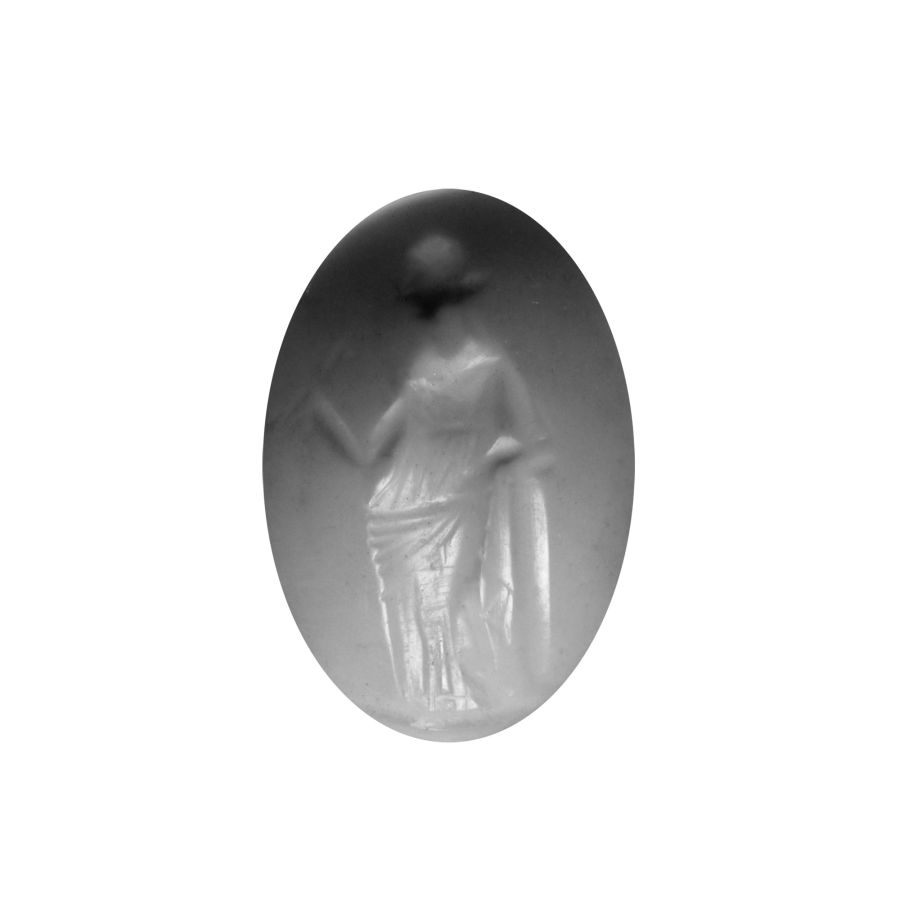
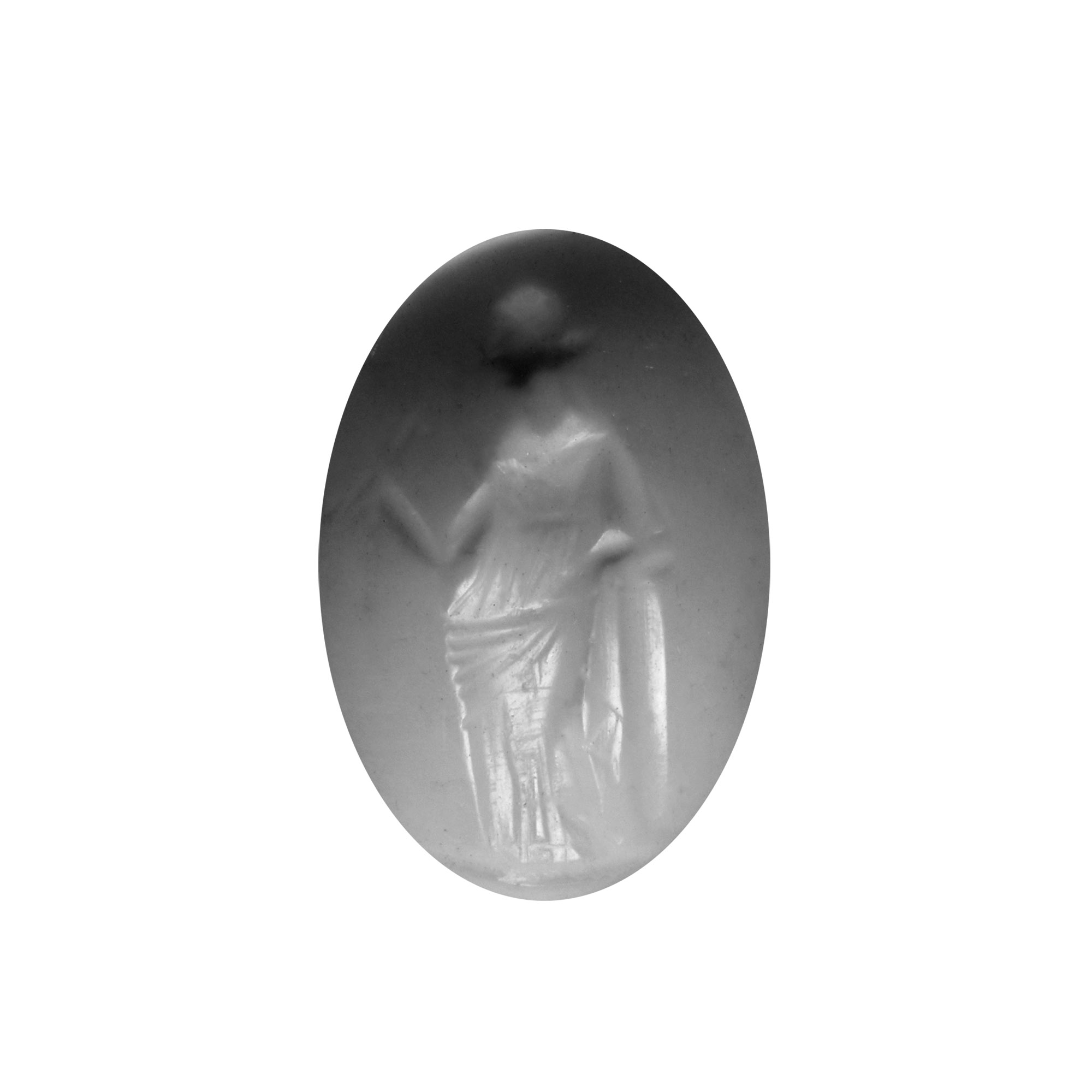
Roman Orange Agate Gemstone with Standing Figure
1ST CENTURY B.C.
1 in. (2.50 grams, 20.50 mm).
Cabochon with intaglio to the convex face, standing female figure with pillar to her rear, one hand raised holding a starburst; supplied with a museum-quality impression. [No Reserve]
ProvenanceFrom the private collection of a European gentleman (1942-2024), formed since the 1970s.
CONDITIONTimeLine Auctions follows a vetting process to ensure the authenticity and legality of all items, reinforcing our commitment to integrity and responsible trading. Each antiquity, antique, and coin lot undergoes thorough examination by a vetting committee of at least ten external specialists, professional trade association members, scientists, and archaeologists: Our Vetting Process
AUCTIONS:
TimeLine is a leading auction house specialising in antiquities, ancient art, collectables, natural history, coins, medals, and books. Our auctions offer museums, collectors, historians, and enthusiasts the opportunity to acquire unique and historically significant pieces.
-
.jpg)
Roman Bronze Statuette of a Wild Boar
1st-2nd century A.D.Sold for (Inc. bp): £910
Modelled in the round with ridge of bristles along the spine. 51.26 grams, 52 mm
UK private collection before 2000. Acquired on the UK art market. Private collection, London, UK. -
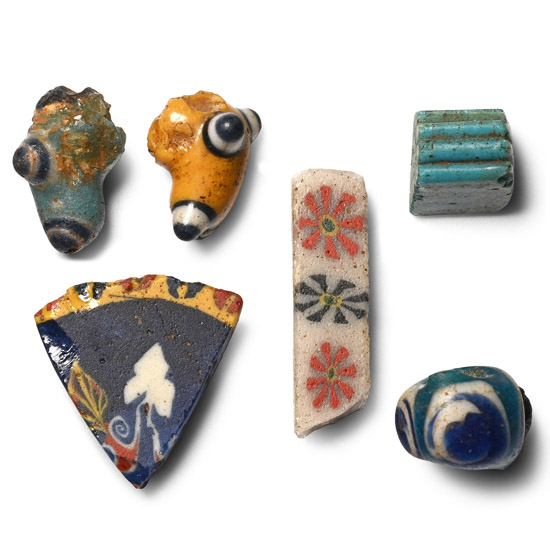
Roman Glass Inlay, Bead and Fragment Group
1st-4th century A.D.Sold for (Inc. bp): £390
A group of millefiori and lampwork beads and fragments, comprising: a polychrome mosaic glass fragment with leaf decoration and a banded yellow rim; a white mosaic glass inlay with red and black floral motifs; an oblate bead with 'eye' motifs; a turquoise-coloured thick inlay of four fingers with white nail detailing; a blue and a yellow shoe-shaped fragment with applied bosses. 5.48 grams total, 9-20 mm
Ex private Swiss collection. Acquired by Galerie Rhéa, Zurich, from the above in 2011. -
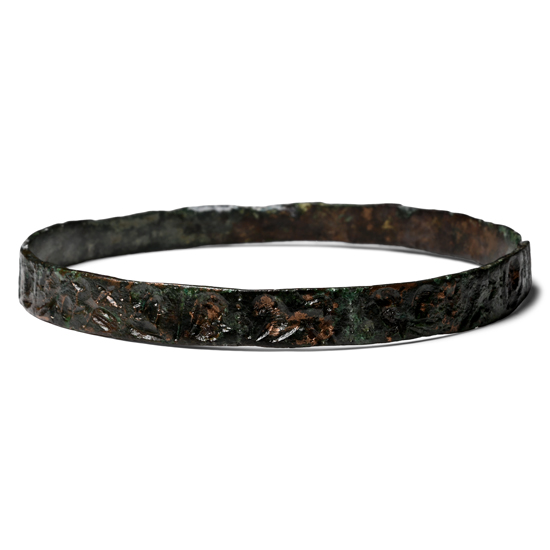
Roman Bronze Bracelet with Gladiatorial Busts and Animals
1st-2nd century A.D.Sold for (Inc. bp): £442
Flat-section penannular band with overlapping ends; outer face divided by rows of vertical points and populated with stamped figures including bird, horse, profile bust, lion and other motifs. 17.5 grams, 75 mm
From the private collection of a European gentleman (1942-2024), formed since the 1970s.
