
Loading, please wait...
LOT 0138
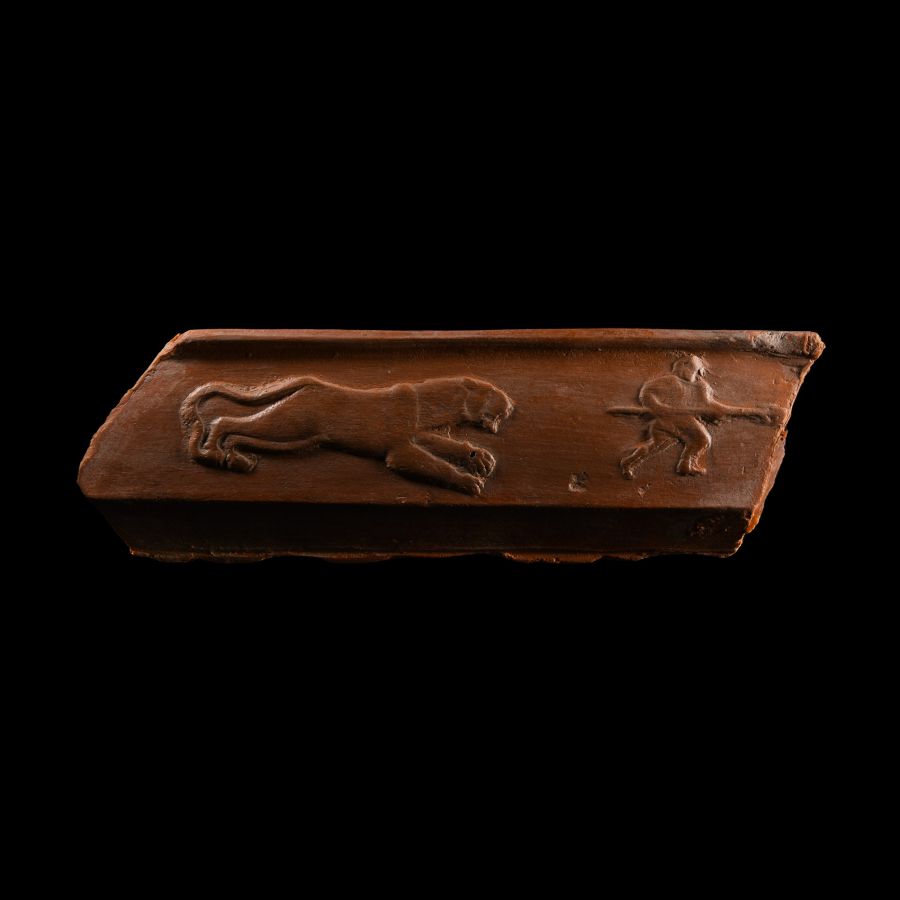
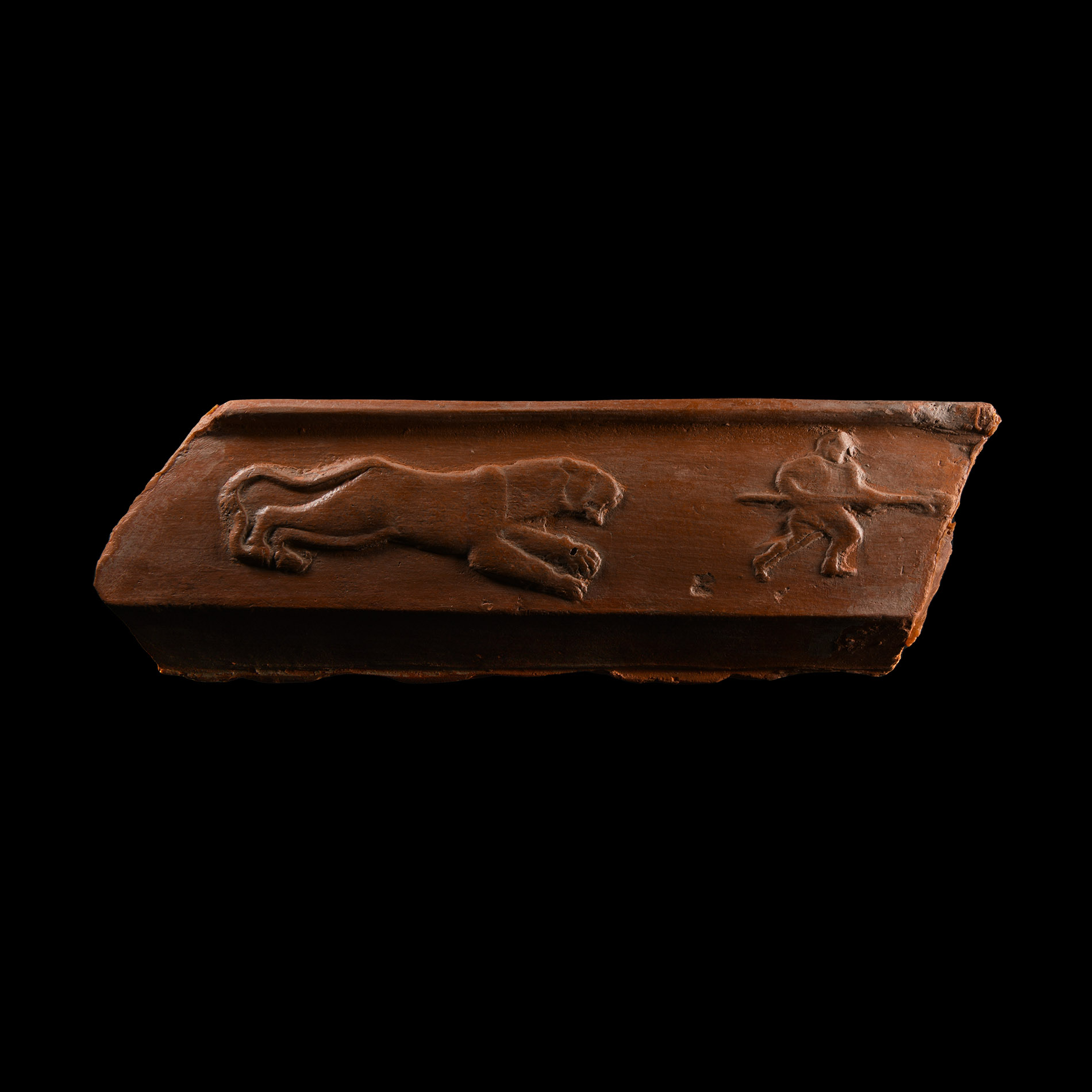
Roman North African Redware Shard with Lion and Bestiarius
4TH-5TH CENTURY A.D.
8 5/8 in. (274 grams, 22 cm).
Of fine deep red clay, thin smooth slip on top, a large lioness leaping to right towards a bestiarius (animal fighter) armed with a hunting spear.
ProvenanceAcquired 1960s-1990s.
Late Alison Barker collection, a retired London barrister.
Cf. Hayes, J.W., Roman Pottery in the Royal Ontario Museum,Toronto, 1976, fig.99, for a similar scene.
FootnotesPossibly representing a hunt in the circus, i.e. a gladiatorial combat where bestiarii or venatores attacked wild animals.
CONDITIONTimeLine Auctions follows a vetting process to ensure the authenticity and legality of all items, reinforcing our commitment to integrity and responsible trading. Each antiquity, antique, and coin lot undergoes thorough examination by a vetting committee of at least ten external specialists, professional trade association members, scientists, and archaeologists: Our Vetting Process
AUCTIONS:
TimeLine is a leading auction house specialising in antiquities, ancient art, collectables, natural history, coins, medals, and books. Our auctions offer museums, collectors, historians, and enthusiasts the opportunity to acquire unique and historically significant pieces.
LOT 0138
Roman North African Redware Shard with Lion and Bestiarius
Estimate £250 - 350€290 - 410 (for guidance only)$340 - 470 (for guidance only)
-
.jpg)
Roman Redware Fragment with Diana
4th-5th century A.D.Sold for (Inc. bp): £143
Curved ceramic fragment with high-relief image to the inner face, female in short-sleeved undergarment and outer stola draped over her head as a hood, holding a rod in her left hand and extending her right arm across her body. 19.6 grams, 63 mm
Acquired 1960s-1990s. From the late Alison Barker collection, a retired London barrister. -
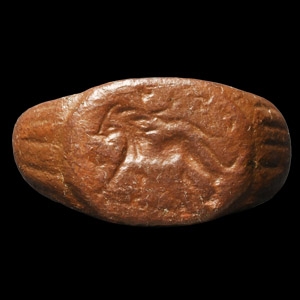
Roman Bronze Ring with Lion
Circa 2nd-4th century A.D.Sold for (Inc. bp): £46
The narrow hoop expanding at the fluted shoulders, oval bezel with intaglio image of an advancing lion with voluminous mane. 5.58 grams, 24.46 mm overall, 19.29 mm internal diameter (approximate size British M 1/2, USA 6 1/4, Europe 13.09, Japan 12)
From the collection of a High Wycombe, Buckinghamshire, UK, gentleman, circa 2000. -
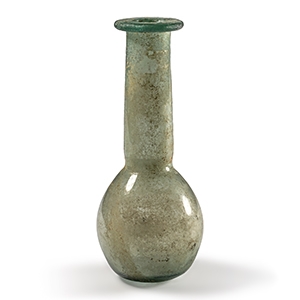
Roman Tall Pale Blue Glass Vial
3rd century A.D.Sold for (Inc. bp): £117
Bulbous with flat base, tall stem neck, splayed rim with an in-folded lip. 46 grams, 12.7 cm high
Acquired 1980-2015. Ex Abelita family collection.
During the early Roman period the glass-making techniques used by the Greeks were continued. Much of the glass was buried and as a result acquired an attractive lustrous patination. Roman glass became a medium for the promotion of the emperor and imperial propaganda, as well as having utilitarian purposes. Glass blowing, a new technique, meant that quantities of identical bottles could be produced.
