
Loading, please wait...
LOT 0156
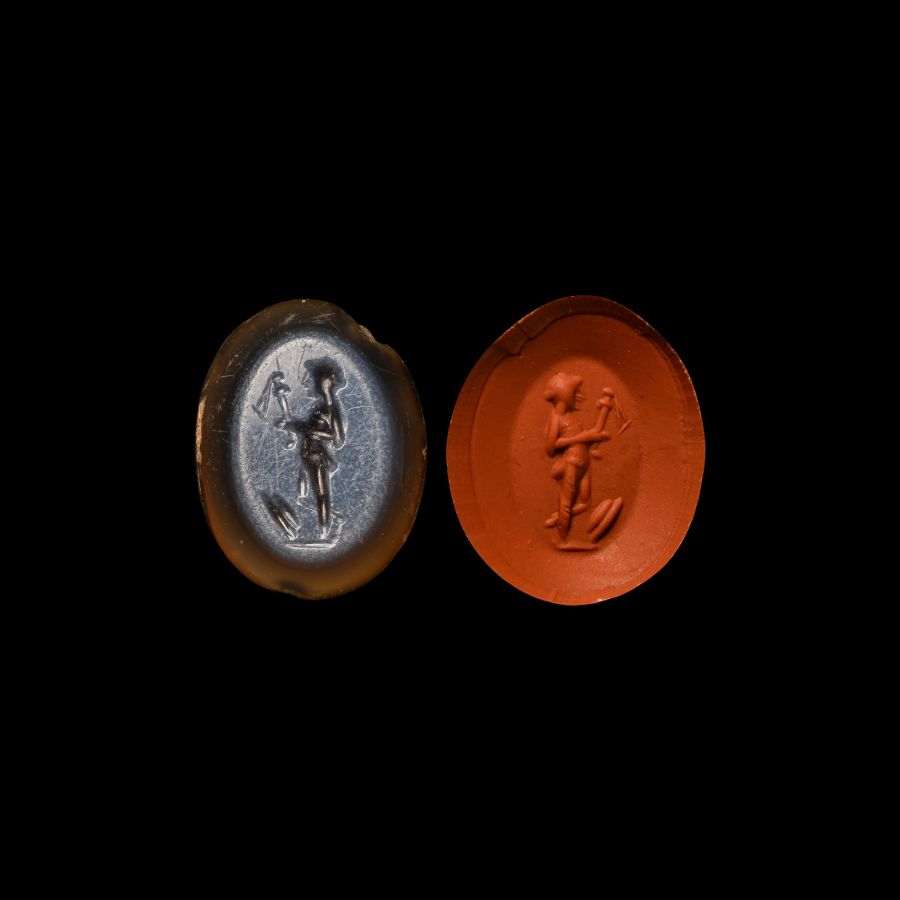
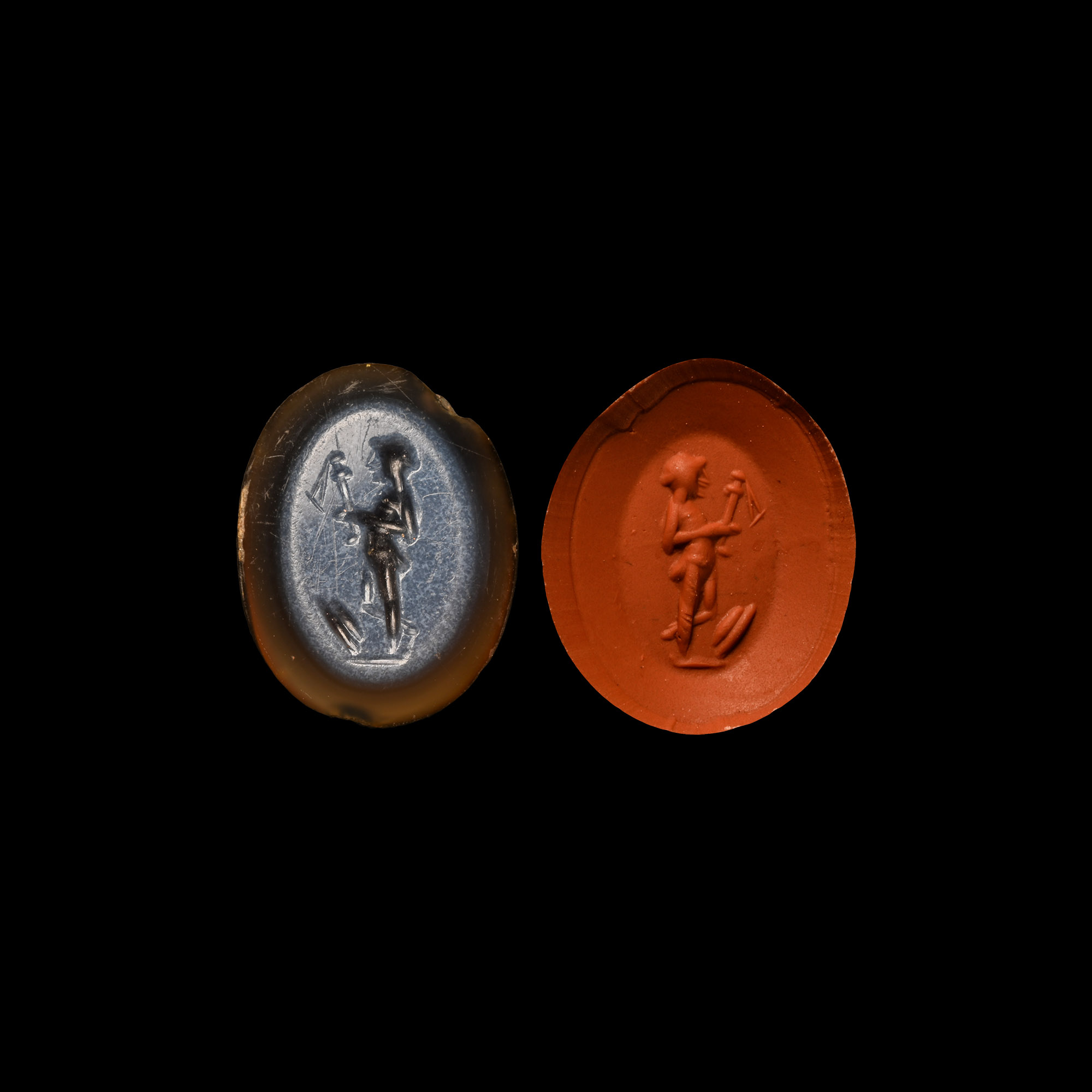
Roman Nicolo Gemstone with Theseus Holding Sword
3RD CENTURY A.D.
1/2 in. (1.08 grams, 15 mm).
The oval intaglio with nude youthful Theseus to left, holding a sword in sheath with belt for attachment.
ProvenanceAcquired in the late 1980s-early 1990s.
Important North West London collection.
Cf. Walters, H.B., Catalogue of Engraved Gems & Cameos, Greek, Etruscan & Roman in the British Museum, London, 1926, no.1909, for similar.
FootnotesTheseus was one of the greatest and most popular heroes of Greek mythology and is closely associated with the city-state of Athens. Theseus is also known for many other adventures: however, he is more famous for slaying the Minotaur at the Labyrinth of Crete.
CONDITIONTimeLine Auctions follows a vetting process to ensure the authenticity and legality of all items, reinforcing our commitment to integrity and responsible trading. Each antiquity, antique, and coin lot undergoes thorough examination by a vetting committee of at least ten external specialists, professional trade association members, scientists, and archaeologists: Our Vetting Process
AUCTIONS:
TimeLine is a leading auction house specialising in antiquities, ancient art, collectables, natural history, coins, medals, and books. Our auctions offer museums, collectors, historians, and enthusiasts the opportunity to acquire unique and historically significant pieces.
LOT 0156
Roman Nicolo Gemstone with Theseus Holding Sword
Estimate £800 - 1,000€930 - 1,160 (for guidance only)$1,080 - 1,350 (for guidance only)
-
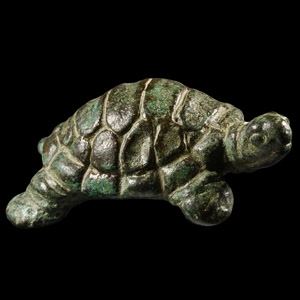
Roman Bronze Tortoise Figure
2nd-3rd century A.D.Sold for (Inc. bp): £910
Modelled in the round with semi-naturalistic detailing, head raised and turned slightly to the right. 30.1 grams, 37 mm
Ex UK private collection. Acquired at the London Coin Fair in the early 1990s. Property of a Buckinghamshire, UK, gentleman. -
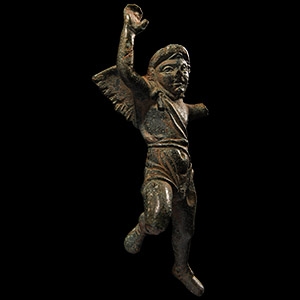
Large Gallo-Roman Bronze Statuette of Cupid
1st-3rd century A.D.Estimate: £5,000 - 7,000 (‡+bp*)
Opening Bid: £2,500
Modelled in the round leaping and winged, his right hand reaching above his head seemingly gesturing to retrieve arrows from a quiver once carried on his back, dressed in an exomis tunic leaving him naked below the torso, wearing a helmet or cap and ankle boots. 403 grams, 16 cm high
Acquired in Europe before 1994. Private collection, Europe. Accompanied by an academic report by Dr Raffaele D’Amato. This lot has been checked against the Interpol Database of stolen works of art and is accompanied by search certificate no.11808-206795.
Often the statues of Puttos or amorini (small loves) depicting personifications of Eros were covered with gold leaf. This was a frequent practice and the figures, when represented with wings, were known as chrysopteroi, meaning 'with golden wings'. -
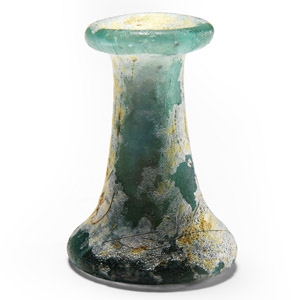
Roman Glass Cotton-Reel Type Bottle
1st century A.D.Estimate: £100 - 140 (+bp*)
Opening Bid: £40
A heavy squat unguentarium or perfume flask with tall, trumpet-style neck and everted rim. 20.2 grams, 42 mm
Acquired 1980-2015. Ex Abelita family collection.
