
Loading, please wait...
LOT 0719
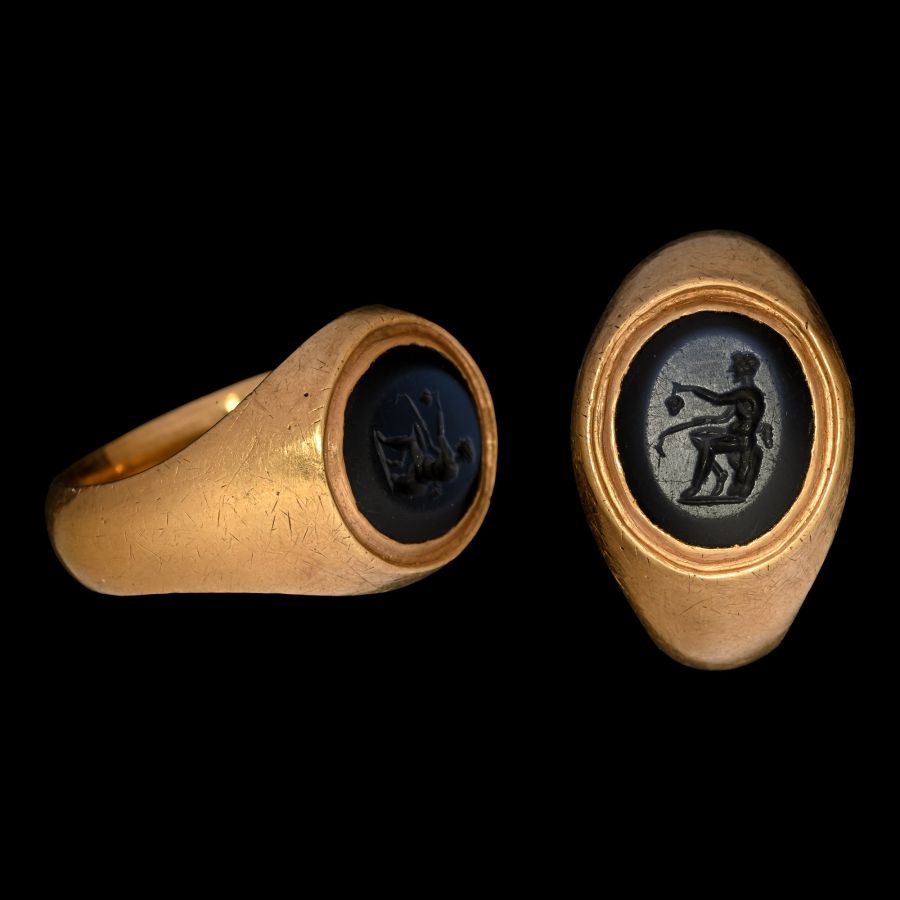
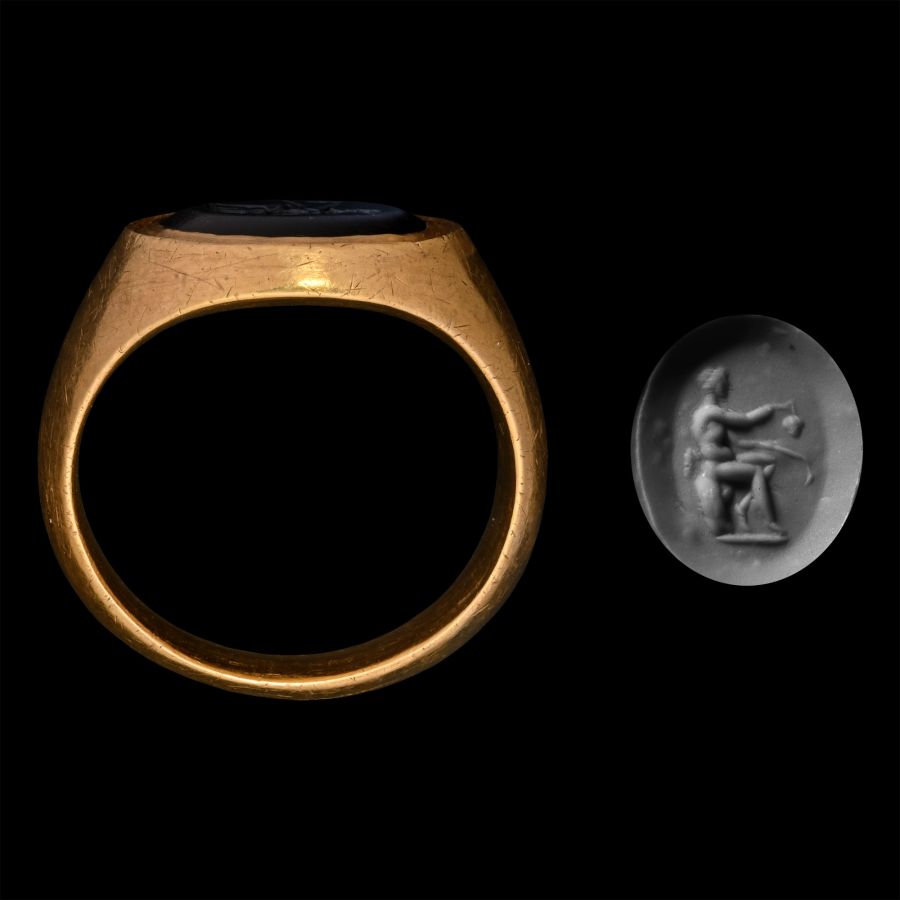
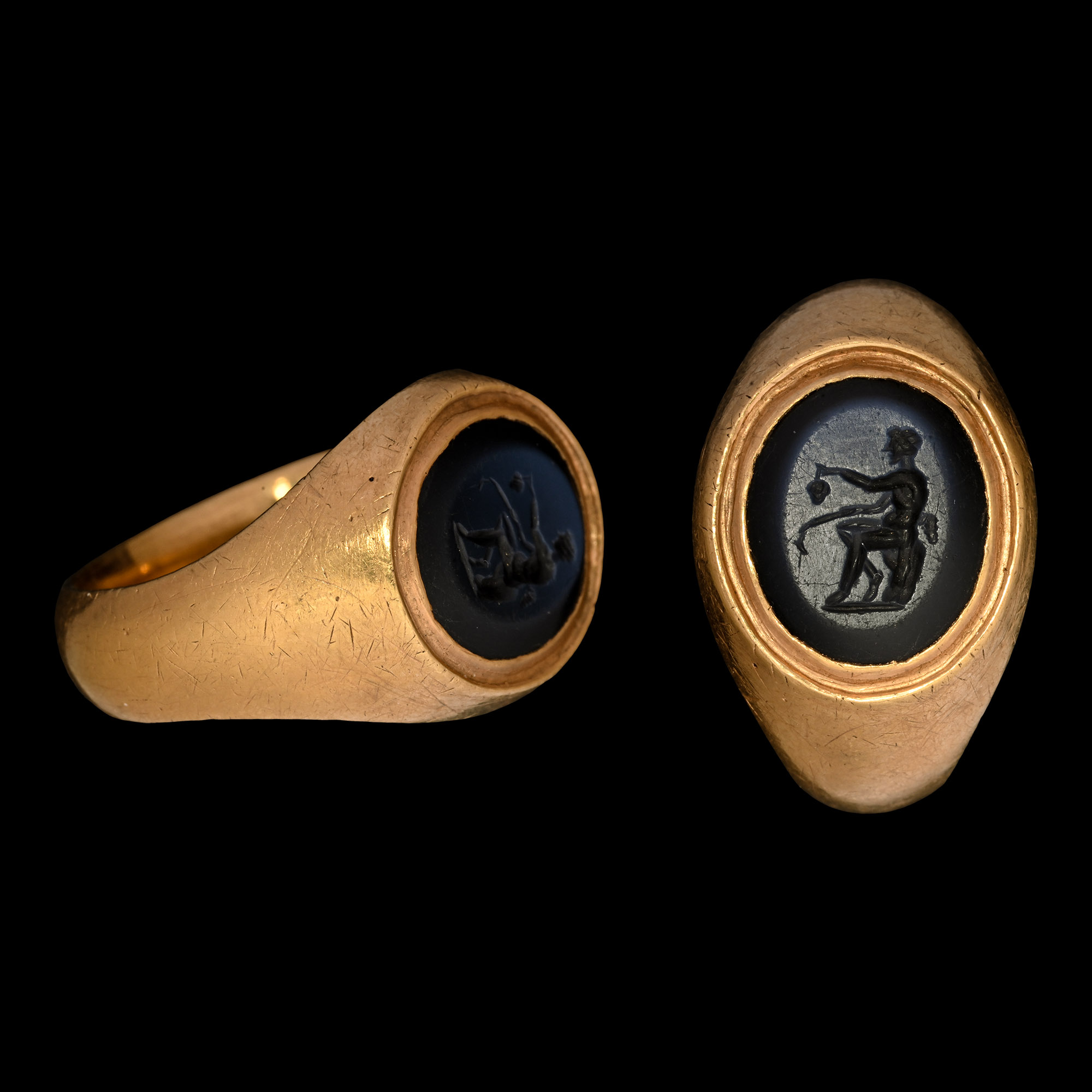
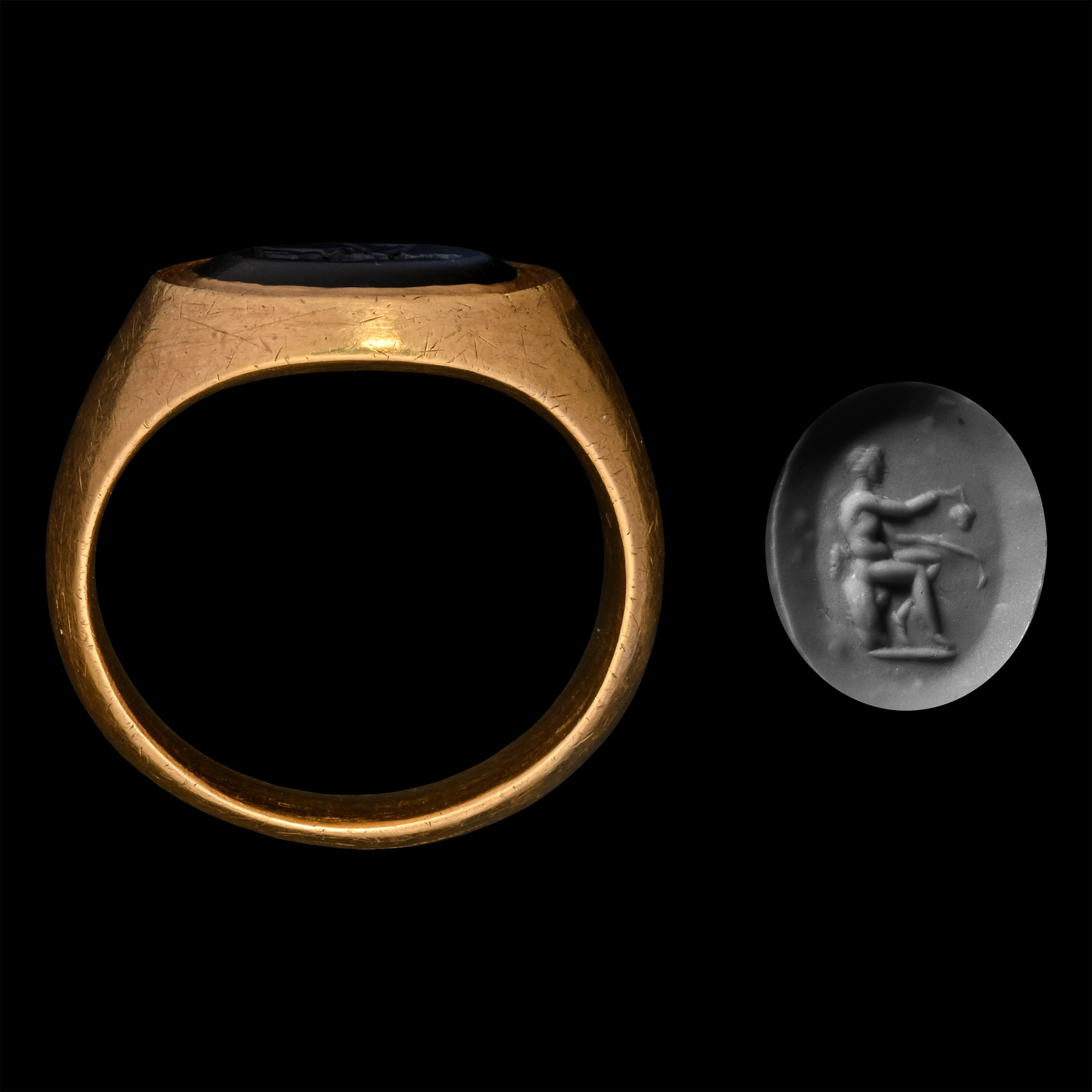
Roman Nicolo Gemstone with Seated Satyr in Gold Ring
1ST-2ND CENTURY A.D.
1 in. (22.47 grams, 25.33 mm overall, 20.60 mm internal diameter (approximate size British R, USA 8 1/2, Europe 18 3/4, Japan 18)).
With incuse profile satyr seated on a rock, with cane in his lap; set into a later gold ring; supplied with a museum-quality impression.
Provenancewith Bertolami Fine Arts, London, Auction 267, no.109.
Private collection, England.
TimeLine Auctions follows a vetting process to ensure the authenticity and legality of all items, reinforcing our commitment to integrity and responsible trading. Each antiquity, antique, and coin lot undergoes thorough examination by a vetting committee of at least ten external specialists, professional trade association members, scientists, and archaeologists: Our Vetting Process
AUCTIONS:
TimeLine is a leading auction house specialising in antiquities, ancient art, collectables, natural history, coins, medals, and books. Our auctions offer museums, collectors, historians, and enthusiasts the opportunity to acquire unique and historically significant pieces.
-

Roman Bronze 'Money' Box with Cross
4th century A.D.Estimate: £2,500 - 3,500 (‡+bp*)
Opening Bid: £1,350
Hollow-formed model male head with aperture to underside; with short beard and incised cross fourchée to the brow. 89 grams, 54 mm
German private collection, 1980s. with Artemis Gallery, 1990s. Private collection, acquired in 1999. This lot has been checked against the Interpol Database of stolen works of art and is accompanied by a search certificate number no.12866-241640. -
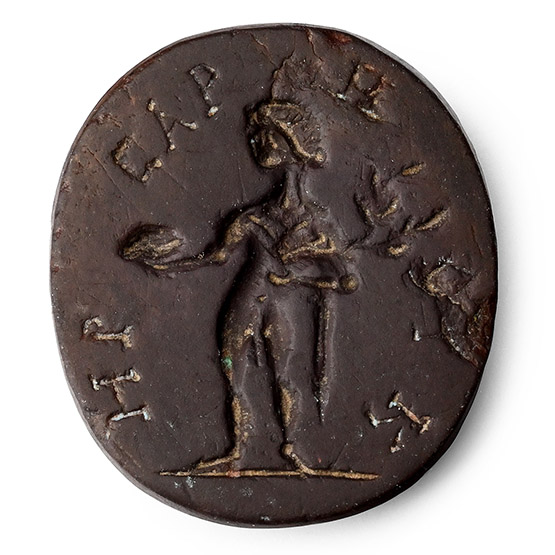
Late Roman Gnostic Hematite Gemstone with Standing Figure
3rd century A.D.Estimate: £800 - 1,000 (‡+bp*)
Opening Bid: £400
Discoid with chamfered edge, standing youth on a baseline with patera in one hand, sword at his hip, enigmatic legend above 'HICAPH[.]K'; supplied with a museum-quality impression. 3 grams, 20 mm
Acquired in 1994. Private collection, thence by descent. Private collection, since the late 1990s. This lot has been checked against the Interpol Database of stolen works of art and is accompanied by a search certificate number no.12867-241734. -

Roman and Other Blue Glass Bead Necklace String
1st-4th century A.D. and laterSold for (Inc. bp): £59
Composed of small annular beads with larger beads as a central feature; restrung with a clasp. 7.29 grams, 45.5 cm
From London, UK, gallery collection, 1990s.
