
Loading, please wait...
LOT 0111
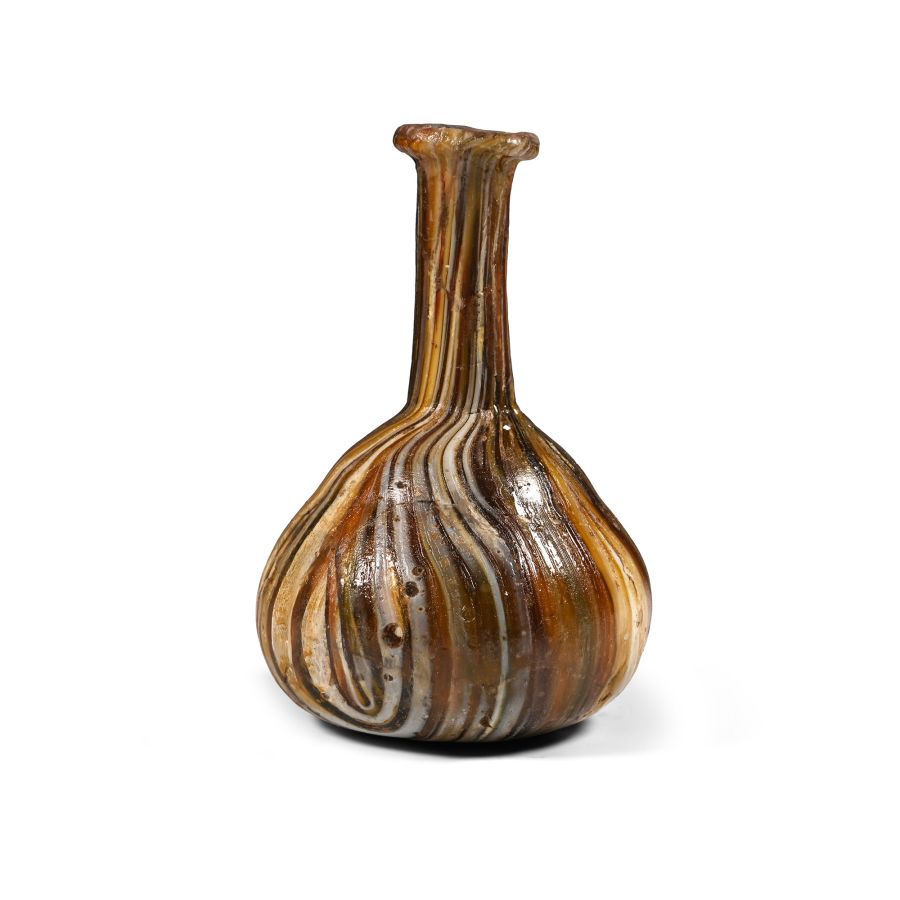
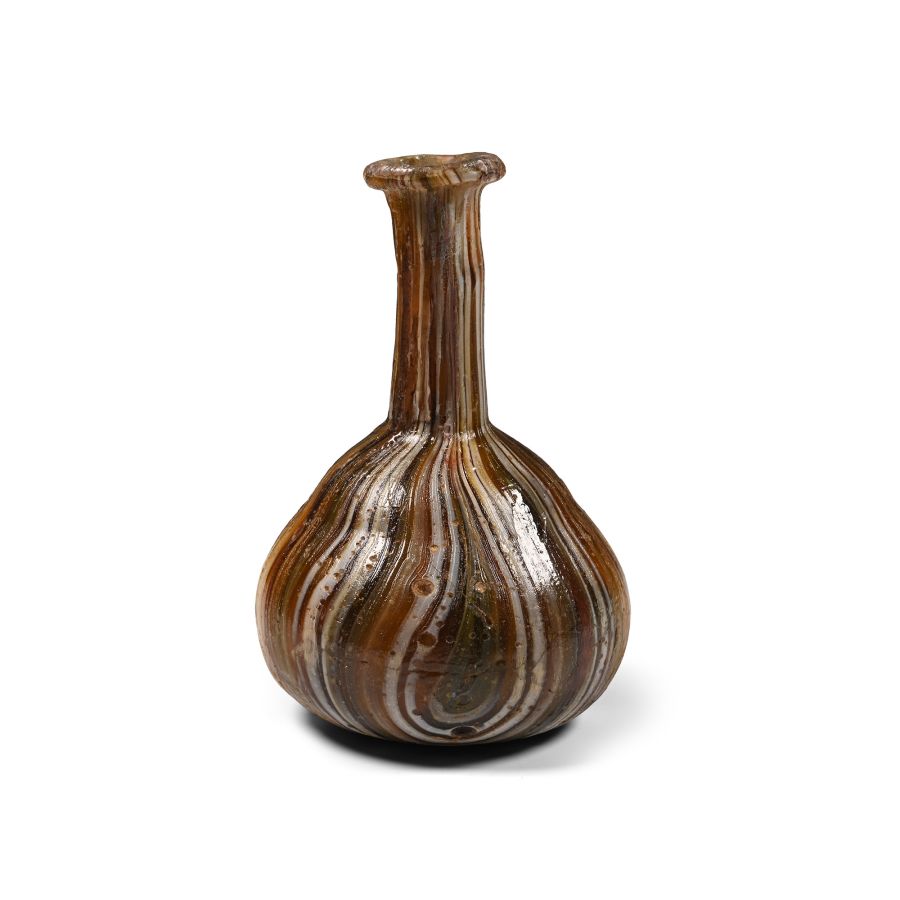
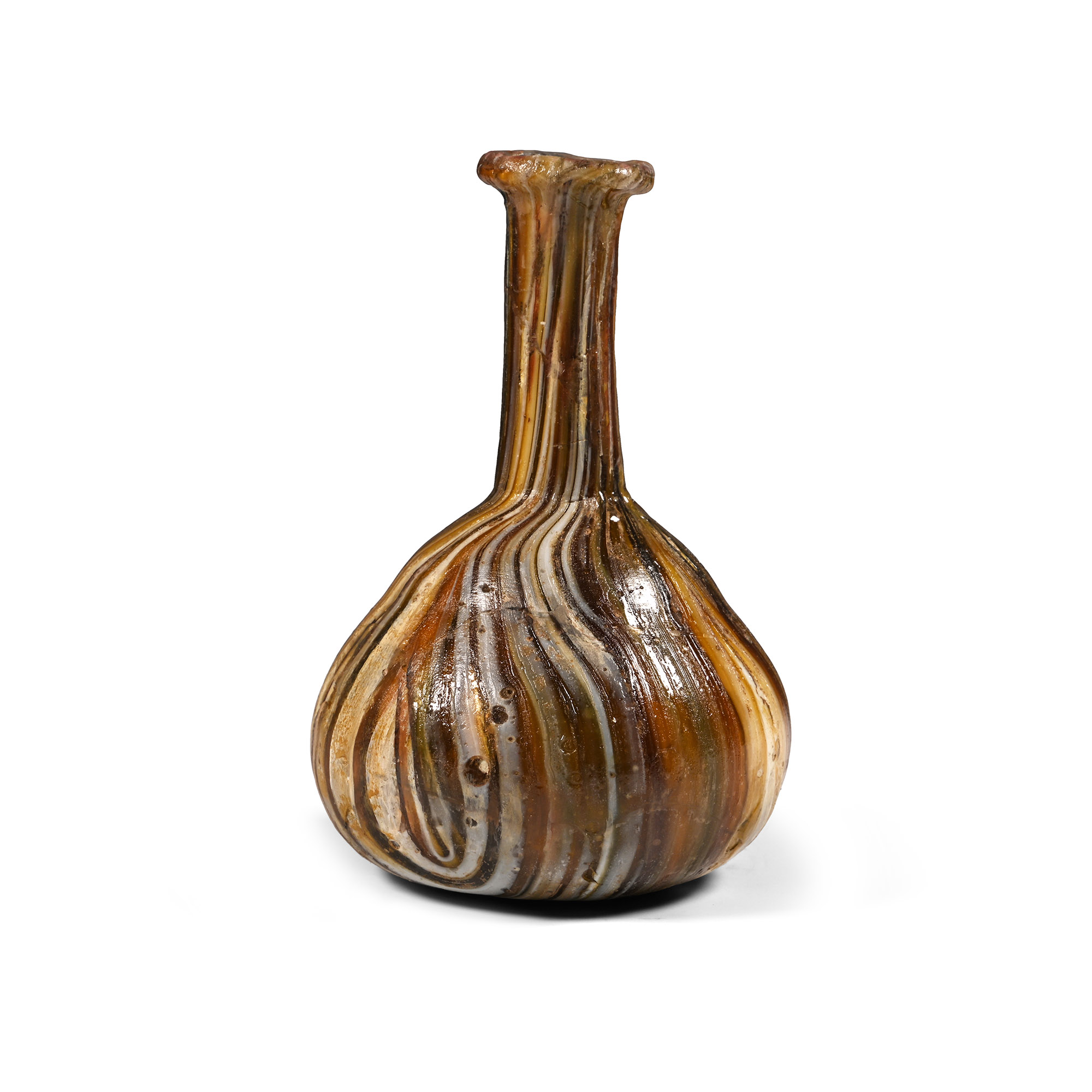
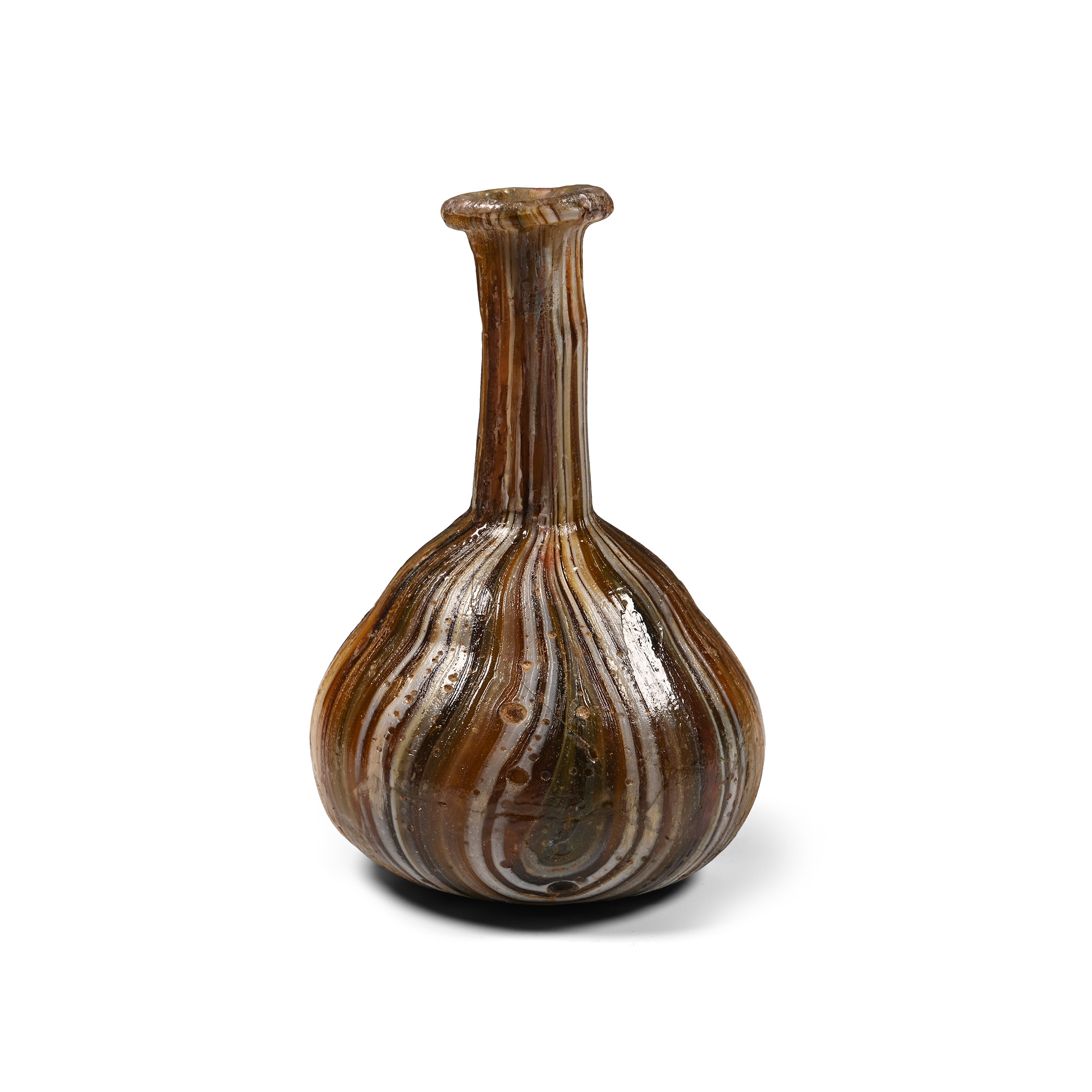
Roman Mould-Blown Marbled Glass Flask
1ST CENTURY A.D.
4 in. (80 grams, 10 cm).
Wide body and tall tubular neck with everted rim, formed of marbled glass in shades of brown and white; restored.
ProvenanceFrom the F.D. collection, 1990s.
Ex Mayfair, London, UK, dealership.
Ex collection of a London, UK, gentleman.
This lot is accompanied by an illustrated lot declaration signed by the Head of the Antiquities Department, Dr Raffaele D'Amato.
Cf. Kelley, M., A study of Late Hellenistic and Early Roman Glass in Jerusalem from excavated sites: understanding local production and the economic status of the population from the time of the Hasmoneans to Hadrian, Jerusalem, 2012, fig.9.4, in Israel Museum, Dobkin collection, inv.77.12.304.
FootnotesThis specimen belongs to the types of colour band piriform bottles of glass strips, fused and blown. After cooling, slices were cut from the rod cross-wise, then arranged side-by-side and fused together to create a multi-coloured and multi-patterned sheet of glass. Alternatively, the craftsman, instead of cutting the glass chords, could place them side by side and fuse them together in strips.
CONDITIONTimeLine Auctions follows a vetting process to ensure the authenticity and legality of all items, reinforcing our commitment to integrity and responsible trading. Each antiquity, antique, and coin lot undergoes thorough examination by a vetting committee of at least ten external specialists, professional trade association members, scientists, and archaeologists: Our Vetting Process
AUCTIONS:
TimeLine is a leading auction house specialising in antiquities, ancient art, collectables, natural history, coins, medals, and books. Our auctions offer museums, collectors, historians, and enthusiasts the opportunity to acquire unique and historically significant pieces.
LOT 0111
Roman Mould-Blown Marbled Glass Flask
Estimate £1,000 - 1,400€1,160 - 1,620 (for guidance only)$1,350 - 1,890 (for guidance only)
-
Roman Gold Pin
1st-3rd century A.D.Sold for (Inc. bp): £1,560
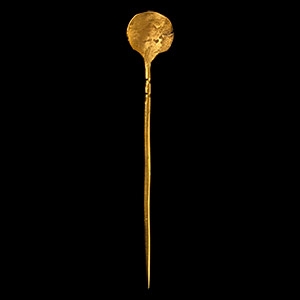
Comprising a slightly dished discoid head and slender shank with baluster. 4.77 grams, 80 mm
Acquired in the 1992. Private collection, Switzerland, thence by descent. Private collection, since the late 1990s. This lot is accompanied by an illustrated lot declaration signed by the Head of the Antiquities Department, Dr Raffaele D'Amato. -
.jpg)
Roman Bronze Mercury Statuette
Eastern Provincial, 3rd-4th century A.D.Sold for (Inc. bp): £715
Modelled in the round, standing nude with attributes, cloak and caduceus on the left arm, coin-purse in the right hand; winged diadem; on a square base with stub legs. 102 grams, 10 cm
Ex German art market, 2000s. Acquired from an EU collector living in London. From the collection of a Surrey, UK, gentleman. This lot is accompanied by an illustrated lot declaration signed by the Head of the Antiquities Department, Dr Raffaele D'Amato. -
Roman Ribbed Glass Bottle
3rd-4th century A.D.Estimate: £600 - 800 (‡+bp*)
Opening Bid: £300
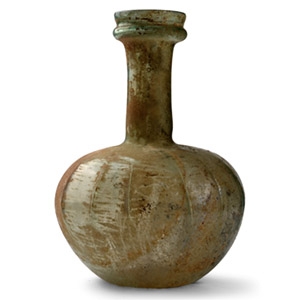
With globular body, dimple foot, slight vertical ribbing to body, broad funicular mouth with folded rim. 174 grams, 19 cm
Acquired in the late 1980s. Private collection, thence by descent. Private collection, since the late 1990s. This lot is accompanied by an illustrated lot declaration signed by the Head of the Antiquities Department, Dr Raffaele D'Amato.
