
Loading, please wait...

LOT 0848
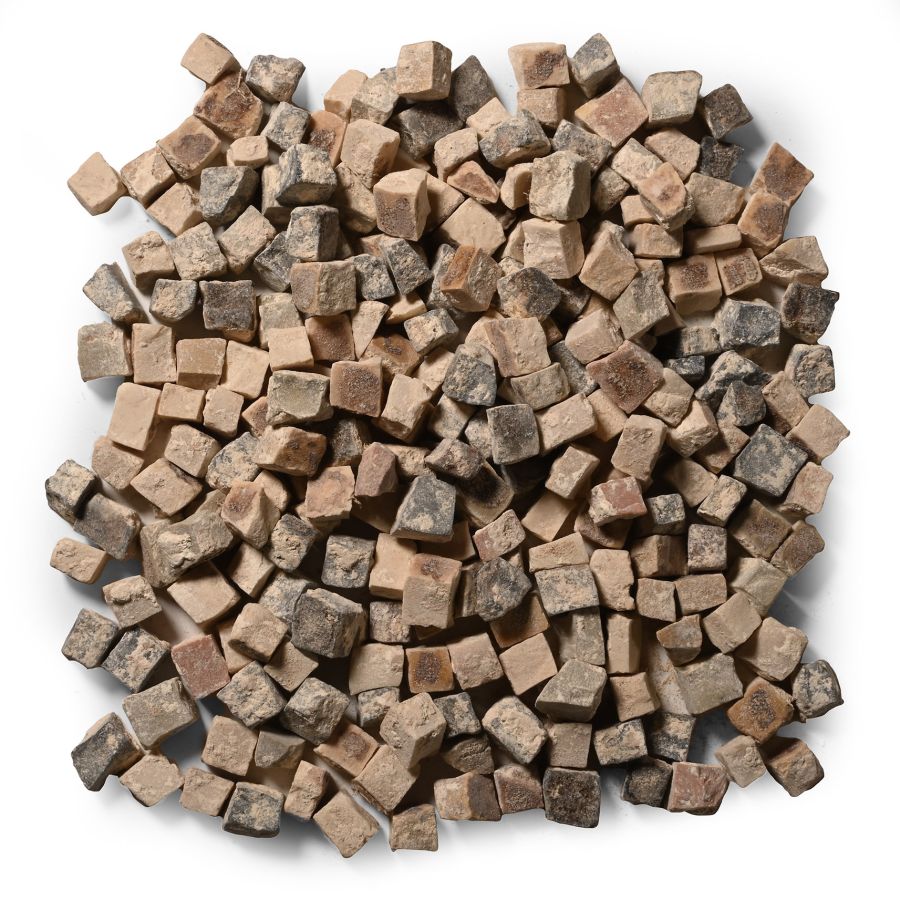
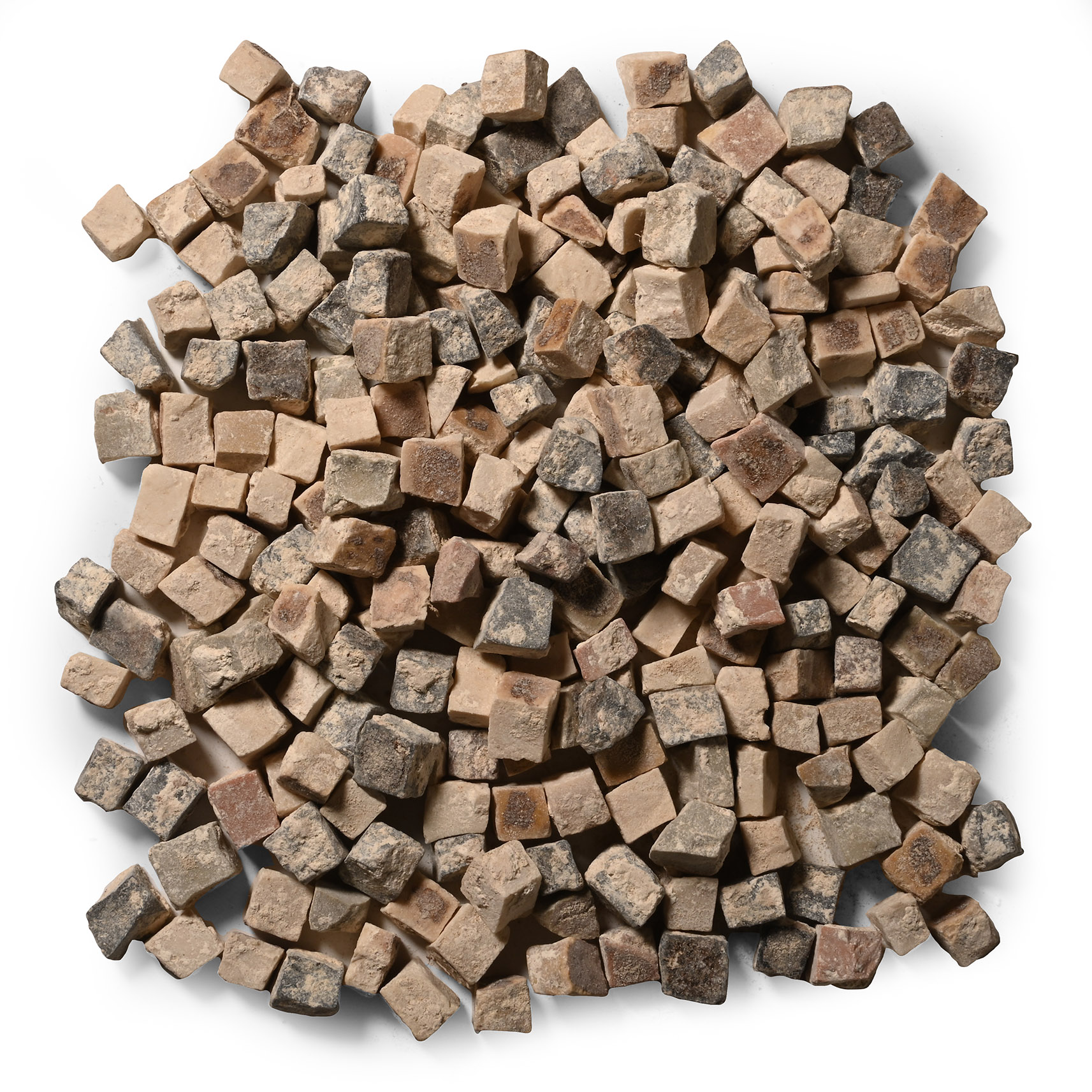
Roman Mosaic Stone Tesserae Group
1ST-4TH CENTURY A.D.
1/4 - 5/8 in. (332 grams total, 7-14 mm).
A mixed group of two hundred and fifty single tesserae of various colours and sizes, mostly cuboid. [250, No Reserve]
ProvenanceFrom a collection acquired on the UK art market from various auction houses and collections mostly before 2000.
From an important Cambridgeshire estate; thence by descent.
This lot is accompanied by an illustrated lot declaration signed by the Head of the Antiquities Department, Dr Raffaele D'Amato.
For similar tesserae see Gabucci, A., Pejrani Baricco, L., Ratto, S., Per il Museo di Ivrea, La sezione archeologica del Museo Civico P.A. Garda, Sesto Fiorentino, 2014, cover, mosaic from a Domus of Eporedia.
FootnotesRoman mosaics were made from small cubes of natural stone and terracotta possibly cut from tile or brick. Each of these small cubes was called a tessera (plural tesserae) from the Latin word for dice.
CONDITIONTimeLine Auctions follows a vetting process to ensure the authenticity and legality of all items, reinforcing our commitment to integrity and responsible trading. Each antiquity, antique, and coin lot undergoes thorough examination by a vetting committee of at least ten external specialists, professional trade association members, scientists, and archaeologists: Our Vetting Process
AUCTIONS:
TimeLine is a leading auction house specialising in antiquities, ancient art, collectables, natural history, coins, medals, and books. Our auctions offer museums, collectors, historians, and enthusiasts the opportunity to acquire unique and historically significant pieces.
-
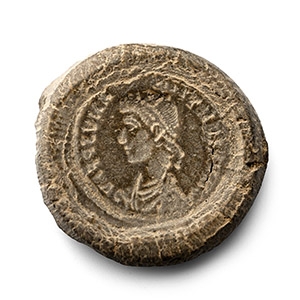
Terracotta Forger's Casting Mould
4th century A.D.Sold for (Inc. bp): £364
Discoid clay mould with impressed design of a coin to each face. 3.46 grams, 24 mm
From the collection of a gentleman, acquired on the London art market in the 1990s. This lot is accompanied by an illustrated lot declaration signed by the Head of the Antiquities Department, Dr Raffaele D'Amato. -
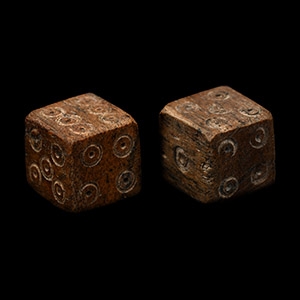
Roman Bone Gaming Dice Pair
1st-4th century A.D.Sold for (Inc. bp): £338
Cuboid with incised annular markings disposed 1:6, 2:5, 3:4. 6.7 grams total, 12 mm each
Ex German art market, 2000s. Acquired from an EU collector living in London. From the collection of a Surrey, UK, gentleman. This lot is accompanied by an illustrated lot declaration signed by the Head of the Antiquities Department, Dr Raffaele D'Amato. -
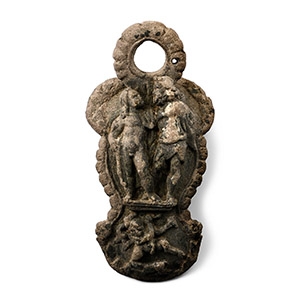
Roman Bronze Three-Dimensional Vessel Mount
2nd-3rd century A.D.Estimate: £3,000 - 4,000 (‡+bp*)
Opening Bid: £1,500
Comprising a plaque of three conjoined lobes with segmented border; at the top, a loop with segmented rim; vignette with a nude male with shoulder-length hair embracing a taller bearded figure with kilt and mantle to left shoulder (Hercules?); below, a satyr with horns and goat's legs beset by hunting dogs. 286 grams, 13.8 cm
Acquired in 1992. Private collection, thence by descent. Private collection, since the late 1990s. This lot has been checked against the Interpol Database of stolen works of art and is accompanied by a search certificate number no.12865-241702. This lot has been cleared against the Art Loss Register database, and is accompanied by an illustrated lot declaration signed by the Head of the Antiquities Department, Dr Raffaele D'Amato.
