
Loading, please wait...


LOT 0746
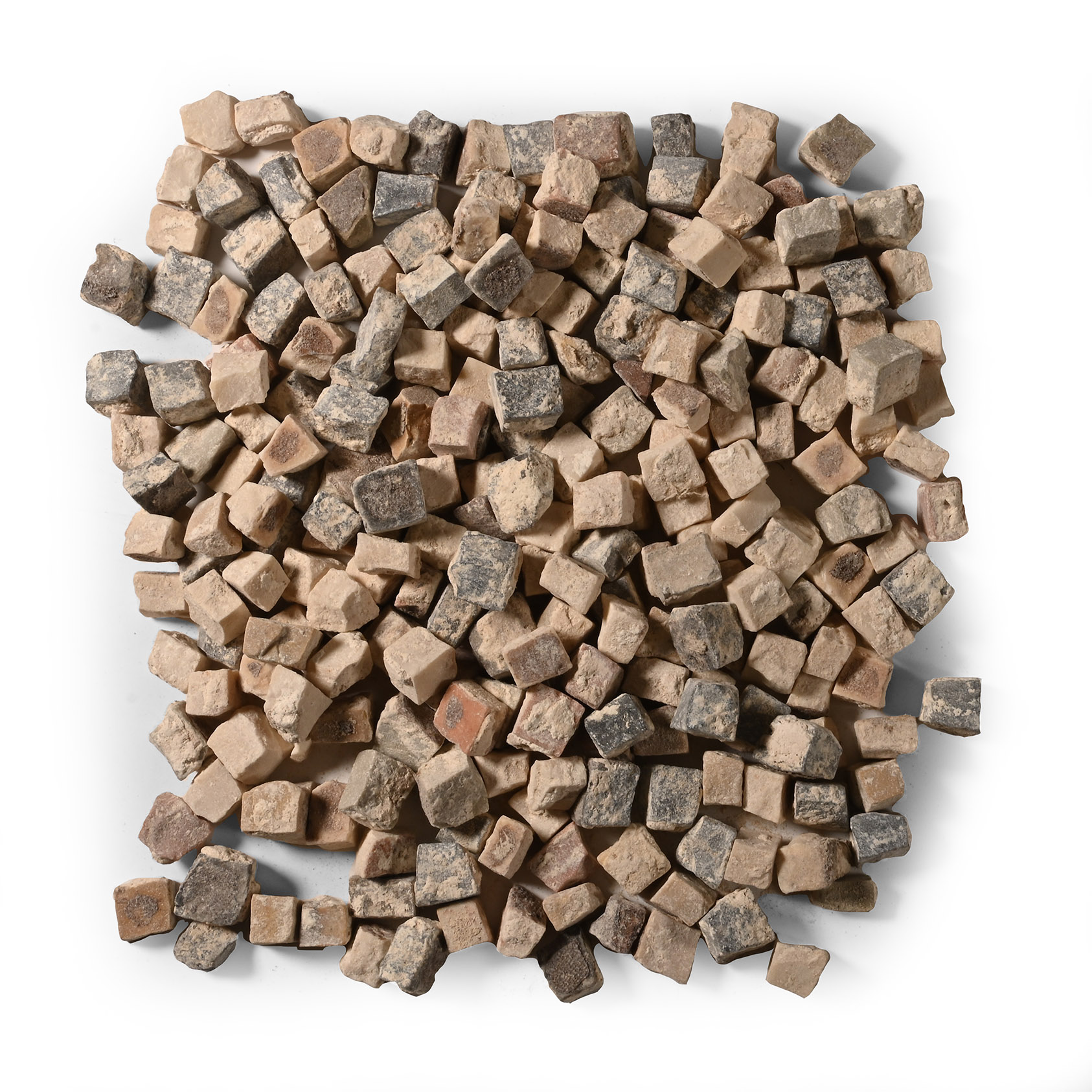
Roman Mosaic Stone Tesserae Group
1ST-4TH CENTURY A.D.
3/8 - 5/8 in. (336 grams total, 9-14 mm).
A mixed group of two hundred and fifty single tesserae of various colours and sizes, mostly cuboid. [250, No Reserve]
ProvenanceFrom a collection acquired on the UK art market from various auction houses and collections mostly before 2000.
From an important Cambridgeshire estate; thence by descent.
This lot is accompanied by an illustrated lot declaration signed by the Head of the Antiquities Department, Dr Raffaele D’Amato.
For similar tesserae see Gabucci, A., Pejrani Baricco, L., Ratto, S., Per il Museo di Ivrea, La sezione archeologica del Museo Civico P.A. Garda, Sesto Fiorentino, 2014, cover, mosaic from a Domus of Eporedia.
FootnotesRoman mosaics were made from small cubes of natural stone and terracotta possibly cut from tile or brick. Each of these small cubes was called a tessera (several tesserae) from the Latin word for dice.
CONDITIONTimeLine Auctions follows a vetting process to ensure the authenticity and legality of all items, reinforcing our commitment to integrity and responsible trading. Each antiquity, antique, and coin lot undergoes thorough examination by a vetting committee of at least ten external specialists, professional trade association members, scientists, and archaeologists: Our Vetting Process
AUCTIONS:
TimeLine is a leading auction house specialising in antiquities, ancient art, collectables, natural history, coins, medals, and books. Our auctions offer museums, collectors, historians, and enthusiasts the opportunity to acquire unique and historically significant pieces.
-
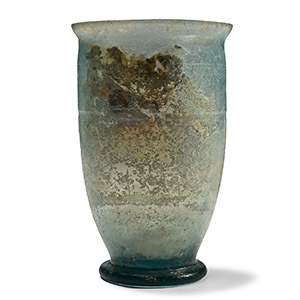
Roman Glass Goblet with Cut Design
Circa 100-300 A.D.Estimate: £700 - 900 (+bp*)
Opening Bid: £350
Translucent with straight sides narrowing to the dimpled base, flared and rolled rim, the body decorated with two horizontal ribbed lines. 104 grams, 10.5 cm
Swiss private collection, Basel. Before that in a Swiss private collection, Bern. Previously with Sayd & Fayez Barakat & Sons, Bethlehem and Jerusalem. Accompanied by a certificate of authenticity from Shaher Barakat, Jerusalem. This lot is accompanied by an illustrated lot declaration signed by the Head of the Antiquities Department, Dr Raffaele D’Amato.
The Hebrew word 'zekhukhith' (glass) appeared in the Old Testament, but it was frequently used in the Mishnaic Hebrew and in correlation with the Aramaic 'zegugita'. In the Talmudic times white and coloured, transparent glasses were very valuable. This magnificent goblet was found on Mons Scopus, in Jerusalem and it shows the skill and the capacity of the Roman glass blowers of the time. After the establishment and unification of the Roman Empire under Augustus (27 B.C.), glass manufacturing quickly travelled throughout the Empire, and with the ease of production, glass entered the same sphere of use and popularity as metal and clay vessels. -
Roman Mosaic Stone Tesserae Group
1st-4th century A.D.Sold for (Inc. bp): £156
A mixed group of two hundred and fifty single tesserae of various colours and sizes, mostly cuboid. 356 grams total, 7-18 mm
From a collection acquired on the UK art market from various auction houses and collections mostly before 2000. From an important Cambridgeshire estate; thence by descent. This lot is accompanied by an illustrated lot declaration signed by the Head of the Antiquities Department, Dr Raffaele D’Amato. -
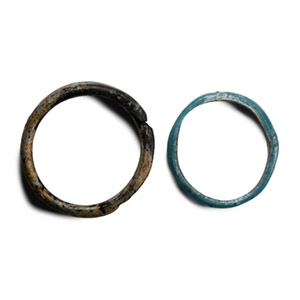
Roman Blue Glass Bangle Pair
Circa 4th century A.D.Sold for (Inc. bp): £72
One flat-section with light blue ribbed outer face; the other flattened at the juncture with some iridescence remaining. 20.4 grams total, 50-58 mm
From an old English collection. Acquired from Helios Gallery in 2011. Ian Wilkinson collection, Nottinghamshire, UK, formed since 1985. This lot is accompanied by an illustrated lot declaration signed by the Head of the Antiquities Department, Dr Raffaele D’Amato.
The mass production of glass in ancient Rome prompted the development of glass jewellery of unique qualities. The ancient Romans considered jewellery to be an essential accessory, being a public display of the wealth of high social classes. Recent excavations have provided better information on the use of glass for necklaces and bracelets, and in some cases it has been possible to understand the exact arrangement of the jewellery.
