
Loading, please wait...


LOT 0980
Roman Mosaic Glass Fragment Collection
1ST-4TH CENTURY A.D.
5/8 - 2 5/8 in. (64.5 grams total, 15-66 mm).
Comprising various polychrome fragments, one showing intricate flower details. [10]
ProvenanceAcquired on the European art market.
CONDITIONTimeLine Auctions follows a vetting process to ensure the authenticity and legality of all items, reinforcing our commitment to integrity and responsible trading. Each antiquity, antique, and coin lot undergoes thorough examination by a vetting committee of at least ten external specialists, professional trade association members, scientists, and archaeologists: Our Vetting Process
AUCTIONS:
TimeLine is a leading auction house specialising in antiquities, ancient art, collectables, natural history, coins, medals, and books. Our auctions offer museums, collectors, historians, and enthusiasts the opportunity to acquire unique and historically significant pieces.
-
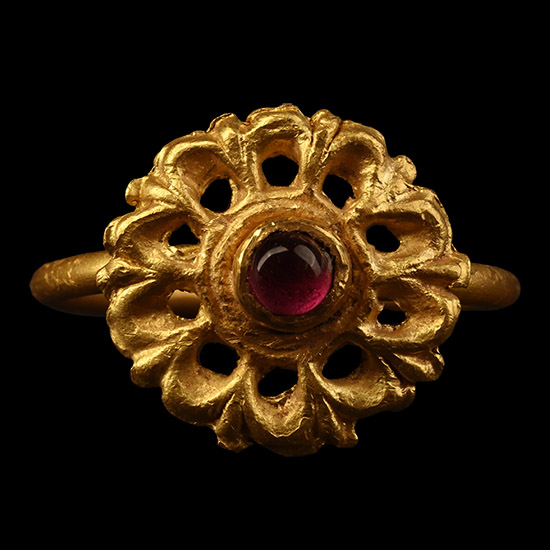
Roman Gold Ring with Garnet Cabochon
3rd-4th century A.D.Sold for (Inc. bp): £1,040
Comprising an openwork rosette bezel with interstitial pellets between the petals, central cell with inset garnet cabochon. 2.55 grams, 22.48 mm overall, 17.72 mm internal diameter (approximate size British M 1/2, USA 6 1/4, Europe 13.09, Japan 12)
Ex German art market, 2000s. Acquired from an EU collector living in London. From the collection of a Surrey, UK, gentleman. -
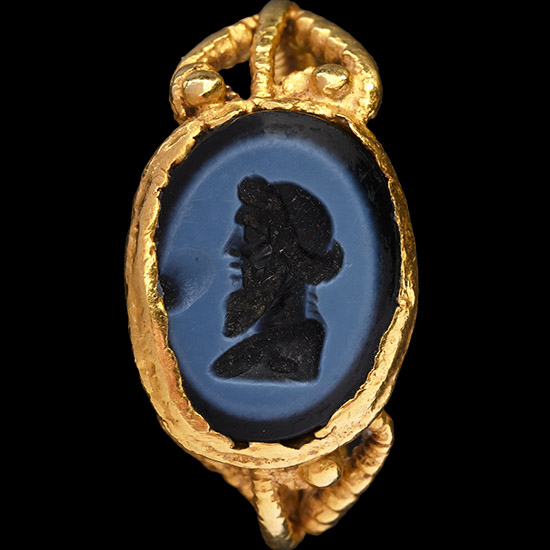
Roman Gold Ring with Nicolo Gemstone of a Bearded Bacchus as a Herm
1st century A.D. ring: 3rd-4th century A.D.Estimate: £3,500 - 4,500 (+bp*)
Current Winning Bid: £10
The intaglio deeply carved to depict a profile of Bacchus, set within a closed-back bezel; the band formed as a triple-twisted rope with granules and beadwork upon the shoulders. 5.90 grams, 22.20 mm overall, 16.36 x 13.99 mm internal diameter (approximate size British I, USA 4 1/4, Europe 7.44, Japan 7)
Acquired on the European art market. This lot has been checked against the Interpol Database of stolen works of art and is accompanied by search certificate number no.13342-257959.
The band formed as a triple-twisted rope with granules, and beadwork upon the shoulders is typical of the 3rd to 4th centuries AD. However, the image of the bearded Bacchus remains attached to the original Greek iconography, as seen on the Ermae of the classical period. -
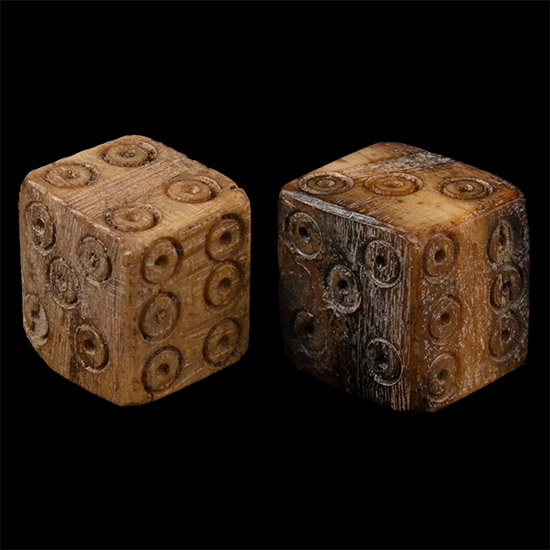
Roman Bone Gaming Dice Pair
Circa 1st-4th century A.D.Sold for (Inc. bp): £286
Two cuboid dice with ring-and-dot markings disposed 1:6,2:5, 3:4. 2.31 grams total, 8-9 mm
Ex gentleman collector of antique and antiquity games from Berkshire, UK, having collected for over 20 years.
