
Loading, please wait...
LOT 0842
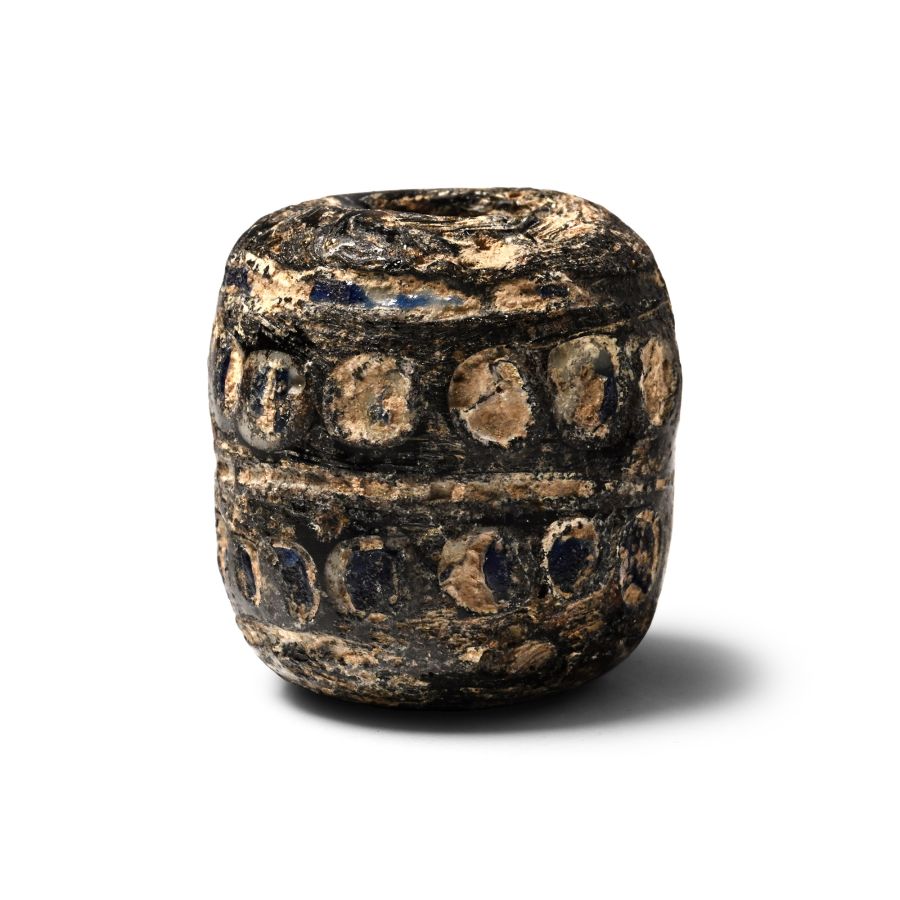
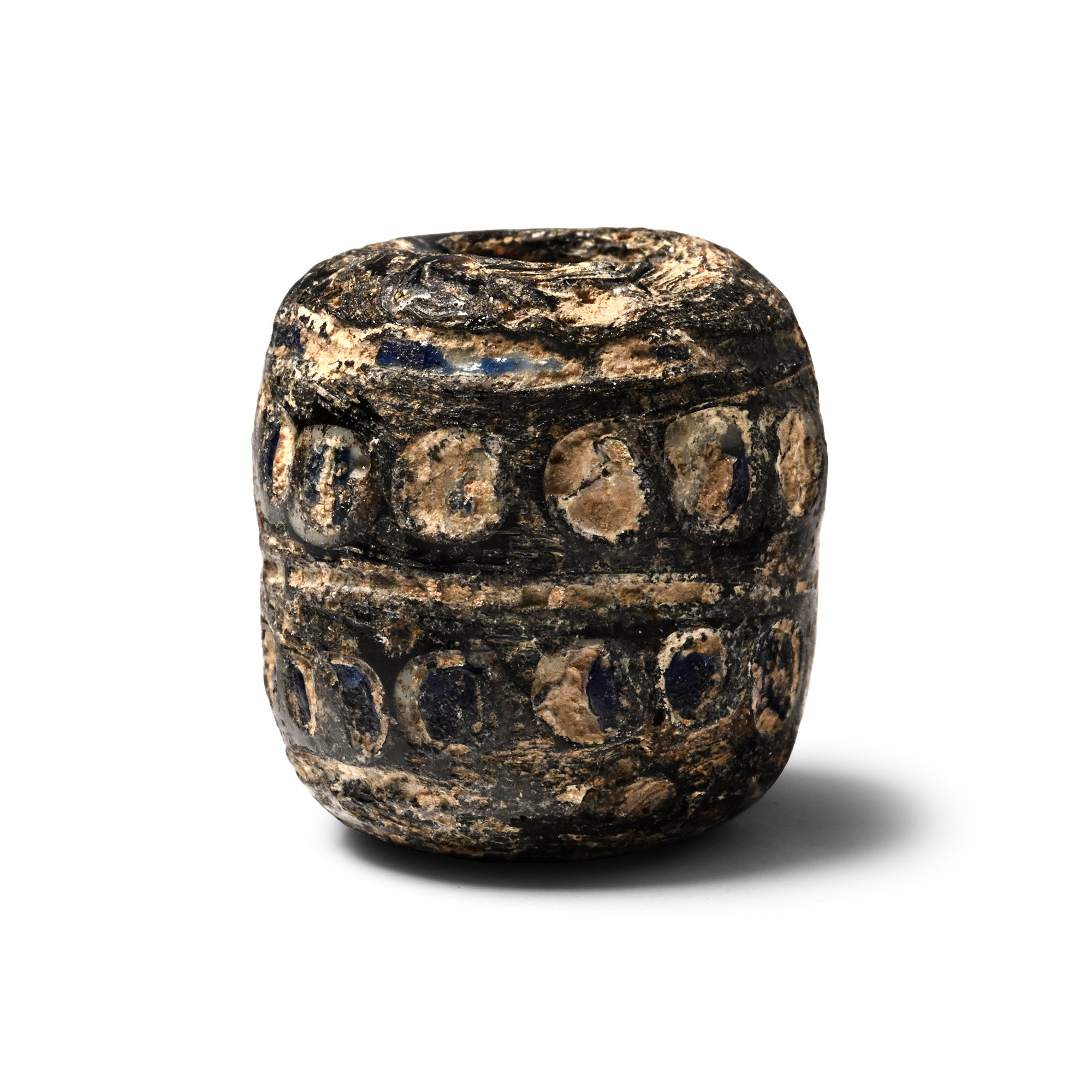
Roman Mosaic Glass Dots Bead
1ST-3RD CENTURY A.D.
1 in. (16.87 grams, 24 mm).
Barrel-shaped in profile with two circumferential bands of impressed pellets. [No Reserve]
ProvenanceLondon collection, 1979-1983.
CONDITIONTimeLine Auctions follows a vetting process to ensure the authenticity and legality of all items, reinforcing our commitment to integrity and responsible trading. Each antiquity, antique, and coin lot undergoes thorough examination by a vetting committee of at least ten external specialists, professional trade association members, scientists, and archaeologists: Our Vetting Process
AUCTIONS:
TimeLine is a leading auction house specialising in antiquities, ancient art, collectables, natural history, coins, medals, and books. Our auctions offer museums, collectors, historians, and enthusiasts the opportunity to acquire unique and historically significant pieces.
-
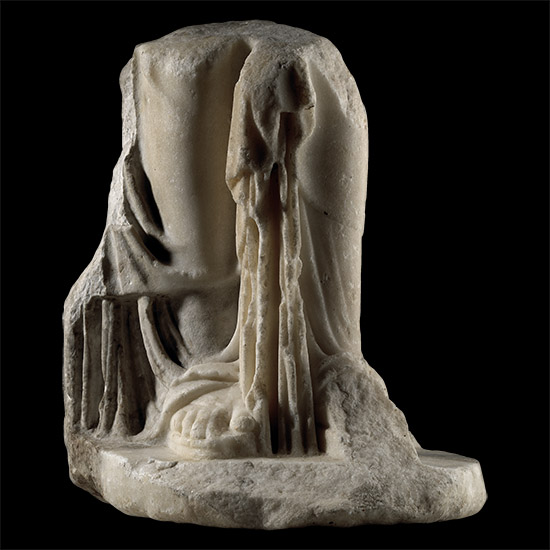
Large Lower Section of a Roman Marble Figure of the Goddess Isis
2nd century A.D.Sold for (Inc. bp): £5,000
Statue fragment of a woman or goddess, including floor-length robe and right foot with sandal; modelled standing with the foot slightly advanced, wearing sandals, chiton and himation. 66.65 kg, 50 cm
American private collection, acquired in the 1980s-1990s. Acquired on the American art market in 2016. with Sotheby's, London, 11 December 2020, no.88. This lot has been checked against the Interpol Database of stolen works of art and is accompanied by search certificate no.13078-249667.
Both the stance and folds of the himation suggest an Archaistic statue, perhaps the goddess Isis. -
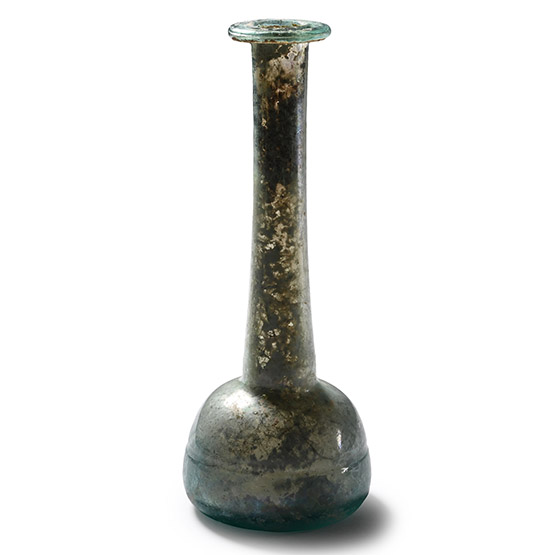
Roman Glass Unguentarium
1st-3rd century A.D.Sold for (Inc. bp): £130
With plano-convex body and dimple base, tall slender neck, folded rim; iridescent green surface. 78 grams, 15 cm
From an important London collection of glass, 1990s.
This kind of toilet bottle was called ‘candlestick unguentarium’ by the academics due to the shape of its neck. This specific type, with its transparent grayish green glass, is especially found in Roman Cyprus (Hayes's fabric 2 of Cypriot blown glass). -

Roman Lead Cnaeus Pompey Battle of Munda Slingshot
1st century B.C.Sold for (Inc. bp): £312
Facetted lentoid-section sling shot (glans) with inscription in Latin letters 'CN' (Cneius) 'MAG' (Magnus) on one side, and 'IMP' for 'IMPERATOR' (victorious general) to the other side, i.e Gnaeus Pompeius Magnus Imperator (Pompey the Great the victorious general). 80.4 grams, 46 mm
Previously from a private Spanish collection. Ex London, UK, gentleman. Accompanied by a copy of a Spanish export licence.
The shot (Völling type 1C) is marked with the abbreviated name of Gnaeus Pompey; it was used in quantity at the Battle of Monda (or Munda) against Julius Caesar, 17th March 45 BC. The projectiles could be of different material: in lead (glandes) or in pottery or stone (lapides missiles). Sometimes they were signed with the name of the general, as is our specimen.
