
Loading, please wait...
LOT 0603
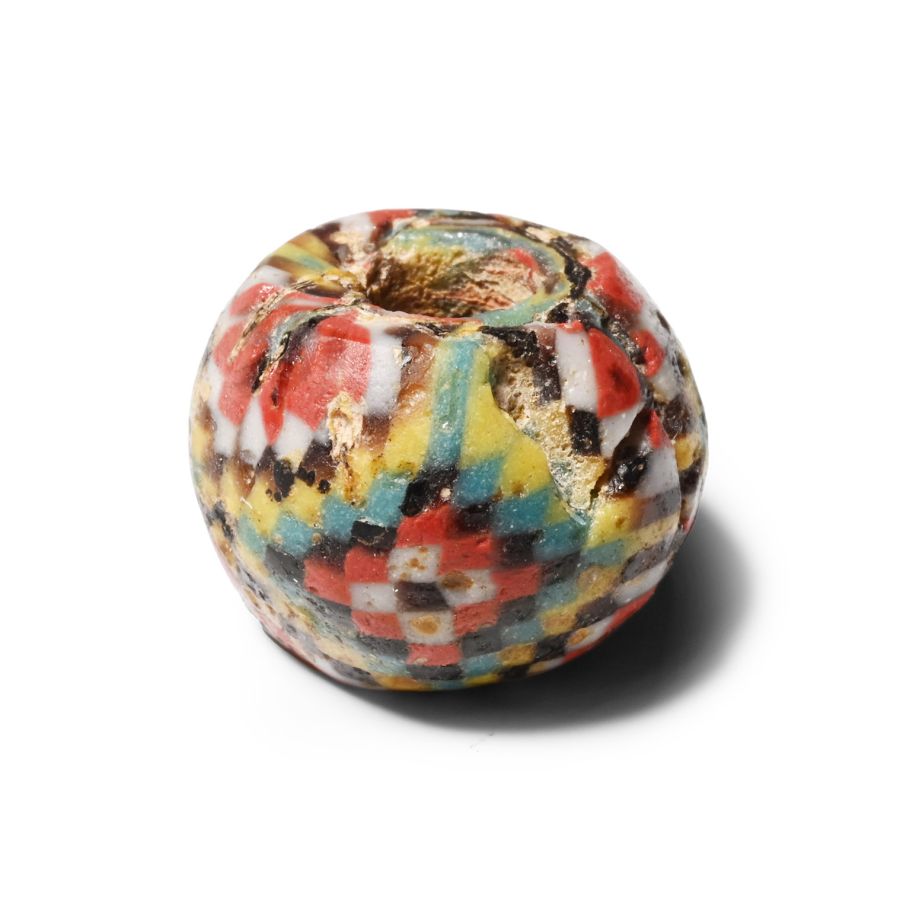
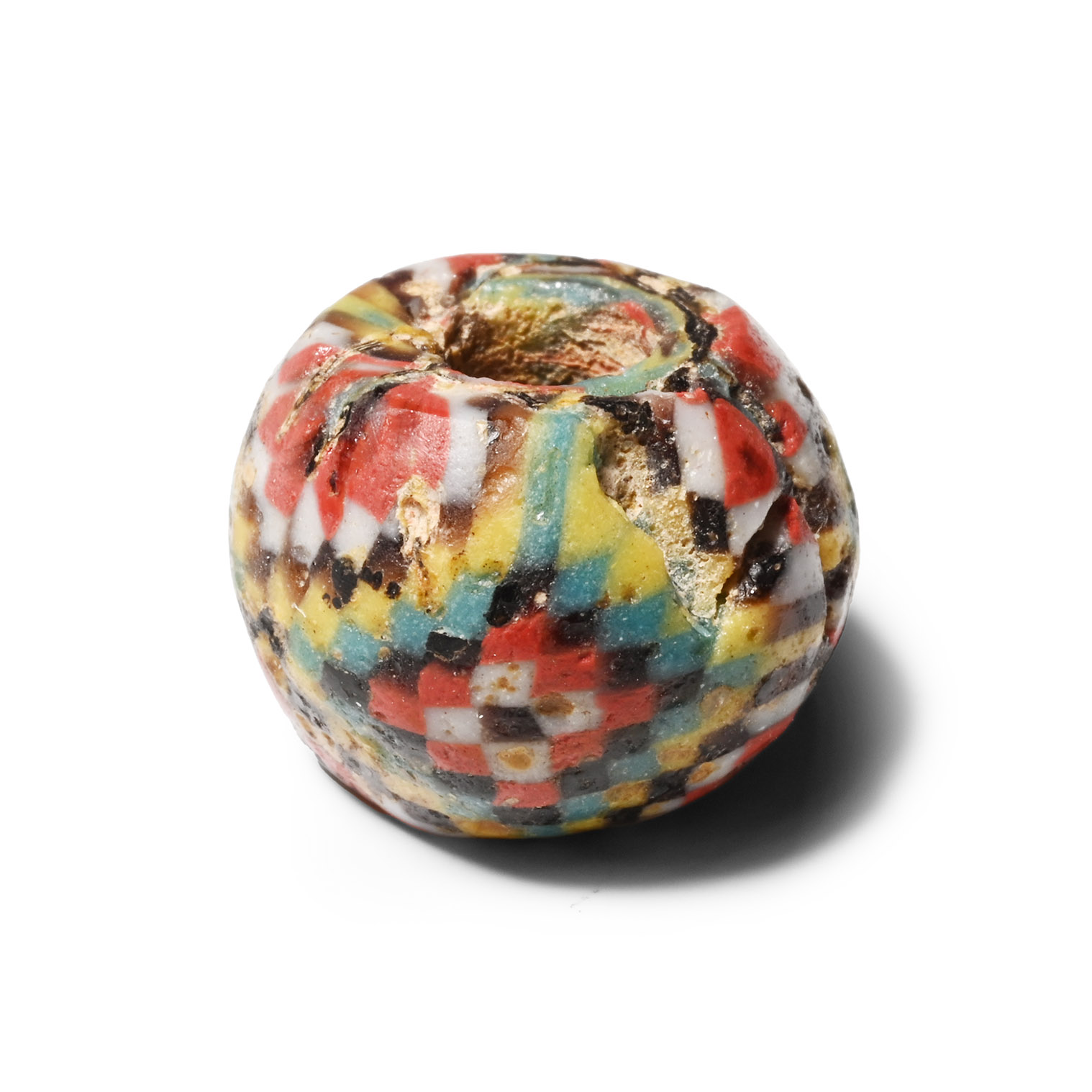
Roman Mosaic Glass Bead
1ST-3RD CENTURY A.D.
1/2 in. (2.66 grams, 14.7 mm).
Of oblate shape with an intricate chequerboard pattern; the patterns assembled from bundles of compatible coloured canes melted together, pulled out long and the slices then melted as the bead around bead surfaces. [No Reserve]
ProvenanceLondon, UK gallery, 1971-early 2000s.
CONDITIONTimeLine Auctions follows a vetting process to ensure the authenticity and legality of all items, reinforcing our commitment to integrity and responsible trading. Each antiquity, antique, and coin lot undergoes thorough examination by a vetting committee of at least ten external specialists, professional trade association members, scientists, and archaeologists: Our Vetting Process
AUCTIONS:
TimeLine is a leading auction house specialising in antiquities, ancient art, collectables, natural history, coins, medals, and books. Our auctions offer museums, collectors, historians, and enthusiasts the opportunity to acquire unique and historically significant pieces.
-
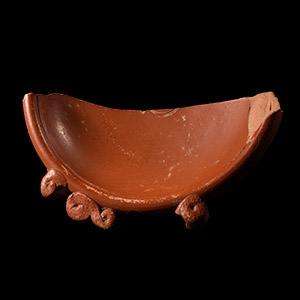
Roman 'Midlands' Samian Ware Bowl Fragment
Circa 1st century A.D.Sold for (Inc. bp): £13
From a small bow with high foot and scrolled strap handle. 26 grams, 78 mm
UK private collection. Found East Midlands, UK. Acquired from Alan Cherry at the Birmingham Coin Fair, 2006. Property of a Nottinghamshire gentleman. Accompanied by an illustrated identification card including provenance. -
.jpg)
Roman Glass Amphoriskos
1st century A.D.Estimate: £400 - 600 (+bp*)
Opening Bid: £200
Comprising a Sidonian mould-blown glass vessel with ovoid body, cylindrical neck, everted rim and twin applied handles; decorated with a medial band of swirl motifs between fluting; iridescent surfaces; rim chipped. 17.6 grams, 73 mm
French collection, 1990s-early 2000s. Acquired at a Paris auction. From an important Paris gallery, France. Ex private Parisian collection. -
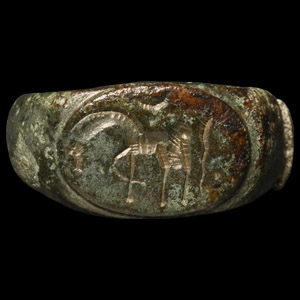
Roman Bronze Ring with Horse
Circa 1st-3rd century A.D.Sold for (Inc. bp): £85
With rectangular-section hoop supporting a raised oval bezel, intaglio image of a grazing horse with crescent above; hoop split. 5.8 grams, 22.49 mm overall, 18.79 mm internal diameter (approximate size British O, USA 7, Europe 14.98, Japan 14)
From the collection of a High Wycombe, Buckinghamshire, UK, gentleman, circa 2000.
