
Loading, please wait...
LOT 0692
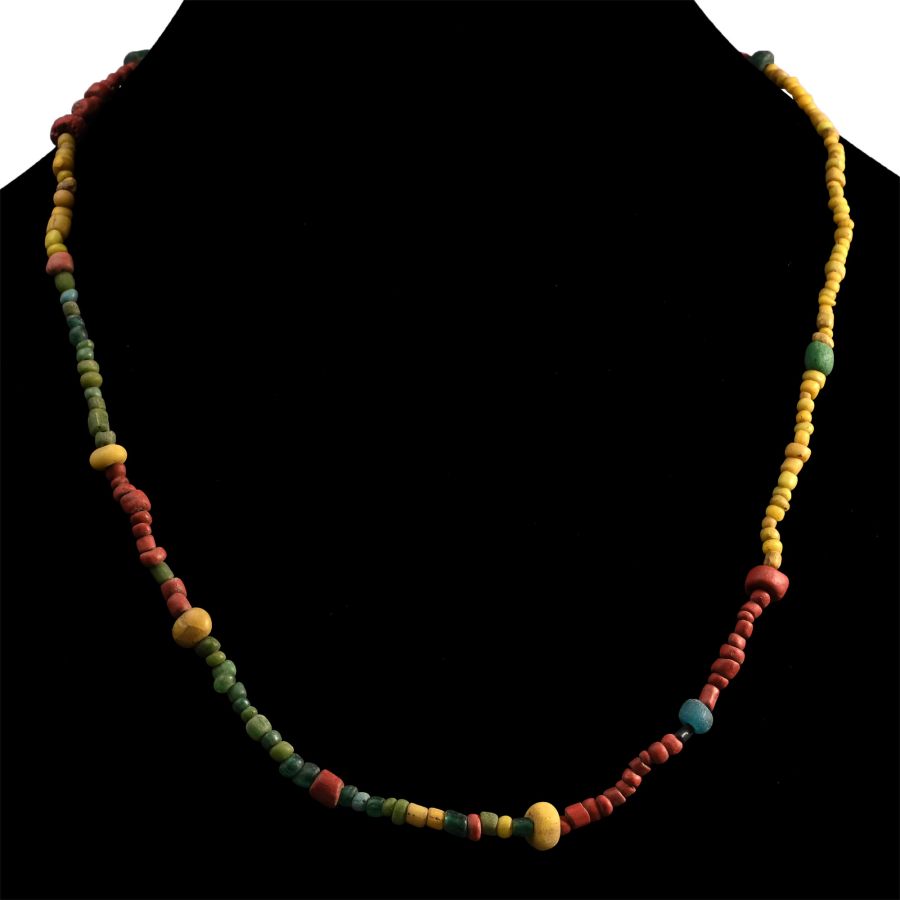
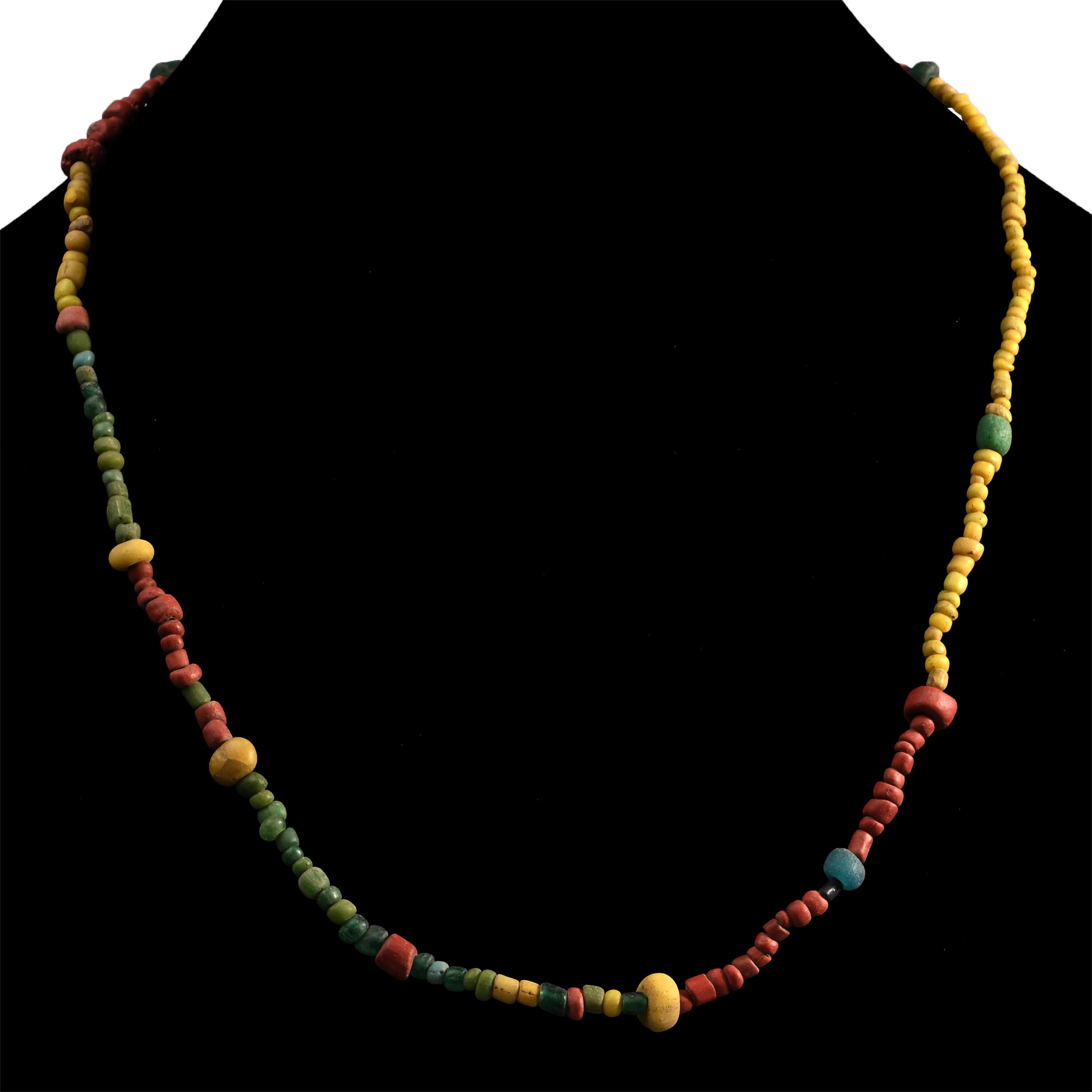
Roman Mixed Coloured Glass Bead Necklace String
1ST-4TH CENTURY A.D. AND LATER
23 5/8 in. (18 grams, 60 cm).
A restrung loop composed of red, green, and yellow beads; restrung. [No Reserve]
ProvenanceFrom the London, UK, art market in the 1990s.
This lot is accompanied by an illustrated lot declaration signed by the Head of the Antiquities Department, Dr Raffaele D'Amato.
For examples of similar yellow Roman beads see Then-Obluska, J., ‘Beads and pendants from the Hellenistic to early Byzantine Red Sea port of Berenike, Egypt, Seasons 2014 and 2015’ in Polish Archaeology in the Mediterranean, 27/1, 2018, pp.203–234, figs.8, 9b,10a,12b.; for examples of similar green Roman beads pp.203–234, figs.3a, 4,5,7; for examples of similar red beads fig.4 nos.7-8-9 and 16-23.
FootnotesIn the Roman period there was a strong formal and chromatic diversity of glass beads used for necklaces and bracelets. The most common beads in forms were small biconical (lenticular), barrel-shaped, spherical and annular; the most common colours were dark blue, followed by green and yellow. The succession of glass beads often imitates jewellery made of costly materials (gold, silver, semi-precious and precious stones).
CONDITIONTimeLine Auctions follows a vetting process to ensure the authenticity and legality of all items, reinforcing our commitment to integrity and responsible trading. Each antiquity, antique, and coin lot undergoes thorough examination by a vetting committee of at least ten external specialists, professional trade association members, scientists, and archaeologists: Our Vetting Process
AUCTIONS:
TimeLine is a leading auction house specialising in antiquities, ancient art, collectables, natural history, coins, medals, and books. Our auctions offer museums, collectors, historians, and enthusiasts the opportunity to acquire unique and historically significant pieces.
-
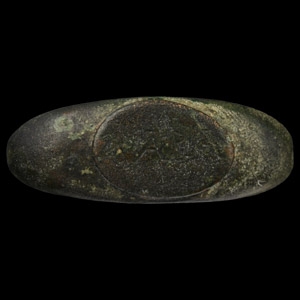
Roman Bronze Ring with APA
2nd-3rd century A.D.Sold for (Inc. bp): £91
Keeled hoop with angled shoulders, oval bezel with incised legend 'APA[I]', probably an abbreviated personal name. 7.43 grams, 26.67 mm overall, 18.25 x 13.32 mm internal diameter (approximate size British H, USA 3 3/4, Europe 6.18, Japan 6)
Acquired on the London art market in the late 1980s-1990s. From the family collection of an East London, UK, gentleman. This lot is accompanied by an illustrated lot declaration signed by the Head of the Antiquities Department, Dr Raffaele D'Amato. -
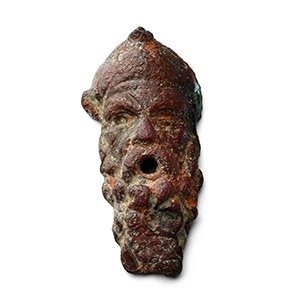
Roman Bronze Silenus Mask
1st-4th century A.D.Sold for (Inc. bp): £78
C-section appliqué mask with suspension loop to the brow, voided mouth. 19.6 grams, 48 mm
From the collection of a gentleman, acquired on the London art market in the 1990s. This lot is accompanied by an illustrated lot declaration signed by the Head of the Antiquities Department, Dr Raffaele D'Amato. -
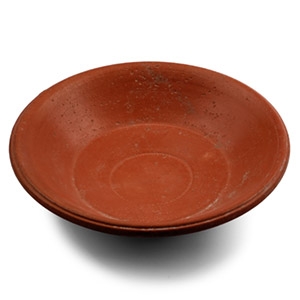
Roman Redware Bowl with Tiered Interior
3rd-4th century A.D.Sold for (Inc. bp): £195
Shallow with broad flaring sidewall, carinated rim, impressed circle to tondo. 223 grams, 15.8 cm
From the private collection of a Canadian gentleman living in Essex, UK, formed since the 1920s-circa 1990. Property of an Essex lady until the late 1990s; thence by descent. From the private collection of an Essex gentleman since the late 1990s. This lot is accompanied by an illustrated lot declaration signed by the Head of the Antiquities Department, Dr Raffaele D'Amato.
