
Loading, please wait...


LOT 0706
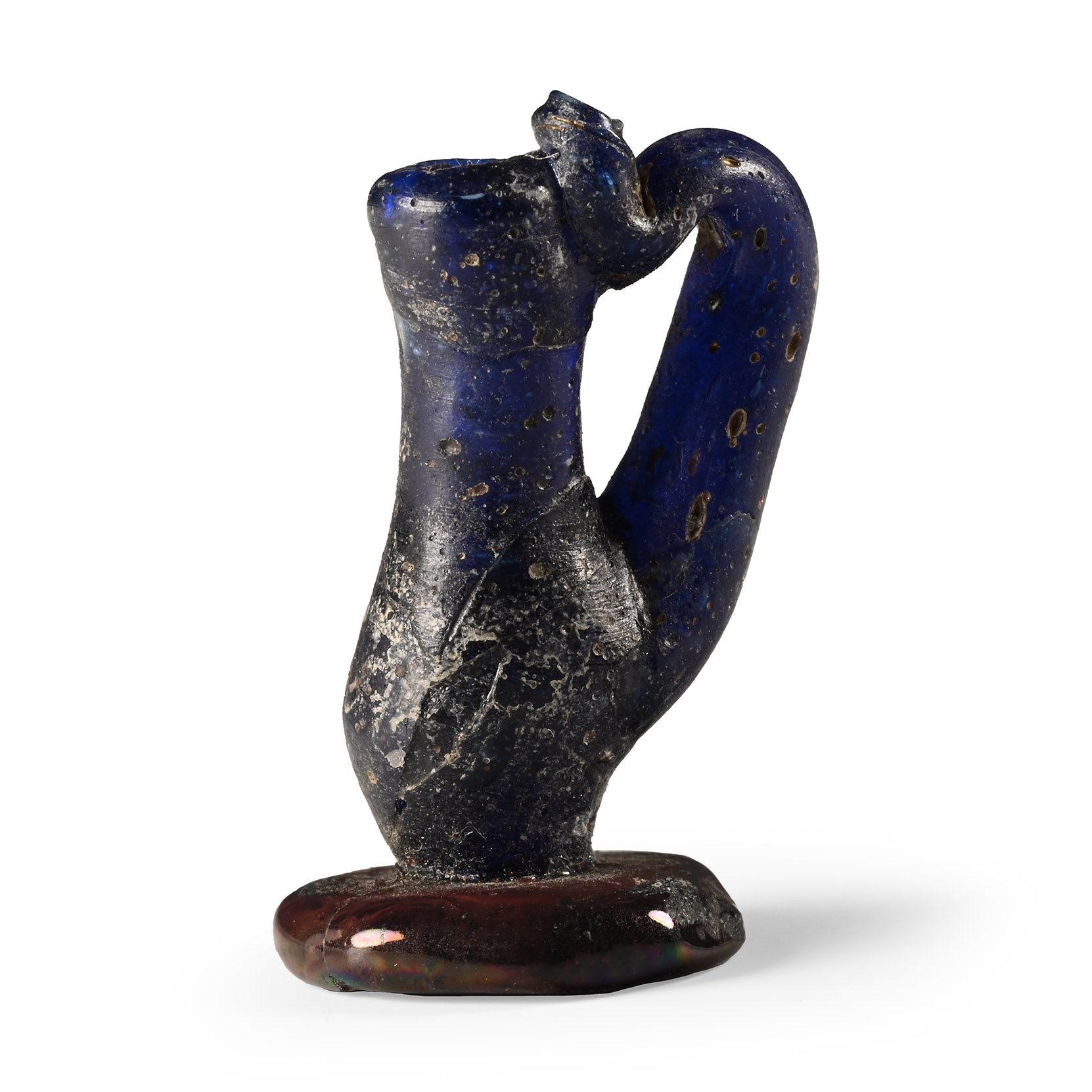
Roman Miniature Glass Juglet
1ST-4TH CENTURY A.D.
1 in. (3.9 grams, 27 mm).
Miniature ewer with piriform body, looped strap handle and broad discoid base.
ProvenanceFrom the collection of Mr S.M., London, UK, formed from 1969-1999.
CONDITIONTimeLine Auctions follows a vetting process to ensure the authenticity and legality of all items, reinforcing our commitment to integrity and responsible trading. Each antiquity, antique, and coin lot undergoes thorough examination by a vetting committee of at least ten external specialists, professional trade association members, scientists, and archaeologists: Our Vetting Process
AUCTIONS:
TimeLine is a leading auction house specialising in antiquities, ancient art, collectables, natural history, coins, medals, and books. Our auctions offer museums, collectors, historians, and enthusiasts the opportunity to acquire unique and historically significant pieces.
LOT 0706
Roman Miniature Glass Juglet
Estimate £100 - 140€120 - 160 (for guidance only)$140 - 190 (for guidance only)
-
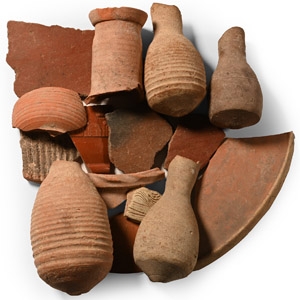
Roman Ceramic Vessel and Sherd Group
Mainly 1st-2nd century A.D.Sold for (Inc. bp): £46
Including ribbed ceramic bottle, fragments of sidewall with ribbing, applied swirl detailing and other types. 324 grams total, 2.4-11.7 cm
From a family collection mostly formed in the 1940s-1950s, thence by descent. -
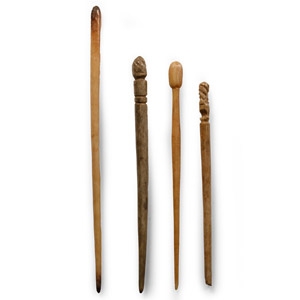
Roman Bone Pin Collection
1st-4th century A.D.Estimate: £100 - 140 (+bp*)
Opening Bid: £50
Comprising: two with a bulbous finial; one with a lion head finial; one with a tapering body and rounded finial. 12 grams total, 9.3-13 cm
Ex German art market, 2000s. Acquired from an EU collector living in London. From the collection of Surrey, UK, gentleman. -
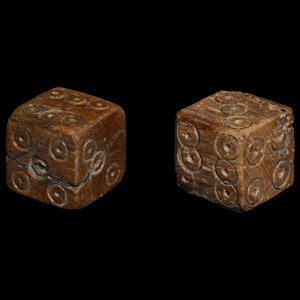
Roman Bone Dice Pair
1st-4th century A.D.Sold for (Inc. bp): £390
Each cuboid with ring-and-dot markings disposed 1:6, 2:3, 4:5 and 1:6, 2:5, 3:4. 5.2 grams total, 11 mm
Acquired 1980-2015. Ex Abelita family collection.
