
Loading, please wait...
LOT 0902
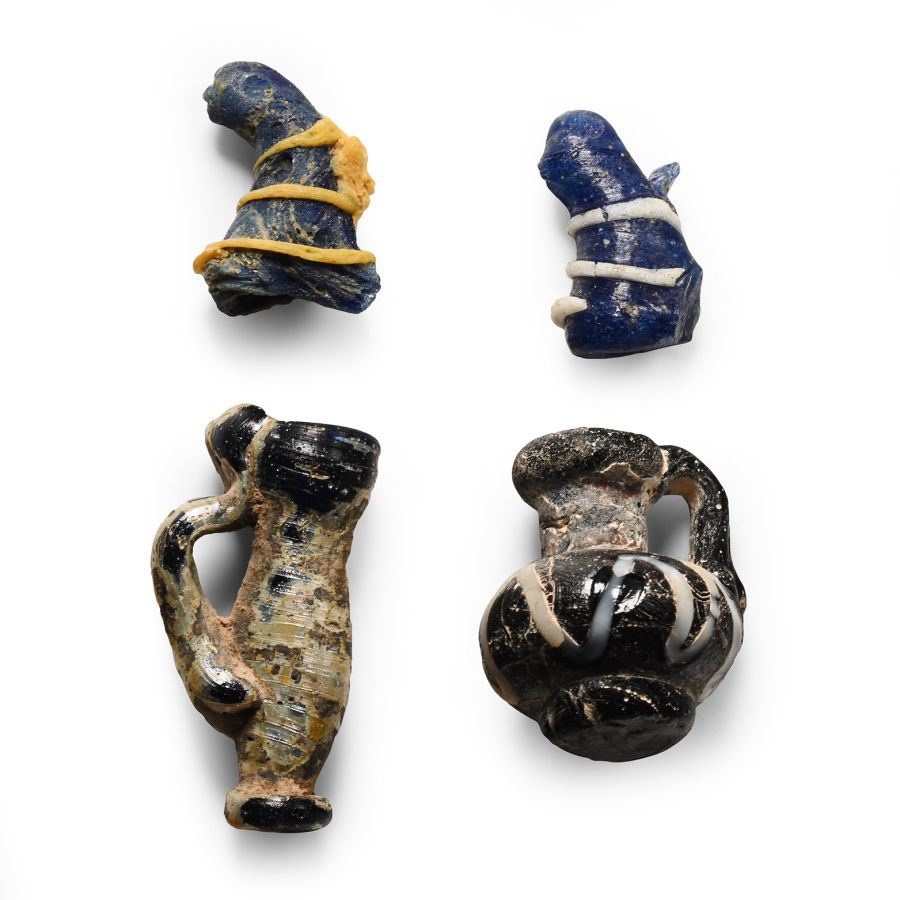
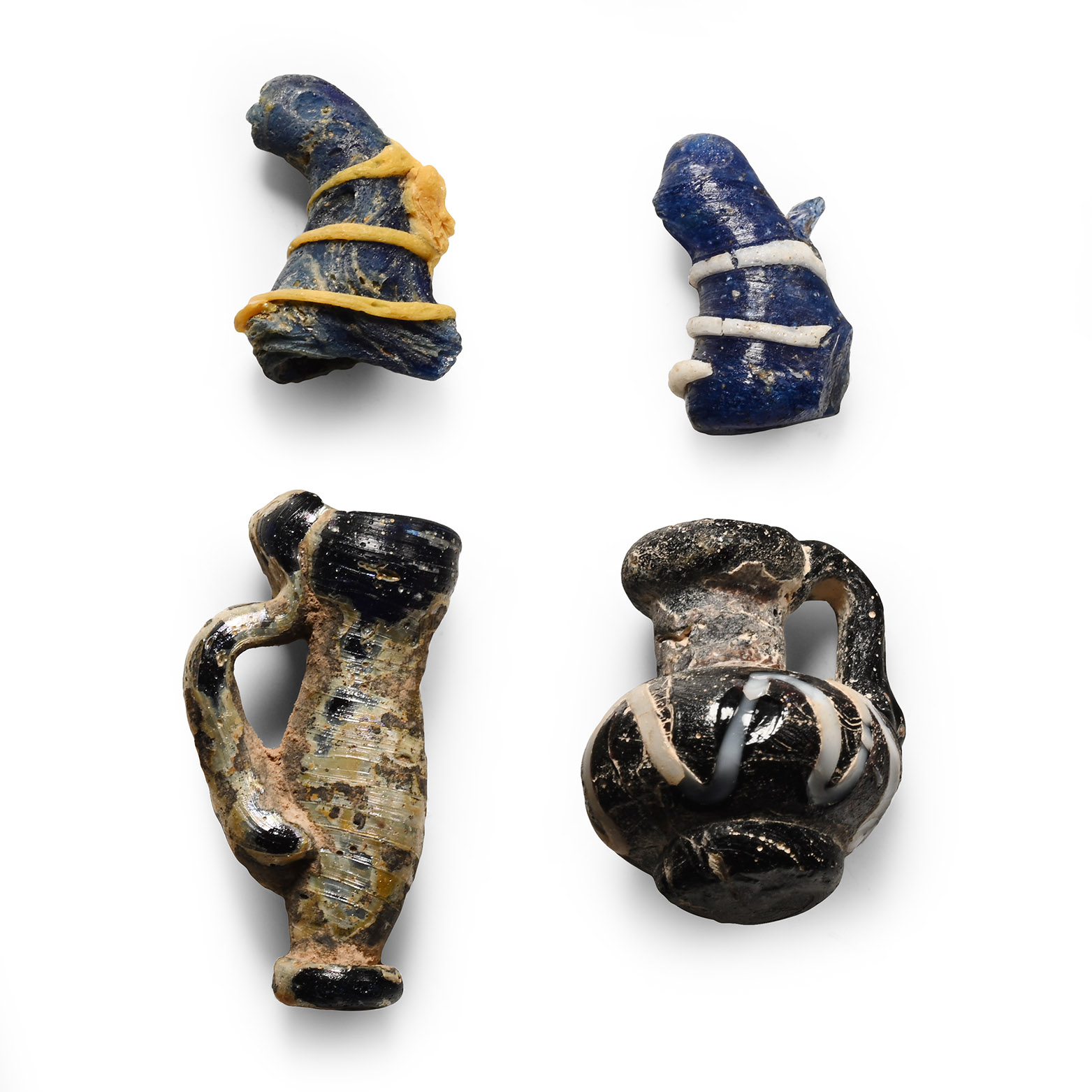
Roman Miniature Glass Group
1ST-4TH CENTURY A.D.
3/4 - 1 1/4 in. (14 grams total, 18-30 mm).
Comprising: a blue ewer with applied trails to the body; slender vase with applied handle; two small bottoms of toilet bottles with trails in contrasting colours. [4, No Reserve]
ProvenanceFrom the private collection of Mr K.A., acquired in the 1990s-early 2000s.
This lot is accompanied by an illustrated lot declaration signed by the Head of the Antiquities Department, Dr Raffaele D'Amato.
Cf. for a blue toilet bottle with a similar terminal Whitehouse, D., Roman Glass in the Corning Museum of Glass, vol.2, New York, 1997, item 702.
FootnotesSome fragments of this small group belong to the category of glass toilet bottles decorated with a single trail of glass dropped onto the bottom of a spike, drawn up, then wound around wall and lower neck.
CONDITIONTimeLine Auctions follows a vetting process to ensure the authenticity and legality of all items, reinforcing our commitment to integrity and responsible trading. Each antiquity, antique, and coin lot undergoes thorough examination by a vetting committee of at least ten external specialists, professional trade association members, scientists, and archaeologists: Our Vetting Process
AUCTIONS:
TimeLine is a leading auction house specialising in antiquities, ancient art, collectables, natural history, coins, medals, and books. Our auctions offer museums, collectors, historians, and enthusiasts the opportunity to acquire unique and historically significant pieces.
-
.jpg)
Roman Green Glazed Terracotta Cup with Signature
1st-2nd century A.D.Sold for (Inc. bp): £3,380
Barrel-shaped in profile with low flared foot, stepped inner rim, two loop handles below the rim with palmette detailing; sidewall with applied motifs: clusters of discs, rosette, seated bearded man in long robe, winged female in profile, human foot - one with neatly incised retrograde legend '[T]POKOΛ' (abbreviated maker's name). 273 grams, 16.2 cm
UK private collection before 2000. Acquired on the UK art market. Private collection, London, UK. This lot has been checked against the Interpol Database of stolen works of art and is accompanied by a search certificate number no.12833-240780. This lot has been cleared against the Art Loss Register database, and is accompanied by an illustrated lot declaration signed by the Head of the Antiquities Department, Dr Raffaele D'Amato. -
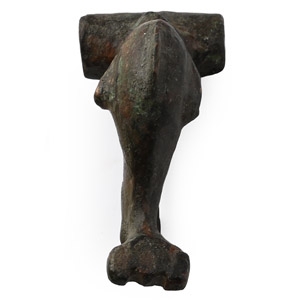
Roman Bronze Dolphin Bow Brooch
2nd century A.D.Sold for (Inc. bp): £39
With chord developing to a sturdy pin, carinated bow with lateral fins, recurved foot with bulb finial, long catchplate. 18 grams, 40 mm
Acquired from Coincraft, London, UK. From the private collection of Kenneth Machin (1936-2020), Buckinghamshire, UK; his collection of antiquities and natural history was formed since 1948; thence by descent. Accompanied by a Coincraft certificate of authenticity. This lot is accompanied by an illustrated lot declaration signed by the Head of the Antiquities Department, Dr Raffaele D'Amato. -
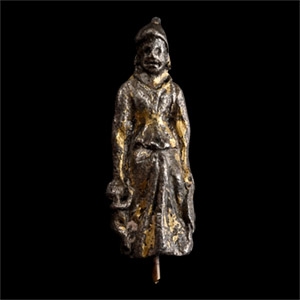
Roman Silver-Gilt Statuette of Athena
1st-2nd century A.D.Sold for (Inc. bp): £433
Modelled in the round, standing erect with crested helmet, shield in her left hand, small shield at her right knee. 4.62 grams, 24 mm
Acquired in the late 1980s-early 1990s. Private collection, London. This lot is accompanied by an illustrated lot declaration signed by the Head of the Antiquities Department, Dr Raffaele D'Amato.
In Greek myths, Athena had no child; nor did Minerva in Roman myths. Figures such as Venus and Isis, who did have children, famously were not warriors and were not depicted with weapons or armour.
