
Loading, please wait...
LOT 0153
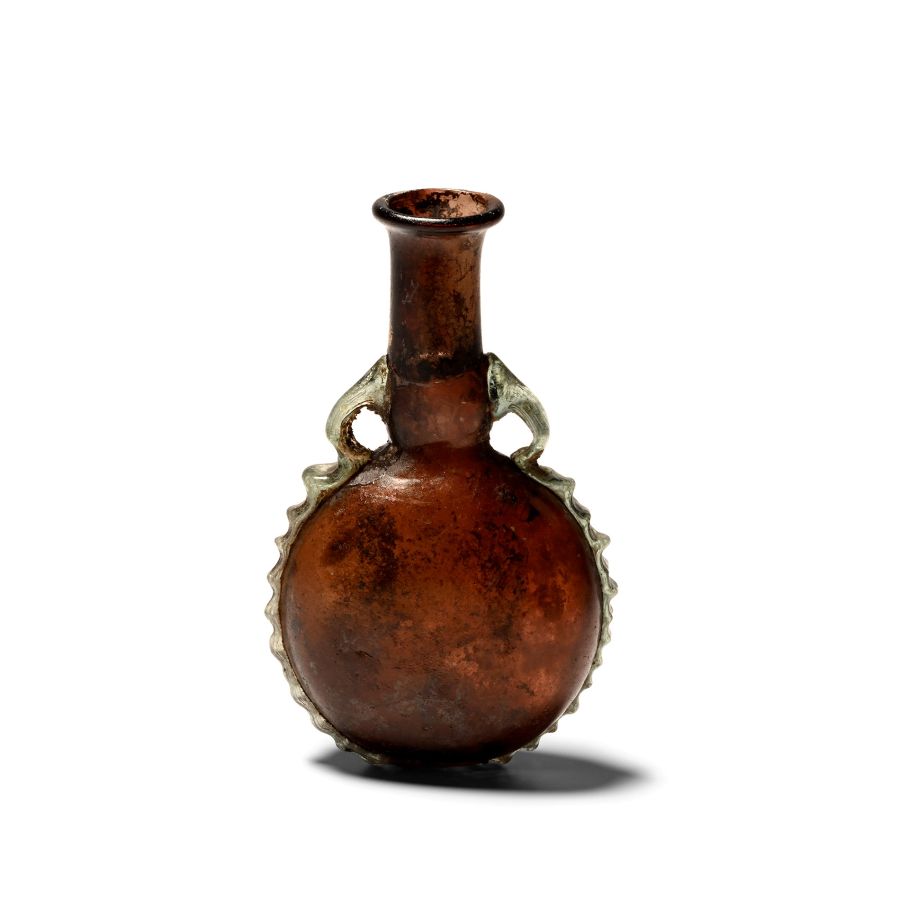
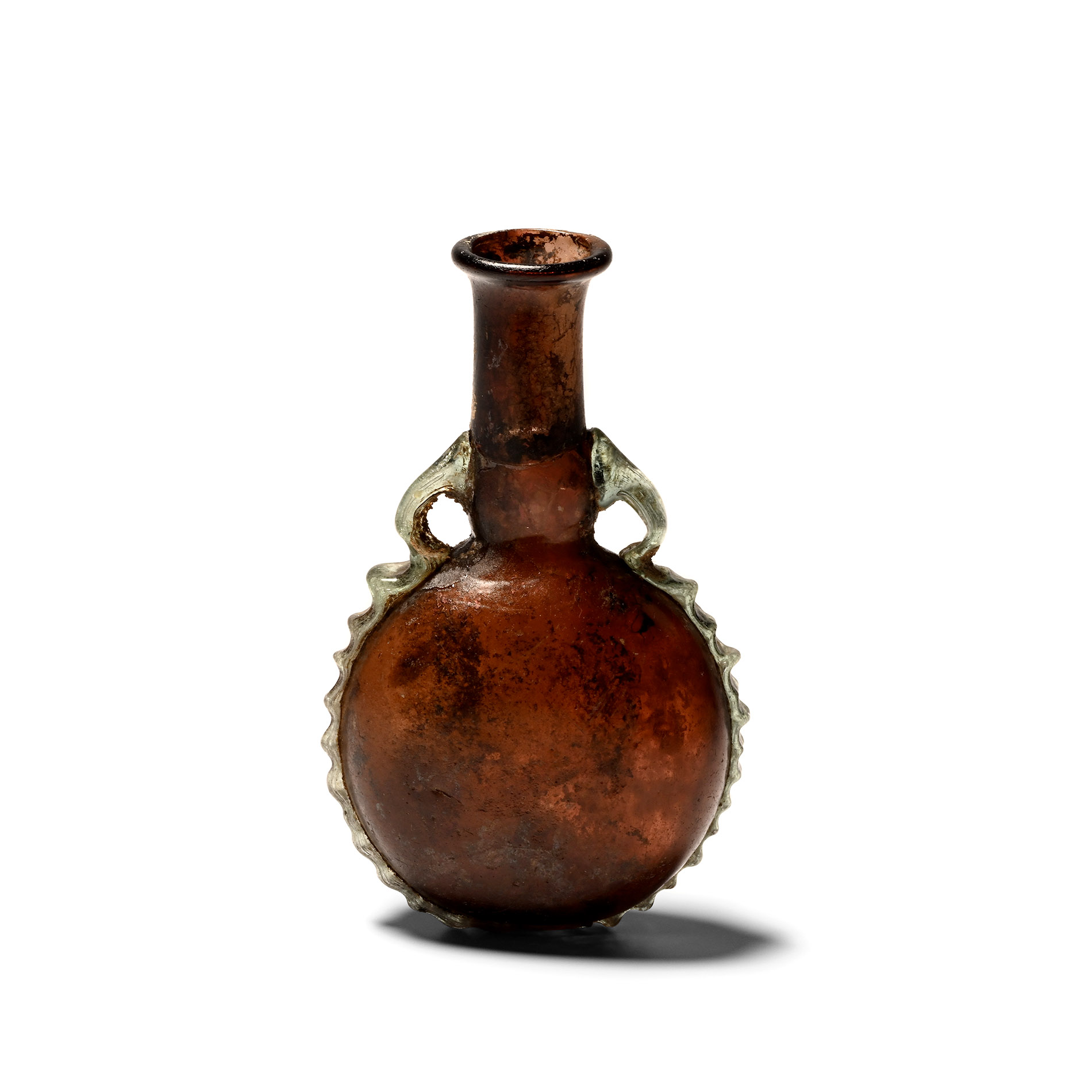
Roman Miniature Glass Flask
1ST-3RD CENTURY A.D.
3 3/4 in. (30 grams, 97 mm high).
An aubergine-coloured glass flask with tubular neck and rolled rim, applied clear glass handles and wavy trail to circumference; iridescent surfaces; repaired.
ProvenanceFrench collection, 1960s-early 2000s.
From an important Paris gallery, France.
TimeLine Auctions follows a vetting process to ensure the authenticity and legality of all items, reinforcing our commitment to integrity and responsible trading. Each antiquity, antique, and coin lot undergoes thorough examination by a vetting committee of at least ten external specialists, professional trade association members, scientists, and archaeologists: Our Vetting Process
AUCTIONS:
TimeLine is a leading auction house specialising in antiquities, ancient art, collectables, natural history, coins, medals, and books. Our auctions offer museums, collectors, historians, and enthusiasts the opportunity to acquire unique and historically significant pieces.
-
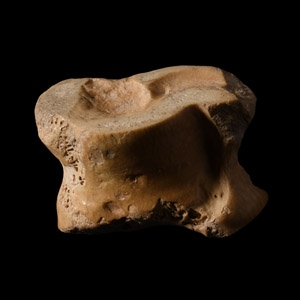
Late Roman Bone Gaming Piece
Circa 3rd century A.D.Sold for (Inc. bp): £6
A bone astragalus gaming piece with flattened base and upper face, from the game of 'knuckle bones'. 9.7 grams, 33 mm
Fine condition.
Ex UK art market, 1970s. Property of a London gentleman. -
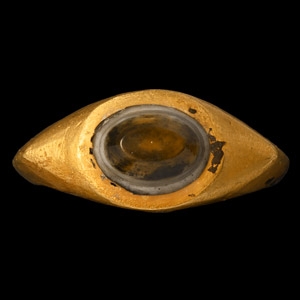
Roman Gold Ring with Sardonyx Gemstone
2nd-3rd century A.D.Estimate: £1,000 - 1,400 (‡+bp*)
Opening Bid: £500
A gold finger ring with D-section shank and steep facetted shoulders, inset sardonyx gemstone. 5.65 grams, 19.11 mm overall, 13.53 mm internal diameter
Private European collection, acquired 2000. -
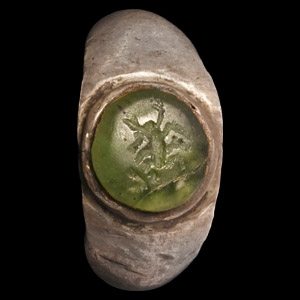
Roman Silver Ring with Glass Insect Intaglio
2nd-3rd century A.D.Sold for (Inc. bp): £364
A silver finger ring with inset glass cabochon, intaglio scorpion motif. 7.43grams, 24.82 mm overall, 18.67 mm internal diameter (approximate size British N, USA 6 1/2, Europe 13.72, Japan 13)
English private collection.
