
Loading, please wait...
LOT 0603
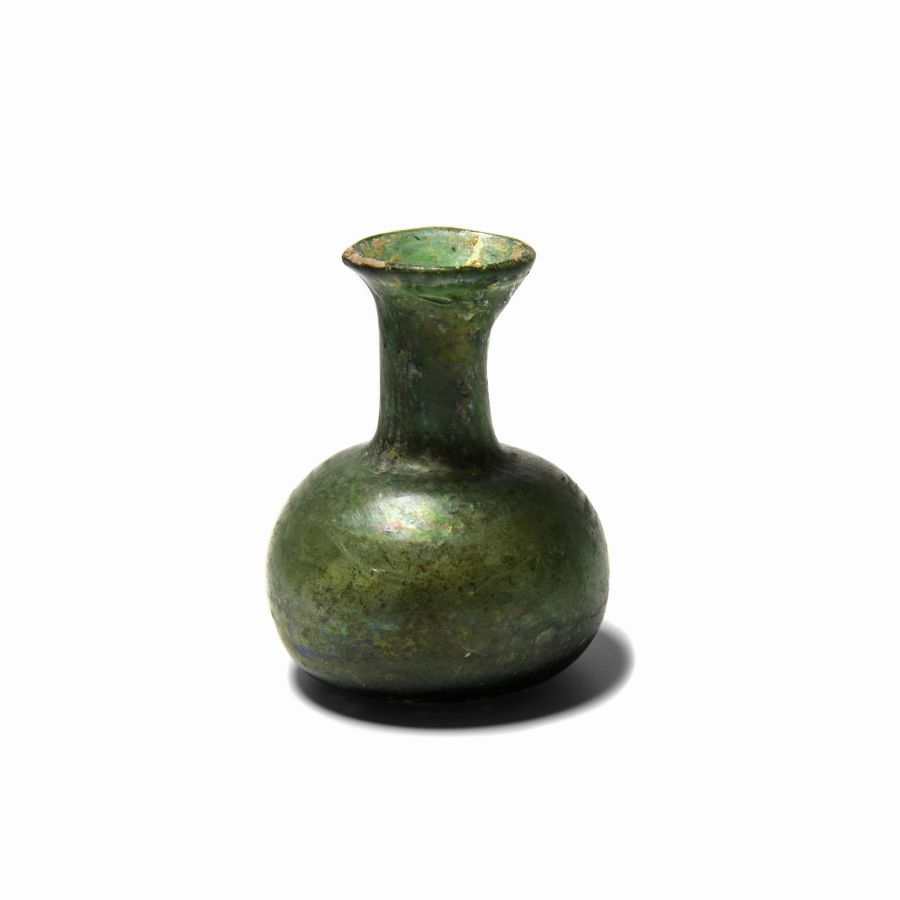
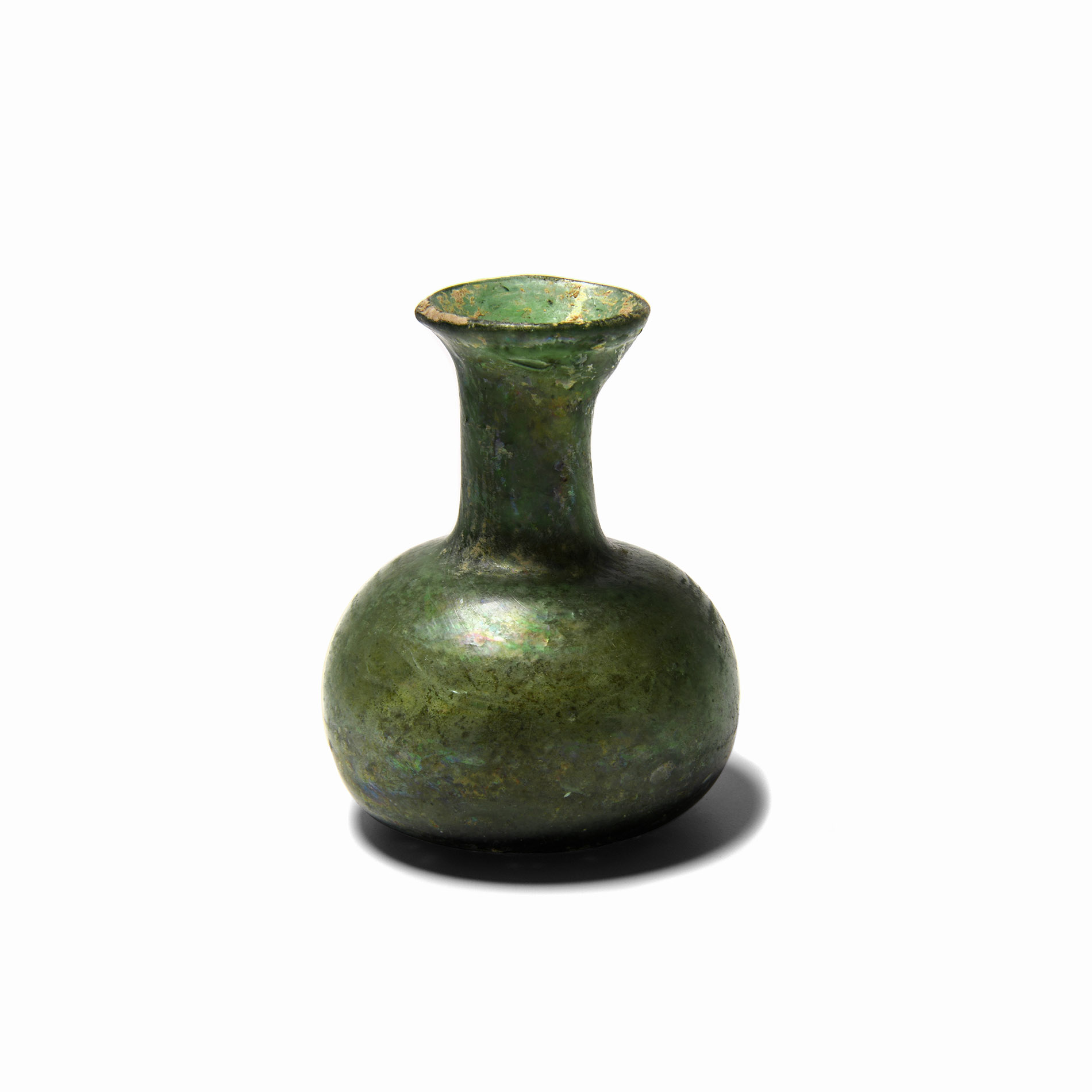
Roman Miniature Emerald Green Glass Unguentarium
2ND CENTURY A.D.
2 in. (15.8 grams, 49 mm).
An emerald green miniature glass bottle of squat, bulbous form, slender neck with flared rim; iridescent surfaces.
ProvenanceAcquired 1980-2015.
Ex Abelita family collection.
TimeLine Auctions follows a vetting process to ensure the authenticity and legality of all items, reinforcing our commitment to integrity and responsible trading. Each antiquity, antique, and coin lot undergoes thorough examination by a vetting committee of at least ten external specialists, professional trade association members, scientists, and archaeologists: Our Vetting Process
AUCTIONS:
TimeLine is a leading auction house specialising in antiquities, ancient art, collectables, natural history, coins, medals, and books. Our auctions offer museums, collectors, historians, and enthusiasts the opportunity to acquire unique and historically significant pieces.
-
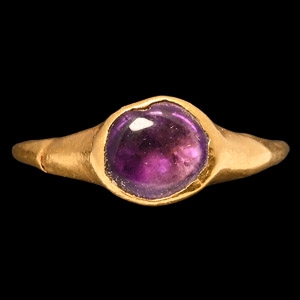
Roman Gold Ring with Gemstone
Circa 2nd-3rd century A.D.Sold for (Inc. bp): £650
A slender gold finger ring with ellipsoid cell and inset cabochon amethyst. 1.07 grams, 19.64 mm overall, 15.84 mm internal diameter (approximate size British H 1/2, USA 4, Europe 6.81, Japan 6)
UK private collection, since 1956. Formed in the 1950s by by Mr and Mrs S. Broukal, thence by decent. with Bonham's, London, New Bond Street, 30 November 2016, lot 155 [Part]. English private collection. -
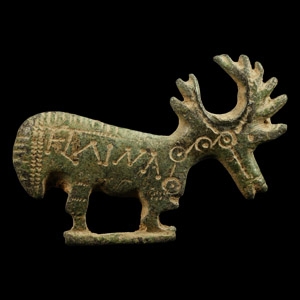
Roman Deer Brooch for Flaina
2nd century A.D.Sold for (Inc. bp): £845
A copper-alloy zoomorphic plate brooch, in the shape of a deer with two legs, a short tail and a complete antler, characterised by a series of transverse grooves, the body of the animal with the inscription 'FLAINA' in Latin letters; pin lugs and remains of ferrous pin to the reverse. 11.5 grams, 41 mm
Acquire in the 1990s. Ex Cambridgeshire, UK, collection.
Roman fibulae came in a variety of shapes and embellishments. In the Roman Empire, the fibula was both functional and decorative, as men and women wore it to fasten their aprons and cloaks. A similar function was performed by pins intended to hold heavy garments such as cloaks. This type of fibulae were probably produced in Pannonia, from where they were exported around the Empire. Another centre of production of deer fIbulae was probably Roman Britannia. -
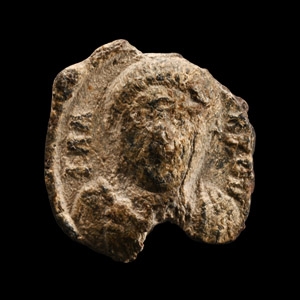
Roman Lead Sealing with Bust of an Emperor
3rd-4th century A.D.Sold for (Inc. bp): £20
A round lead seal with male portrait, wearing a military mantle fastened on the right side by a fibula, three Latin letters on the left side, possibly 'I A A'. 2.3 grams, 13 mm
Acquired in the 1970s. Important European collection.
Lead seals were used to seal documents. The sealing shows a facing male head with a bearded face, probably the portrait of a Roman emperor or a high imperial functionary, like a Dux or a Praefectus. The hairstyle is that of the Dominate, or late 3rd century AD.
