
Loading, please wait...
LOT 0733
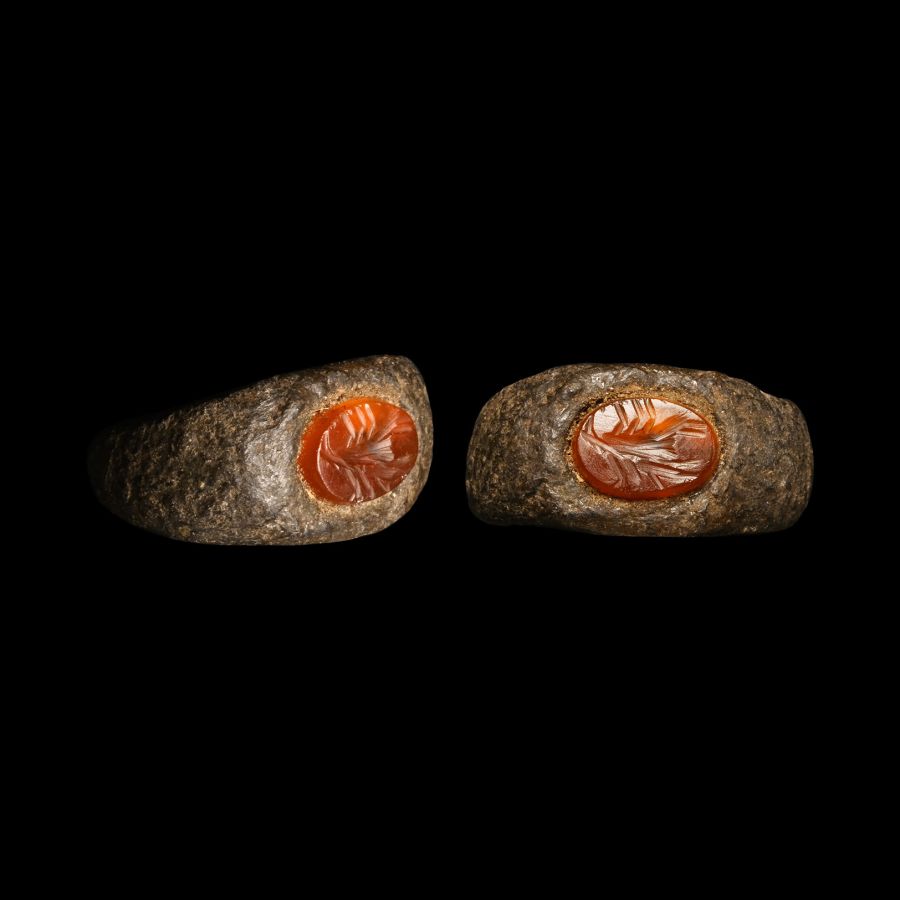
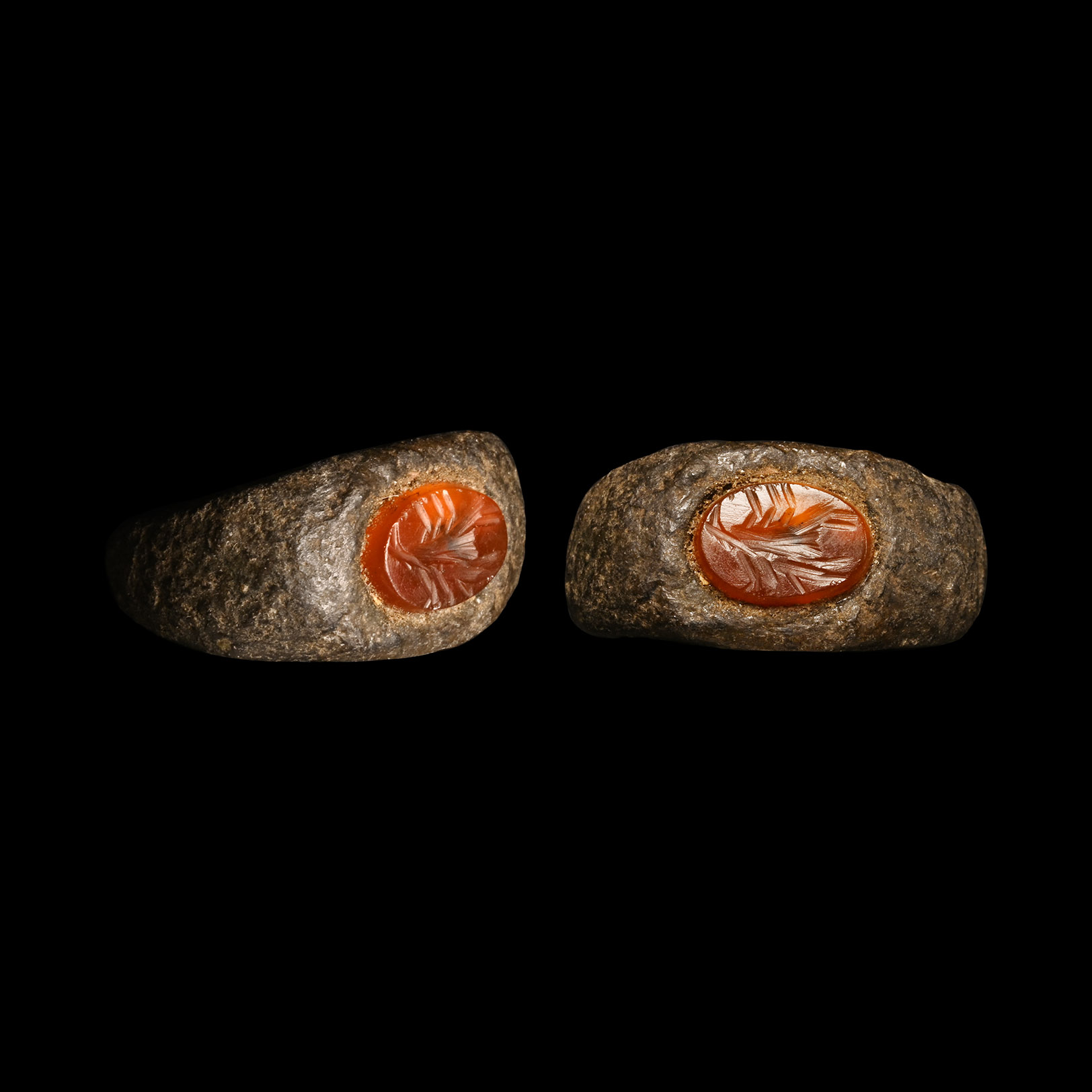
Roman Military Ring with Scorpion Gemstone
CIRCA 2ND CENTURY A.D.
3/4 in. (4.31 grams, 21.20 mm overall, 17.45 mm internal diameter (approximate size British J, USA 4 3/4, Europe 8.69, Japan 8)).
A bronze finger ring with inset carnelian gemstone, intaglio scorpion. [No Reserve]
ProvenanceAcquired before 2000.
From the collection of a European gentleman living in the UK.
The ring could have belonged to a praetorian guardsman. The scorpion was one of the main symbols of the praetorian guard since the age of Augustus.
CONDITIONTimeLine Auctions follows a vetting process to ensure the authenticity and legality of all items, reinforcing our commitment to integrity and responsible trading. Each antiquity, antique, and coin lot undergoes thorough examination by a vetting committee of at least ten external specialists, professional trade association members, scientists, and archaeologists: Our Vetting Process
AUCTIONS:
TimeLine is a leading auction house specialising in antiquities, ancient art, collectables, natural history, coins, medals, and books. Our auctions offer museums, collectors, historians, and enthusiasts the opportunity to acquire unique and historically significant pieces.
-
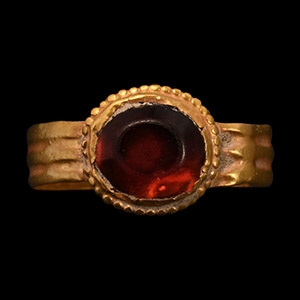
Roman Gold Ring with Garnet Gemstone
1st century B.C.-1st century A.D.Sold for (Inc. bp): £650
A gold ring composed of a flat-section hoop with decorative channelling, oval bezel with granulated border, set with a flat-top polished garnet gemstone. 0.99 grams, 16.41 mm overall, 14.20 mm internal diameter (approximate size British F 1/2, USA 3, Europe 4.3, Japan 4)
Acquired 1970-2000s. Ex Abelita family collection. -
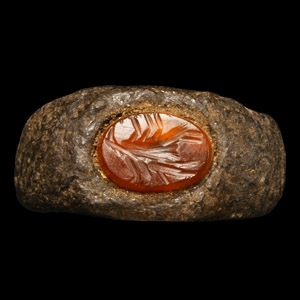
Roman Military Ring with Scorpion Gemstone
Circa 2nd century A.D.Sold for (Inc. bp): £111
A bronze finger ring with inset carnelian gemstone, intaglio scorpion. 4.31 grams, 21.20 mm overall, 17.45 mm internal diameter (approximate size British J, USA 4 3/4, Europe 8.69, Japan 8)
Acquired before 2000. From the collection of a European gentleman living in the UK.
The ring could have belonged to a praetorian guardsman. The scorpion was one of the main symbols of the praetorian guard since the age of Augustus. -
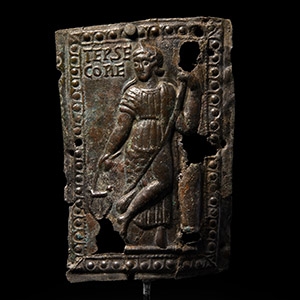
Roman Repousse Plaque with Muse Terpsichore
4th century A.D.Estimate: £700 - 900 (+bp*)
Opening Bid: £389
A square plaque from a casket or votive panel with the embossed image of the Muse Terpsichore, dressed in a short sleeved tunica talaris, standing with the weight on the right leg, the other leg bent in front of the body, the right hand holding a lyre hanging from a strap, in the left hand a staff; inscription in late Latin beside the right part of the head reading 'TEPSECORE'; the figure framed with an embossed edge; accompanied by a custom-made display stand. 41 grams total, 10.6 cm high including stand
Fine condition.
Acquired in the 1970s. Ex London collection.
The plaque probably came from a casket similar to the one of Carnuntum, which represent the images of the Muses on one side and biblical scenes to the other side. These scenes were popular motifs in Late Antiquity, where caskets with Christian and mythological images were widespread, especially in Pannonia.
