
Loading, please wait...
LOT 0660
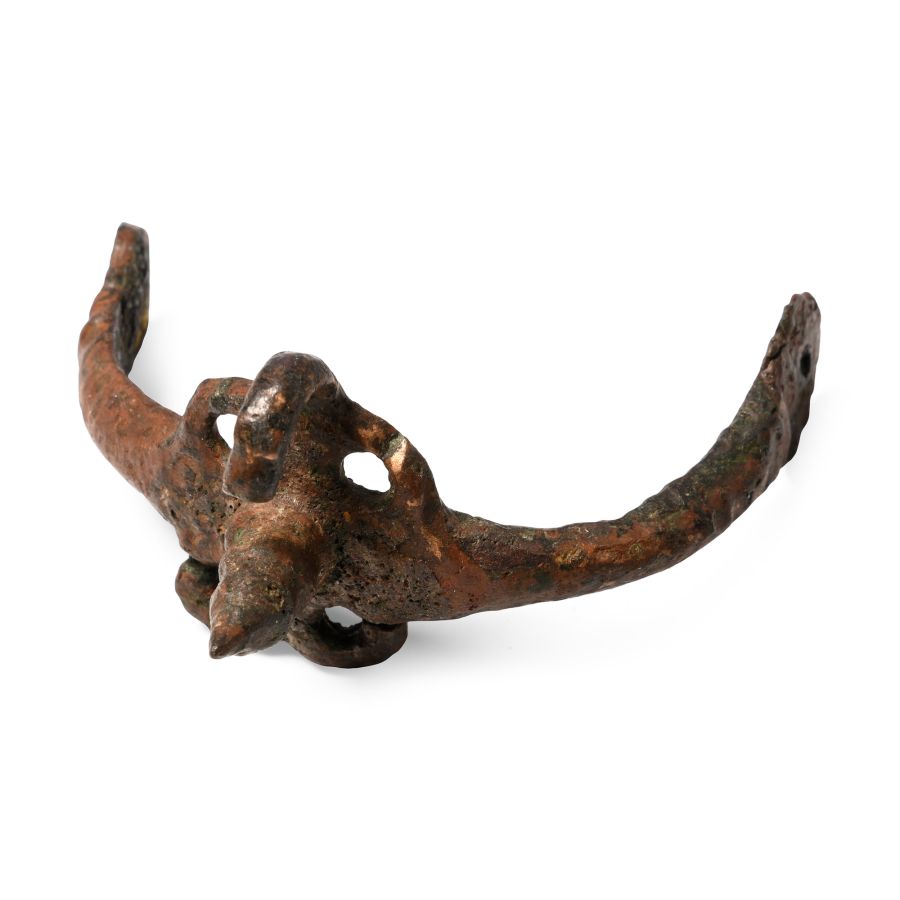
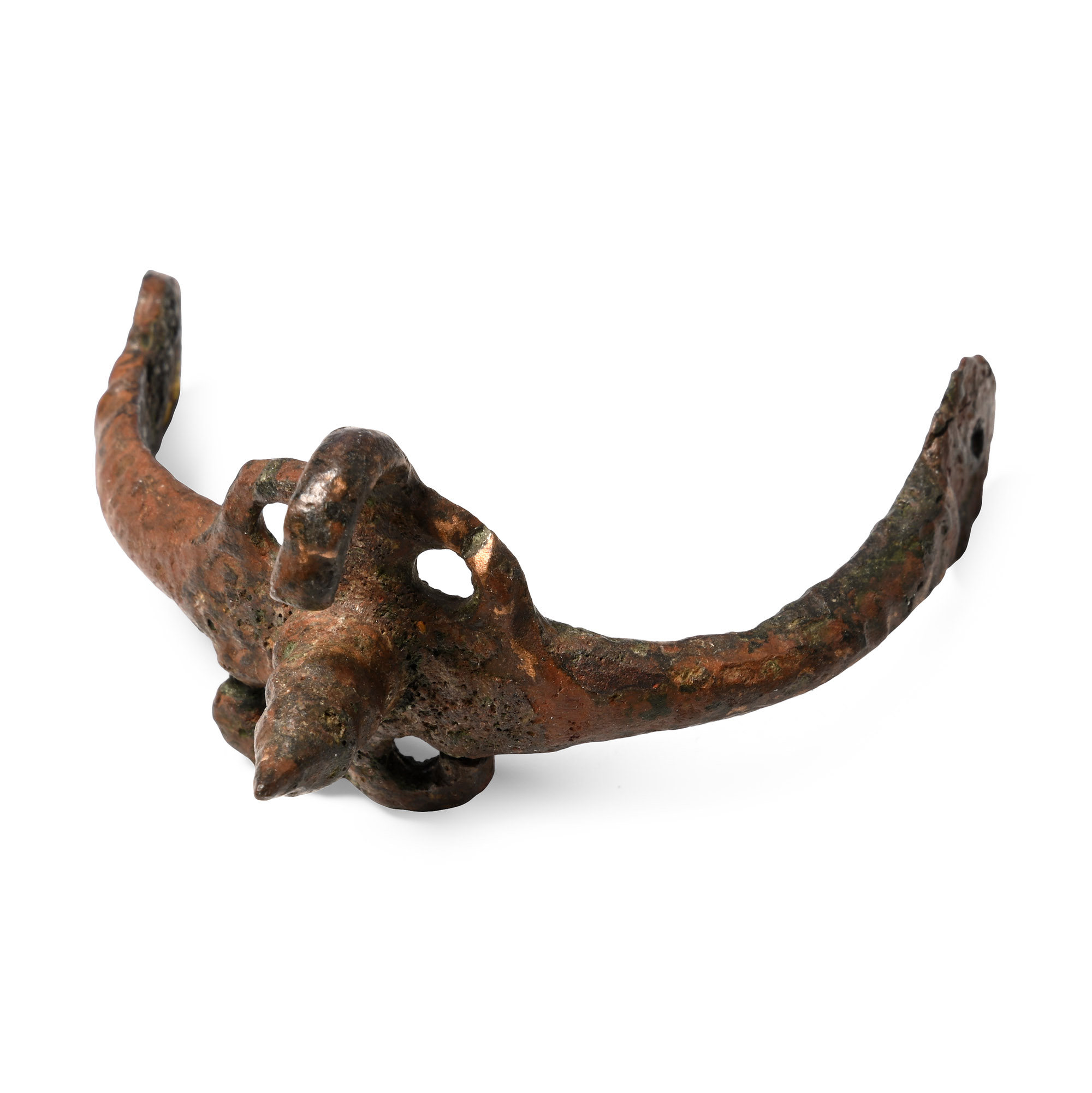
Roman Military Bronze Prick Spur
3RD-4TH CENTURY A.D.
2 3/8 in. (28.8 grams, 59 mm).
D-section curving body with pierced lobe finials, a ribbed conical spike surrounded by four pierced lobes and a curving hook below, an inked collector's number on the inner face.
ProvenanceFrom a Wiltshire, UK, collection, 1990s.
CONDITIONTimeLine Auctions follows a vetting process to ensure the authenticity and legality of all items, reinforcing our commitment to integrity and responsible trading. Each antiquity, antique, and coin lot undergoes thorough examination by a vetting committee of at least ten external specialists, professional trade association members, scientists, and archaeologists: Our Vetting Process
AUCTIONS:
TimeLine is a leading auction house specialising in antiquities, ancient art, collectables, natural history, coins, medals, and books. Our auctions offer museums, collectors, historians, and enthusiasts the opportunity to acquire unique and historically significant pieces.
-
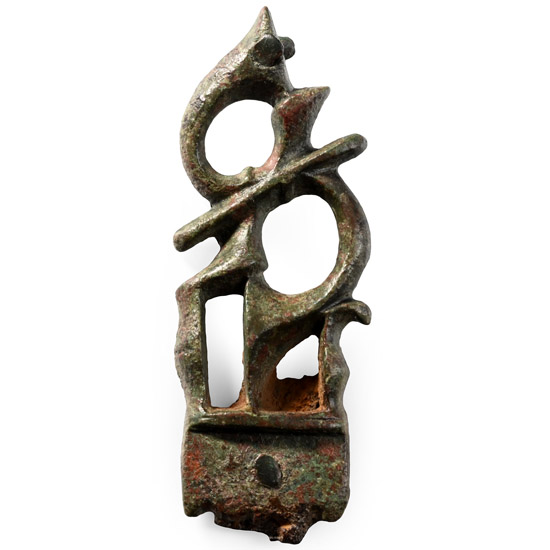
Romano-British Bronze Trumpet-Whorl Knife Handle
1st-2nd century A.D.Sold for (Inc. bp): £52
Openwork handle formed of curving trumpet-whorls, rectangular bar with a single rivet below. 14.8 grams, 58 mm
From the private coin collection of a West London, UK, gentleman, formed since the mid 1980s. -
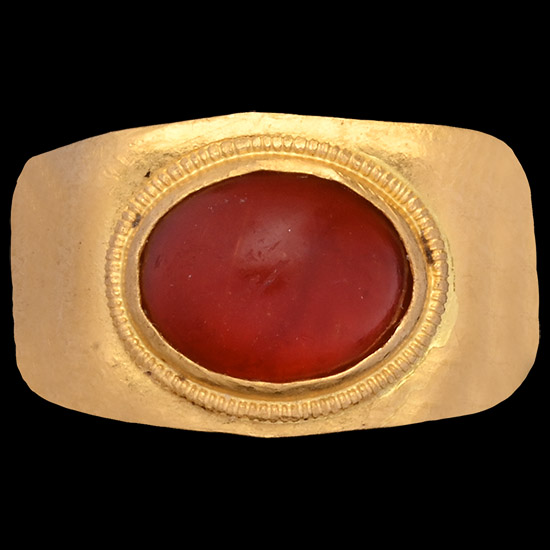
Roman Gold Ring with Carnelian Cabochon
2nd-4th century A.D. or laterEstimate: £500 - 700 (+bp*)
Opening Bid: £250
Flat-section shank flaring at the shoulders, filigree border around the bezel set with a replaced carnelian cabochon. 3.87 grams, 21.70 mm overall, 17.49 x 16.43 mm internal diameter (approximate size British L, USA 5 3/4, Europe 11.24, Japan 10)
Private collection, Suffolk, UK. -
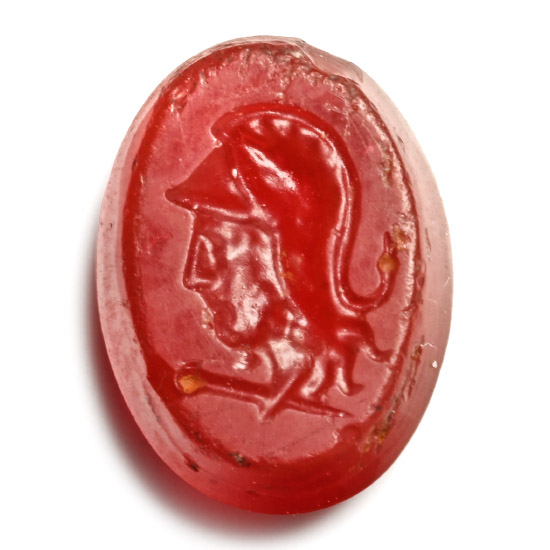
Roman Carnelian Gemstone with Bust of Minerva
2nd-3rd century A.D.Sold for (Inc. bp): £124
Scaraboid type with incuse design of a profile bust of Minerva wearing a Corinthian-style crested helmet; supplied with a museum-quality impression. 0.46 grams, 10 mm
From the private collection of a European gentleman (1942-2024), formed since the 1970s.
