
Loading, please wait...
LOT 0659
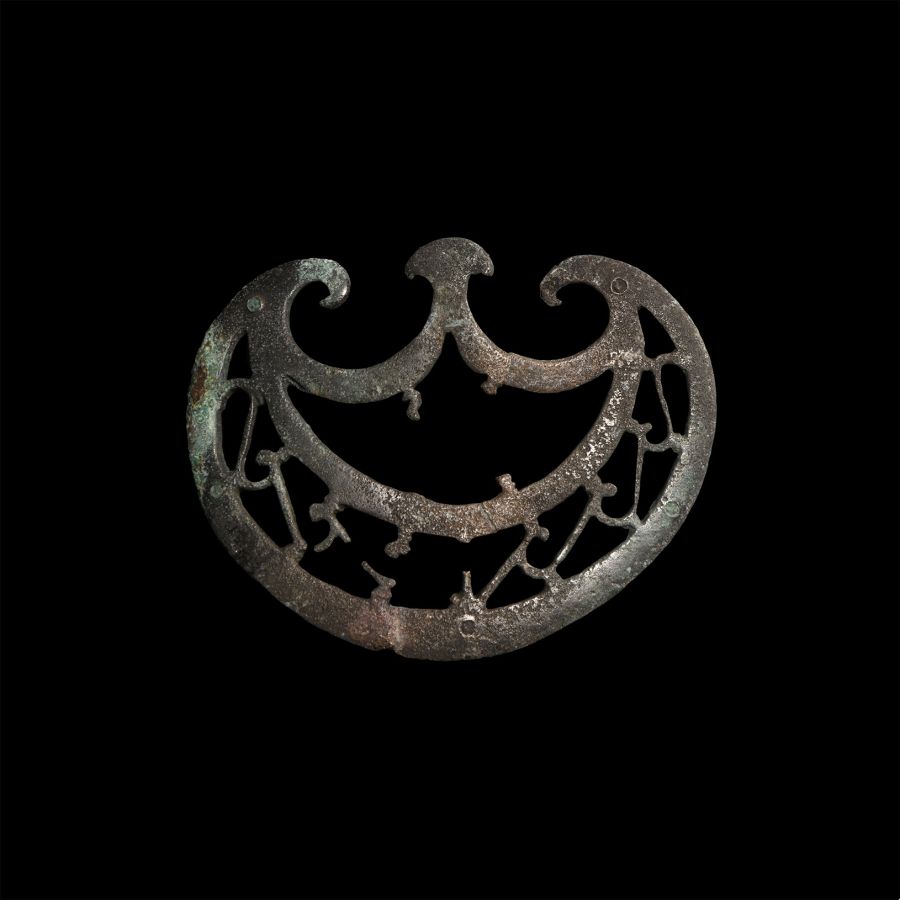
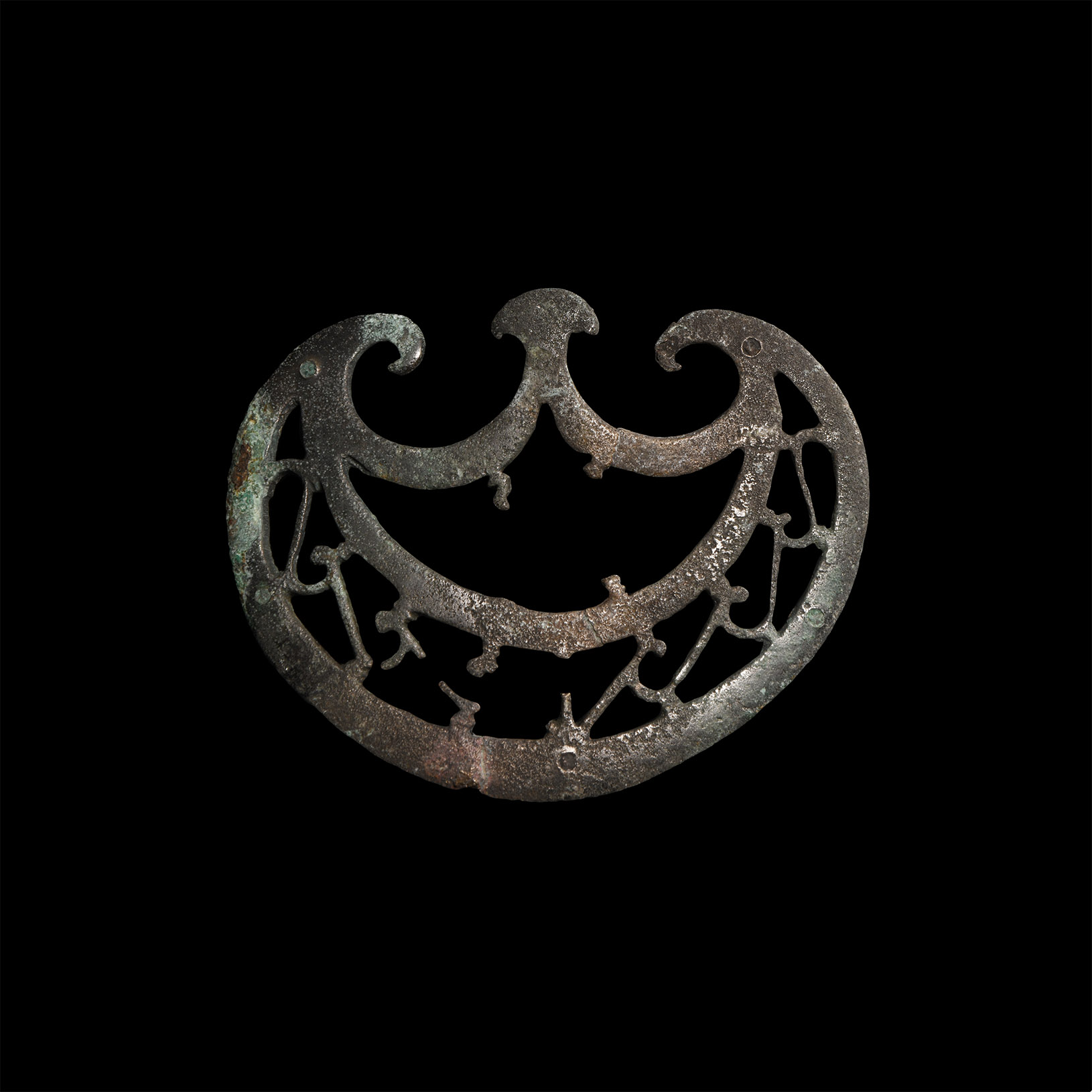
Roman Military Baldric Fitting
3RD CENTURY A.D.
3 in. (25.2 grams, 75 mm).
A copper-alloy military baldric phalera of crescentic form, with scrolled terminals and openwork centre; remains of mounting lugs to reverse. [No Reserve]
ProvenanceAcquired before 2000.
From the collection of a European gentleman living in the UK.
TimeLine Auctions follows a vetting process to ensure the authenticity and legality of all items, reinforcing our commitment to integrity and responsible trading. Each antiquity, antique, and coin lot undergoes thorough examination by a vetting committee of at least ten external specialists, professional trade association members, scientists, and archaeologists: Our Vetting Process
AUCTIONS:
TimeLine is a leading auction house specialising in antiquities, ancient art, collectables, natural history, coins, medals, and books. Our auctions offer museums, collectors, historians, and enthusiasts the opportunity to acquire unique and historically significant pieces.
-
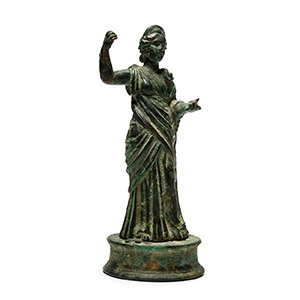
Roman Statuette of the Goddess Fortuna
1st-2nd century A.D.Estimate: £2,000 - 3,000 (+bp*)
Opening Bid: £1,000
A bronze statuette of the goddess Fortuna, modelled in the round standing on a circular plinth base, her feet emerging from beneath her floor length robes, her hair held in a chignon at the back of the head and crowned with a diadem. 205 grams total, 13 cm high including stand
Acquired London art market in early 1960s. From the private collection of the late Walter Steinberg, London, UK. This lot has been checked against the Interpol Database of stolen works of art and is accompanied by search certificate no.11633-199467.
The cult of Fortuna was associated with the round of the agricultural year, the wheel of time and the changing fortunes of the individual, both bad and good. The Rota Fortunae (wheel of fortune) is a symbol of the changeable nature of one's luck and was already a recognised idiom by the time of Cicero, writing in the 1st century B.C. -
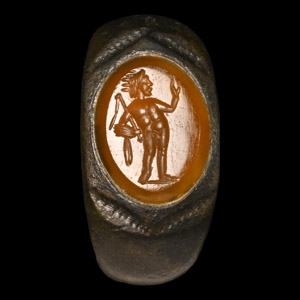
Roman Ring with Sol Gemstone
Circa 1st century B.C.-3rd century A.D.Sold for (Inc. bp): £468
A bronze finger ring with inset carnelian cloison, intaglio Sol standing with whip. 5.17 grams, 20.88 mm overall, 17.37 mm internal diameter (approximate size British L, USA 5 3/4, Europe 11.24, Japan 10)
Acquired before 2000. From the collection of a European gentleman living in the UK. -
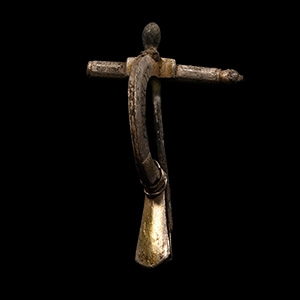
Roman Silver Brooch with Dedicatory Inscription
4th century A.D.Estimate: £600 - 800 (+bp*)
Opening Bid: £325
A silver military crossbow fibula with rounded knobs, the bow with a dedicatory inscription in Latin letters 'VTER FELIX IURE VICTO'. 19.5 grams, 62 mm
Acquire in the 1990s. Ex Cambridgeshire, UK, collection.
The dedicatory inscription 'VTERE FELIX', 'use it with good luck' or 'with happiness' is often found on Roman military artefacts, like belt fittings, brooches, and armlets; but it is rarely accompanied by 'IURE VICTO' inscription ([being the] rightful winner). The inscription is typical of the late Roman military world, but it can also refer to people using the brooch in civil duties, these fibulae being ordinarily gifted to the militia armata and non armata.
