
Loading, please wait...
LOT 0567
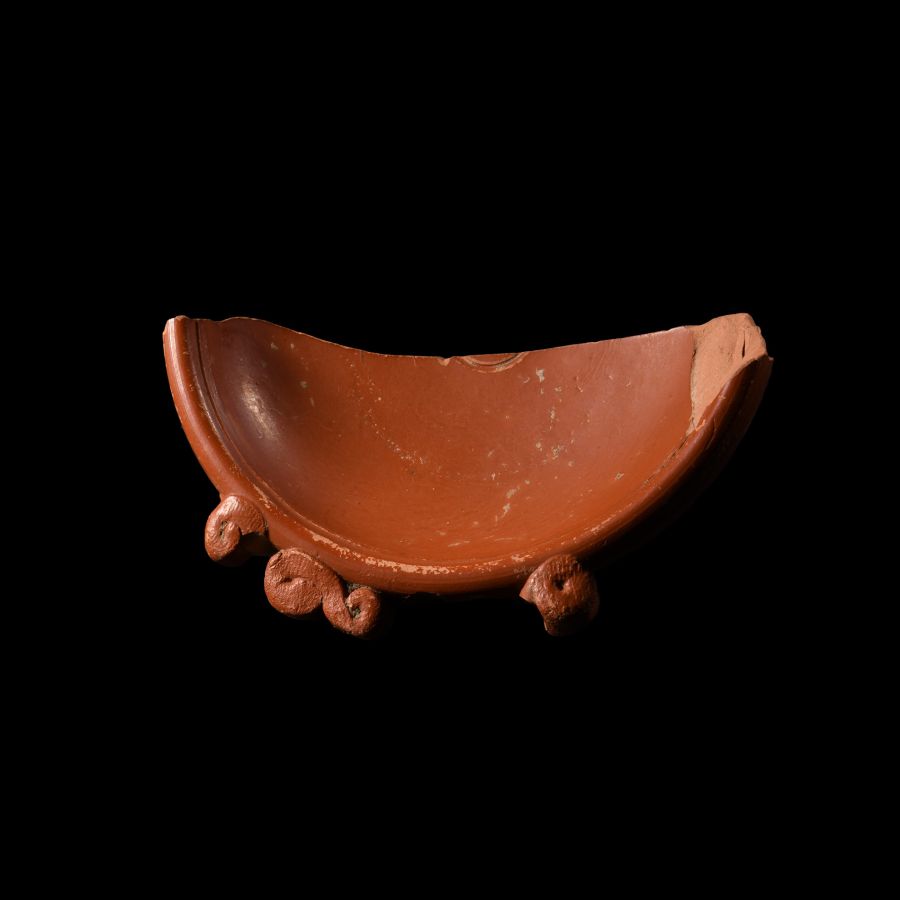
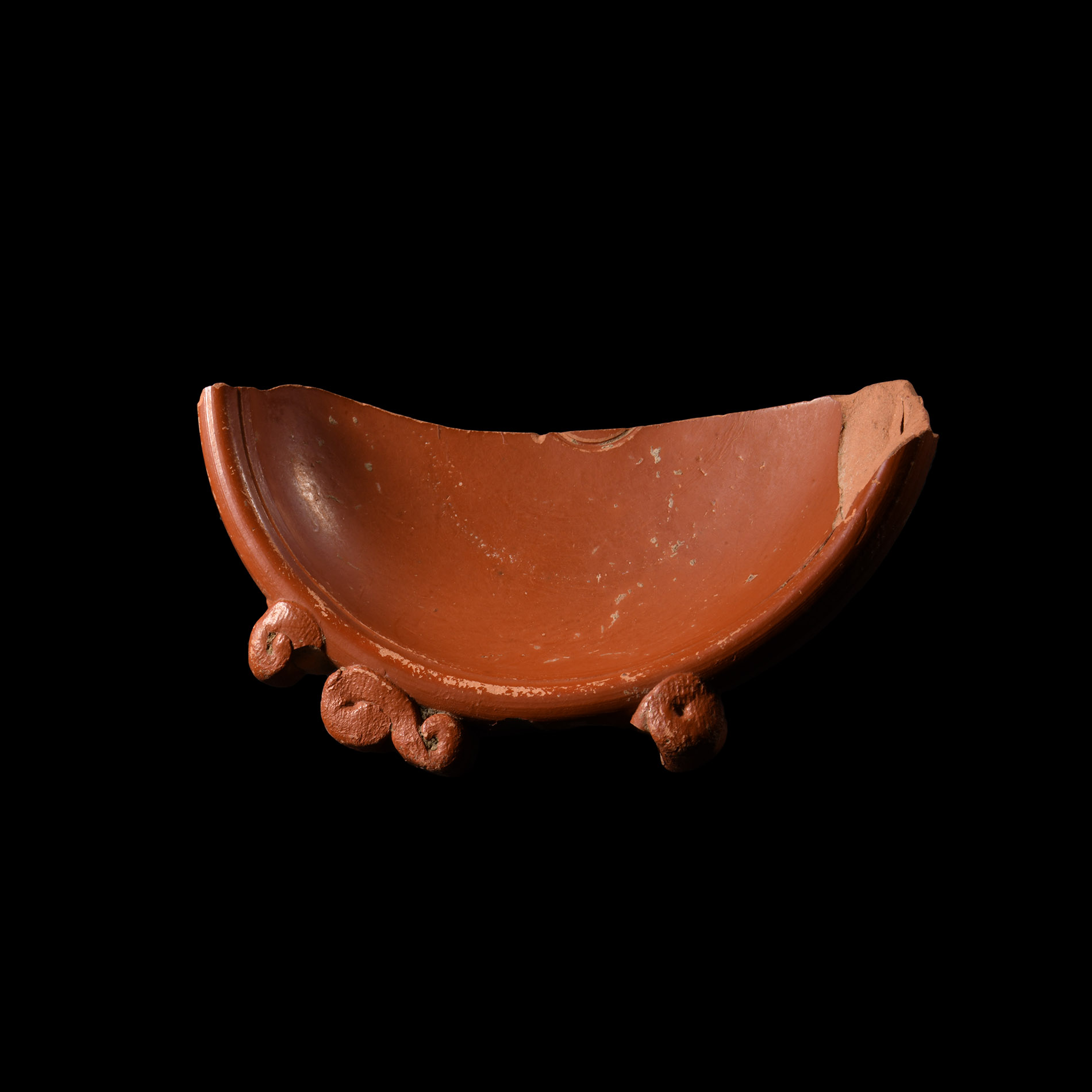
Roman 'Midlands' Samian Ware Bowl Fragment
CIRCA 1ST CENTURY A.D.
3 in. (26 grams, 78 mm).
From a small bow with high foot and scrolled strap handle. [No Reserve]
ProvenanceUK private collection.
Found East Midlands, UK.
Acquired from Alan Cherry at the Birmingham Coin Fair, 2006.
Property of a Nottinghamshire gentleman.
Accompanied by an illustrated identification card including provenance.
TimeLine Auctions follows a vetting process to ensure the authenticity and legality of all items, reinforcing our commitment to integrity and responsible trading. Each antiquity, antique, and coin lot undergoes thorough examination by a vetting committee of at least ten external specialists, professional trade association members, scientists, and archaeologists: Our Vetting Process
AUCTIONS:
TimeLine is a leading auction house specialising in antiquities, ancient art, collectables, natural history, coins, medals, and books. Our auctions offer museums, collectors, historians, and enthusiasts the opportunity to acquire unique and historically significant pieces.
-
.jpg)
Roman Bronze Antinous Balsamarium
2nd-3rd century A.D.Sold for (Inc. bp): £2,405
Comprising the bust of Antinous or Bacchus (Greek Dionysus); the head modelled in the round, hair with voluminous waves, semi-naturalistic facial features, muscular neck and chest, two loops at the sides for the handle, silver inlaid eyes restored with black glass pupils. 300 grams, 10 cm
Acquired on the German art market before 2000. From an EU collection before 2020.
The balsamarium (ointment or balsam container), is a modern term reflecting the Roman use of relatively small vessels as containers for aromatic oils, or storing and dispensing cosmetic liquids and/or scented powdered substances. These vessels were produced in the first three centuries of the Roman Empire in a variety of forms, including busts and animal shapes. The present balsamarium testifies to the power of imperial imagery and its dissemination across the empire, as the vessel portrays Antinous, Emperor Hadrian's ‘favourite’, whose untimely death in a boating accident led to his deification. The general facial characteristics of our figure are consistent with the stylistic portrait features of late antiquity and the personal features of Antinous, here appearing with large almond-shaped eyes, set into slightly upturned, incised pupils. -
Roman Gold Linked Chain
1st-2nd century A.D.Estimate: £15,000 - 20,000 (+bp*)
Opening Bid: £7,500
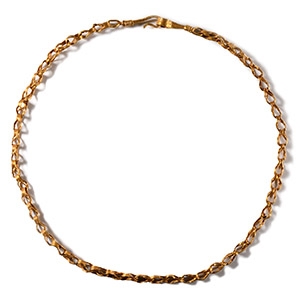
Loop-in-loop chain, each link formed from two strands of thick gold wire; thick hook with the end coiled about the shank; eye with ribbed detailing and coiled end; housed in a custom-made display case. 28.15 grams, 46.5 cm long
Excellent condition
Acquired in the late 1980s-early 1990s. Important North West London collection. Accompanied by an academic report by Dr Raffaele D’Amato. This lot has been checked against the Interpol Database of stolen works of art and is accompanied by search certificate no.11937-210478.
Among the necklaces manufactured from gold mesh (hormoi or chains), there are two recognisable fundamental types: the first, shorter and with endings suitable for being fixed on fabric, was used to adorn clothes, hooked at shoulder height. The second type (like our specimen) was worn around the neck and was generally fitted with a simple hook-and-eyelet closure. -
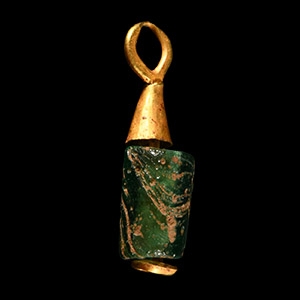
Roman Gold Pendant with Bead Drop
1st-4th century A.D.Sold for (Inc. bp): £143
With an emerald green cylindrical bead, conical gold collar beneath the suspension loop. 0.38 grams, 14 mm high
Property of a UK gentleman, acquired in the 1970s. Property of an East Sussex, UK, gentleman. Accompanied by an old identification ticket.
