
Loading, please wait...
LOT 0135
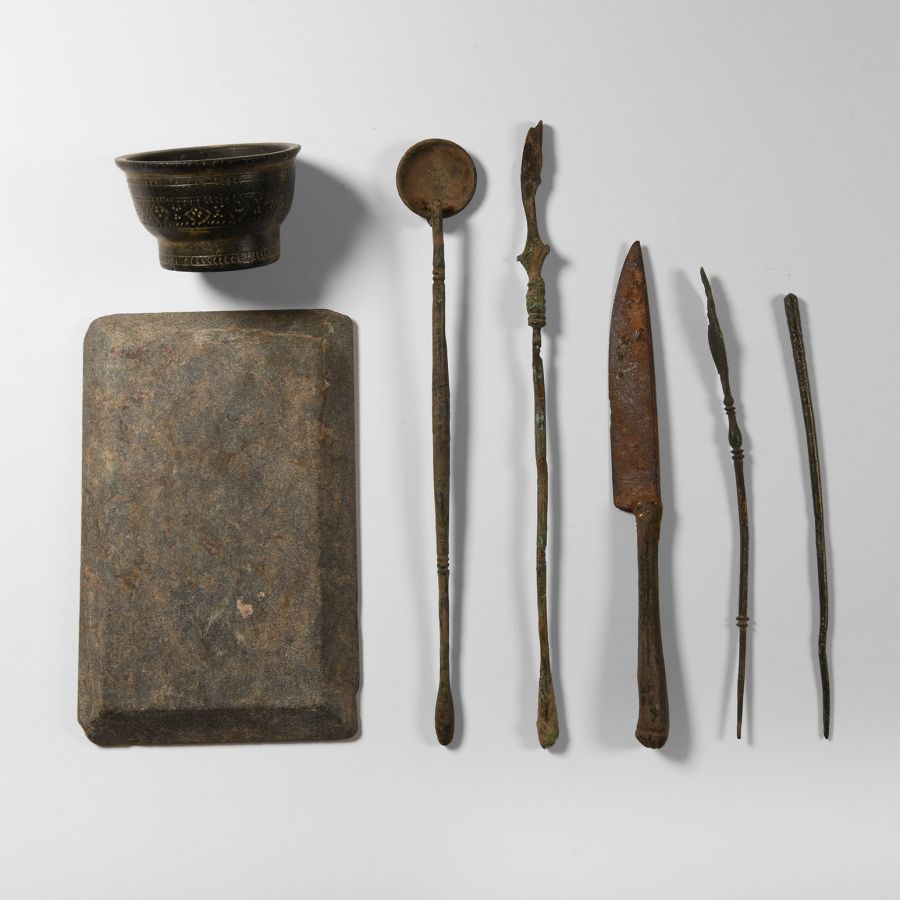
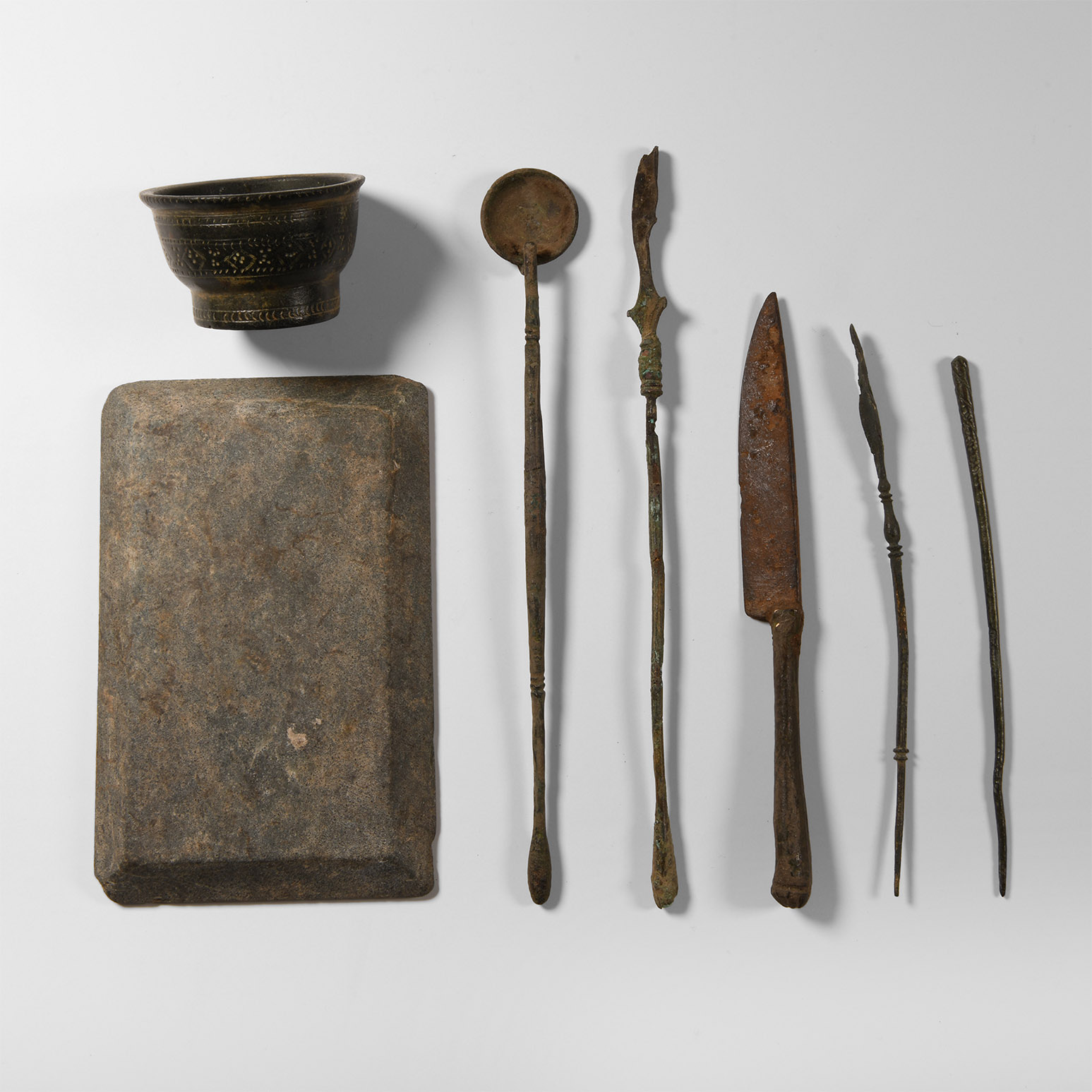
Roman Medical Implements and Palette
1ST-4TH CENTURY A.D.
1 7/8 - 6 3/4 in. (332 grams total, 4.8-17 cm).
A copper-alloy medical instrument group comprising: a bowl with incised geometric decoration; a rectangular palette with bevelled edges; knife with single-edged iron blade and decoratively incised pommel; spoon with circular bowl, collared stem with expanded waist and finial formed as a probe; pin with tapering round-section body, shallow conical finial and decoratively incised head; a scoop probe with remains of elongated shallow scoop, expanded neck with collars, slender ribbed stem and bulbous probe to terminal; scoop with leaf-shaped bowl and balustered stem. [7]
ProvenanceAcquired before 2000.
From the collection of a European gentleman living in the UK.
TimeLine Auctions follows a vetting process to ensure the authenticity and legality of all items, reinforcing our commitment to integrity and responsible trading. Each antiquity, antique, and coin lot undergoes thorough examination by a vetting committee of at least ten external specialists, professional trade association members, scientists, and archaeologists: Our Vetting Process
AUCTIONS:
TimeLine is a leading auction house specialising in antiquities, ancient art, collectables, natural history, coins, medals, and books. Our auctions offer museums, collectors, historians, and enthusiasts the opportunity to acquire unique and historically significant pieces.
LOT 0135
Roman Medical Implements and Palette
Estimate £600 - 800€700 - 930 (for guidance only)$810 - 1,080 (for guidance only)
-
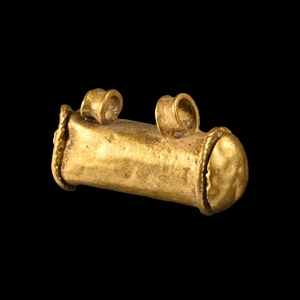
Late Roman Gold Amulet Case Pendant
5th-6th century A.D. or laterEstimate: £120 - 170 (+bp*)
Opening Bid: £60
A gold amulet case pendant composed of a cylindrical body with two suspension loops to one face, filigree collar to both arms, one end face retaining a removeable domed cap. 1.15 grams, 15 mm
Acquired 1980-2015. Ex Abelita family collection. -
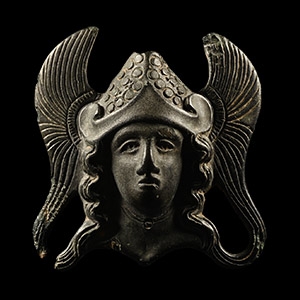
Roman Head of Minerva with Helm Appliqué
2nd-4th century A.D.Sold for (Inc. bp): £1,300
A bronze appliqué formed as the head of Minerva (Greek Athena) wearing a tall helmet with scooped brow-band and lobed ends developing to wings with radiating feather detailing; facing mask with finely detailed eyes and mouth, hanks of flowing hair connecting to the ends of the wings. 23.2 grams, 39 mm
Acquired early 1990s. Ex private American collection; thence by descent. Private Swiss collection since 1998. This lot has been checked against the Interpol Database of stolen works of art and is accompanied by search certificate no.11626-199003. -
.jpg)
Roman Key with Chain
2nd-3rd century A.D.Sold for (Inc. bp): £59
A key composed of a D-section handle and integral loop, decorated with hatched geometric motifs, notched rectangular-section stem and rectangular bit with six teeth; chain composed of nine links. 18.8 grams, 22 cm
Fine condition.
Acquired Munich, Germany, late 1990s. Property of an East London gentleman.
