
Loading, please wait...
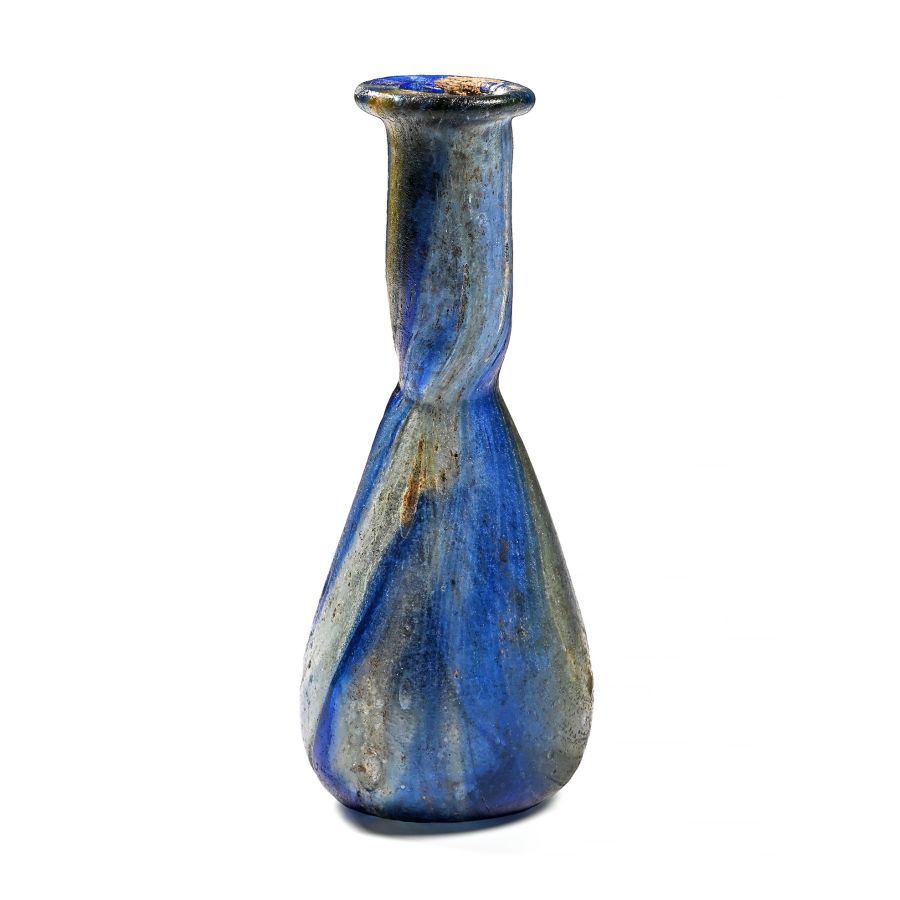
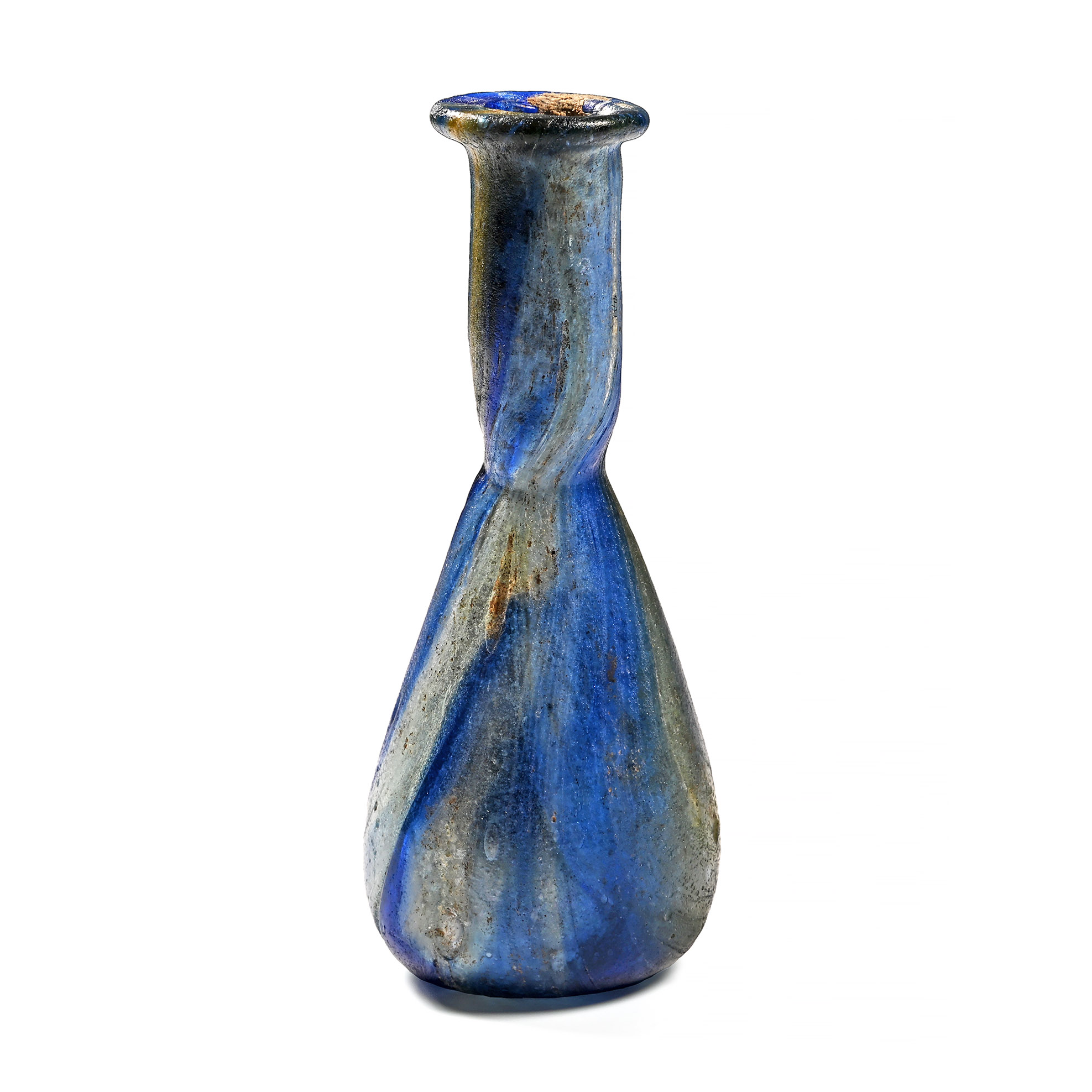
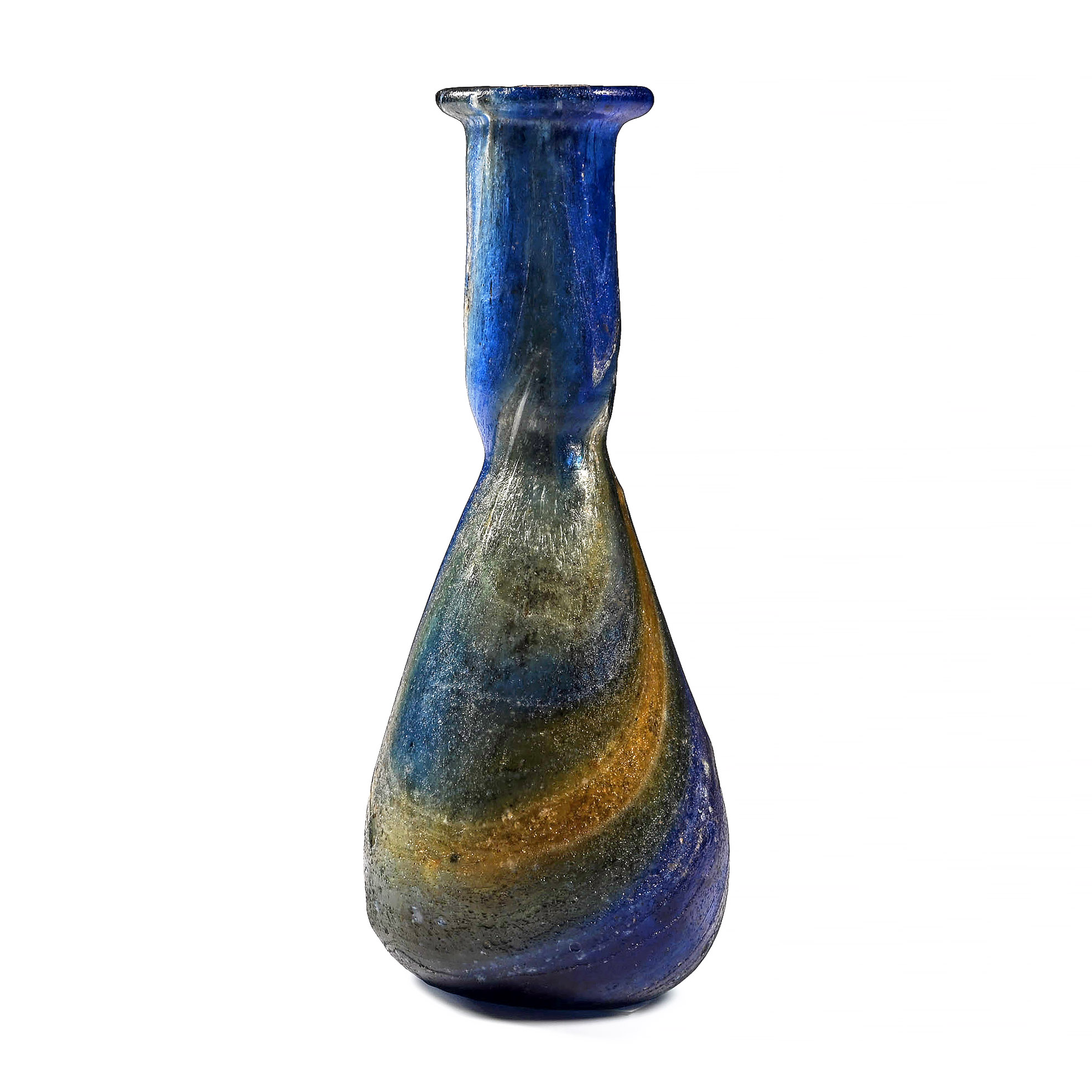
LOT 0137
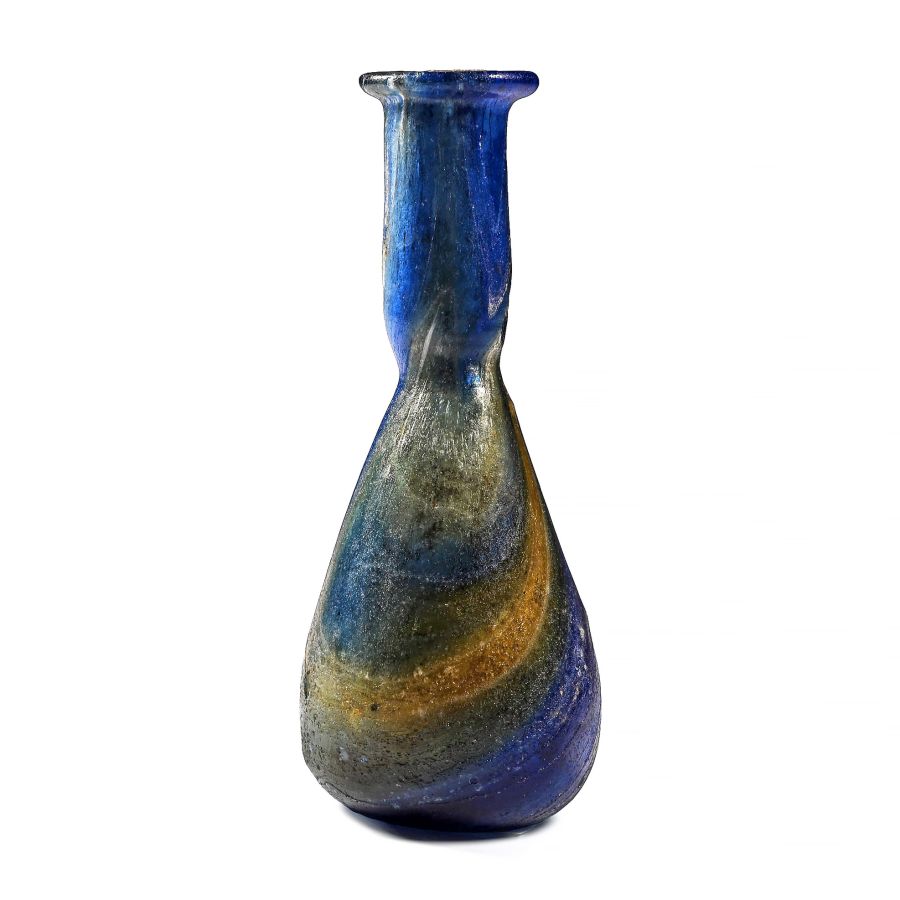
Roman Marbled Blue Glass Toilet Bottle
1ST-2ND CENTURY A.D.
3 1/4 in. (19.7 grams, 83 mm).
An iridescent unguentarium with piriform body, tubular neck with everted rolled rim.
ProvenanceAcquired on the European art market in 2001.
LiteratureCf. Whitehouse, D., Roman Glass in the Corning Museum of Glass, vol.1, New York, 1997, item 213, for type.
FootnotesThis typology was produced mainly in Egypt (Karanis class XIII.B). They were characteristic of the Eastern Mediterranean as well, and characterised by the irregular curved depression on the underside of the base and by the narrow cylindrical neck with slight constriction at the bottom.
CONDITIONTimeLine Auctions follows a vetting process to ensure the authenticity and legality of all items, reinforcing our commitment to integrity and responsible trading. Each antiquity, antique, and coin lot undergoes thorough examination by a vetting committee of at least ten external specialists, professional trade association members, scientists, and archaeologists: Our Vetting Process
AUCTIONS:
TimeLine is a leading auction house specialising in antiquities, ancient art, collectables, natural history, coins, medals, and books. Our auctions offer museums, collectors, historians, and enthusiasts the opportunity to acquire unique and historically significant pieces.
-
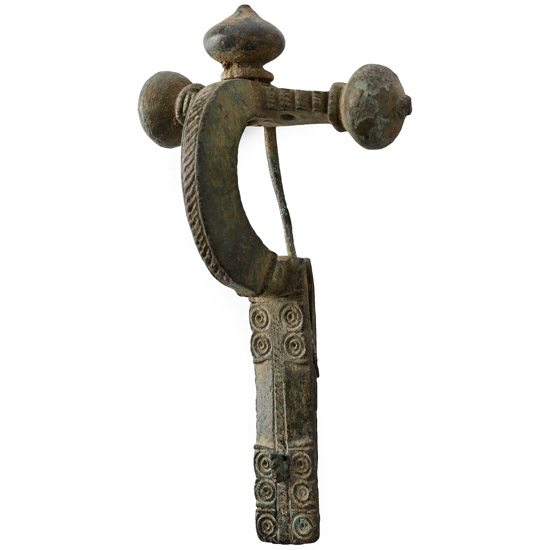
Roman Decorated Bronze Crossbow Brooch
4th century A.D.Sold for (Inc. bp): £221
Substantial crossbow brooch with onion-knop finials and keeled bow with a hatched panel, a ribbed collar above the junction and a wide rectangular footplate with ring-and-dot motifs, pin and integral catchplate on the reverse. 87 grams, 96 mm
Acquired before 1980. Private collection, Suffolk. -
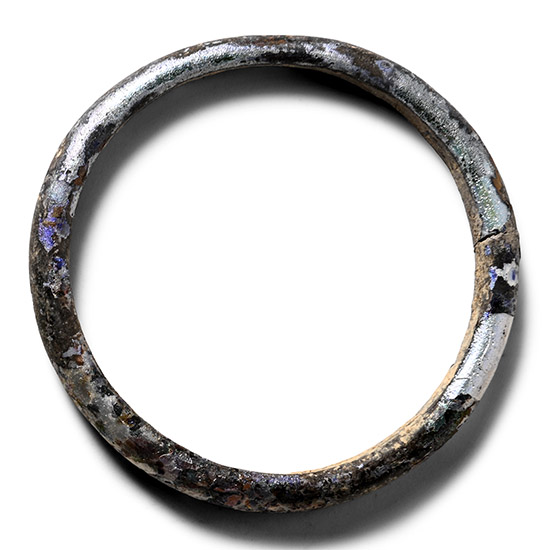
Roman Iridescent Glass Bracelet
1st-4th century A.D.Sold for (Inc. bp): £46
D-shaped in section with iridescent surface. 3.96 grams, 46 mm
From the private collection of Mr Brian Edwards, New Malden, Surrey, UK, formed from the late 1970s-early 1980s; thence by descent. Accompanied by the original collector's data sheet(s) with reference no.A16. -
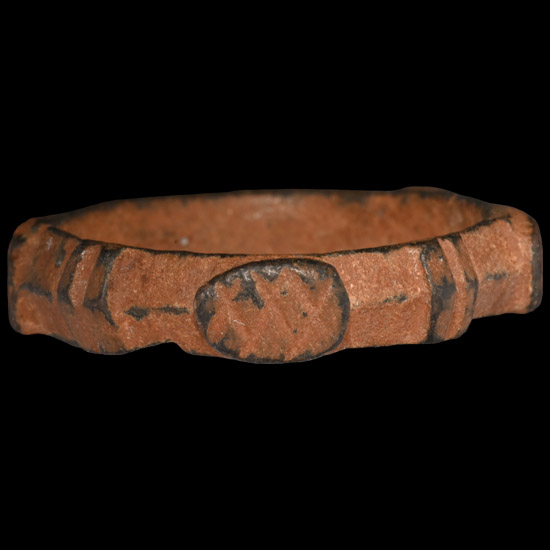
Roman Bronze Military Glove Ring with Four Bezels
3rd-4th century A.D.Sold for (Inc. bp): £65
A substantial ring with a keeled hoop with four bezels decorated with hatching and separated by raised banding. 7.91 grams, 29.88 mm overall, 23.37 mm internal diameter (approximate size British Z+2 1/2, USA 13 3/4, Europe 32.01, Japan 30)
From the private collection of a European gentleman (1942-2024), formed since the 1970s.
