
Loading, please wait...
LOT 0142
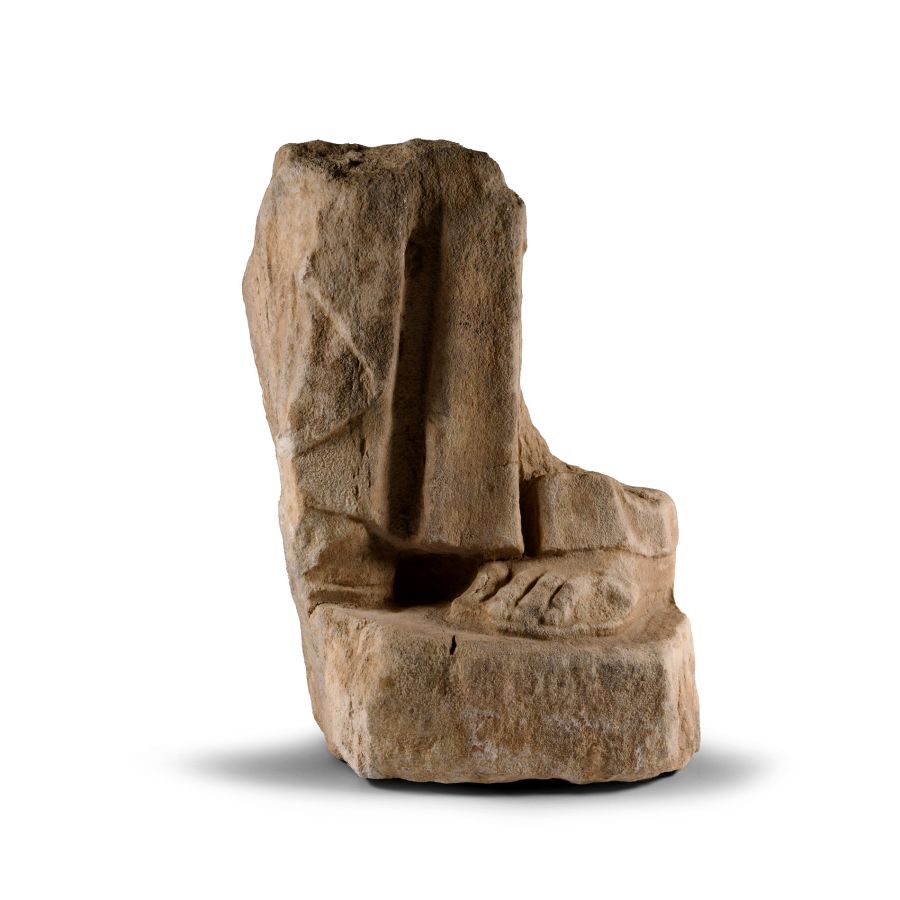
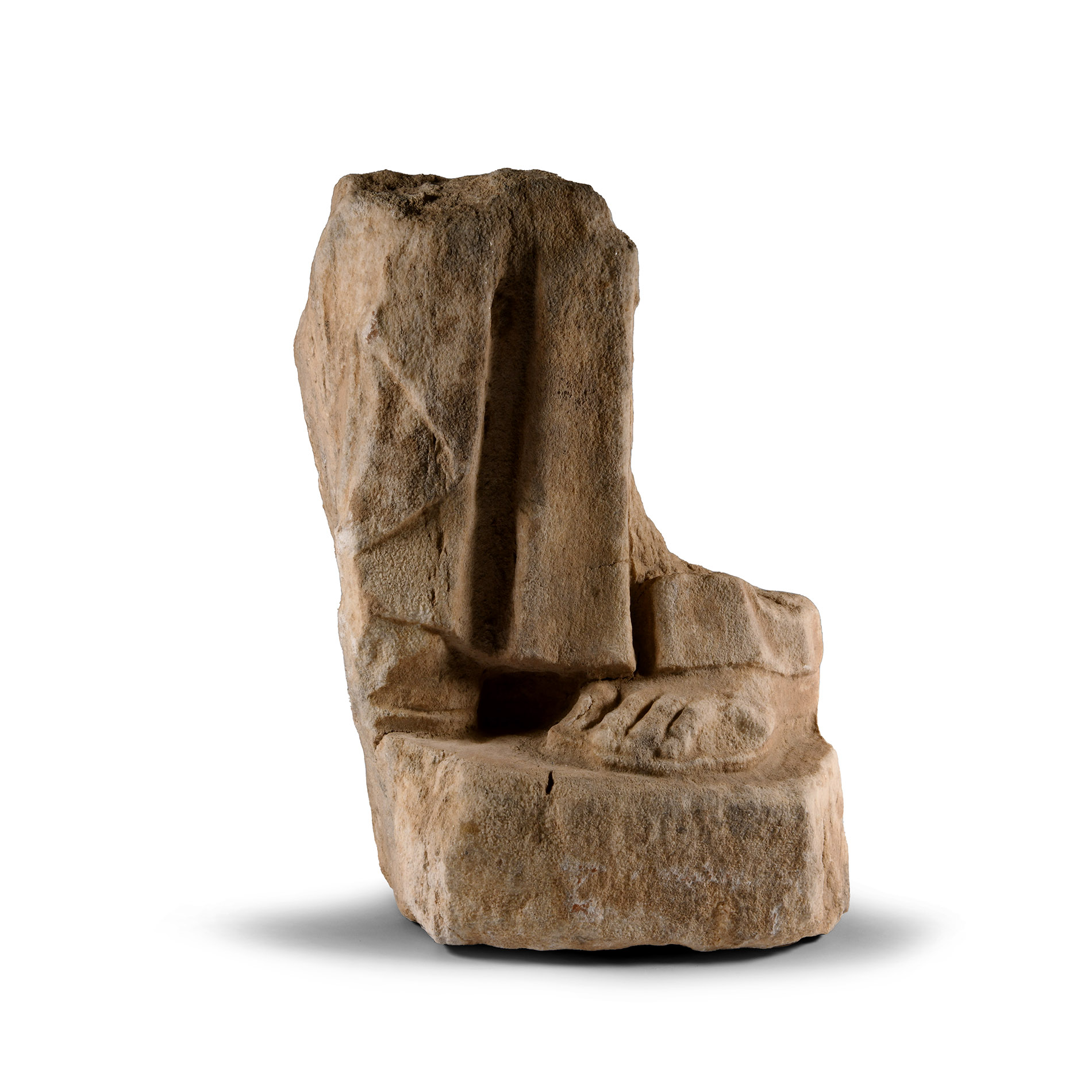
Roman Marble Statue Fragment with Feet
1ST-2ND CENTURY A.D.
9 1/2 in. (7.1 kg, 24 cm).
Presenting the hem of a pleated robe, the sandaled feet of the figure emerging from beneath, with semi-naturalistic anatomical detailing, resting on a plain base.
ProvenanceAcquired early 1990s.
Ex private American collection; thence by descent.
Private collection since 1998.
This lot has been checked against the Interpol Database of stolen works of art and is accompanied by search certificate no.11624-198973.
TimeLine Auctions follows a vetting process to ensure the authenticity and legality of all items, reinforcing our commitment to integrity and responsible trading. Each antiquity, antique, and coin lot undergoes thorough examination by a vetting committee of at least ten external specialists, professional trade association members, scientists, and archaeologists: Our Vetting Process
AUCTIONS:
TimeLine is a leading auction house specialising in antiquities, ancient art, collectables, natural history, coins, medals, and books. Our auctions offer museums, collectors, historians, and enthusiasts the opportunity to acquire unique and historically significant pieces.
LOT 0142
Roman Marble Statue Fragment with Feet
Estimate £1,500 - 2,000€1,740 - 2,320 (for guidance only)$2,030 - 2,700 (for guidance only)
-
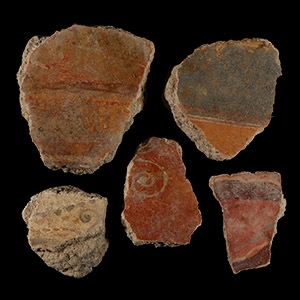
Roman Fresco Painted Wall Plaster Collection
1st century A.D.Sold for (Inc. bp): £208
Comprising five pieces in red, blue and orange with tendrils and linear decoration painted in contrasting colours. 672 grams total, 6.5-10.3 cm
Acquired in the 19th century. Ex Jeger collection, Switzerland. -
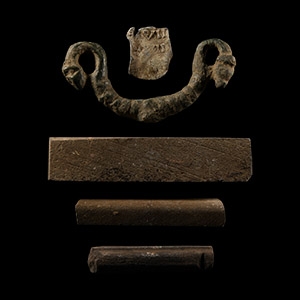
Roman Artefact Collection
1st-4th century A.D.Sold for (Inc. bp): £39
The group comprising: a bronze handle or a furniture mount with ribbed body and looped terminals; a lead disc with Roman numerals 'VII' in two lines; a whetstone and two moulded stone fragments. 118 grams total, 23-88 mm
Found Nottinghamshire, UK. Acquired from Ancient & Oriental in 2003. Property of a Nottinghamshire gentleman. -
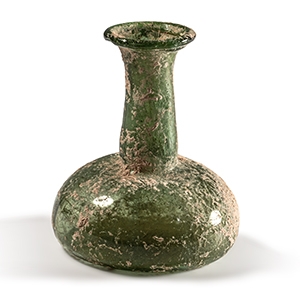
Roman Blue-Green Glass Vessel
3rd-4th century A.D.Sold for (Inc. bp): £195
Bulbous with flat base, tall neck and splayed lip. 39 grams, 77 mm high
Acquired 1980-2015. Ex Abelita family collection.
The ampulla was, in Ancient Rome, a small round vessel, usually made of glass and used for sacred purposes. The term can also refer to later flasks, often flatter and without handles, typically used as pilgrim souvenirs. Materials include glass, ceramics and metal. An unguentarium is a bottle believed to have been used to store perfume. Such vessels were often produced in Gaul.
