
Loading, please wait...
LOT 0075
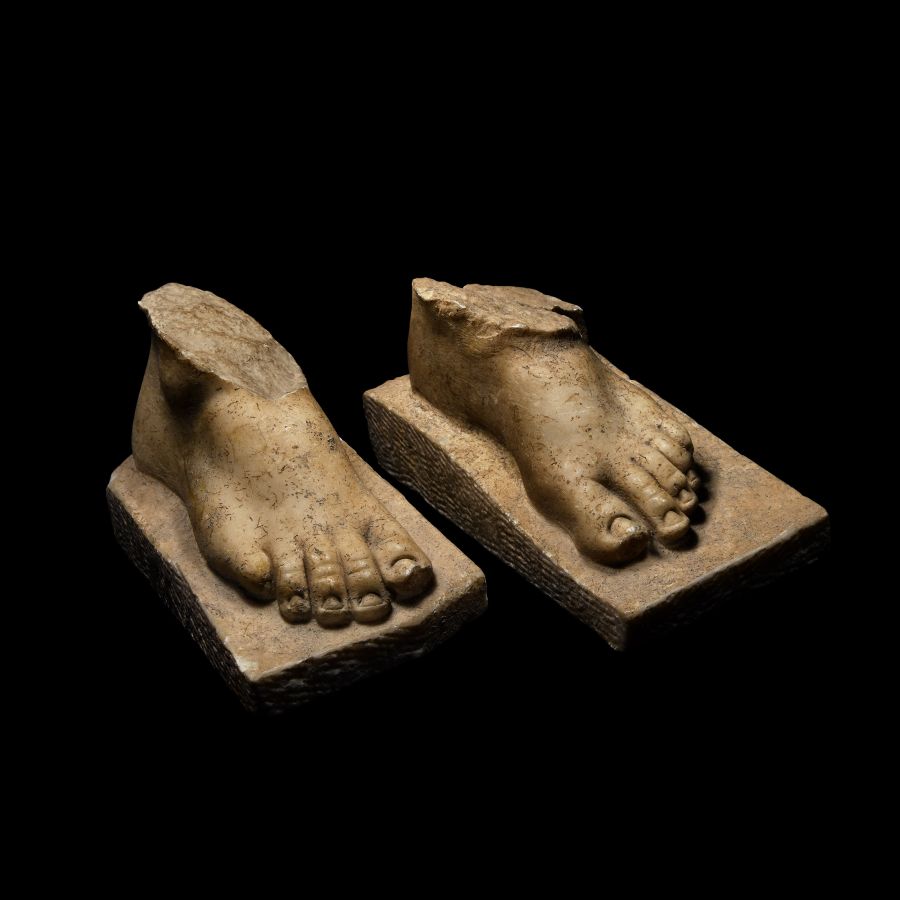
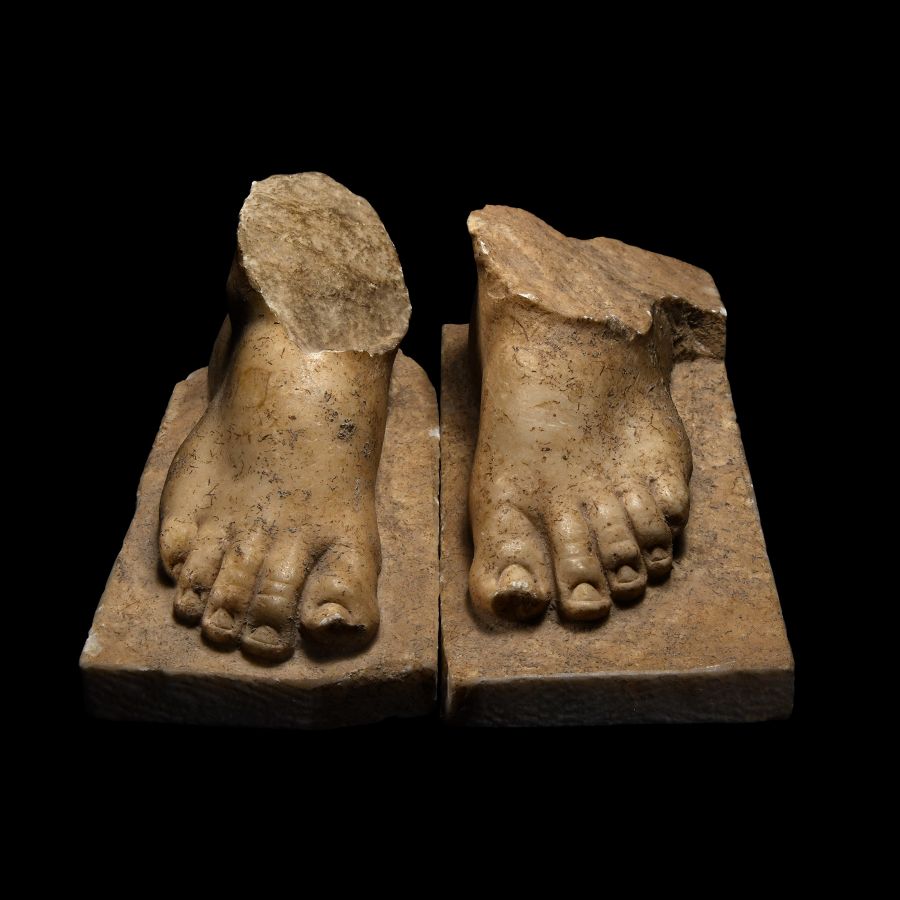
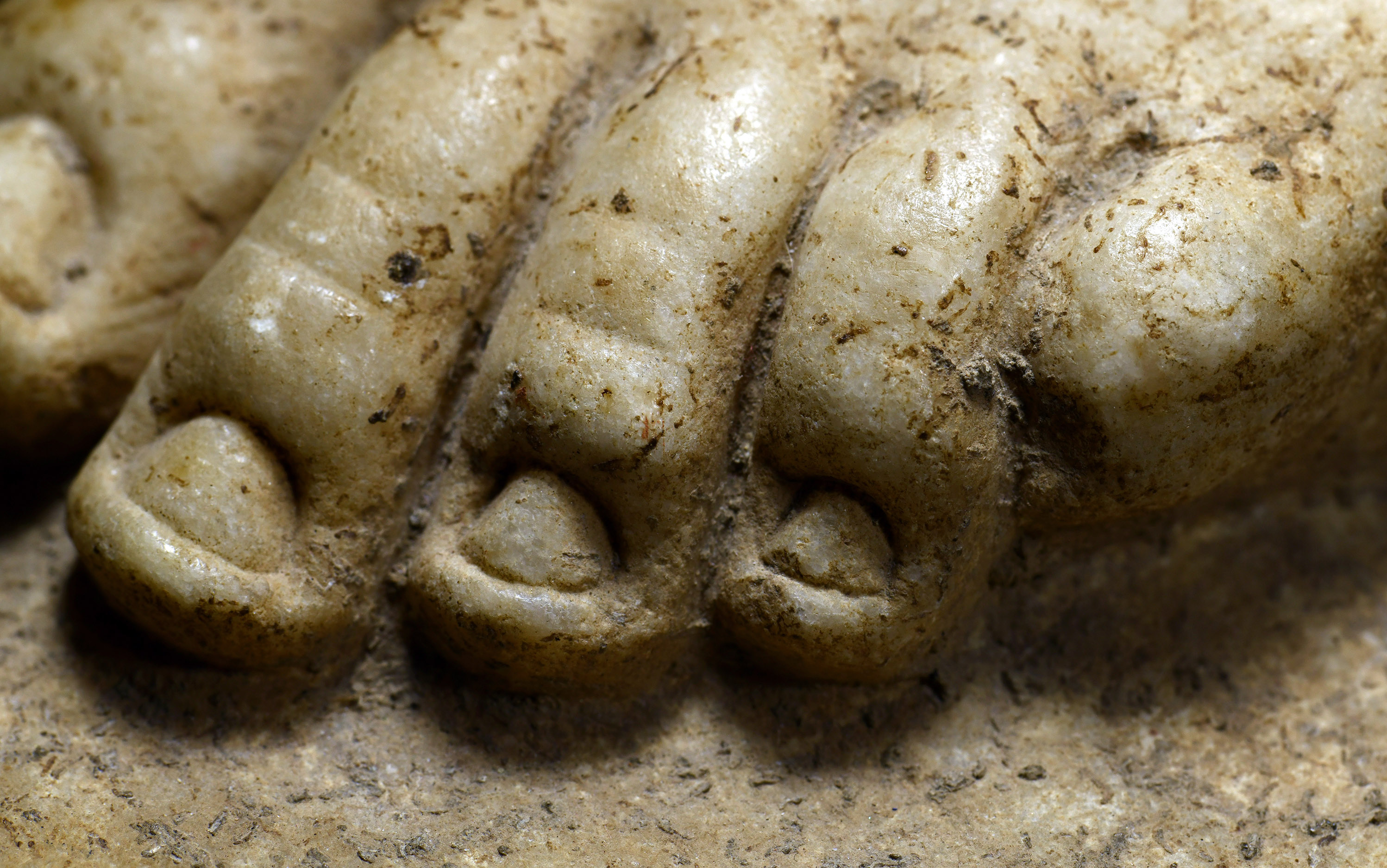
Roman Marble Statue Foot Pair
2ND CENTURY AD
8" (5.5 kg total, 20.5cm each).
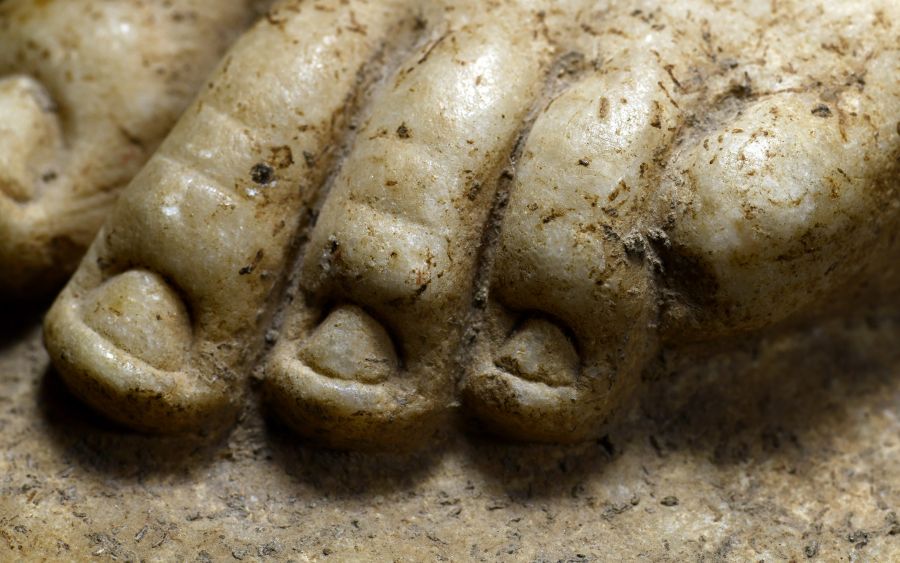
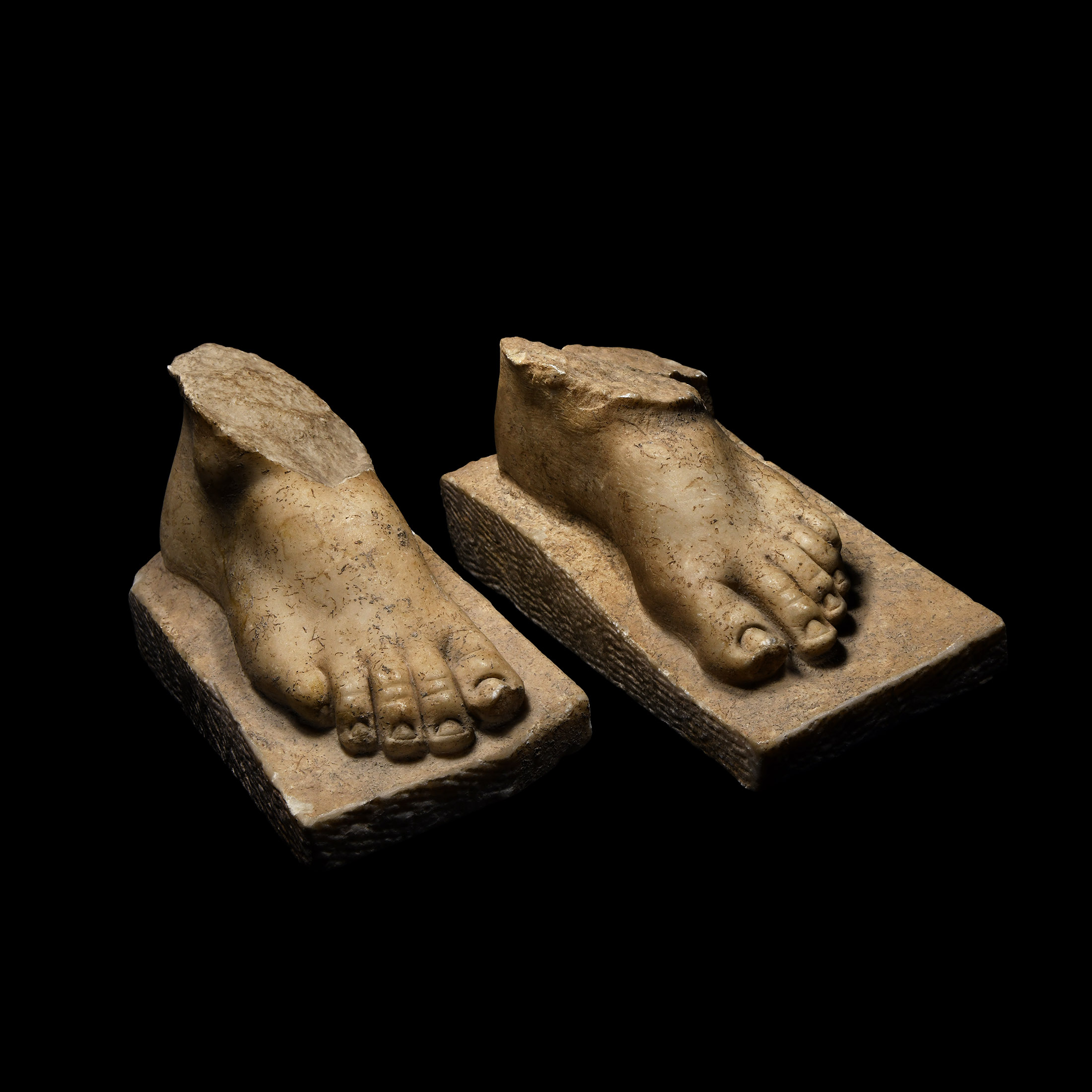
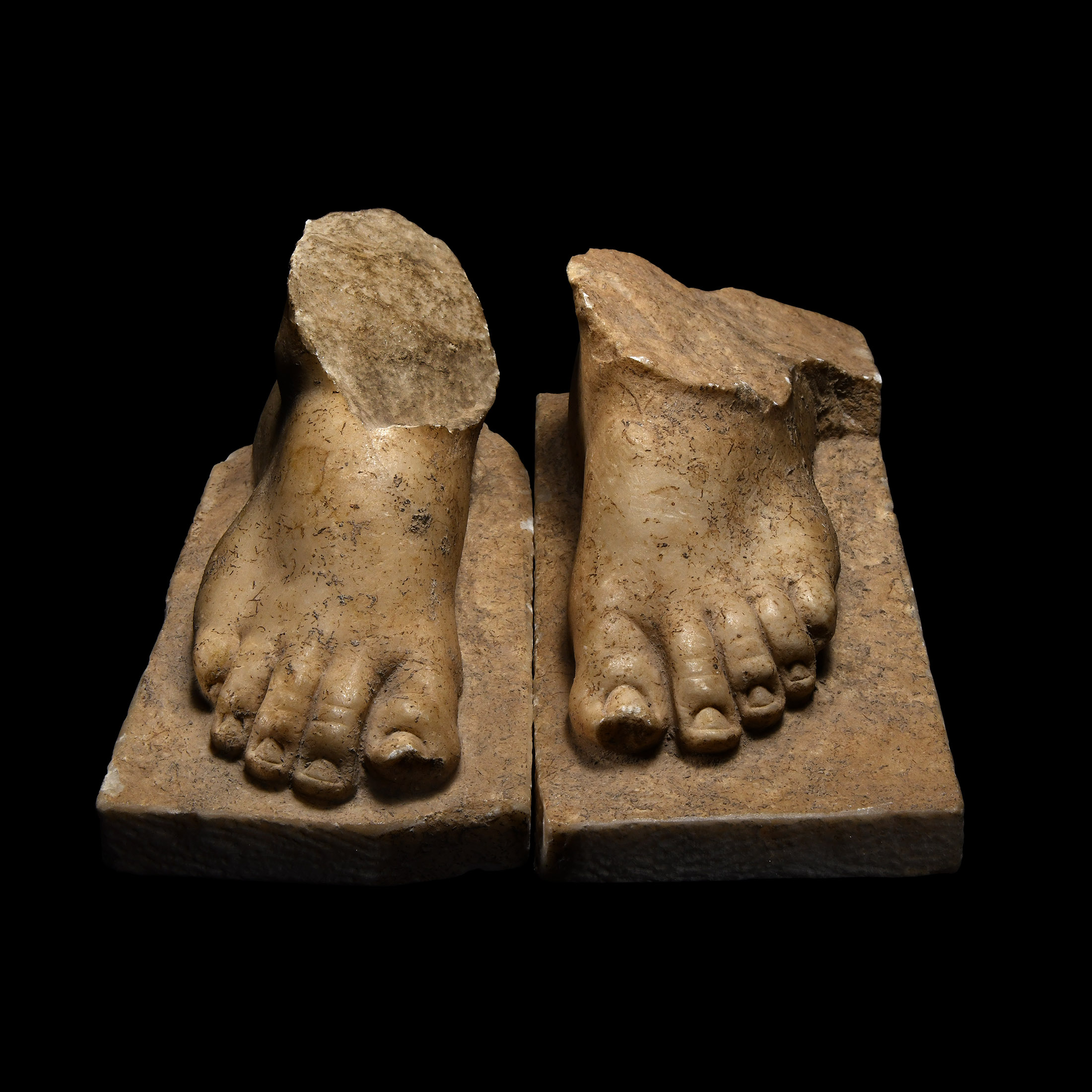
A pair of marble feet from a statue, each naturalistically modelled with detailed toes and nails; each resting on a rectangular plinth, later cut from the original base of the statue. [2]
ProvenanceFrom an important English collection; previously acquired on the German art market in 2012; formerly in an old private English collection; accompanied by an archaeological expertise by Dr. Raffaele D’Amato; both objects have been checked against the Art Loss Register Database (right foot 870173, left foot 870171) and the Interpol Database of stolen works of art and is accompanied by AIAD certificate number no.10765-177430.
LiteratureSee various examples in Reinach, S., Répertoire de la statuaire grecque et romaine, Paris, 1897-1930.
FootnotesThe fragments show some delightful remains of a small marble sculpture, representing a female (probably a divinity) or a child, modelled with excellent detail. Although only the extremities of this statue survive, the piece is very aesthetically pleasing. The feet appear natural, the toenails have been carved with extreme detail, and the placement upon their podium (cut from a bigger one) suggests that the right knee would have been bent. Roman statuary was often inspired by Greek originals, preserving their graceful style. It is extremely difficult, considering the wide range of Graeco-Roman sculpture, to identify the individual represented. It is possible to suggest Silvanus (Reinach, 1930, p.45, figs.2,4), often represented over a plinth upon which the naked feet are depicted in contrapposto pose. Other possible subjects could be the genii of abundance (Reinach, 1930, p.46, fig.1; p.47 fig.7), and Cupid, son of Venus. An interesting small statue of the Torlonia collection (Reinach, 1930, p.125, fig.2) shows the god with similar delicate feet in a divergent pose, which can also be seen on a statuette from Selignan and on another of Cupid at the Louvre (inv.2198). There are also many similar feminine sculptures depicting Nymphs or Maenads. Significantly, for young Roman women the naked foot was the symbol of pre-matrimonial life and virginity.
CONDITIONTimeLine Auctions follows a vetting process to ensure the authenticity and legality of all items, reinforcing our commitment to integrity and responsible trading. Each antiquity, antique, and coin lot undergoes thorough examination by a vetting committee of at least ten external specialists, professional trade association members, scientists, and archaeologists: Our Vetting Process
AUCTIONS:
TimeLine is a leading auction house specialising in antiquities, ancient art, collectables, natural history, coins, medals, and books. Our auctions offer museums, collectors, historians, and enthusiasts the opportunity to acquire unique and historically significant pieces.
1st-2nd century AD or later
Lot No. 1012
Sold for (Inc. premium): £279

4th-5th century AD
Lot No. 0815
Sold for (Inc. premium): £89
1st-2nd century AD
Lot No. 0118
Sold for (Inc. premium): £1,905
