
Loading, please wait...
LOT 0113
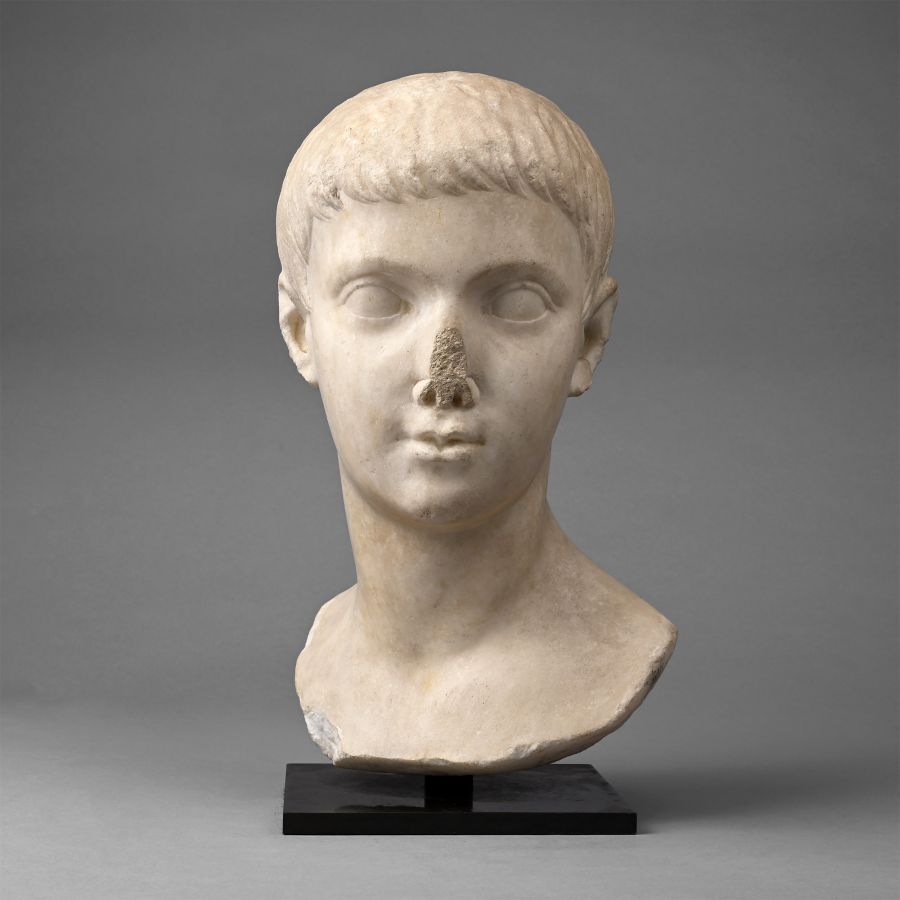
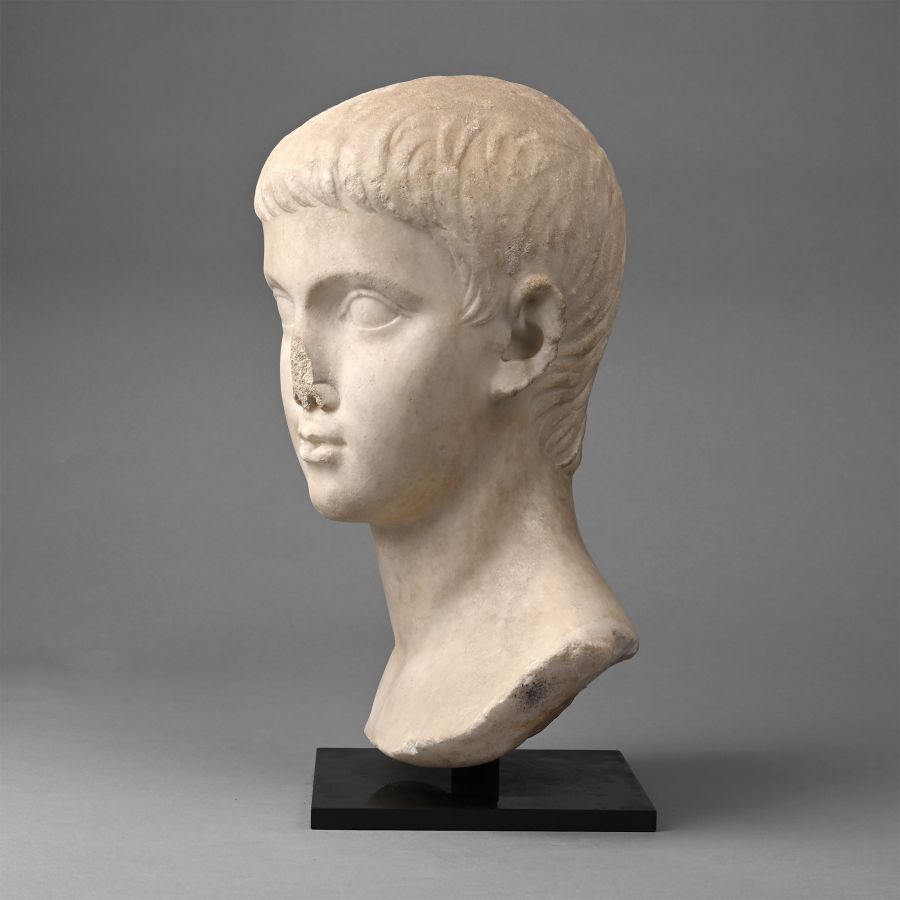
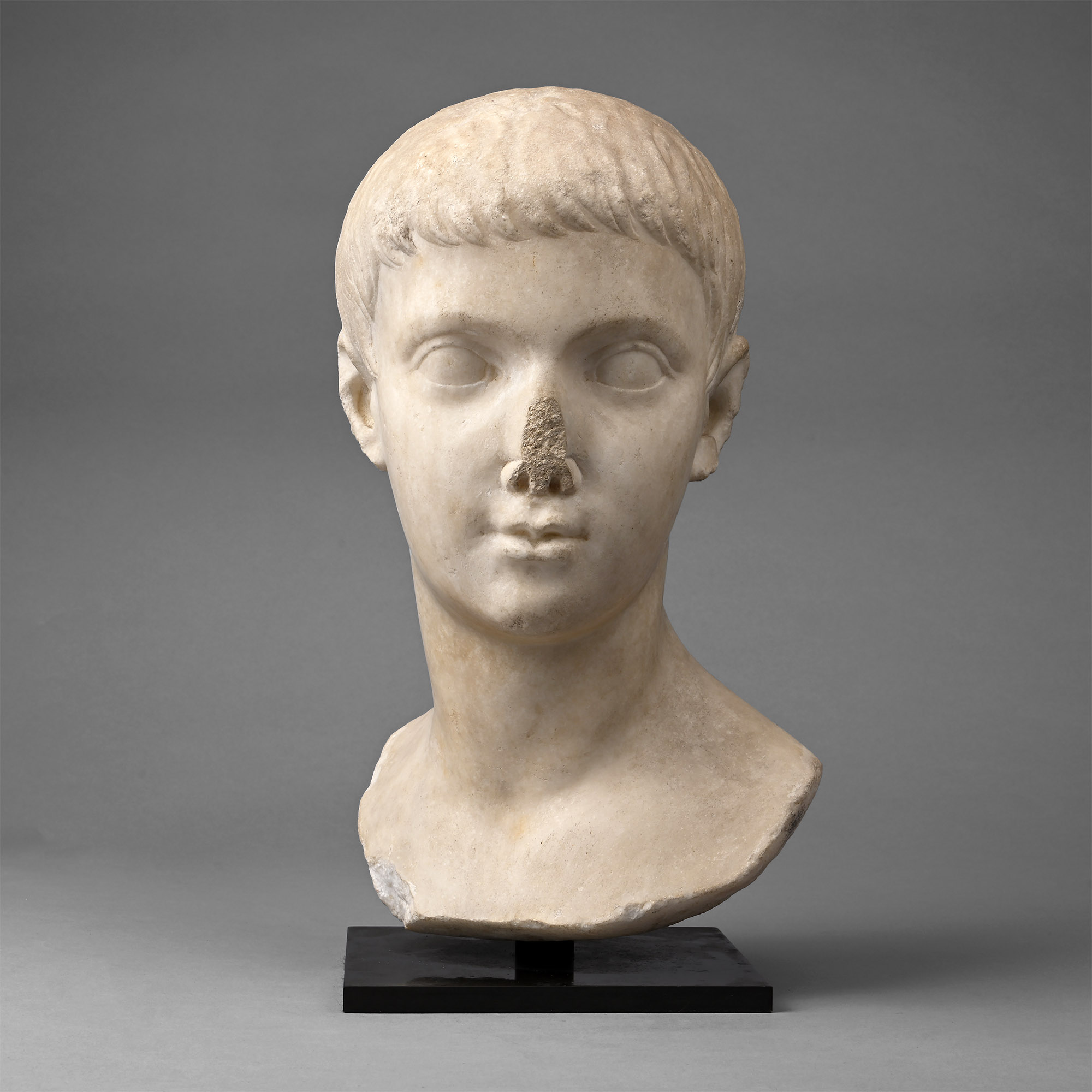
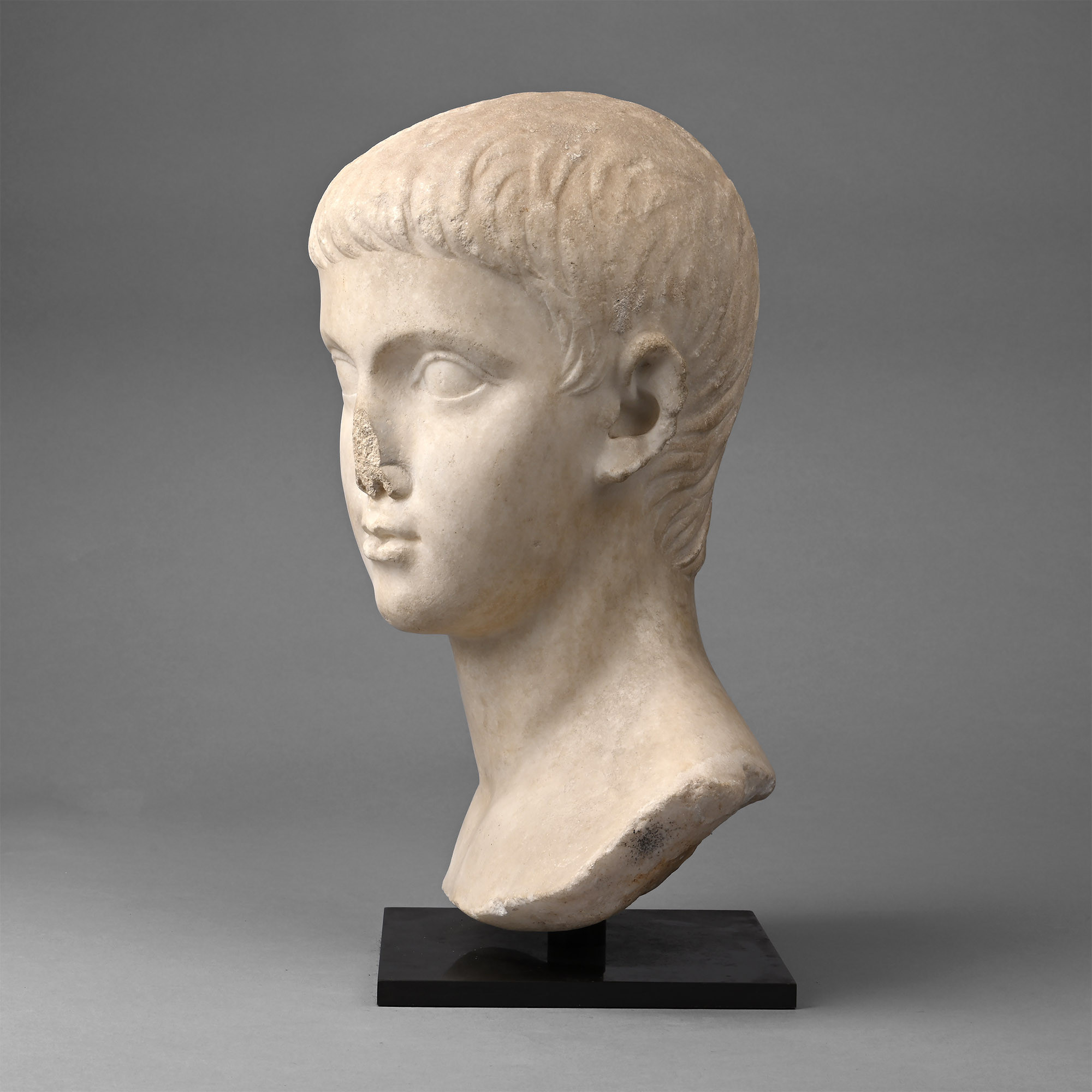
Roman Marble Portrait of Drusus the Younger
13 B.C.-23 A.D.
13 3/4 in. (15.15 kg total, 35 cm high including stand).
Finely carved bust of Drusus, son of Emperor Tiberius; the hair shaped in a mop of short locks combed forward towards the brow; the features adolescent with soft lips and smooth skin; the nose chipped; mounted on a custom-made stand.
ProvenancePreviously mounted in an 18th-19th century bust.
Private collection, Northern England, acquired in the 1980s.
This lot has been checked against the Interpol Database of stolen works of art and is accompanied by search certificate number no.13361- 259006.
Cf. Berouilli, Griechische Ikonographie, 1901, cat.no 11; a bust of Drusus in the Museo del Prado, Madrid, depicts him somewhat later in his life and wearing a sagum military cloak fastened with an umbonate brooch; Scarpati, G., ‘Il ritratto di Druso Minore dal ciclo statuario Giulio-Claudio di Sessa Aurunca,’ in Bollettino d’Arte, 24 Ottobre-Dicembre, 2014, Anno XCIX, serie VII, pp.29-38, figs.1,12 (portraits of Cleveland and Grosseto).
FootnotesThe facial features of the sculpture reveal the physiognomic characteristics of a Julio-Claudian prince; specifically, Drusus the Younger, supported by comparisons with coin portraits.
CONDITIONTimeLine Auctions follows a vetting process to ensure the authenticity and legality of all items, reinforcing our commitment to integrity and responsible trading. Each antiquity, antique, and coin lot undergoes thorough examination by a vetting committee of at least ten external specialists, professional trade association members, scientists, and archaeologists: Our Vetting Process
AUCTIONS:
TimeLine is a leading auction house specialising in antiquities, ancient art, collectables, natural history, coins, medals, and books. Our auctions offer museums, collectors, historians, and enthusiasts the opportunity to acquire unique and historically significant pieces.
-
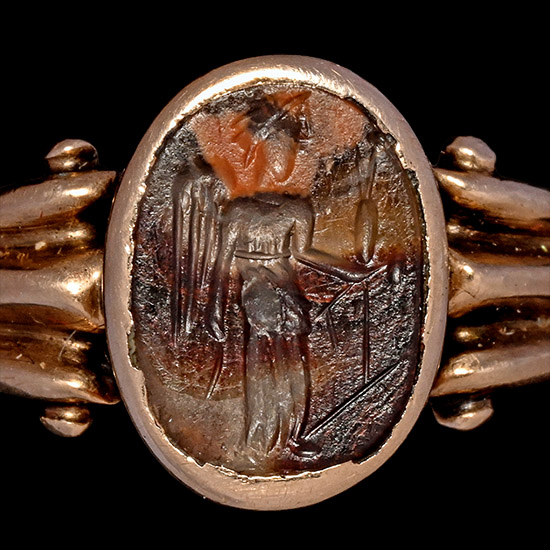
Roman Agate Gemstone of Syncretistic Fortuna in Gold Ring
2nd-3rd century A.D.Sold for (Inc. bp): £819
Intaglio of syncretistic Fortuna, winged like Victory and helmeted like Minerva in a long robe holding a rudder with an ear of corn and poppy; set into an antique gold ring; supplied with a museum-quality impression. 3.22 grams, 23.31 mm overall, 19.46 x 19.15 mm internal diameter (approximate size British R, USA 8 1/2, Europe 18 3/4, Japan 18)
Private collection, Europe. Acquired on the English art market. -
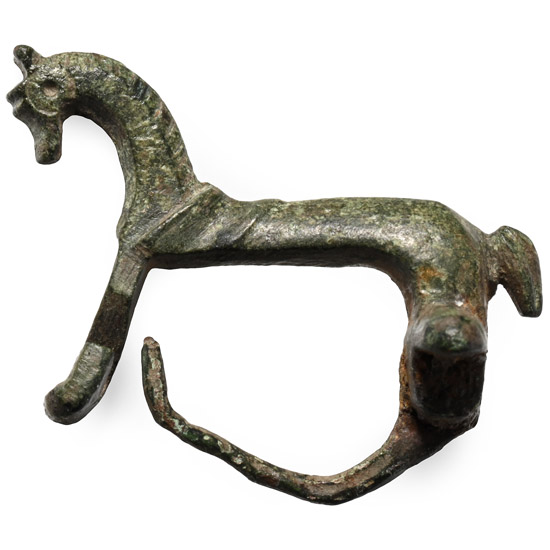
Roman Bronze Horse Brooch
Circa 2nd century A.D.Sold for (Inc. bp): £59
Formed as a standing horse, the hind legs forming a crossbar, the forelegs forming a catchplate, and linear detailing to the mane. 8.88 grams, 35 mm
From the private coin collection of a West London, UK, gentleman, formed since the mid 1980s. -
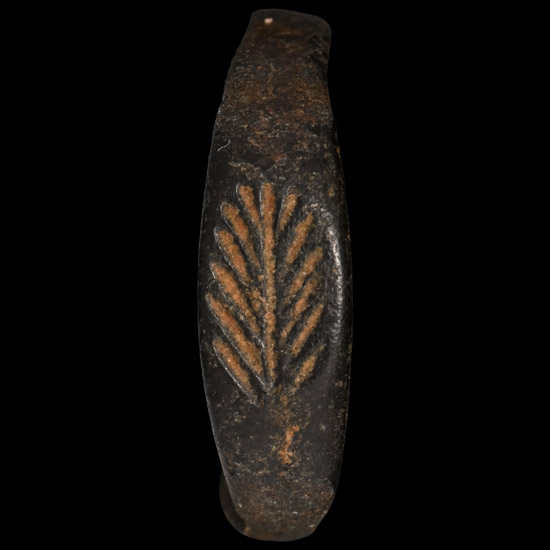
Roman Bronze Ring with Palm Branch
3rd-4th century A.D.Sold for (Inc. bp): £72
Featuring a flat-section hoop and a narrow bezel with a palm leaf. 1.12 grams, 17.64 mm overall, 15.62 mm internal diameter (approximate size British H 1/2, USA 4, Europe 6.81, Japan 6)
From the private collection of a European gentleman (1942-2024), formed since the 1970s.
