
Loading, please wait...
LOT 0118
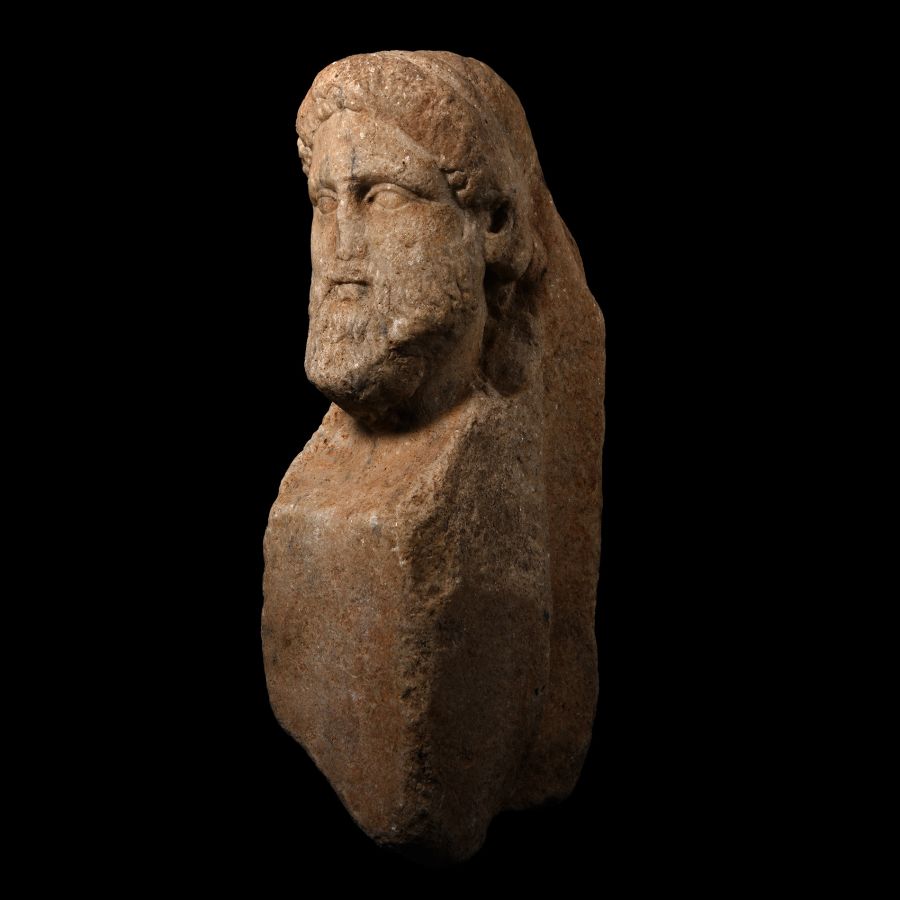
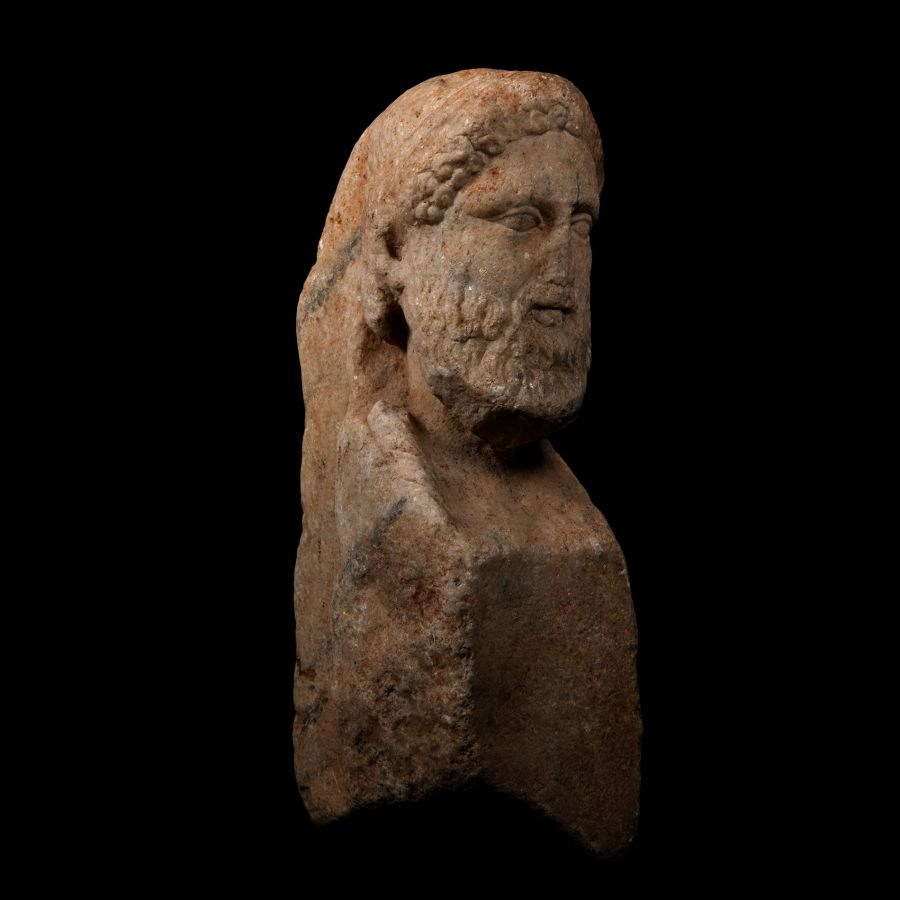
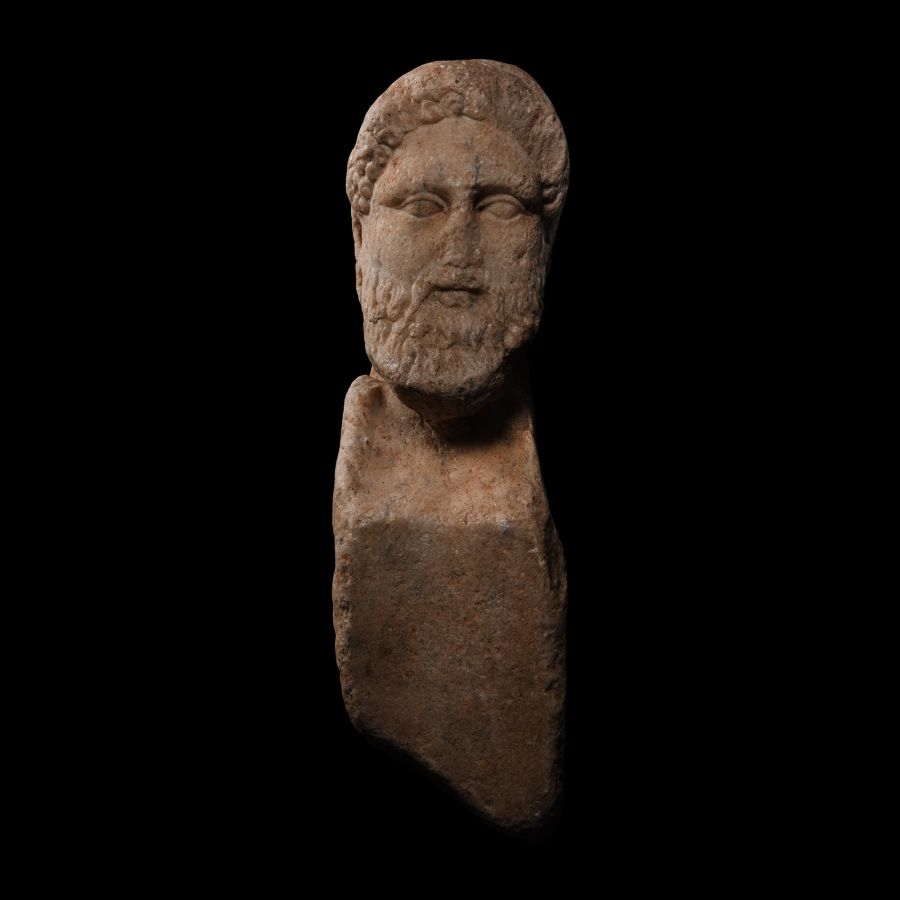
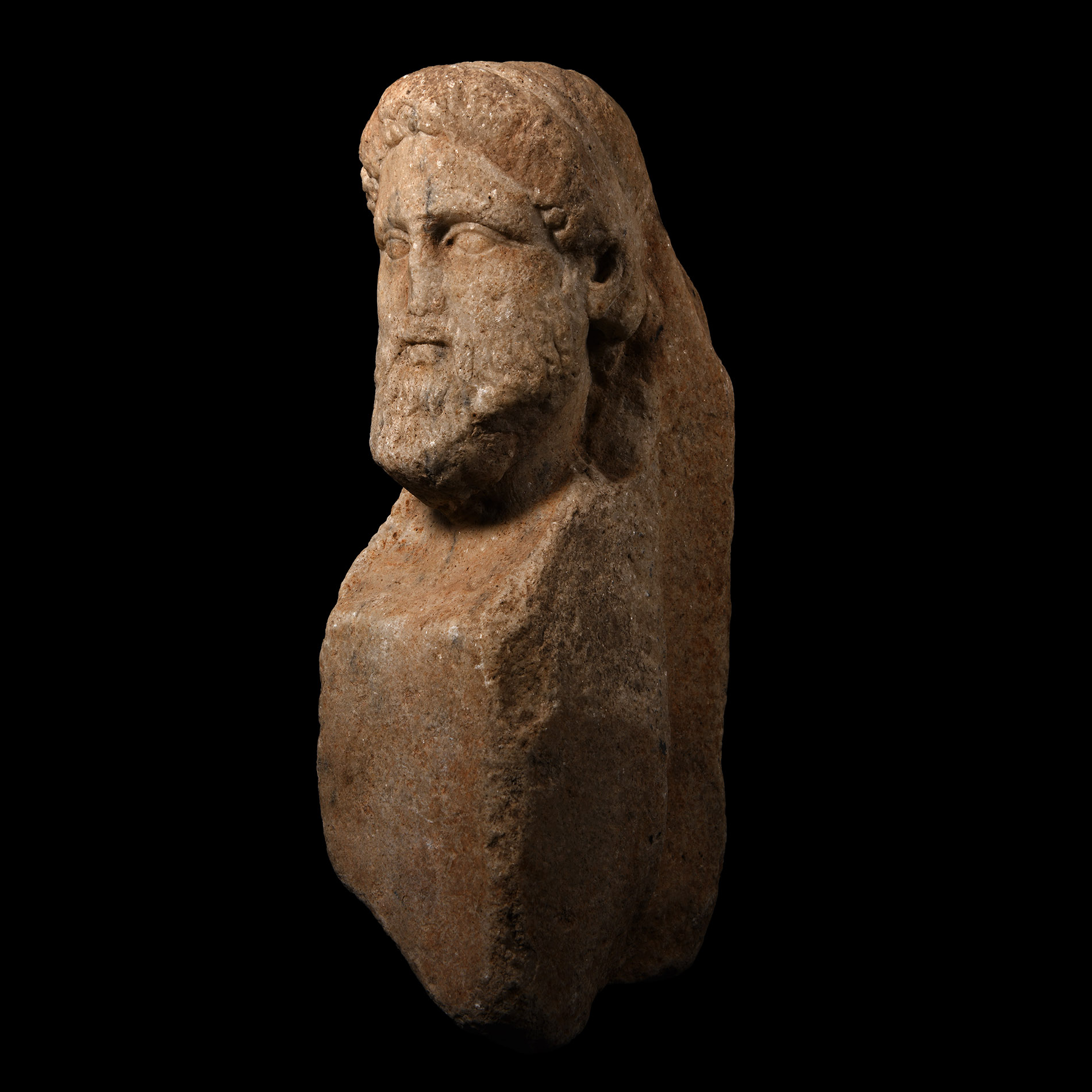
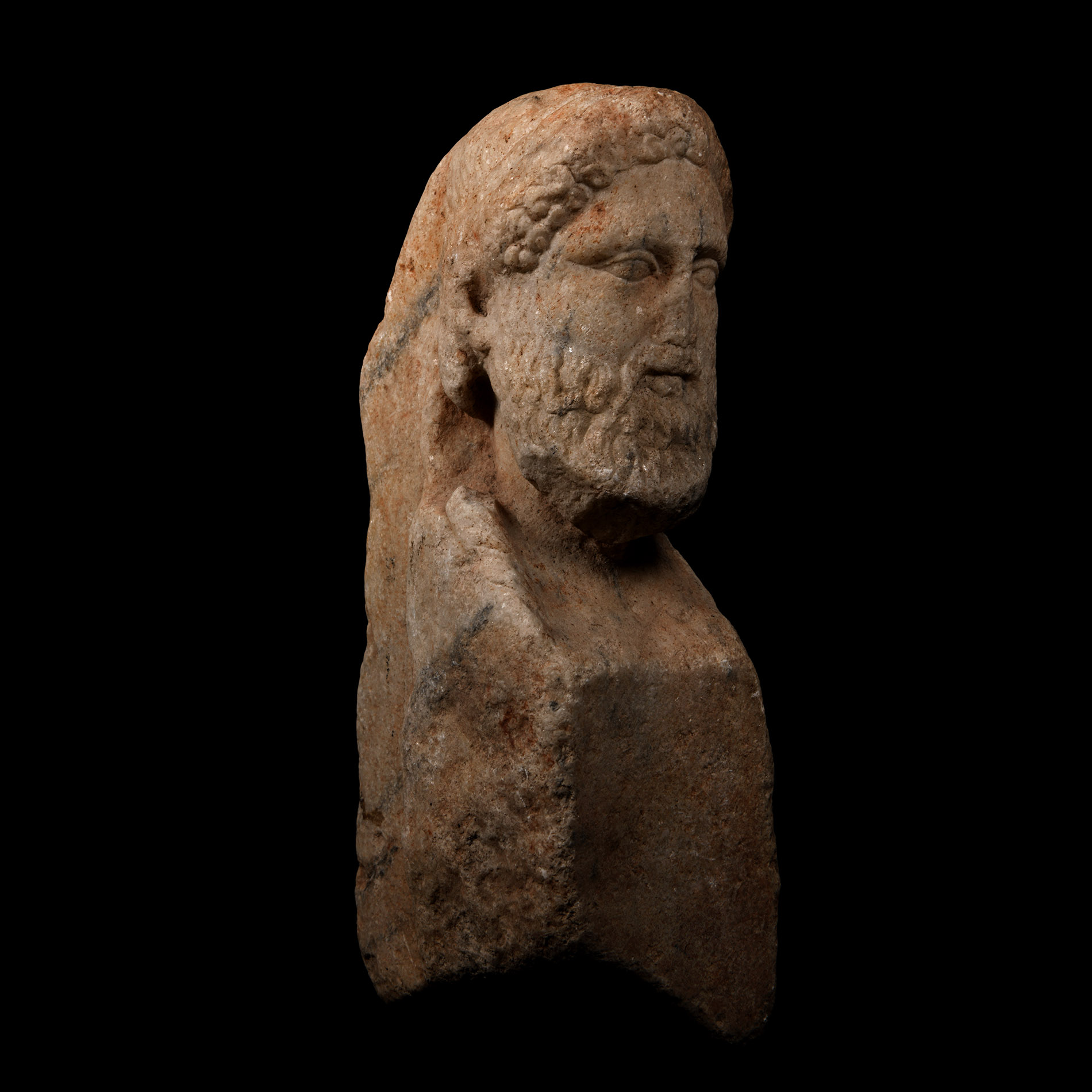
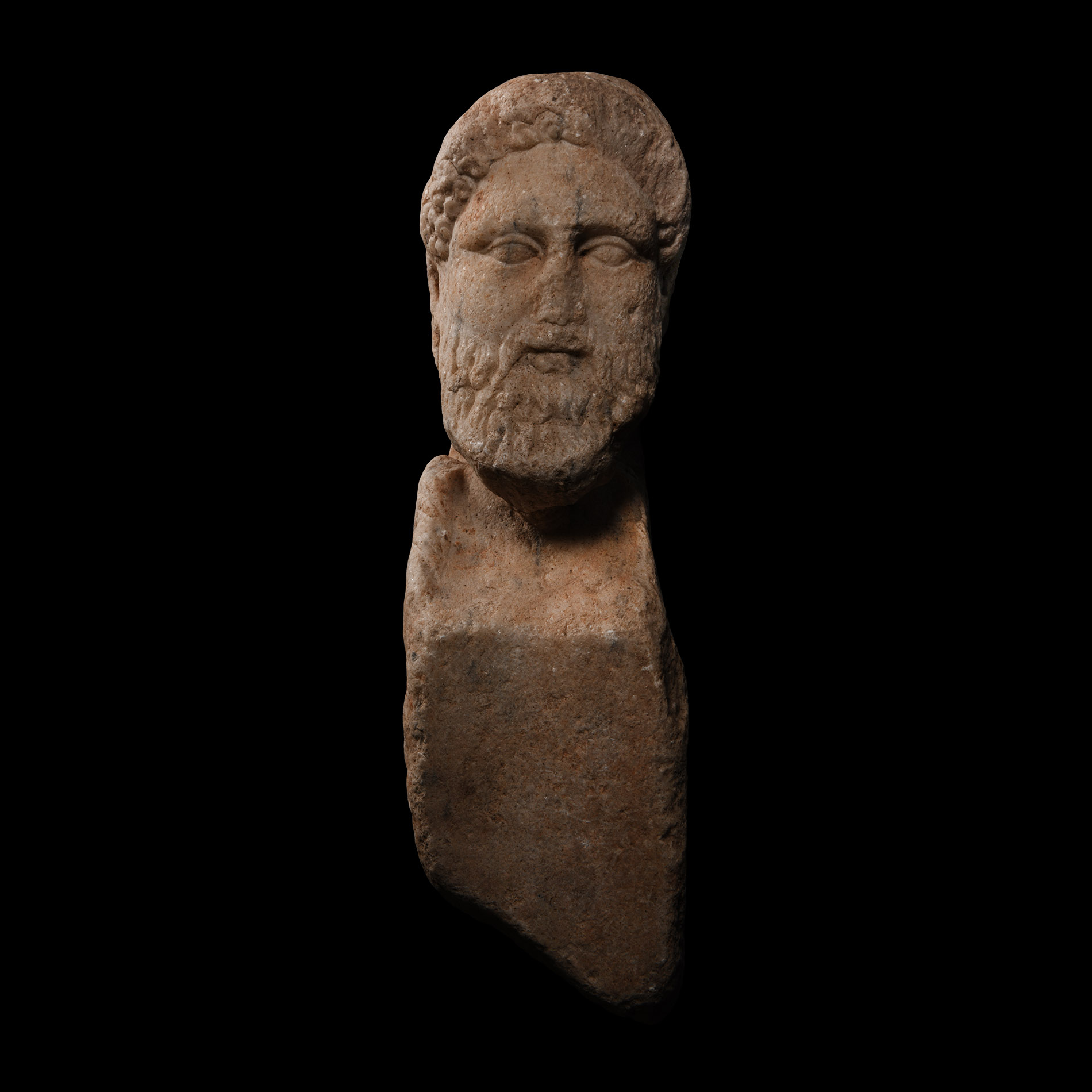
Roman Marble Herm Boundary Marker
CIRCA 1ST CENTURY B.C.
12 3/8 in. (7.3 kg, 31.5 cm high).
A carved marble herm boundary marker carved in the round as the bust of an adult male wearing a conical cap and with a full beard; dorsal pillar terminating behind the head.
ProvenanceFrench collection, 1960s-early 2000s.
From an important Paris gallery, France.
This lot has been checked against the Interpol Database of stolen works of art and is accompanied by search certificate no.11629-199364.
Possibly an architectural element or herm: herma (Ancient Greek: ἑρμῆς, usually called a 'herm' in English), is a sculptured stone block with a head and often a chest above an undecorated lower section on which male genitals may additionally be carved. From the Neolithic period onwards, in parts of Europe, divinities were worshipped in the form of either a heap of stones (cairn) or a wooden column. Piles of stones were created beside roads and at the borders of fields as they were cleared of pebbles, and religious respect was shown through the custom of each passer-by throwing a stone on the heap or offering a libation. In due course, the addition of a carved head (and phallus) to the column encouraged the belief that these monuments were especially favoured by divinities.
CONDITIONTimeLine Auctions follows a vetting process to ensure the authenticity and legality of all items, reinforcing our commitment to integrity and responsible trading. Each antiquity, antique, and coin lot undergoes thorough examination by a vetting committee of at least ten external specialists, professional trade association members, scientists, and archaeologists: Our Vetting Process
AUCTIONS:
TimeLine is a leading auction house specialising in antiquities, ancient art, collectables, natural history, coins, medals, and books. Our auctions offer museums, collectors, historians, and enthusiasts the opportunity to acquire unique and historically significant pieces.
-
.jpg)
Roman Marble Herm Boundary Marker
Circa 1st century B.C.Sold for (Inc. bp): £4,680
A carved marble herm boundary marker carved in the round as the bust of an adult male wearing a conical cap and with a full beard; dorsal pillar terminating behind the head. 7.3 kg, 31.5 cm high
French collection, 1960s-early 2000s. From an important Paris gallery, France. This lot has been checked against the Interpol Database of stolen works of art and is accompanied by search certificate no.11629-199364.
Possibly an architectural element or herm: herma (Ancient Greek: ἑρμῆς, usually called a 'herm' in English), is a sculptured stone block with a head and often a chest above an undecorated lower section on which male genitals may additionally be carved. From the Neolithic period onwards, in parts of Europe, divinities were worshipped in the form of either a heap of stones (cairn) or a wooden column. Piles of stones were created beside roads and at the borders of fields as they were cleared of pebbles, and religious respect was shown through the custom of each passer-by throwing a stone on the heap or offering a libation. In due course, the addition of a carved head (and phallus) to the column encouraged the belief that these monuments were especially favoured by divinities. -
Roman Goddess Statuette Heads
Circa 1st-3rd century A.D.Estimate: £300 - 400 (+bp*)
Opening Bid: £150
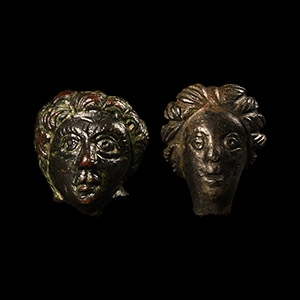
A pair of semi-naturalistic bronze statue heads modelled in the round: a female with hair held in a chignon at the nape; figure with hair dressed in short wavy tufts, large eyes with exaggerated eyelashes. 71 grams total, 23-25 mm
Acquired before 2000. From the collection of a European gentleman living in the UK.
Bronze statuettes of Roman work representing Roman gods and goddesses were widespread all around the empire, and are also known as far as archaeological sites of Jutland and the islands. The two heads represent probably tutela divinities of the home, like Vesta and Juno (Greek Hera). -
Roman Aubergine Glass Vessel with Trails
3rd-5th century A.D.Estimate: £400 - 600 (+bp*)
Opening Bid: £200
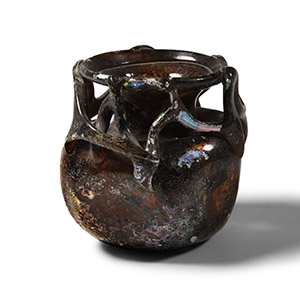
An aubergine glass jar with dimples around the circumference, trumpet-style neck and rim, applied openwork trails around the shoulder; pontil to base; iridescent surfaces. 64 grams, 68 mm wide
Acquired UK, in the 1980s. Property of a London gentleman.
