
Loading, please wait...
LOT 0102
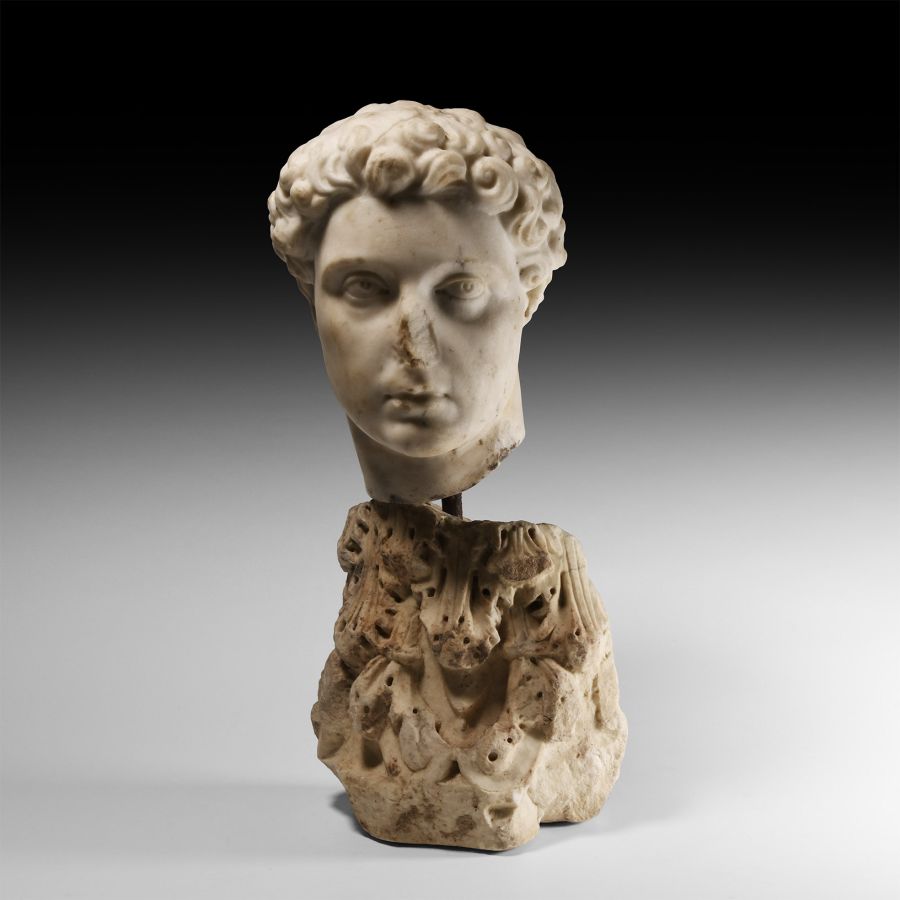
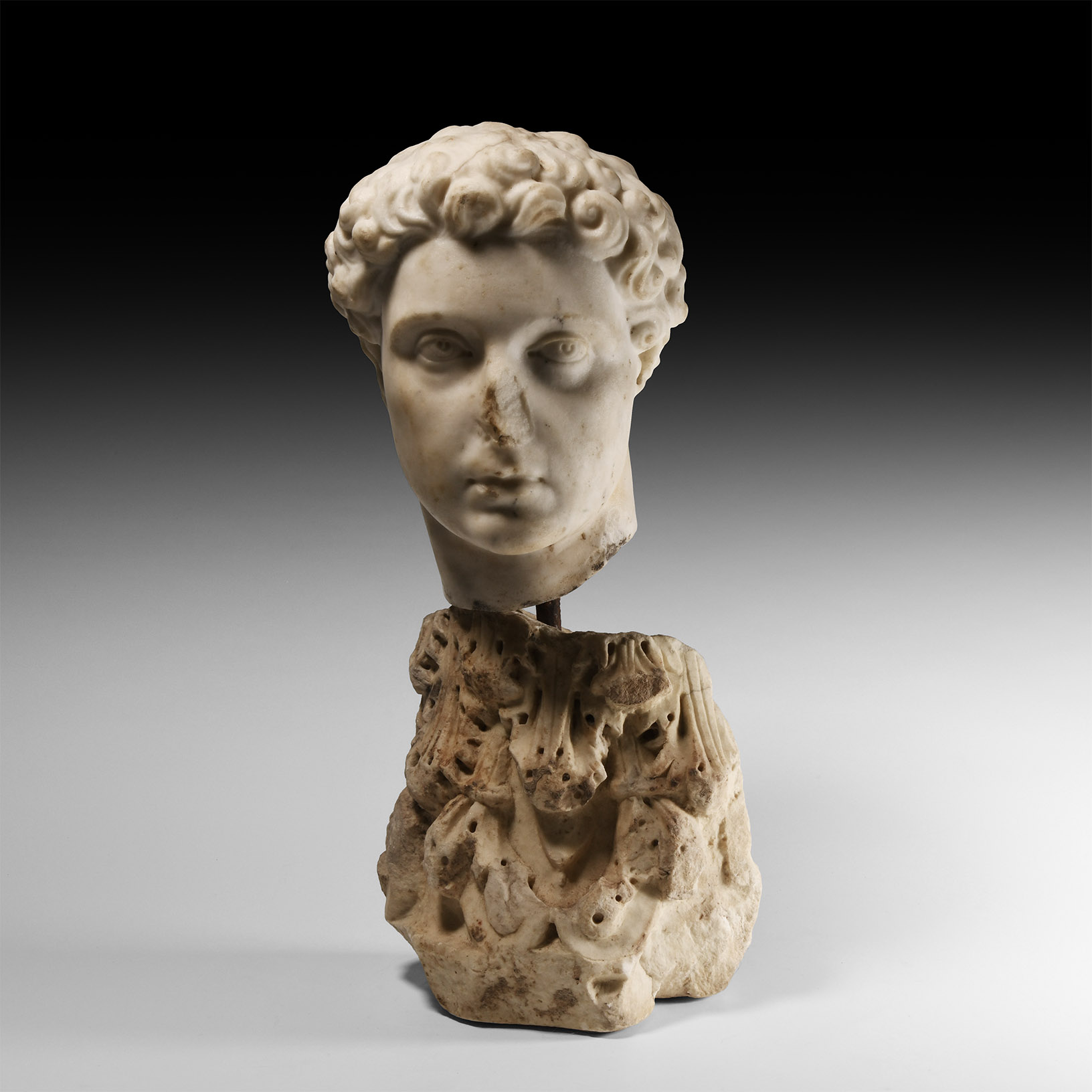
Roman Marble Head on Corinthian Capital Section
2ND-3RD CENTURY A.D. OR LATER
17 3/8 in. (16.2 kg total, 44 cm high including stand).
A 2nd-3rd century A.D. Roman marble Corinthian capital fragment carved with acanthus leaves; together with a 16th-17th century A.D. reworked male head modelled in the round with naturalistic detailing.
ProvenanceAcquired on the UK art market.
English private collection.
This lot has been checked against the Interpol Database of stolen works of art and is accompanied by search certificate no.11623-199751.
TimeLine Auctions follows a vetting process to ensure the authenticity and legality of all items, reinforcing our commitment to integrity and responsible trading. Each antiquity, antique, and coin lot undergoes thorough examination by a vetting committee of at least ten external specialists, professional trade association members, scientists, and archaeologists: Our Vetting Process
AUCTIONS:
TimeLine is a leading auction house specialising in antiquities, ancient art, collectables, natural history, coins, medals, and books. Our auctions offer museums, collectors, historians, and enthusiasts the opportunity to acquire unique and historically significant pieces.
-
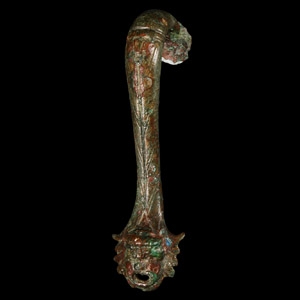
Roman Tankard Handle with Actor's Mask
1st-2nd century A.D.Sold for (Inc. bp): £130
A bronze tankard handle terminating in a male mask shown with an open mouth and wild hair, degenerate foliate detailing to the stem. 94 grams, 10.8 cm
Acquired early 2000s. Property of a Birmingham, UK, collector. Property of an Essex, UK, gentleman. -
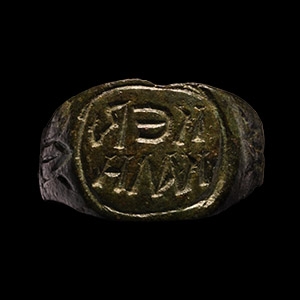
Post Roman Ring with Inscription
6th-7th century A.D.Sold for (Inc. bp): £169
A bronze finger ring with raised ellipsoid bezel, the shoulders decorated with engraved foliage, on the bezel incised in Greek letters the inscription 'ΚΕΡΙ ΚАΛΗ' (written backwards). 4.33 grams, 23.12 mm overall, 21.00 mm internal diameter (approximate size British U 1/2, USA 10 1/4, Europe 23.15, Japan 22)
Acquired in the late 1990s-2000. Property of an East London gentleman.
The ring corresponds to the 1d type of Hadjadj's classification. The Greek inscription is probably a barbaric interpretation of 'ΚΗΡΙ ΚАΛΗ' (kind-hearted). The Merovingian typology of the ring suggests a late Roman product under the Roman-Barbarian kingdoms of Gaul or the Iberian Peninsula. -
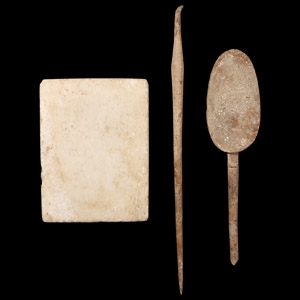
Roman Palette and Bone Implement Group
1st-4th century A.D.Estimate: £200 - 300 (‡+bp*)
Opening Bid: £100
A rectangular stone palette with bevelled edges, accompanied by a bone spoon and probe implement. 152 grams total, 7.5-15.5 cm
Acquired early 1990s. Ex private American collection; thence by descent. Private collection since 1998.
