
Loading, please wait...
LOT 0110
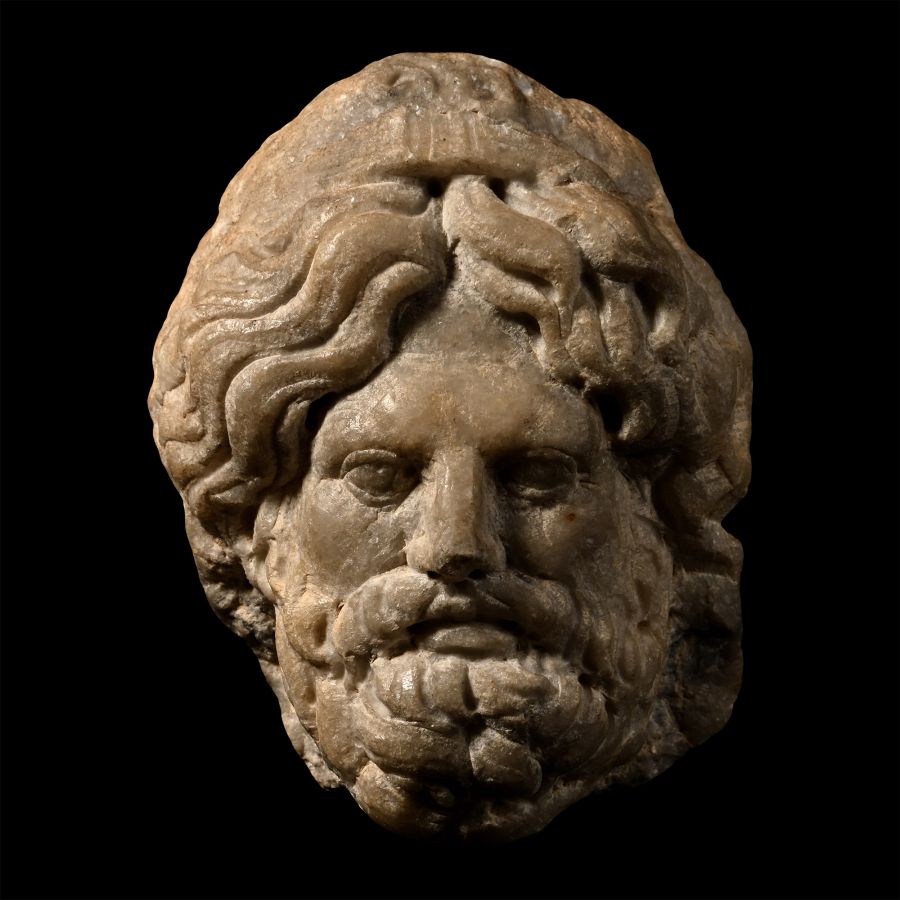
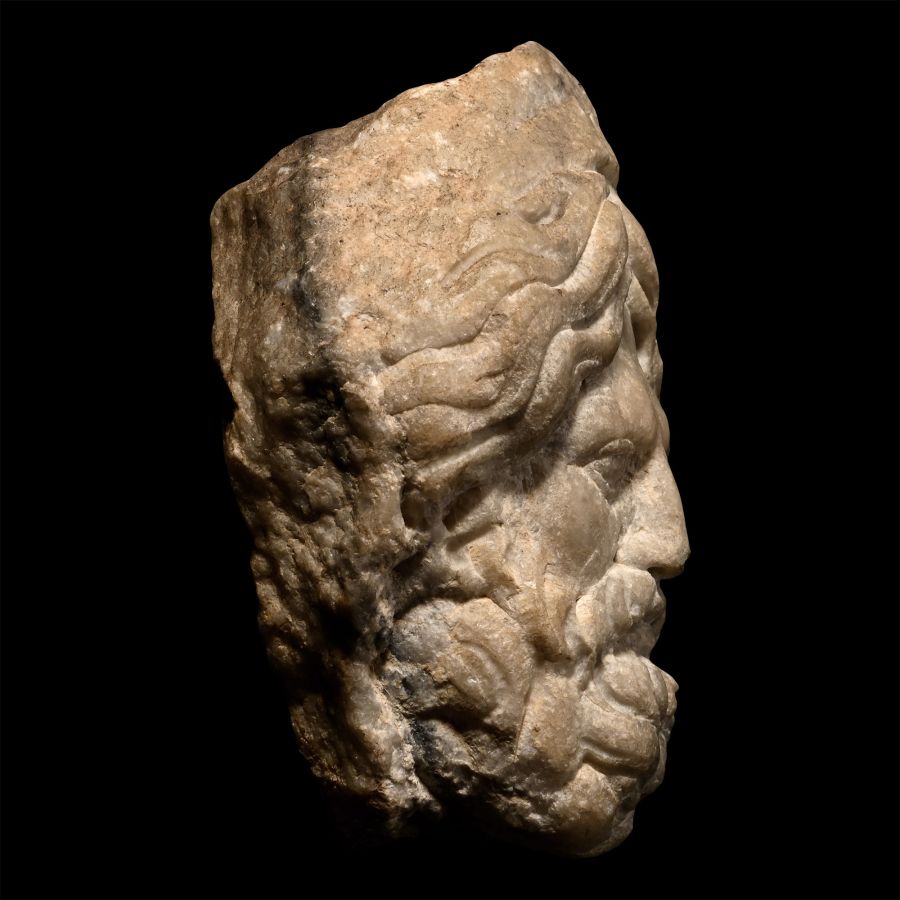
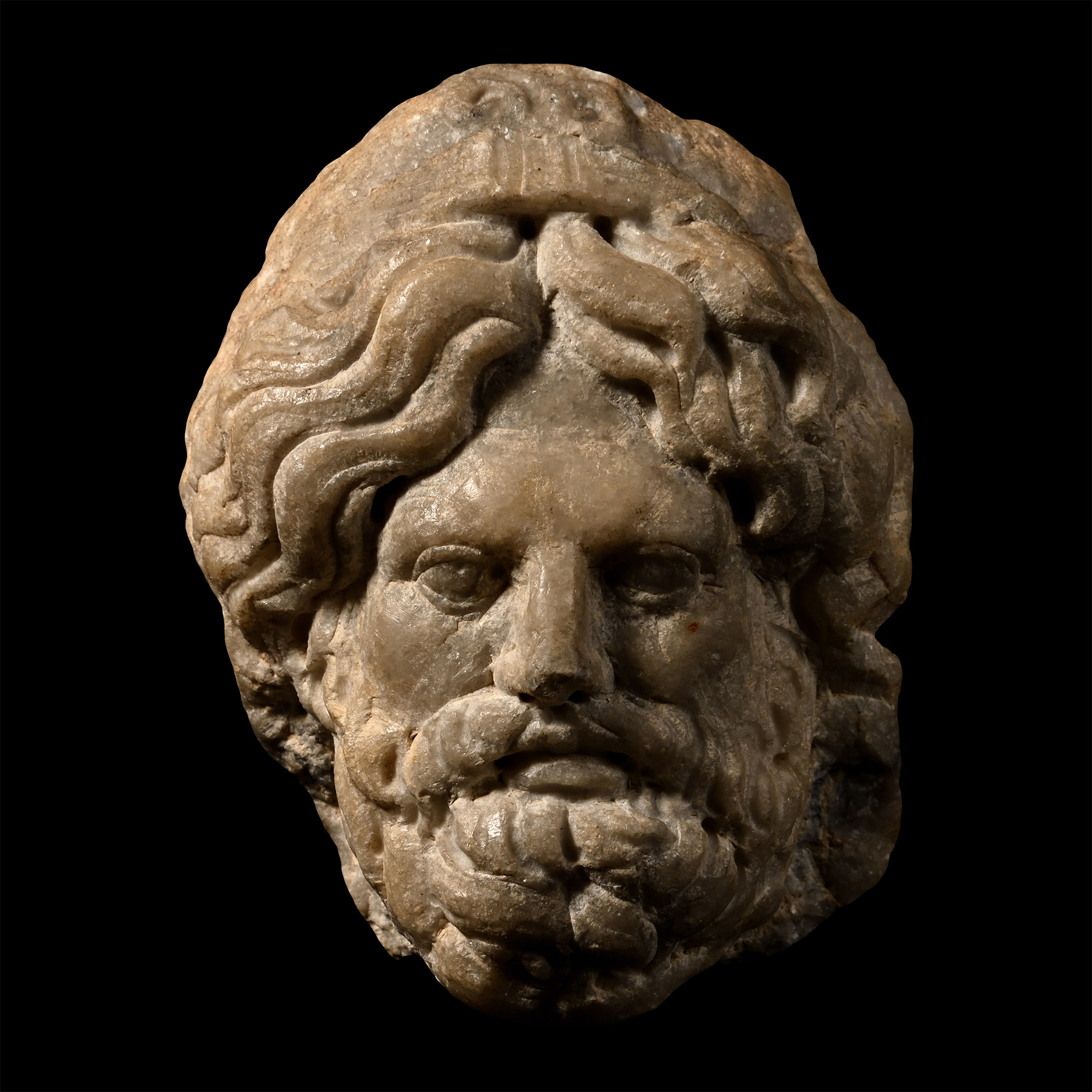
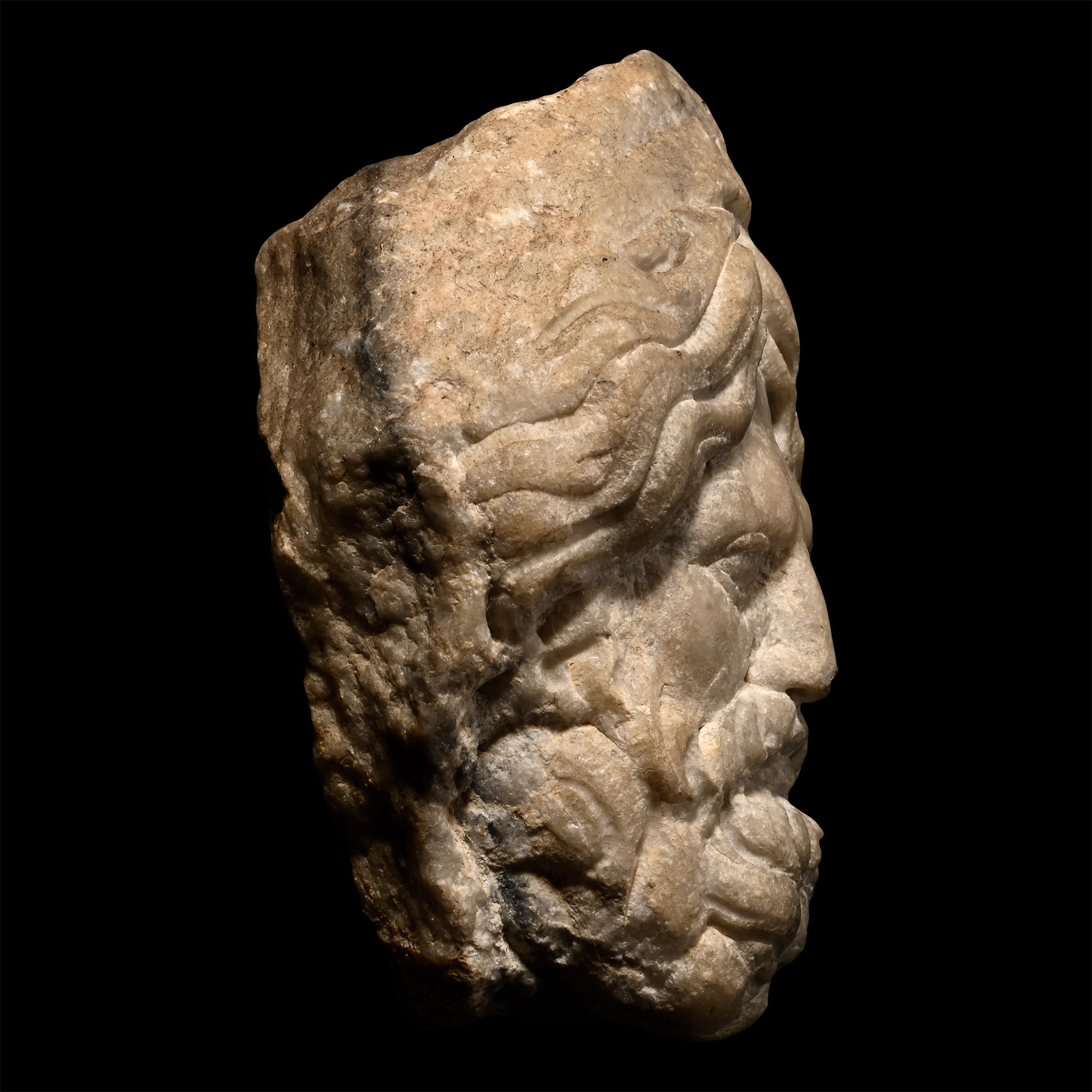
Roman Marble Head of Jupiter
1ST-2ND CENTURY A.D.
4 1/4 in. (574 grams, 10.5 cm).
Modelled in the half-round with luxuriant curls to the hair and beard, strong nose and brow with lentoid eyes; undercut modelling to the nose, mouth and hair; large mounting socket to the right side of the brow and smaller beneath the chin.
ProvenanceThe father of Christopher Frederick, a general practitioner based in Brighton, East Sussex, who acquired it prior to 1969.
Thence by descent to his son, Christopher Frederick, Brighton, East Sussex.
Acquired from the above by the present owner.
TimeLine Auctions follows a vetting process to ensure the authenticity and legality of all items, reinforcing our commitment to integrity and responsible trading. Each antiquity, antique, and coin lot undergoes thorough examination by a vetting committee of at least ten external specialists, professional trade association members, scientists, and archaeologists: Our Vetting Process
AUCTIONS:
TimeLine is a leading auction house specialising in antiquities, ancient art, collectables, natural history, coins, medals, and books. Our auctions offer museums, collectors, historians, and enthusiasts the opportunity to acquire unique and historically significant pieces.
-
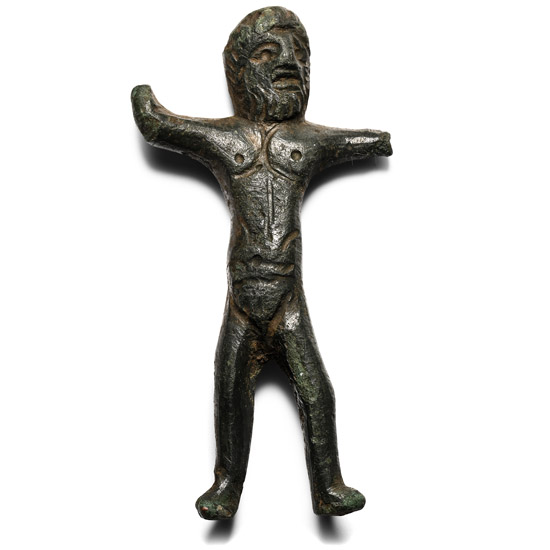
Romano-Celtic Bronze Statuette of God Sucellos
2nd-4th century A.D.Sold for (Inc. bp): £104
Modelled in the round with luxuriant hair and beard, bare-chested with a short kilt and belt; left arm extended straight and right arm bent upwards. 36.7 grams, 69 mm
From the private collection of a European gentleman (1942-2024), formed since the 1970s.
Sucellos was the Gaulish strong-man deity, usually shown with a hammer in his raised hand and a pot in the other. -
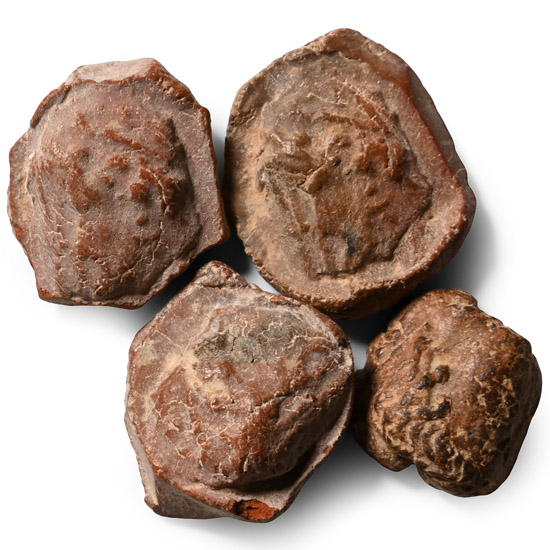
Jewish Terracotta Bullae, Tesserae or Token Group
3rd century B.C.-1st century A.D.Sold for (Inc. bp): £7
A mixed group of ceramic bullae, tesserae or theatre tokens bearing low-relief motifs of profile busts, three with Hebrew text to the reverse. 3.97 grams total, 12-17 mm
From the private collection of a European gentleman (1942-2024), formed since the 1970s.
The term 'tessera' was used in Roman times to convey the Greek term σύμβολον (token). Small tiles are known as tokens, often shaped like coins, made of metal (copper, lead, iron), clay, bone, wood, or glass, stamped as well as engraved. The tokens, however, are not exclusively coin-shaped, as the Latin term 'tessera' refers to a four-sided shape. Tokens and tesserae seem to have been used both in Athens and Rome for the distribution of goods. According to written sources, the term ‘token’ is identified with credentials of the official authorities. They have also been interpreted as tokens of identity, as entrance tickets to theatre performances, tribunals or assemblies of citizens, archival material of seal engraving, as pawns in games, Charon’s obols and even as amulets. -
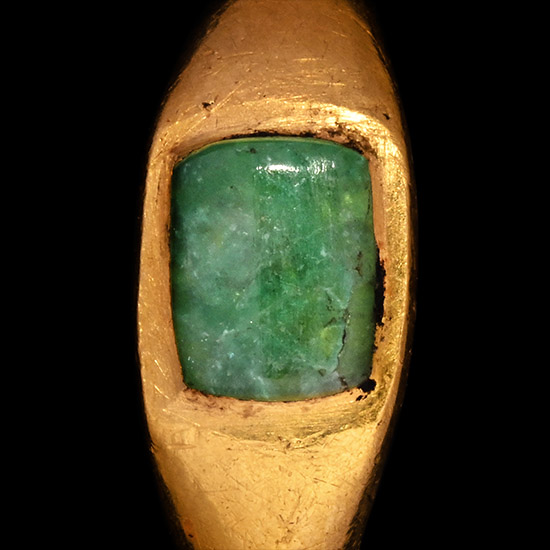
Roman Child's Ring with Emerald
1st-2nd century A.D.Sold for (Inc. bp): £715
Integral flat bezel with inset green emerald. 1.22 grams, 13.23 mm overall, 10.74 mm internal diameter
Private English collection, formed between the late 1970s and early 1990s. Private collection, UK.
