
Loading, please wait...




LOT 0122
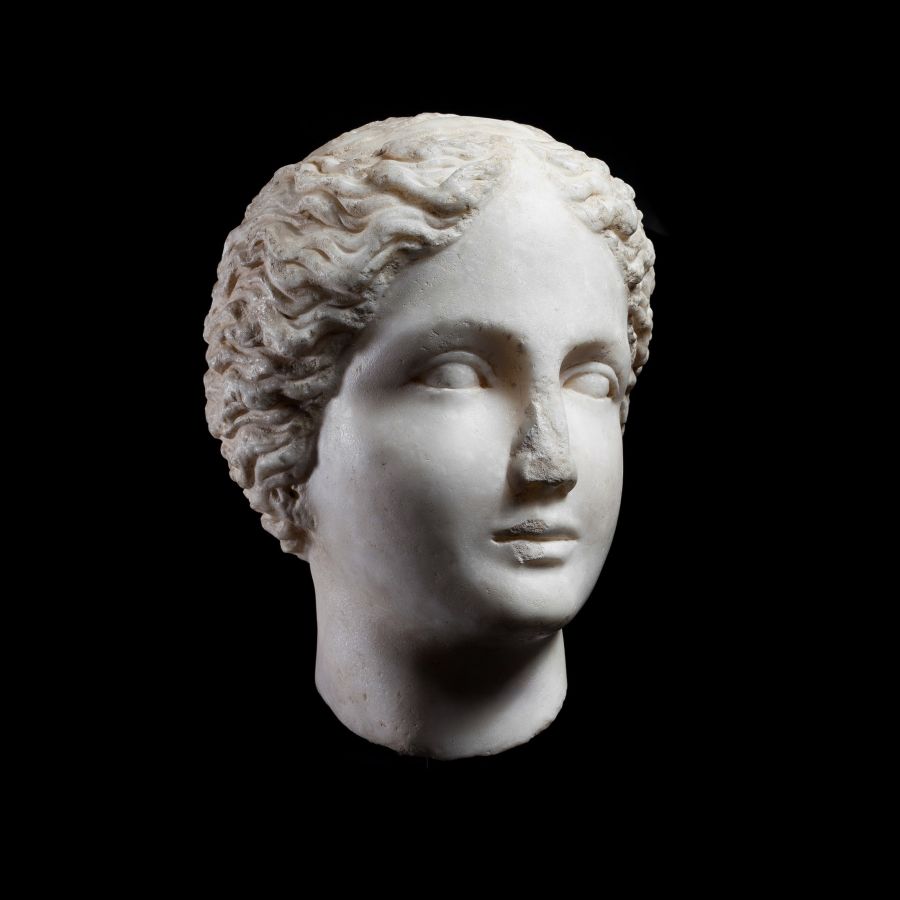
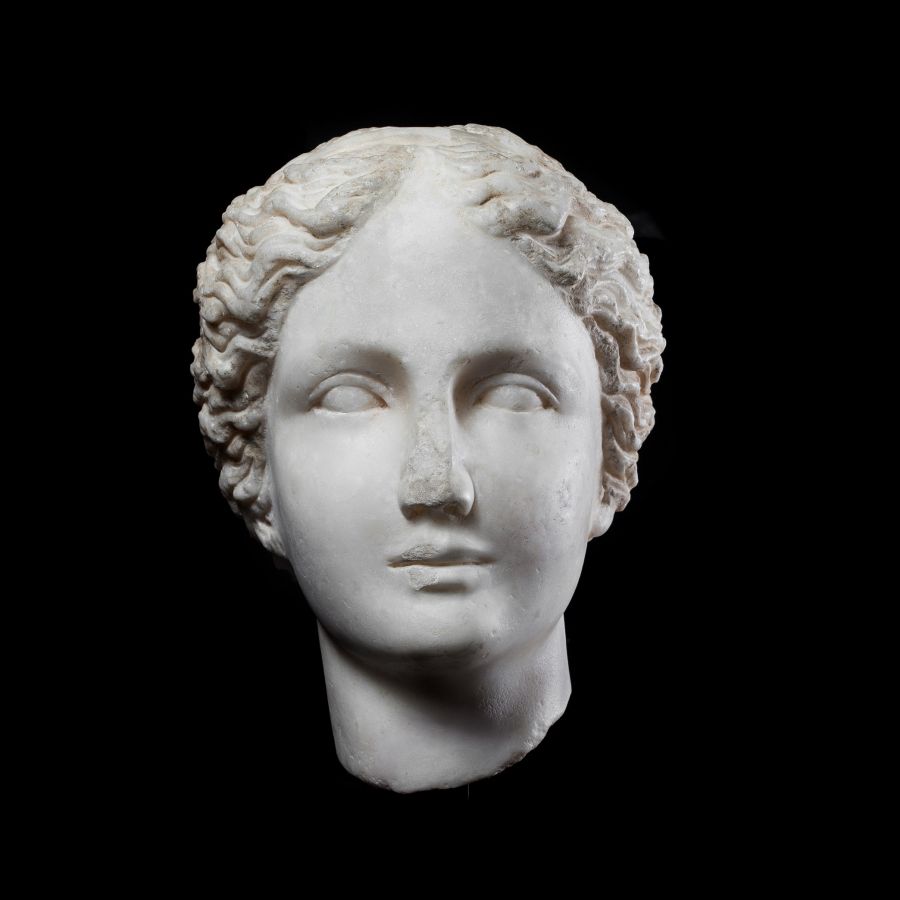
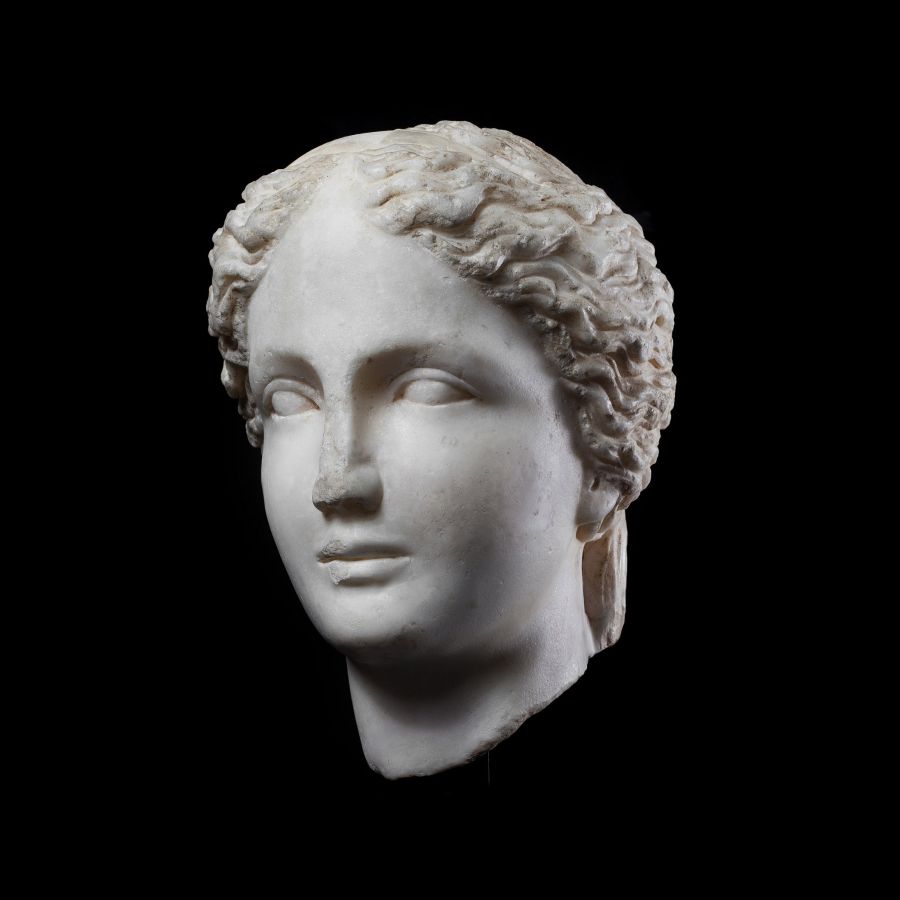
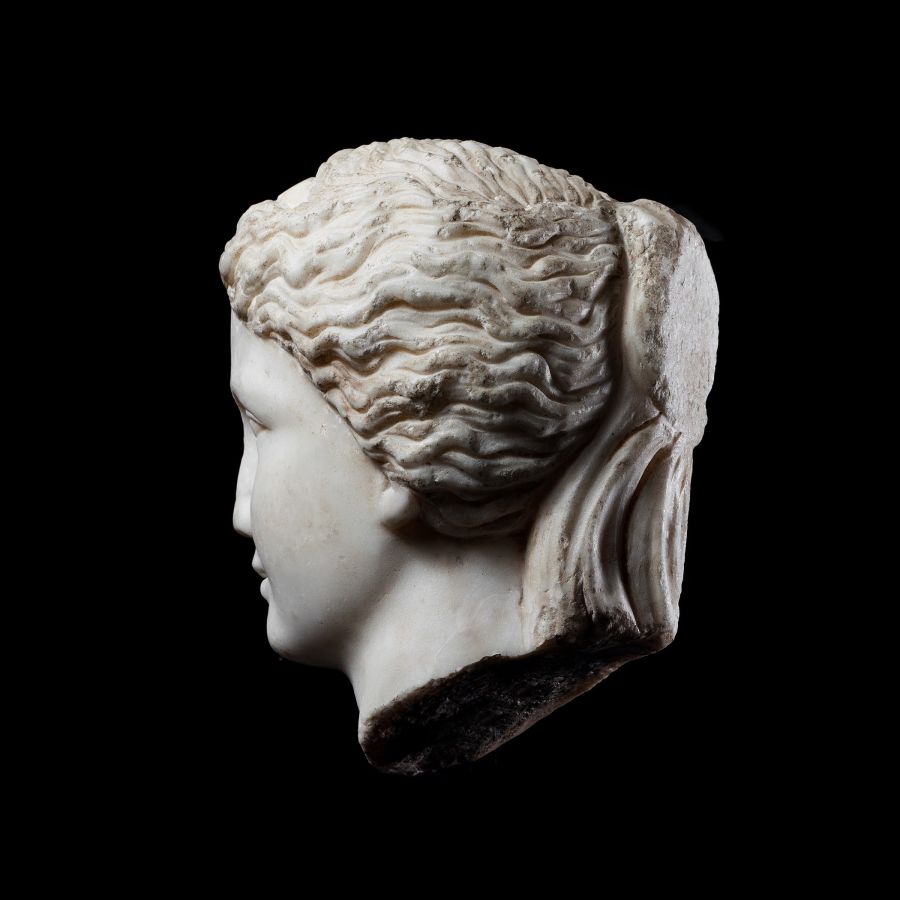
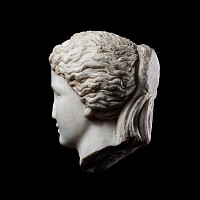
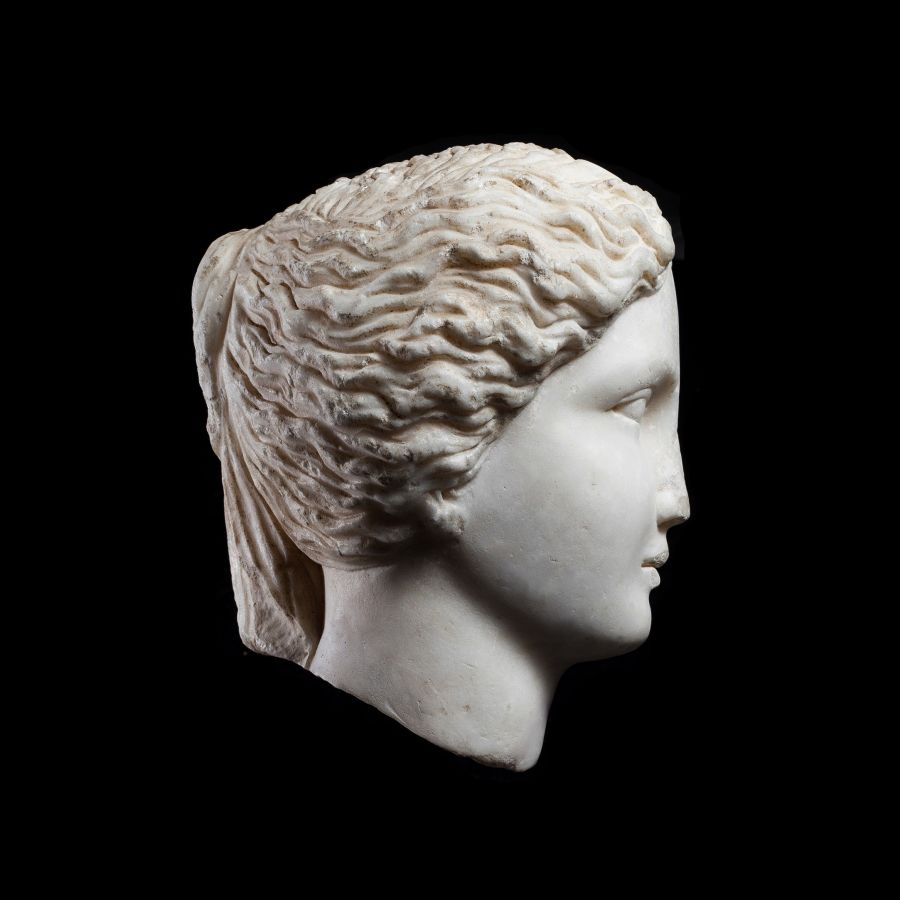
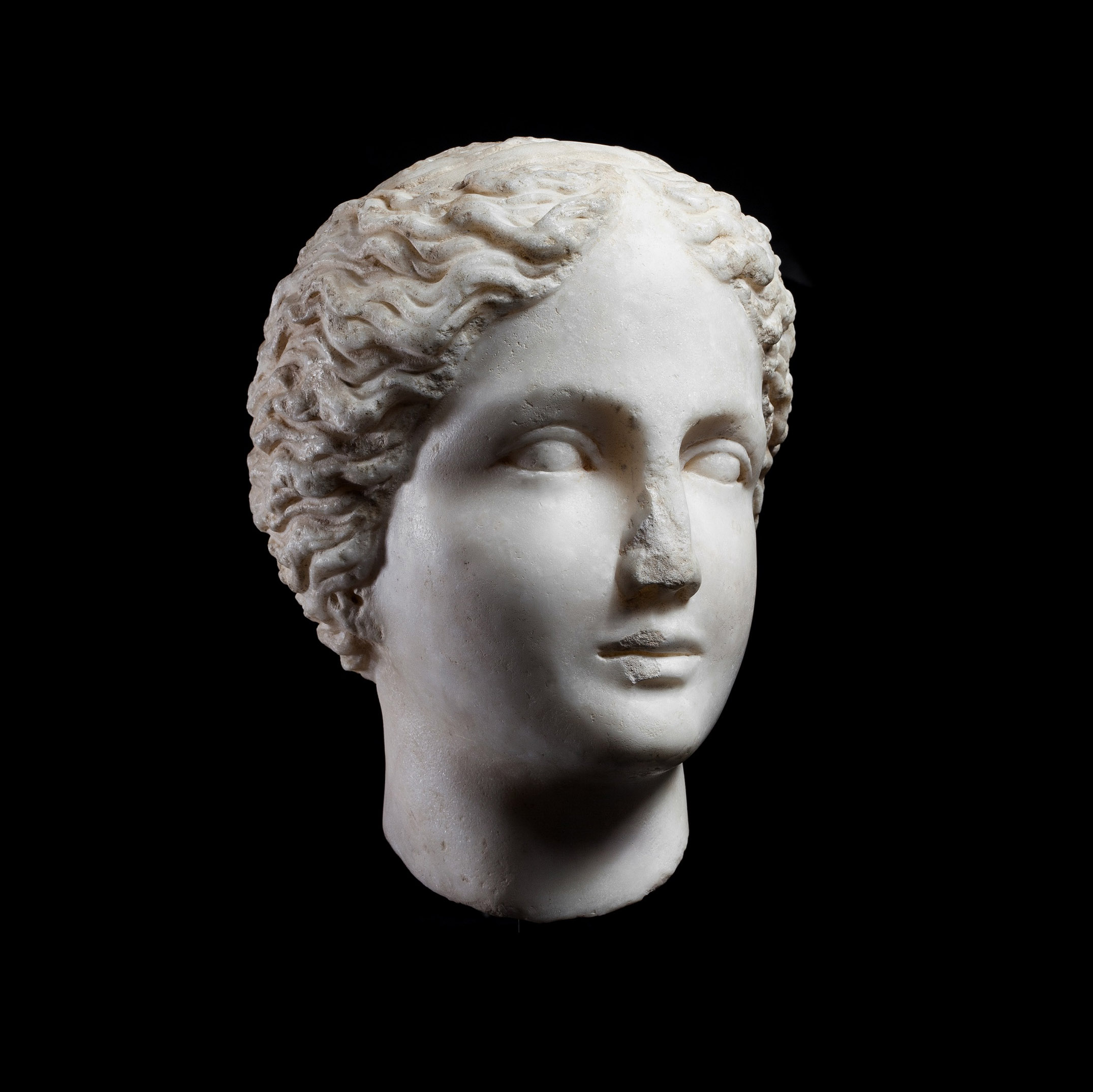
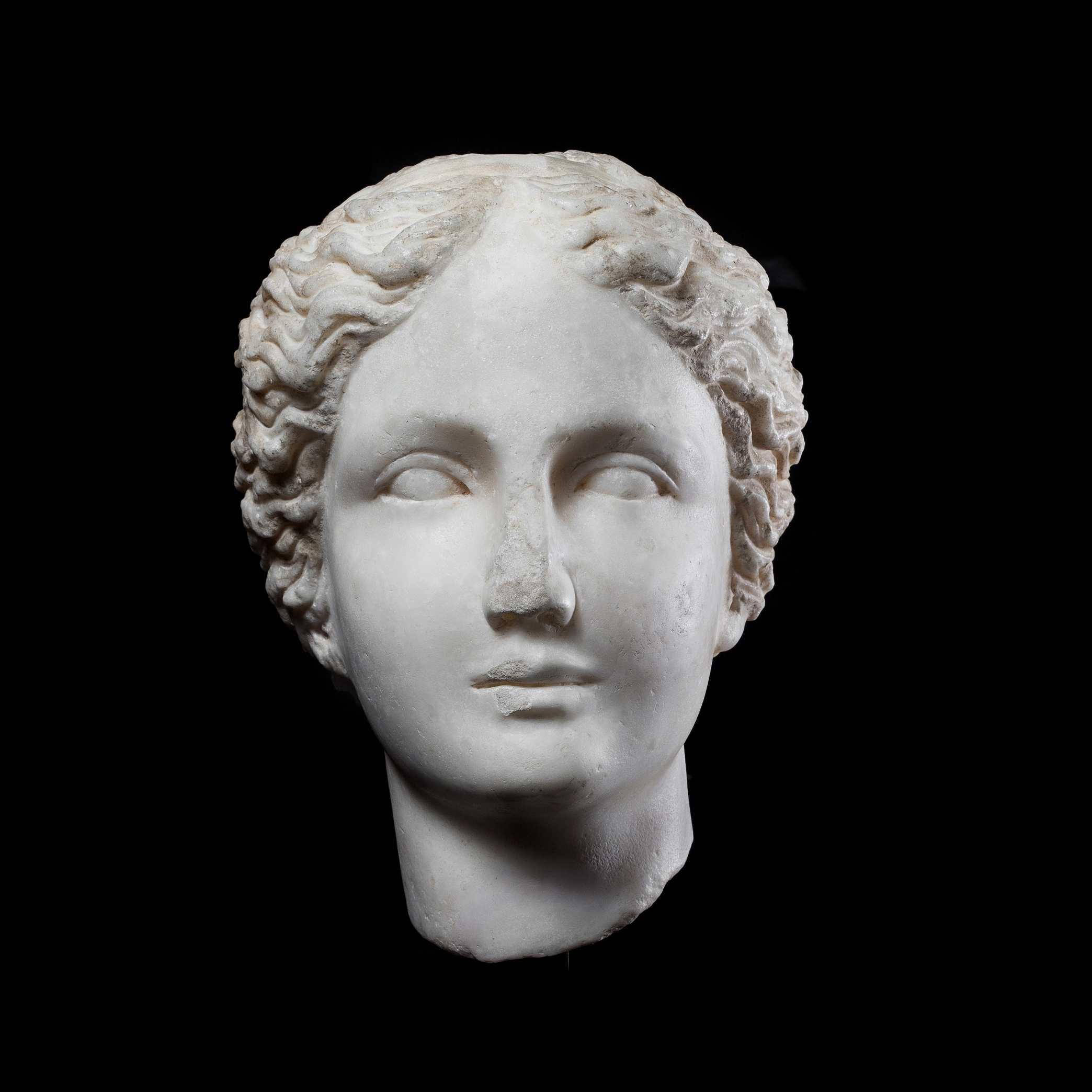
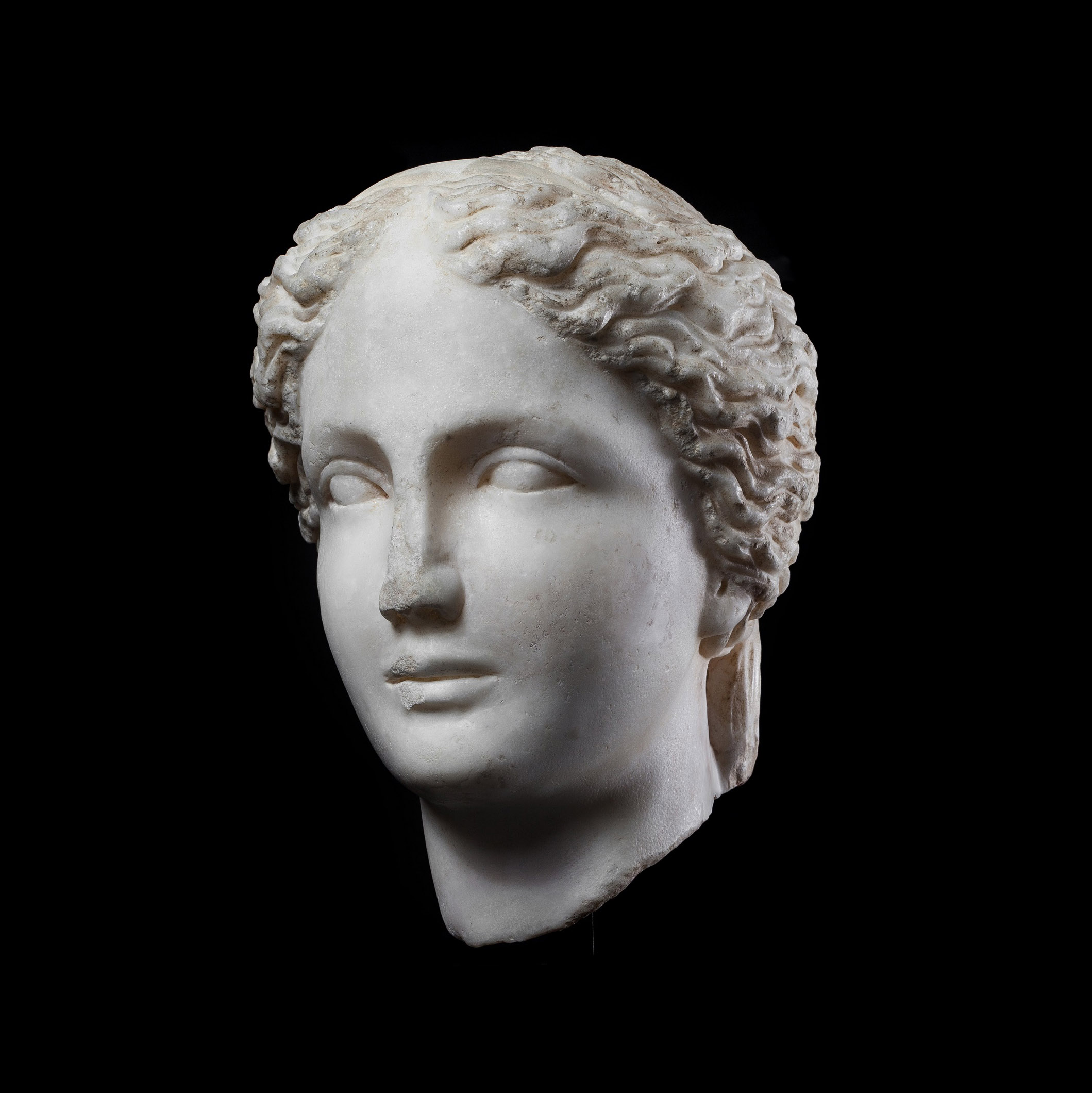
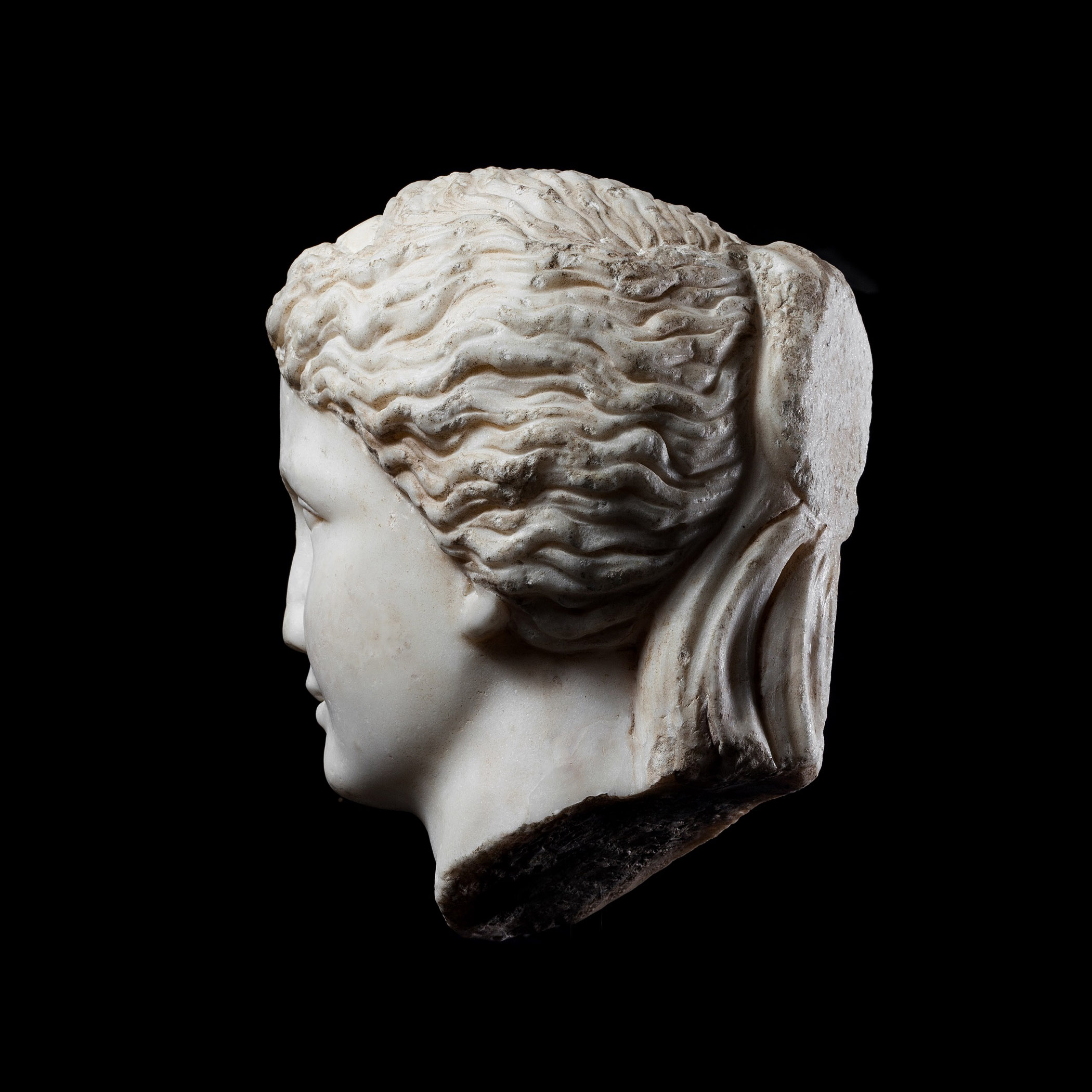
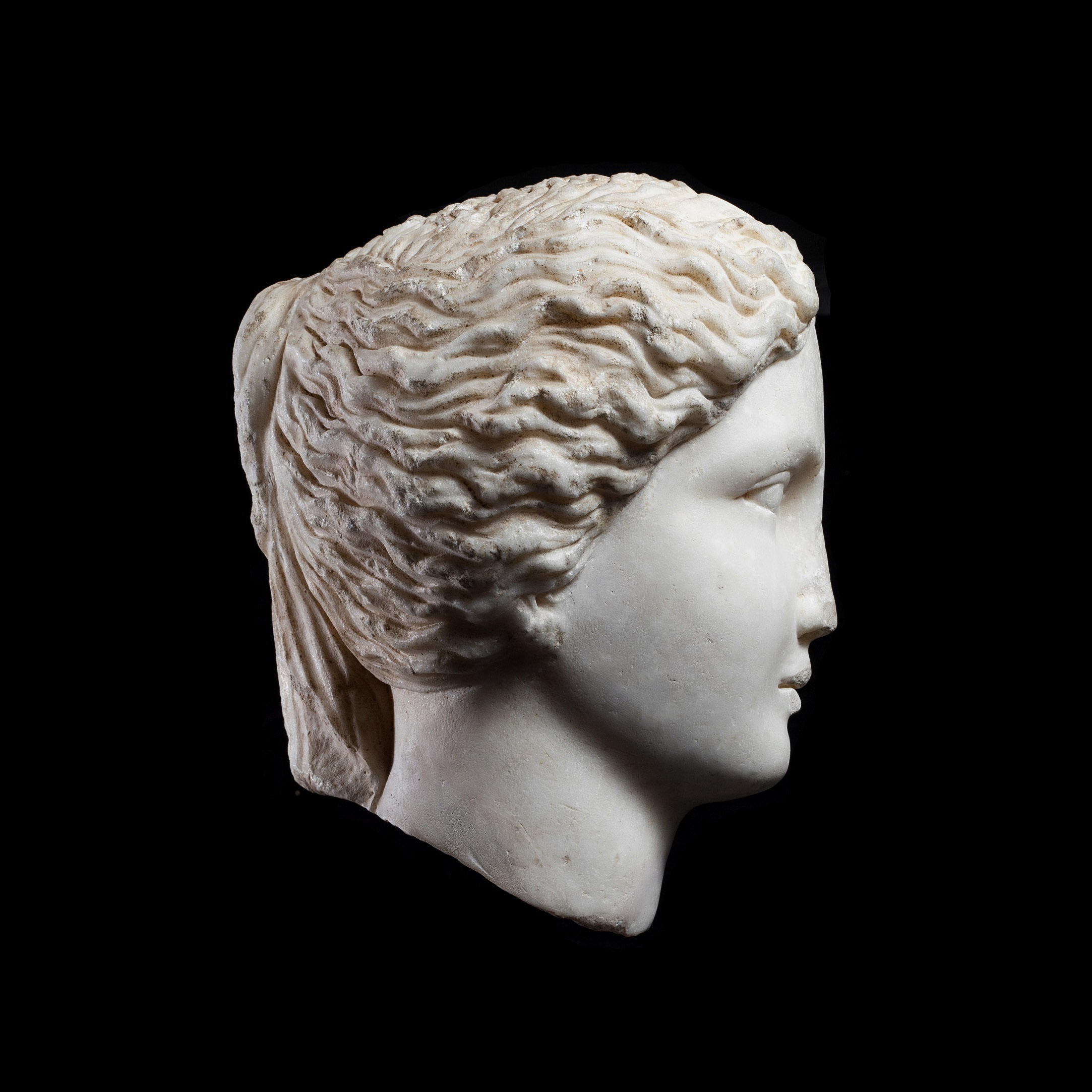
Roman Marble Head of a Young Woman
2ND CENTURY A.D.
15 in. (14 kg total, 38 cm high including stand).
A skilfully carved life-size marble head of a female (possibly Artemis, a Muse or an Amazon) with centrally parted hair composed of wavy strands and tied in a ponytail at the back; serene facial expression, almond-shaped eyes and small mouth with slightly parted lips; some restoration; mounted on a custom-made display stand.
ProvenanceEx private collection, Monaco, 1960s-1970s.
Acquired from the Monaco Fine Arts on 4th November 1992.
Private collection of Mr & Mrs Daniel, Monaco.
Acquired by the present owner from David Aaron Gallery in 2019.
Accompanied by an academic report by Dr Raffaele D’Amato.
This lot has been checked against the Interpol Database of stolen works of art and is accompanied by searcher certificate number no.11569-197722.
Cf. Felletti Maj, B.M., Museo Nazionale Romano, I Ritratti, Roma, 1953; Bianchi Bandinelli, R., L'arte Romana nel centro del potere, dalle origini alla fine del II secolo d.C., Roma, 1969; Bieber, M., Ancient Copies. Contributions to the History of Greek and Roman Art, New York, 1977, p.88, pls.60-61; Fittschen K., Zanker P., Le sculture del Museo Civico Archeologico di Bologna, La collezione Marsili, Comune di Bologna, Bologna, 1986; Boardman, J., Griechische Plastik. Die spätklassische Zeit, Mainz, 1998, pp.100ff.; Fuchs, W., Die Skulptur der Griechen, München, 1993, pp.221ff.; Agnoli, N., Museo Archeologico Nazionale di Palestrina, Le sculture, Roma, 2002; Vout, C., ‘Hadrian, Hellenism, and the Social History of Art’, in Arion: A Journal of Humanities and the Classics, Third Series, Vol.18, No.1, Spring-Summer 2010, pp.55-78.
FootnotesThe youthful head seems to be based on the Greek Attic Artemis Colonna type of the 4th century B.C. The composition of the head is powerful with a serene countenance, its physiognomy replete with the idealised quality characteristic of Greek classical sculpture. This classic influence is best seen in the perfect almond- shaped eyes with their sharply carved lids as well as the smooth contour of the face. The rich handling of the coiffure and the smooth quality of the face can suggest a date sometime during the Hadrianic (117 to 138 A.D.) or early Antonine periods.
CONDITIONTimeLine Auctions follows a vetting process to ensure the authenticity and legality of all items, reinforcing our commitment to integrity and responsible trading. Each antiquity, antique, and coin lot undergoes thorough examination by a vetting committee of at least ten external specialists, professional trade association members, scientists, and archaeologists: Our Vetting Process
AUCTIONS:
TimeLine is a leading auction house specialising in antiquities, ancient art, collectables, natural history, coins, medals, and books. Our auctions offer museums, collectors, historians, and enthusiasts the opportunity to acquire unique and historically significant pieces.
-
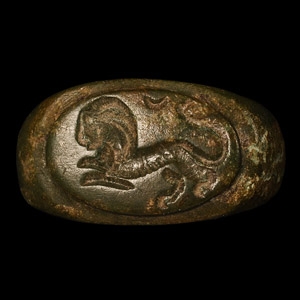
Roman Ring with Leaping Gladiatorial Lion
Circa 2nd century A.D.Sold for (Inc. bp): £234
A bronze finger ring with raised ellipsoid bezel, incuse leaping lion motif. 5.21 grams, 21.25 mm overall, 17.32 mm internal diameter (approximate size British K, USA 5 1/4, Europe 9.95, Japan 9)
Acquired before 2000. From the collection of a European gentleman living in the UK. -
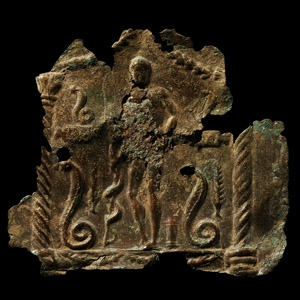
Roman Votive Plaque with Asclepius
2nd-3rd century A.D.Sold for (Inc. bp): £286
A sheet-bronze votive plaque fragment displaying repoussé ornament, likely the god Asclepius holding his snake-entwined staff beneath a columned arch, additional snakes raising their heads and necks beside and above him, other enigmatic symbols in the field. 2.67 grams, 52 mm
Acquired before 2000. From the collection of a European gentleman living in the UK.
Aesculapius, god of medicine, the Greek Asclepius, son of Apollo and a mortal, Coronis, is often accompanied by a snake, a symbol of wisdom and healing power. Aesculapius-Asclepius is also often represented with the staff having a snake wrapped around it. -
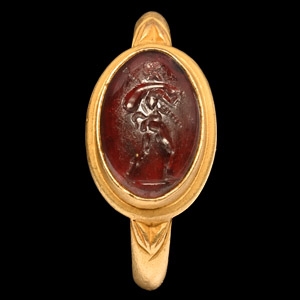
Roman Satyr Traveller Gemstone in Gold Ring
1st-3rd century A.D.Sold for (Inc. bp): £4,940
A garnet cabochon with intaglio satyr traveller advancing with staff and pouch over his shoulder, set into a later gold finger ring. 8.22 grams, 27.20 mm overall, 22.95 mm internal diameter (approximate size British O, USA 7, Europe 14.98, Japan 14)
Acquired 1960s-1990s. Late Alison Barker collection, a retired London barrister. This lot has been checked against the Interpol Database of stolen works of art and is accompanied by search certificate no.11619-199018.
The subject was popular on Roman gems: Silenus and the satyrs, grotesque hedonists, unrestrained in their desire for sex and wine, and yet immortal companions of Dionysus, were considered ‘cruder than men and yet somehow wiser, combining mischief with wisdom, lewdness with skill in music, animalism with divinity'. The counterpoint of the divine and the atavistic appealed to the Roman sense of moral superiority.
