
Loading, please wait...
LOT 0159
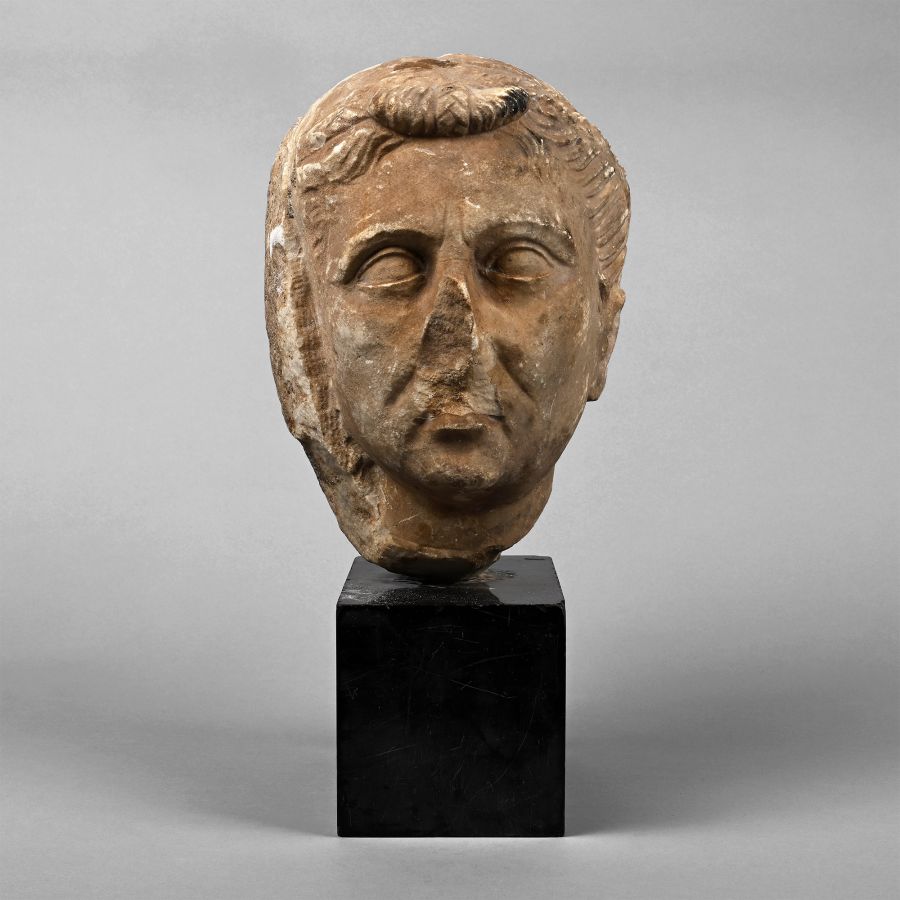
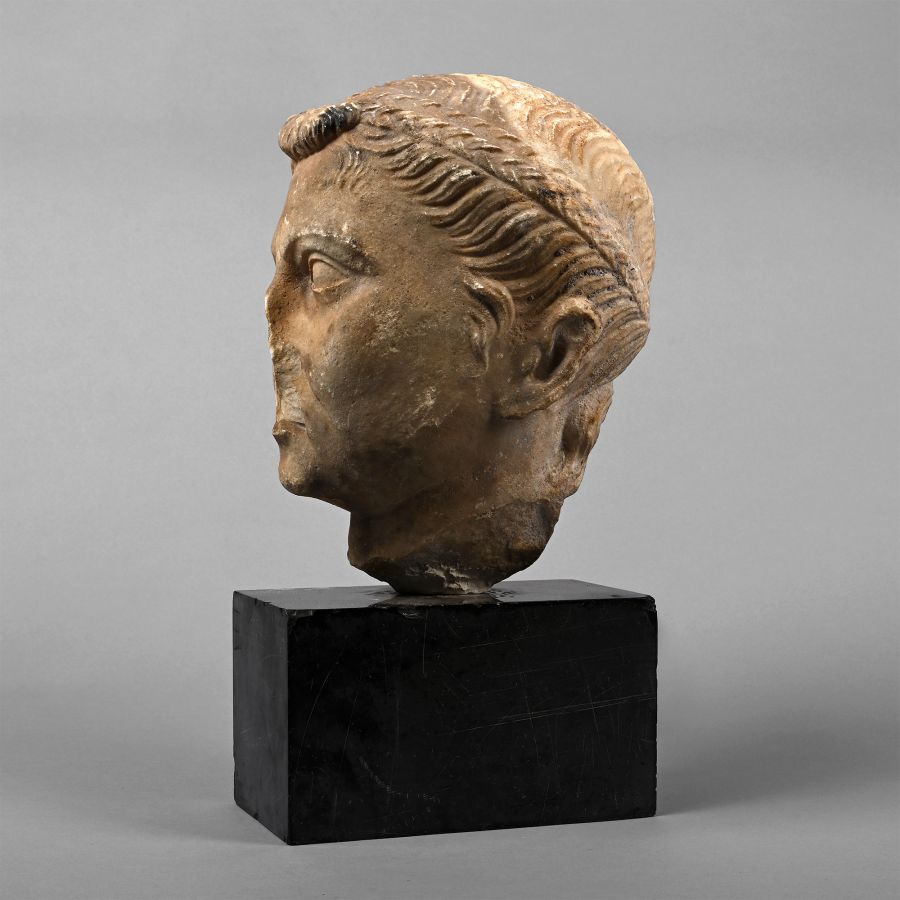
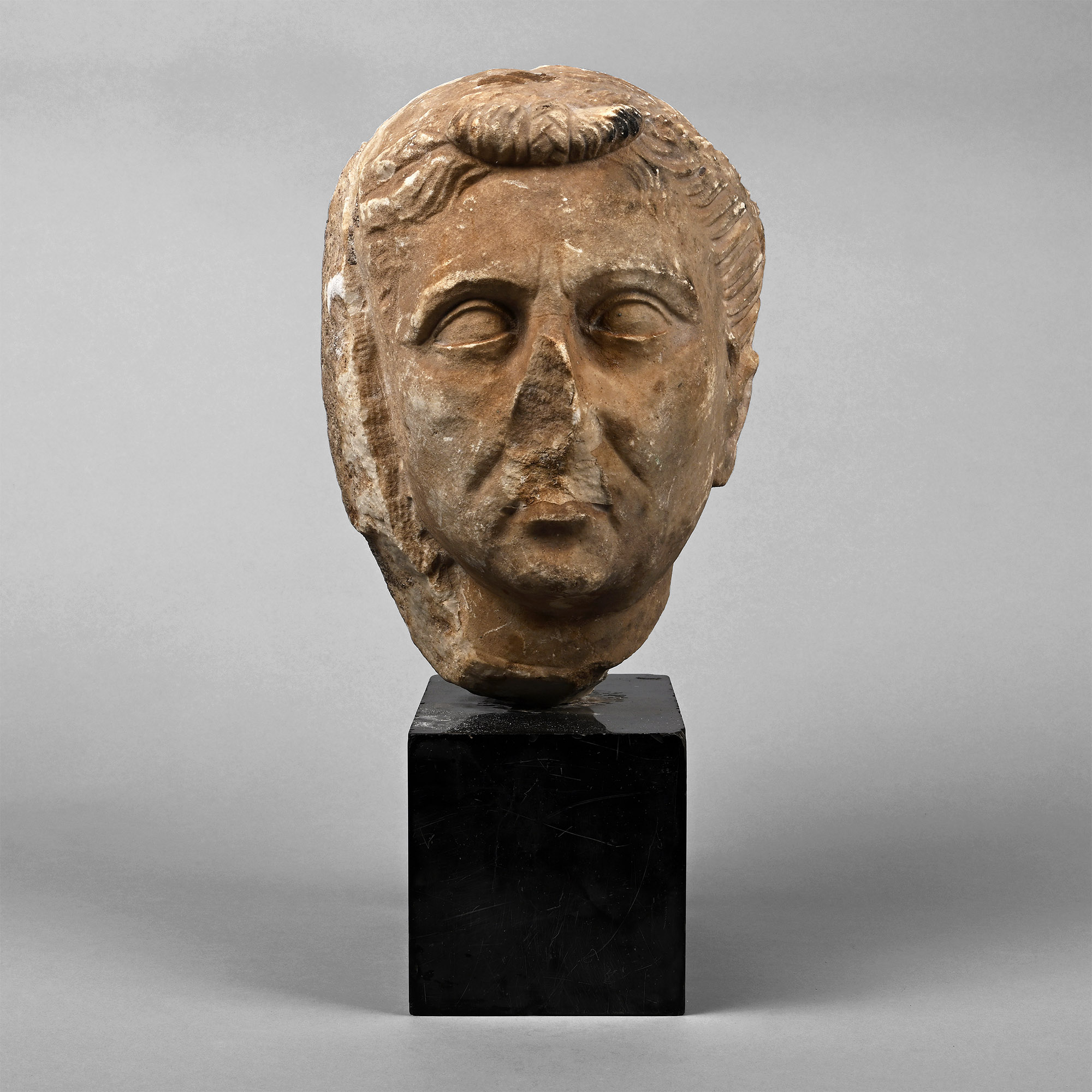
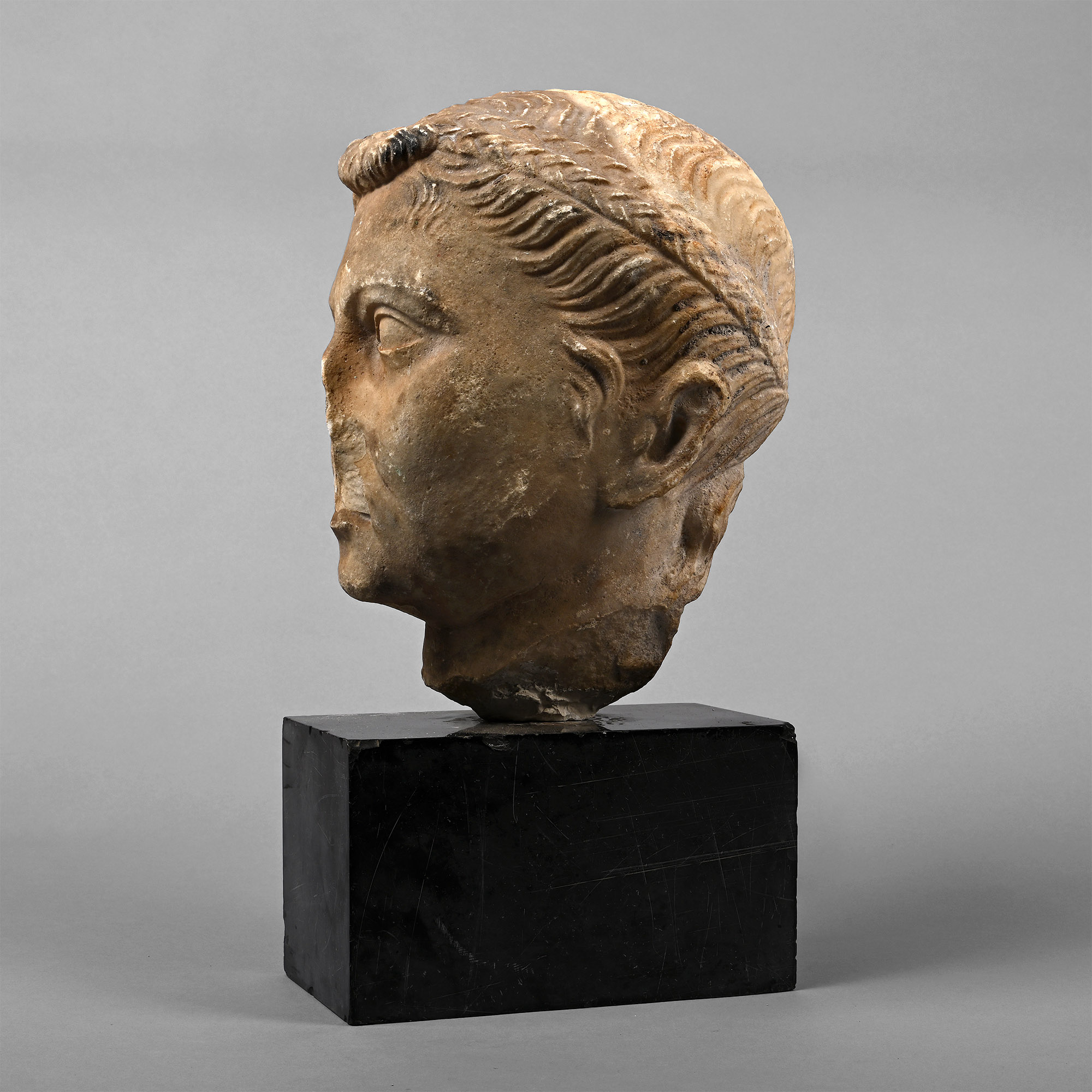
Roman Marble Head of a Wealthy Lady
1ST CENTURY A.D.
16 1/8 in. (24.5 kg total, 41 cm including stand).
Carved in the round with dressed hair and braided band with fanned closure above the brow; finely modelled facial detailing; mounted on a custom-made stand.
ProvenanceFrom the collection of L.V. (1950-1960), Paris, France.
Collection of Monsieur X. (1931-2017), dispersed for the benefit of the Monaco Red Cross.
Private collection, Europe.
Accompanied by a copy of French passport no.229089.
See Felletti Maj, B.M., Museo Nazionale Romano, I Ritratti, Roma, 1953; Scrinari, V. S. M., Sculture Romane di Aquileia, Roma, 1972; similar portraits can be found in Aquileia (Scrinari, 1972, cat.141 p.50 and 245 p.81); s. also Fittschen, K., Zanker, P. and Deutsches Archäologisches Institut, Katalog der römischen Porträts in den Capitolinischen Museen und den anderen kommunalen Sammlungen der Stadt Rom, Mainz am Rhein, 1983; Zanker, P., Roman portraits, sculptures in stone and bronze in the collection of the Metropolitan Museum of Art, New York, 2016.
FootnotesThe portrait is of an idealised feminine head, probably modelled on an Aphrodite type, with the hair in a bun on the nape, adorned with circles and with a tuft knotted at the top of the forehead, re-used as a portrait of a Roman lady. Many statue types were used both for portraits of women of the imperial family and for the portraits of other women, some of them based on images of goddesses.
CONDITIONTimeLine Auctions follows a vetting process to ensure the authenticity and legality of all items, reinforcing our commitment to integrity and responsible trading. Each antiquity, antique, and coin lot undergoes thorough examination by a vetting committee of at least ten external specialists, professional trade association members, scientists, and archaeologists: Our Vetting Process
AUCTIONS:
TimeLine is a leading auction house specialising in antiquities, ancient art, collectables, natural history, coins, medals, and books. Our auctions offer museums, collectors, historians, and enthusiasts the opportunity to acquire unique and historically significant pieces.
LOT 0159
Roman Marble Head of a Wealthy Lady
Estimate £10,000 - 14,000€11,600 - 16,240 (for guidance only)$13,500 - 18,900 (for guidance only)
-
Roman Glass Trefoil-Mouthed Juglet
2nd-3rd century A.D.Estimate: £300 - 400 (+bp*)
Opening Bid: £150
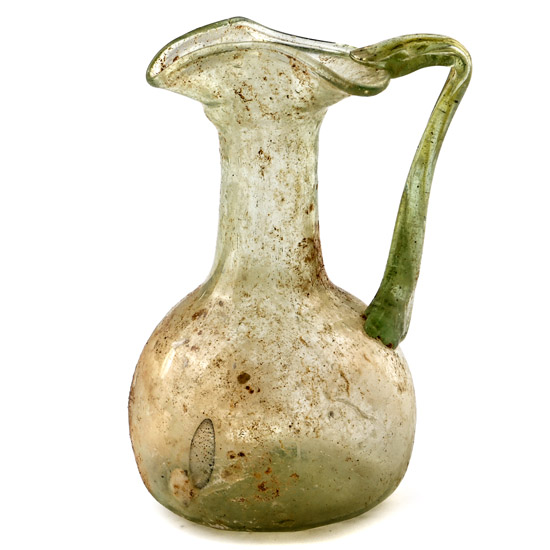
With bulbous body and pontil base, slender neck, rolled rim pinched to a trefoil; applied handle to the rear. 30 grams, 84 mm
From a specialist collection of glass, acquired from dealerships during the 1990s. -
Roman Bronze Decorated Bracelet
1st-4th century A.D.Sold for (Inc. bp): £98
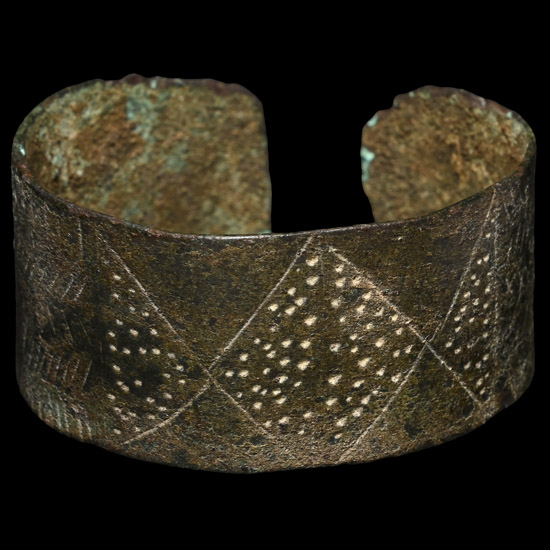
Featuring a wide flat-section penannular body, upper face with pointillé triangles and a lozenge, and a band of herringbone design on each finial. 19.6 grams, 45.8 mm
From the private collection of a European gentleman (1942-2024), formed since the 1970s. -
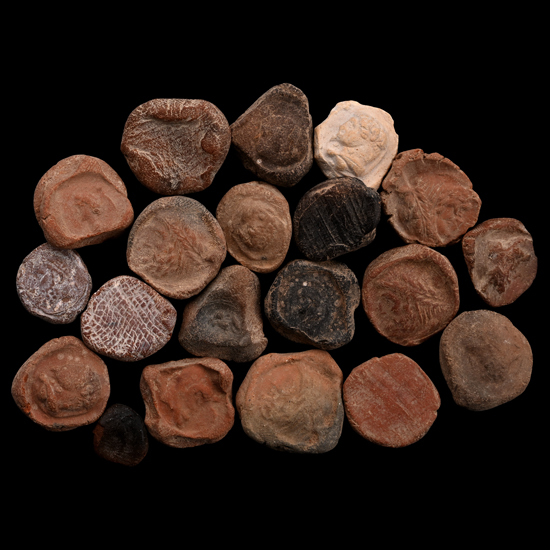
Roman Terracotta Bullae, Tesserae or Token Group
3rd century B.C.-1st century A.D.Sold for (Inc. bp): £98
A mixed group of ceramic bullae, tesserae or theatre tokens bearing low-relief motifs, mainly consisting of profile busts of deities. 37 grams total, 15-22 mm
From the private collection of a European gentleman (1942-2024), formed since the 1970s.
The term 'tessera' was used in Roman times to convey the Greek term σύμβολον (token). Small tiles are known as tokens, often shaped like coins, made of metal (copper, lead, iron), clay, bone, wood, or glass, stamped as well as engraved. The tokens, however, are not exclusively coin-shaped, as the Latin term 'tessera' suggests by etymologically referring to a square or at least a four-sided shape and confirmed in several cases by material remains of the past. Tokens and tesserae seem to have been used both in Athens and Rome for the distribution of goods. According to written sources, the term token is identified with credentials of the official authorities. They have also been interpreted as tokens of identity, as entrance tickets to theatre performances, tribunals or assemblies of citizens, archival material of seal engraving, as pawns in games, Charon’s obols and even as amulets.
