
Loading, please wait...
LOT 0610
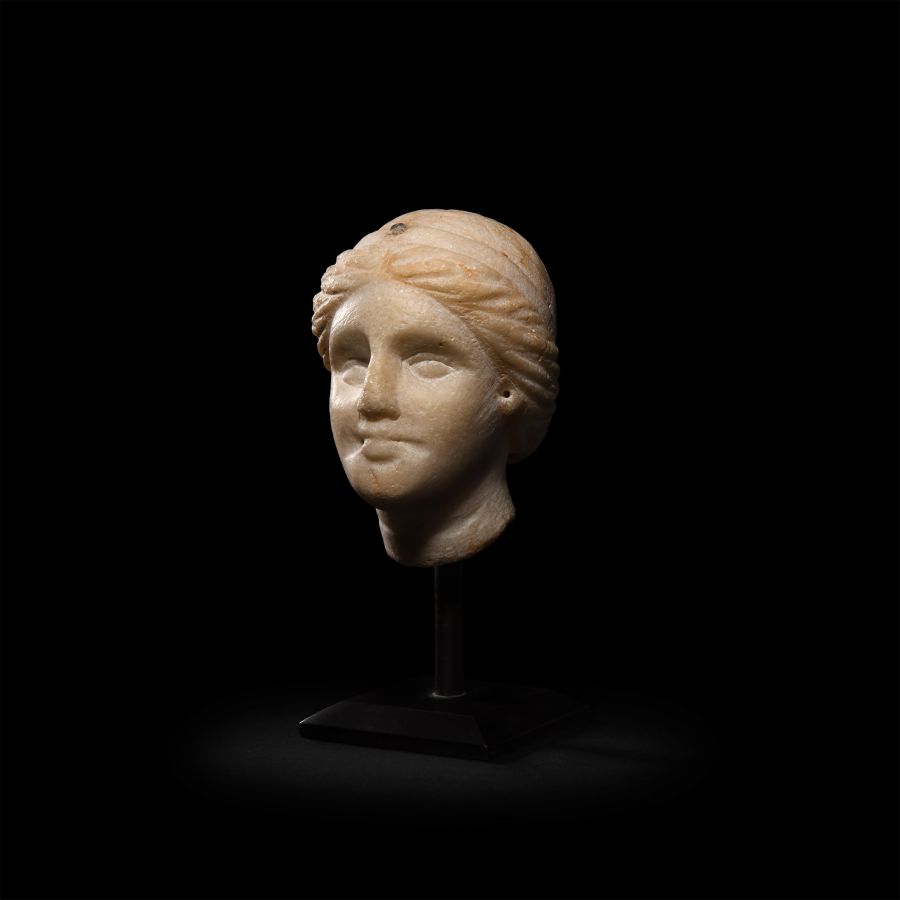
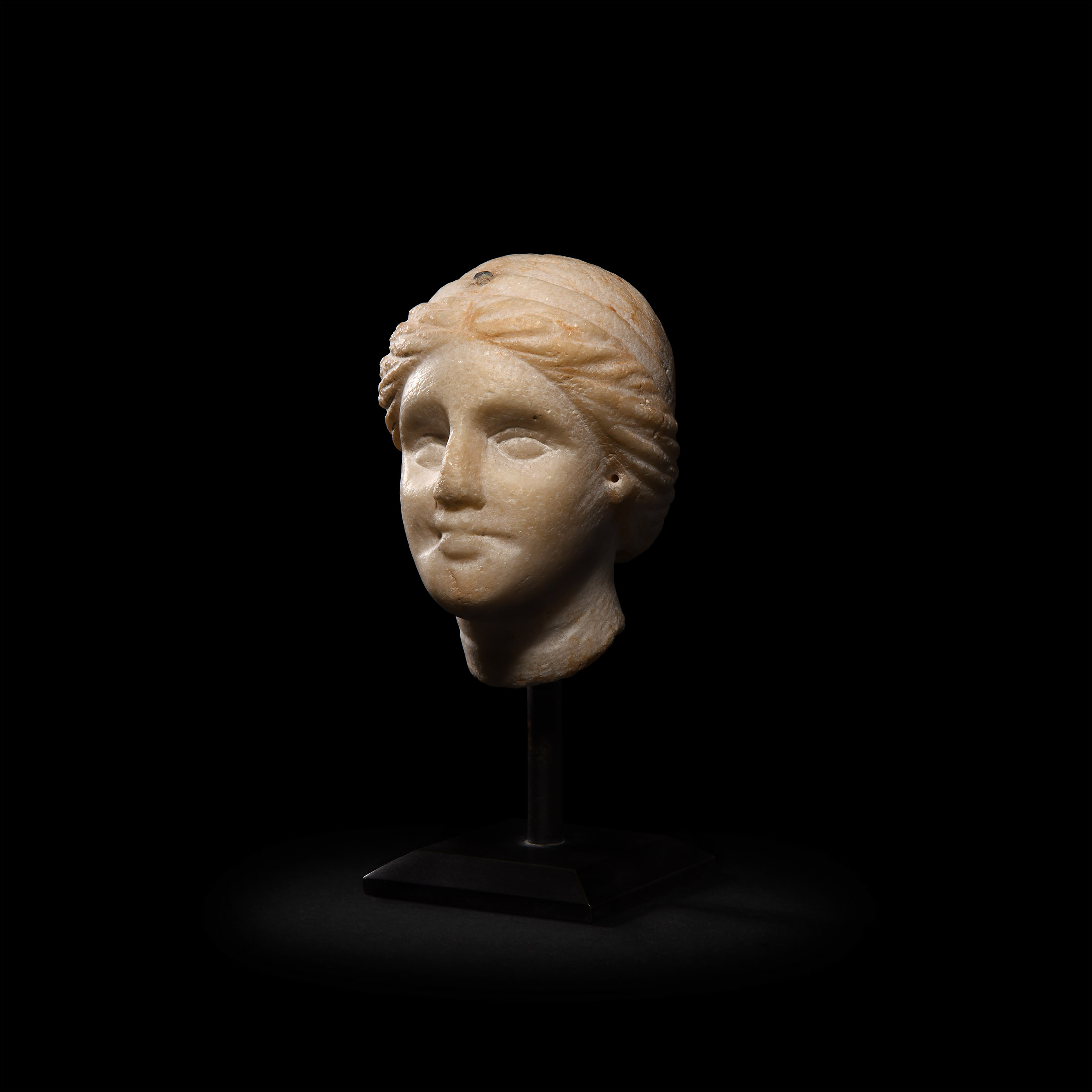
Roman Marble Head of a Goddess
LATE 4TH CENTURY A.D. OR LATER
4 3/4 in. (477 grams total, 12 cm high).
A marble head of a lady or a goddess from a statuette, carved in the round with semi-naturalistic facial features and dressed hair with fillet; mounted on a custom-made display stand. [No Reserve]
ProvenanceLondon art market, 1988.
LiteratureCf. Beckmann, E., Statuary Collections in the Late Roman Villas of Hispania and Southwestern Gaul, University of Pennsylvania, 2016, fig.31, statuette of Aphrodite from Sidon, Istanbul archaeological museum.
FootnotesThe head could represent a late Aphrodite, when compared with heads of the goddess of small late Roman statuettes. In these examples, like here, the goddess’ face is typical of idealised late-mythological statuary, with heavy eyelids, pronounced brow ridges, small lips and a soft jaw.
CONDITIONTimeLine Auctions follows a vetting process to ensure the authenticity and legality of all items, reinforcing our commitment to integrity and responsible trading. Each antiquity, antique, and coin lot undergoes thorough examination by a vetting committee of at least ten external specialists, professional trade association members, scientists, and archaeologists: Our Vetting Process
AUCTIONS:
TimeLine is a leading auction house specialising in antiquities, ancient art, collectables, natural history, coins, medals, and books. Our auctions offer museums, collectors, historians, and enthusiasts the opportunity to acquire unique and historically significant pieces.
-
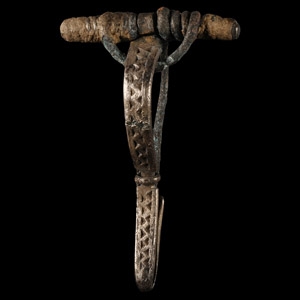
Roman Silver Bow Brooch
3rd-4th century A.D.Sold for (Inc. bp): £143
A silver bow brooch decorated with punched interlocking triangles to the bow and footplate; pin in catchplate to reverse. 6.7 grams, 47 mm
Acquired before 2000. From the collection of a European gentleman living in the UK. -
.jpg)
Roman Iron Ring with Eros Riding a Dolphin Gemstone
2nd century A.D.Sold for (Inc. bp): £195
An iron finger ring with inset burnt white stone cloison bearing intaglio of Eros riding a dolphin. 9.42 grams, 20.30 mm overall, 13.82 x 16.27 mm internal diameter (approximate size British H, USA 3 3/4, Europe 6.18, Japan 6)
Fine condition.
Acquired 1970's. Ex UK collection. Property of a Portsmouth, UK gentleman. -
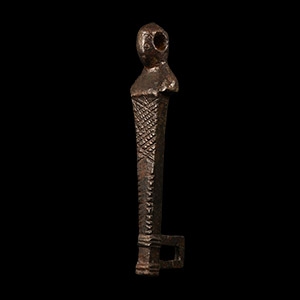
Roman Lock Plate Figure
Circa 1st-3rd century A.D.Sold for (Inc. bp): £33
A bronze key composed of a tapering shaft with hatched and notched detailing, finial in the form of a bust with stylised facial detailing, rectangular openwork ward; perforated through the finial for suspension. 30.7 grams, 79 mm
Acquired before 2000. From the collection of a European gentleman living in the UK.
