
Loading, please wait...

LOT 0108
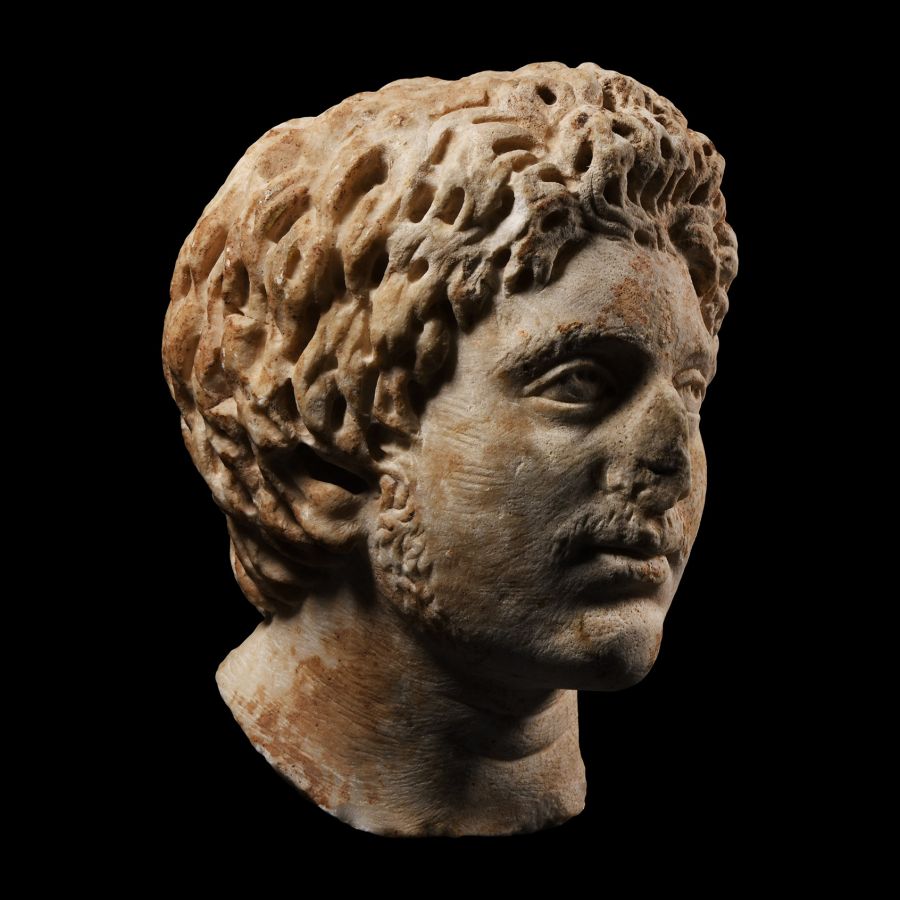
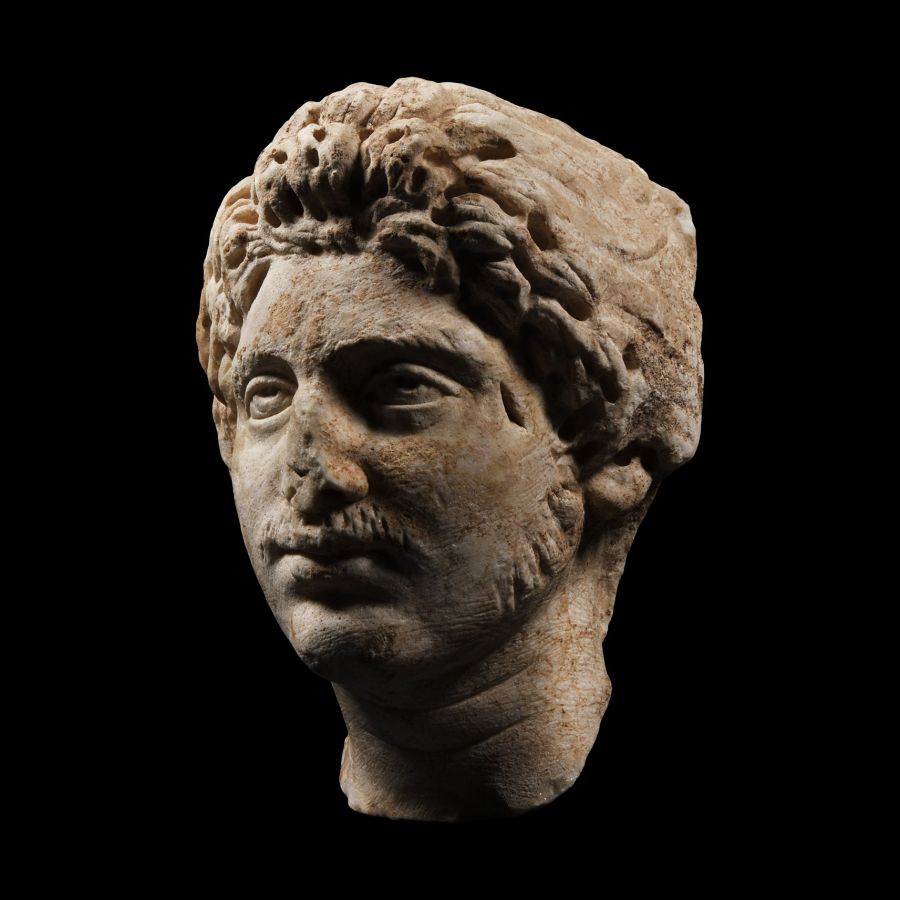
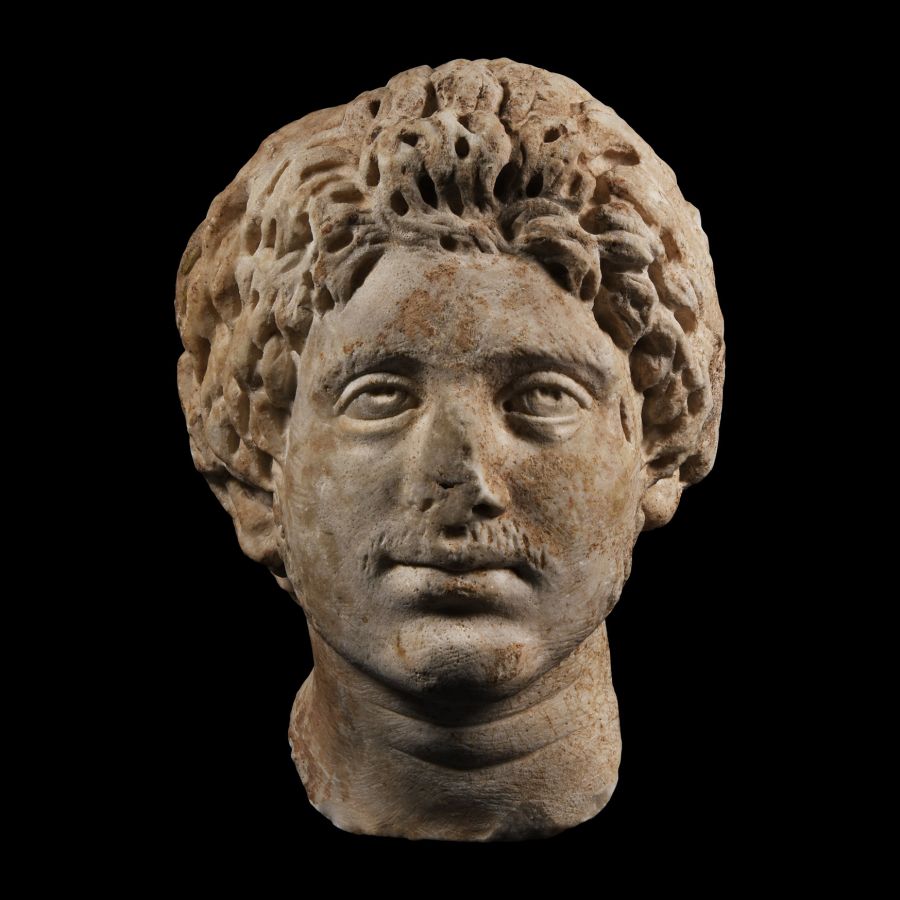
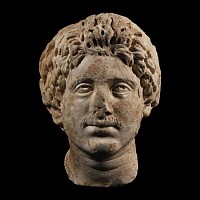
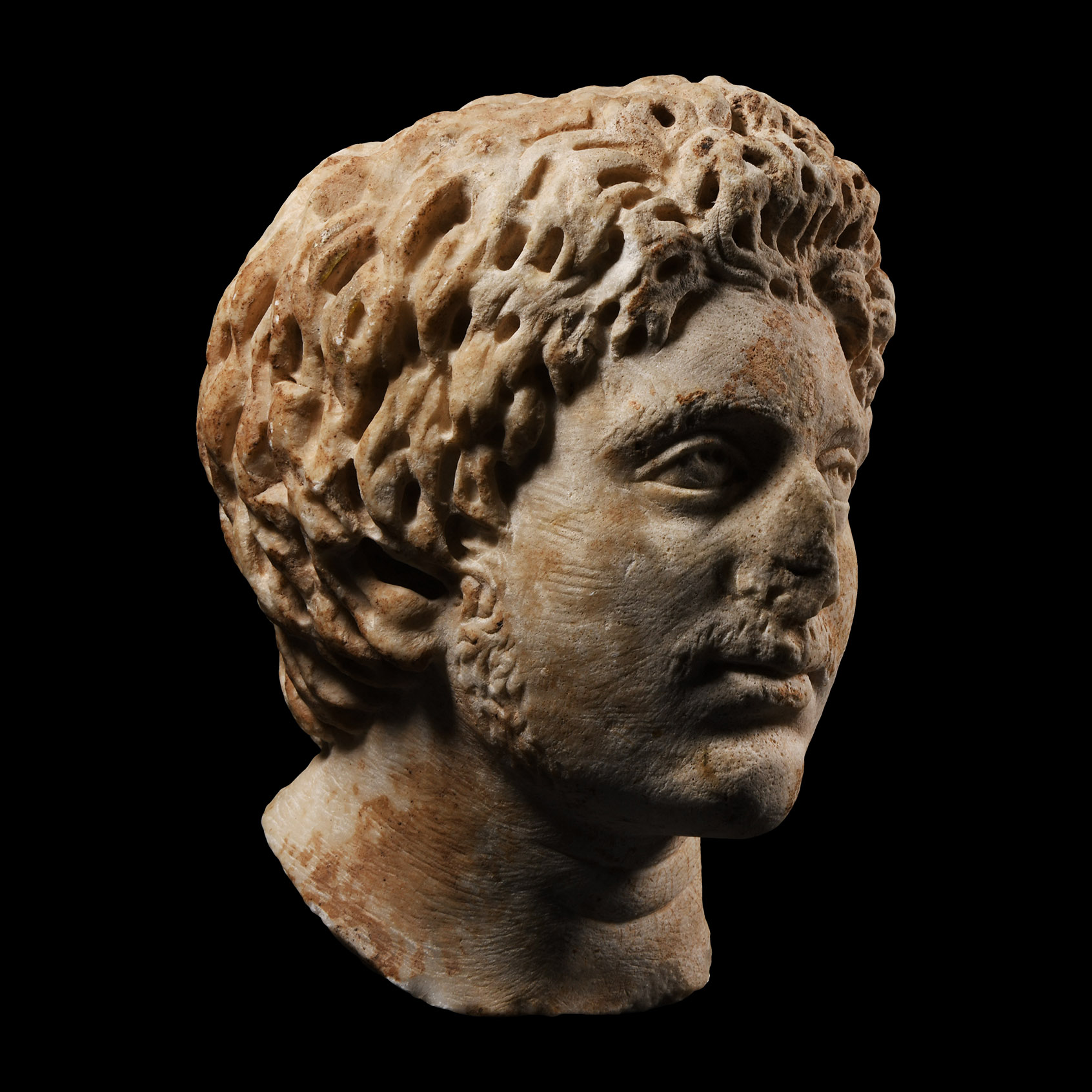
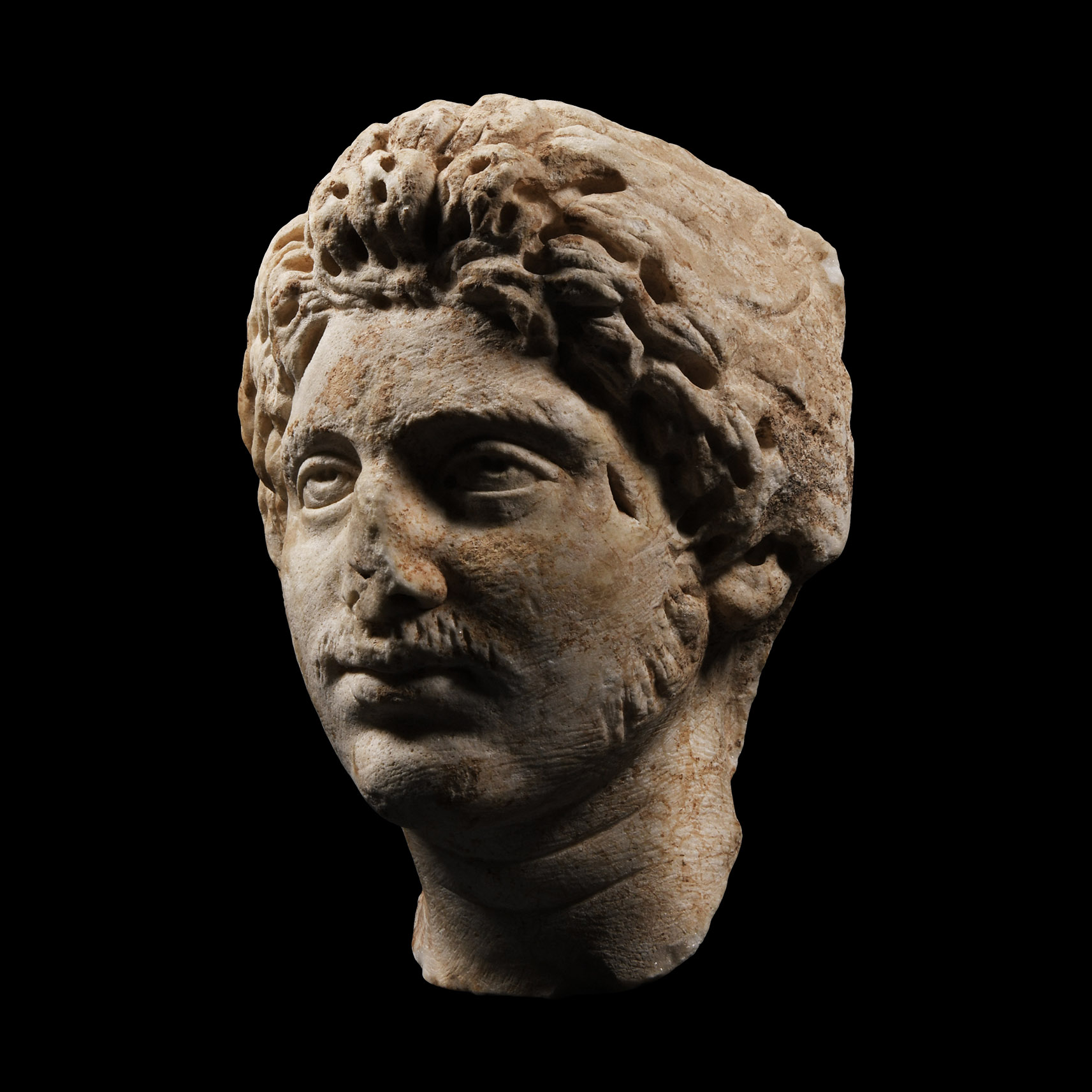
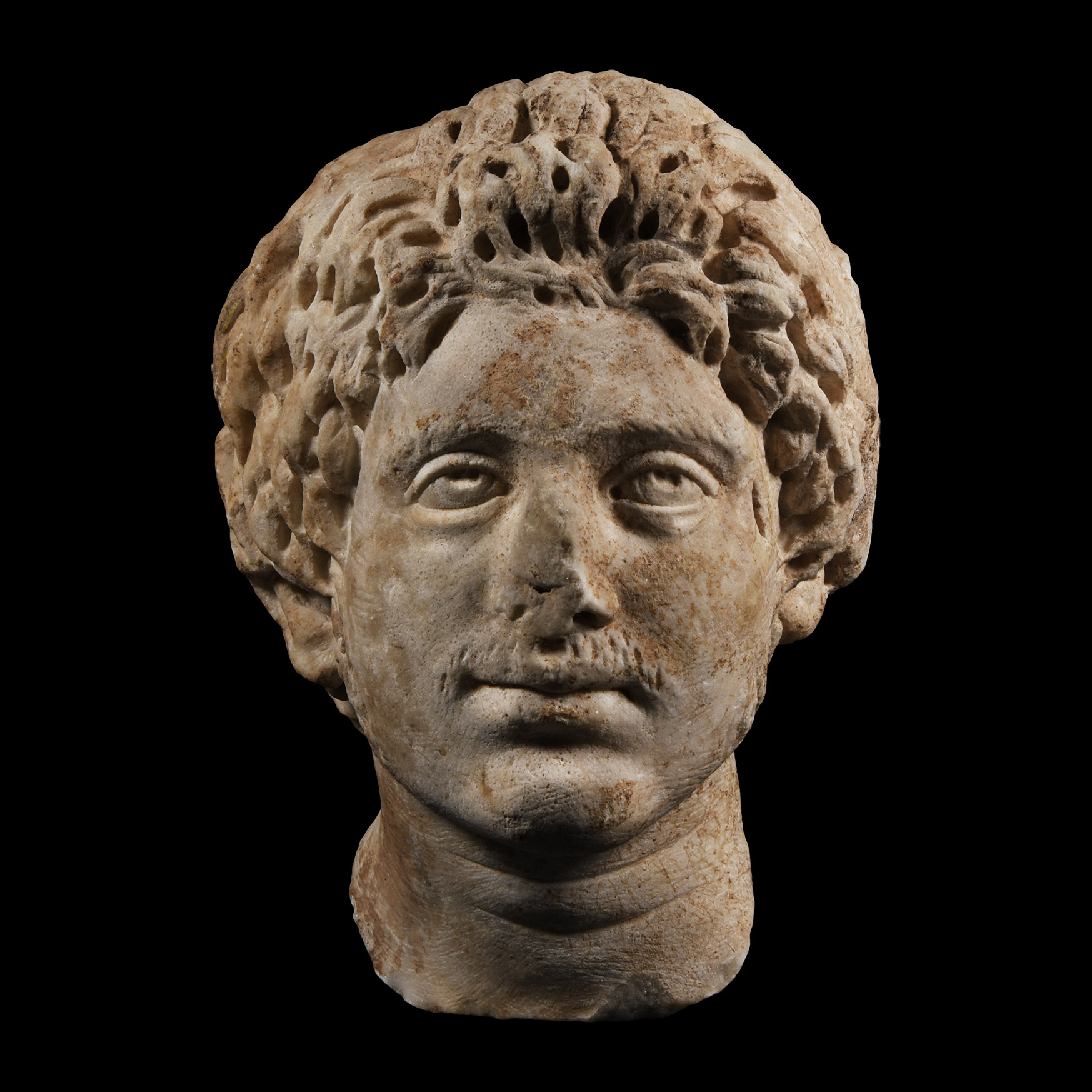
Roman Marble Head of a Germanic Warrior
2ND-3RD CENTURY A.D.
8 1/4 in. (5.6 kg, 21 cm).
A carved marble head of a Germanic tribesman, modelled naturalistically in the round, directing his gaze upwards left, the eyes with sculpted pupils originally decorated with stone insertions, his face framed by voluminous short curls swept up off the forehead, sideburns and a moustache.
ProvenanceEx Mario Fumasoli (1901-1989) collection, Switzerland, acquired between 1940-1970; thence by descent.
with Christie's London, 24th October 2013, lot 92.
Private Swiss collection since 1998.
Accompanied by a copy of the relevant Christie's catalogue pages.
Accompanied by an academic report by Dr Raffaele D’Amato.
This lot has been checked against the Interpol Database of stolen works of art and is accompanied by search certificate number no.11583-198975.
See Bianchi Bandinelli, R., Roma, l’arte romana nel centro del potere, Milano, 1969; Schneider, R.M., ‘The Barbarian in Roman Art: a countermodel of Roman identity,’ in Luiselli, B., Pensabene, P. (ed.), The Colloquia of the XIII International Congress of Prehistoric and Protohistoric Sciences, Forlì (Italia) 8-14 September 1996. The Roman Period (in the Provinces and the Barbaric World), Series COLLOQUIA 13, Forlì 1996, pp.19-30.
FootnotesThe head was possibly part of a statue or from a relief representing barbarian prisoners or warriors, maybe a part of a monument commemorating the campaigns of Marcus Aurelius along the lower Danube, recorded in his famous column in Piazza Colonna, Rome.
CONDITIONTimeLine Auctions follows a vetting process to ensure the authenticity and legality of all items, reinforcing our commitment to integrity and responsible trading. Each antiquity, antique, and coin lot undergoes thorough examination by a vetting committee of at least ten external specialists, professional trade association members, scientists, and archaeologists: Our Vetting Process
AUCTIONS:
TimeLine is a leading auction house specialising in antiquities, ancient art, collectables, natural history, coins, medals, and books. Our auctions offer museums, collectors, historians, and enthusiasts the opportunity to acquire unique and historically significant pieces.
LOT 0108
Roman Marble Head of a Germanic Warrior
Estimate £30,000 - 40,000€34,800 - 46,400 (for guidance only)$40,500 - 54,000 (for guidance only)
-
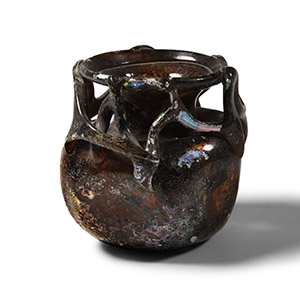
Roman Aubergine Glass Vessel with Trails
3rd-5th century A.D.Estimate: £400 - 600 (+bp*)
Opening Bid: £200
An aubergine glass jar with dimples around the circumference, trumpet-style neck and rim, applied openwork trails around the shoulder; pontil to base; iridescent surfaces. 64 grams, 68 mm wide
Acquired UK, in the 1980s. Property of a London gentleman. -
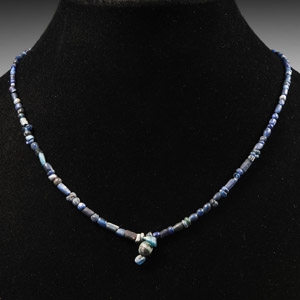
Roman and Other Bead Necklace
1st century A.D. and laterSold for (Inc. bp): £33
A restrung necklace composed mainly of graduated blue glass beads of various shades, dates and types. 1.38 grams, 83 cm long
Acquired 1980-2015. Ex Abelita family collection. -
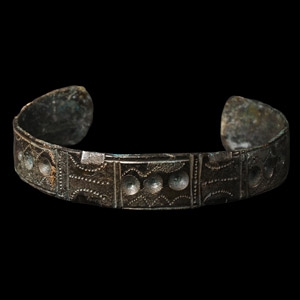
Roman Decorated Bracelet
Circa 1st-2nd century A.D.Sold for (Inc. bp): £156
A copper-alloy bracelet formed as a penannular hoop with rounded terminals, the exterior face divided into rectangular segments, each decorated with one of various repeating decorative schemes: five recessed dots with pricked dotted borders; dotted arcs and lines; horizontal cluster of three recessed dots with dotted chevrons above and below; slender vertical panels with central dotted columns. 24.5 grams, 65 mm
Acquired since the 1970s. Ex property of an Austrian private collector.
