
Loading, please wait...
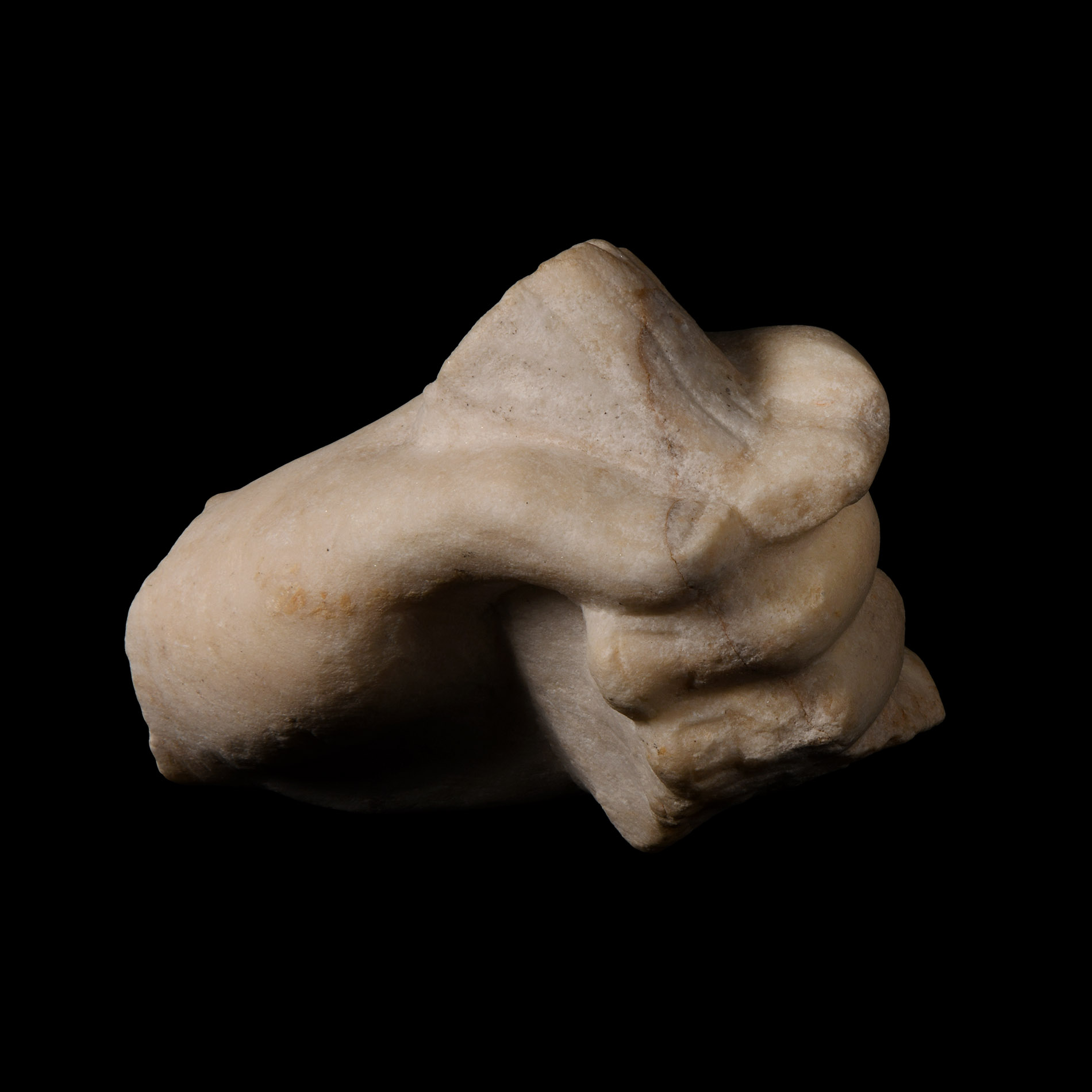
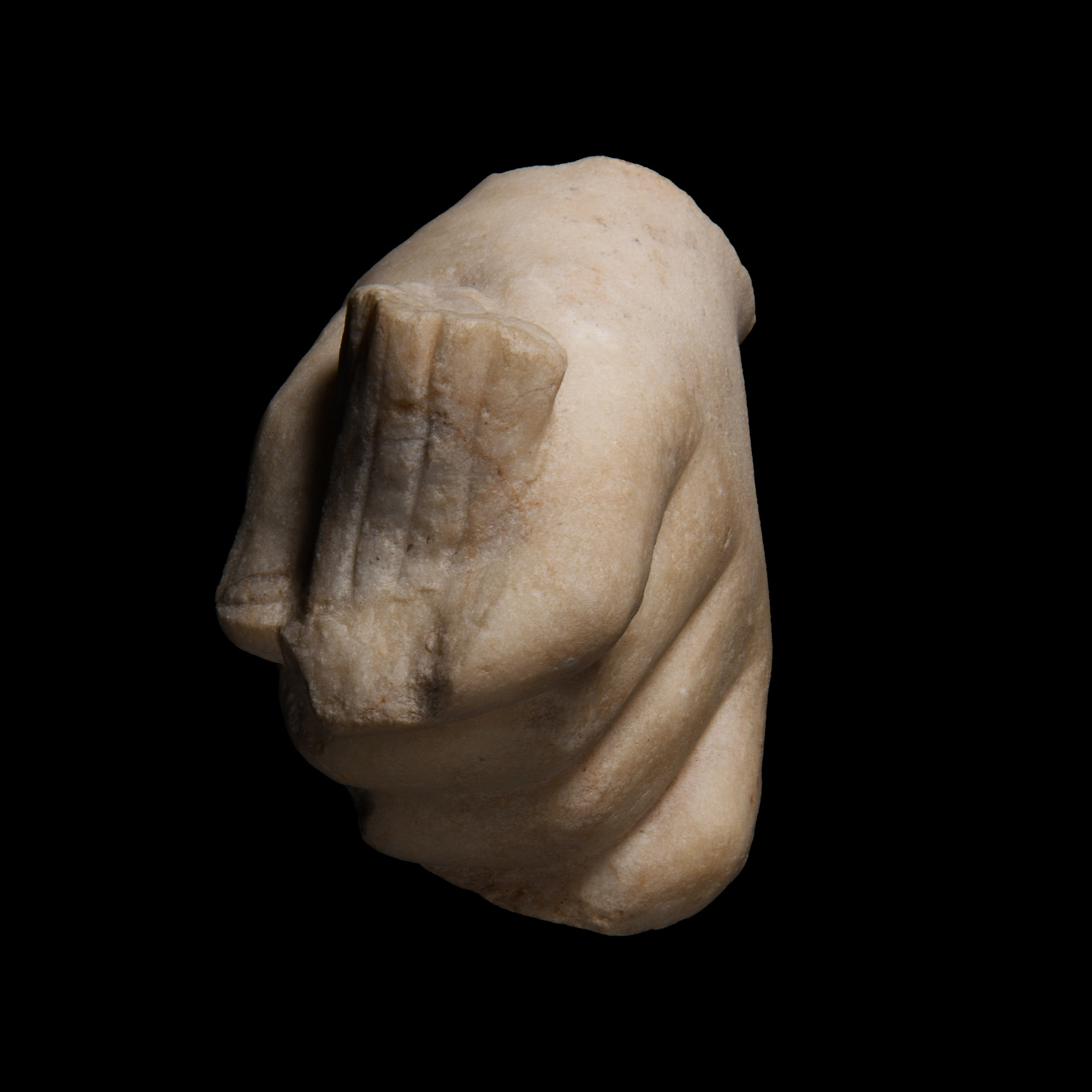
LOT 0617
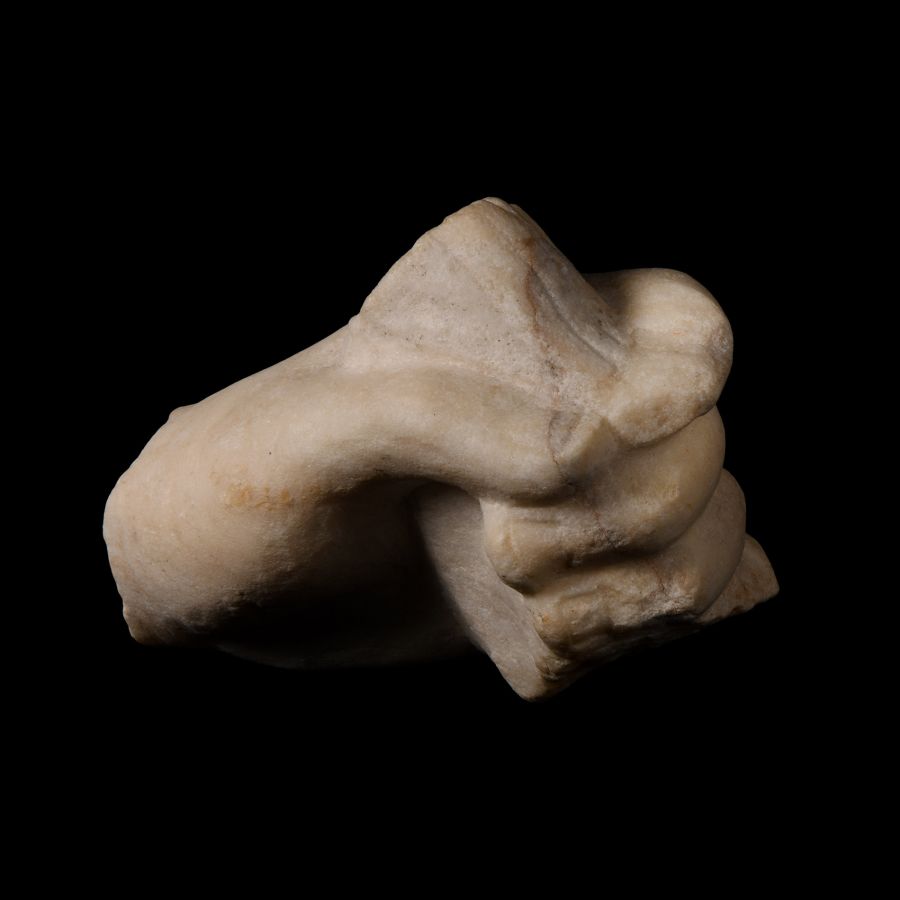
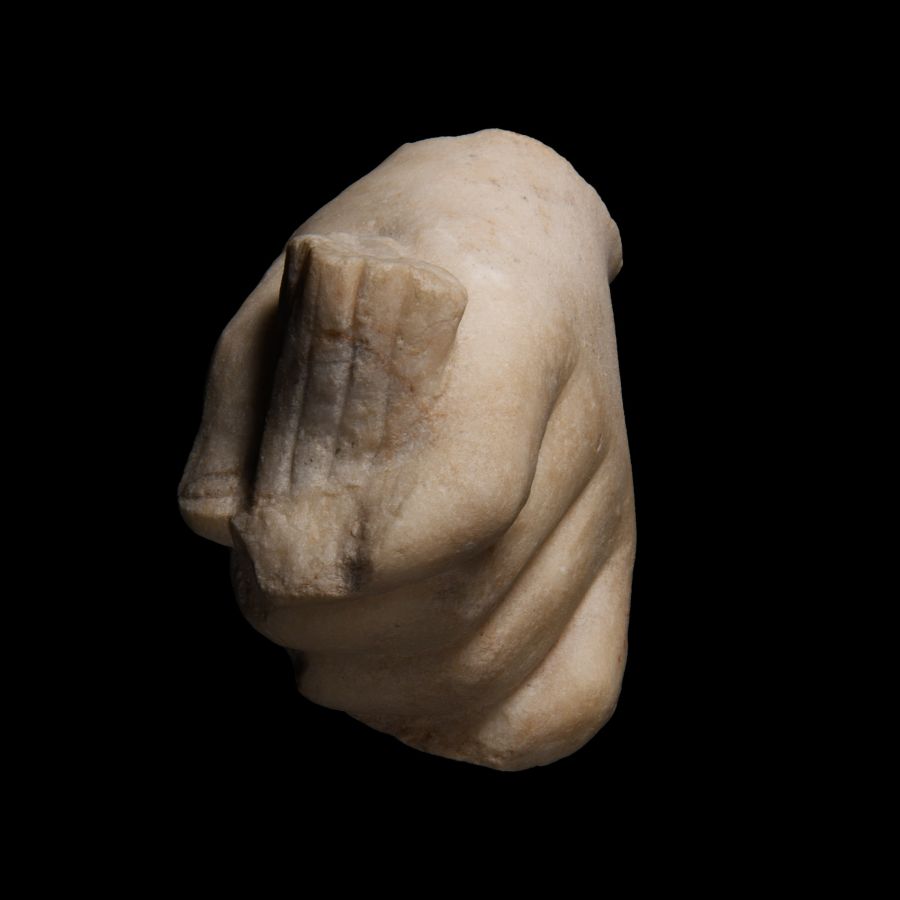
Roman Marble Hand Holding Rope
1ST-2ND CENTURY A.D.
4 3/4 in. (738 grams, 12 cm).
A marble left hand modelled in the round gripping a sinuous object, likely a rope; semi-naturalistic detailing to the nails and palm. [No Reserve]
ProvenanceNew York art market, 1992.
CONDITIONTimeLine Auctions follows a vetting process to ensure the authenticity and legality of all items, reinforcing our commitment to integrity and responsible trading. Each antiquity, antique, and coin lot undergoes thorough examination by a vetting committee of at least ten external specialists, professional trade association members, scientists, and archaeologists: Our Vetting Process
AUCTIONS:
TimeLine is a leading auction house specialising in antiquities, ancient art, collectables, natural history, coins, medals, and books. Our auctions offer museums, collectors, historians, and enthusiasts the opportunity to acquire unique and historically significant pieces.
-
Roman Aubergine Glass Vessel with Trails
3rd-5th century A.D.Estimate: £400 - 600 (+bp*)
Opening Bid: £200
An aubergine glass jar with dimples around the circumference, trumpet-style neck and rim, applied openwork trails around the shoulder; pontil to base; iridescent surfaces. 64 grams, 68 mm wide
Acquired UK, in the 1980s. Property of a London gentleman. -
.jpg)
Roman Marble Seated Hound Statue
1st-2nd century A.D.Sold for (Inc. bp): £4,680
An acephalic seated marble dog carved in the round with anatomical detailing; mounted on a custom-made display stand. 24.4 kg total, 46 cm high including stand
Ex Mr U.C. collection, Belgium, formed in the 1950s. English private collection. This lot has been checked against the Interpol Database of stolen works of art and is accompanied by search certificate no.11630-199755. -
Roman Phallic Amulet
1st-3rd century A.D.Estimate: £300 - 400 (‡+bp*)
Opening Bid: £150
A bronze pendant comprising male genitals flanked by stubby phalloi above, pierced suspension lug. 19.1 grams, 34 mm
Acquired early 1990s. Ex private American collection; thence by descent. Private Swiss collection since 1998.
