
Loading, please wait...
LOT 0649
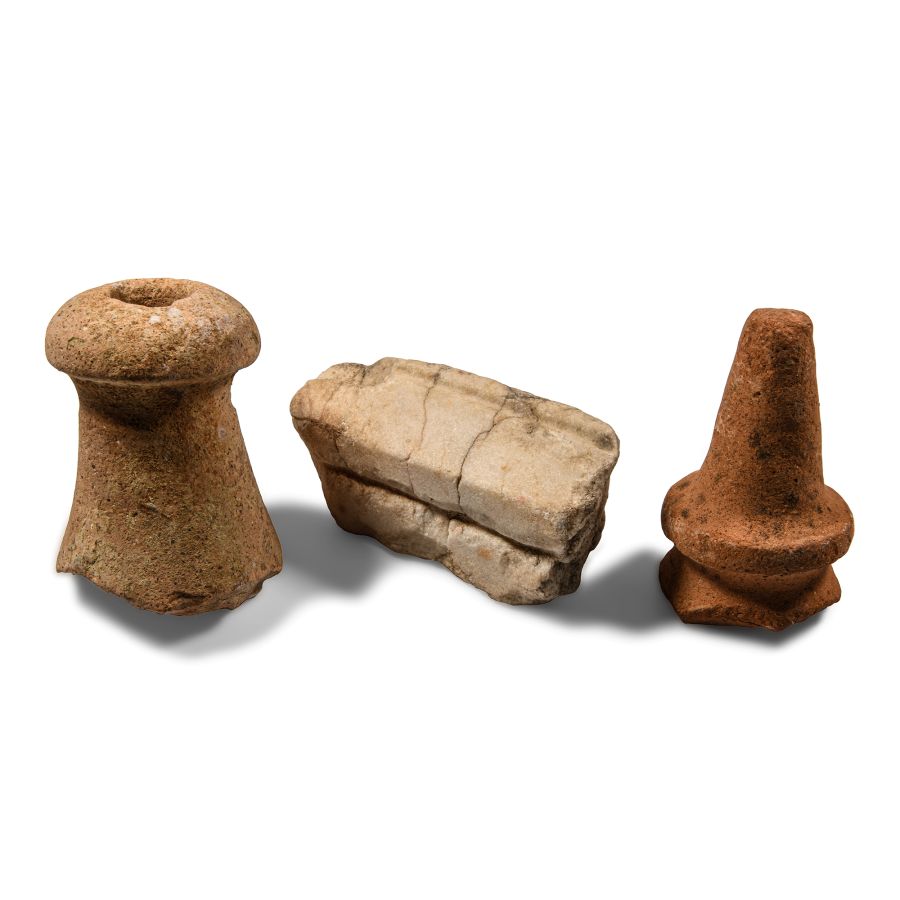
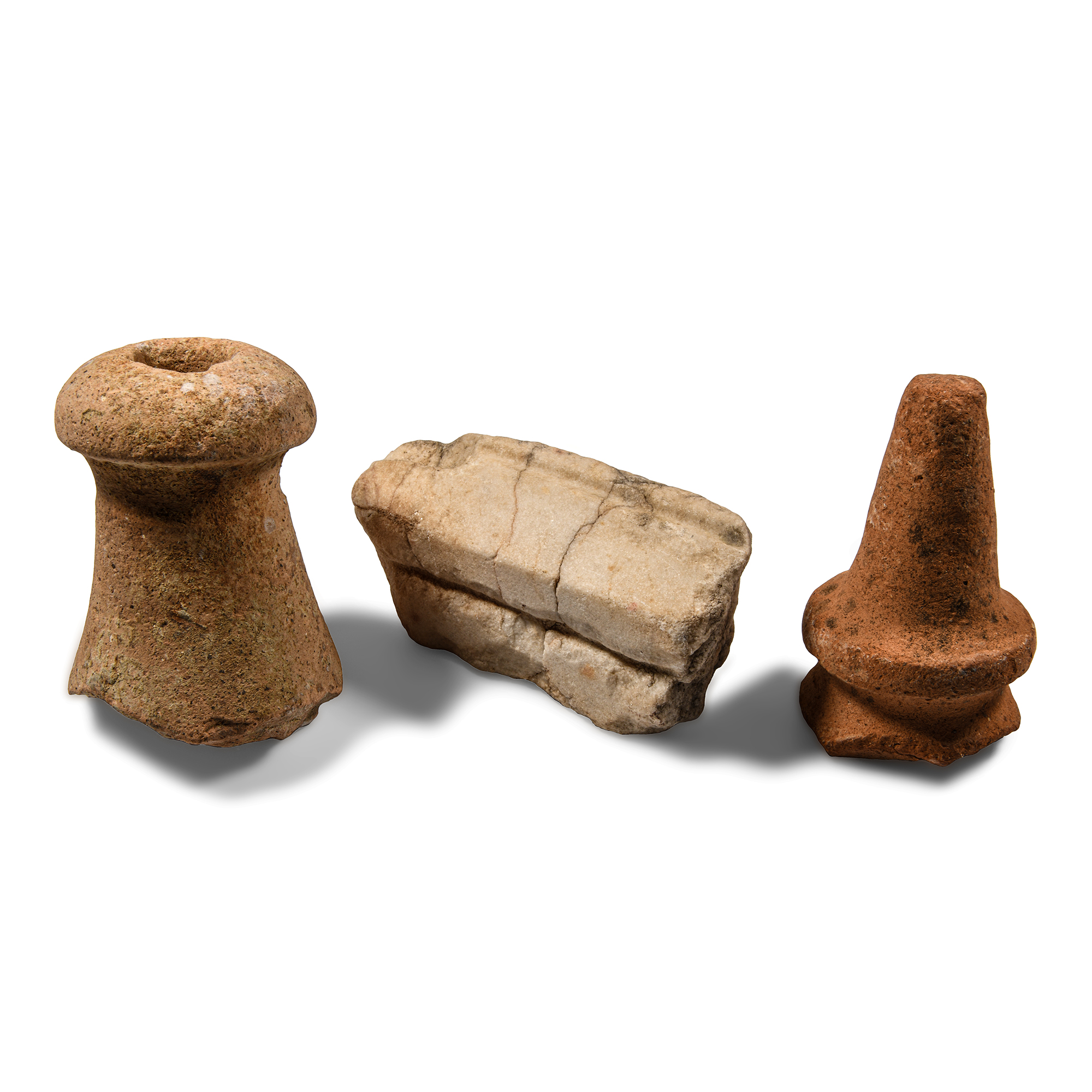
Roman Marble Fragment and Amphora Foot Group
1ST-4TH CENTURY A.D.
4 - 4 3/4 in. (1.2 kg total, 10.3-12.1 cm).
The marble architectural fragment with a carved groove to the sloped face; the terracotta feet from large wine amphoras, one with a decorative collar and the other with a void to the base. [3, No Reserve]
ProvenanceAcquired in the 1970s, thence by descent 2012.
Private UK collection, Cambridge, UK.
Property of an East Sussex, UK, gentleman.
TimeLine Auctions follows a vetting process to ensure the authenticity and legality of all items, reinforcing our commitment to integrity and responsible trading. Each antiquity, antique, and coin lot undergoes thorough examination by a vetting committee of at least ten external specialists, professional trade association members, scientists, and archaeologists: Our Vetting Process
AUCTIONS:
TimeLine is a leading auction house specialising in antiquities, ancient art, collectables, natural history, coins, medals, and books. Our auctions offer museums, collectors, historians, and enthusiasts the opportunity to acquire unique and historically significant pieces.
-
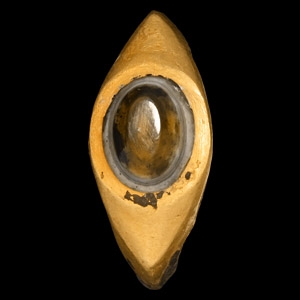
Roman Gold Ring with Sardonyx Gemstone
2nd-3rd century A.D.Estimate: £800 - 1,000 (‡+bp*)
Opening Bid: £400
With D-section shank and steep facetted shoulders, inset sardonyx gemstone. 5.65 grams, 19.11 mm overall, 13.53 mm internal diameter
Private European collection, acquired 2000. -
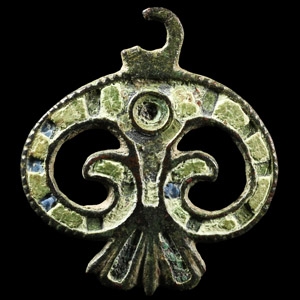
Roman Enamelled Bronze Mount
Late 1st-2nd century A.D.Sold for (Inc. bp): £65
Formed as a volute scroll with flared tail; the body filled with alternating bands of (originally) white and blue enamel, with central roundel above, tail with two further cells; suspension loop and stud to the reverse. 8.26 grams, 40 mm
From the collection of an London antiquarian, 1980s.
The form of the mount resembles early forms of Roman plate brooches, e.g. Hattatt's item 511 of the late 1st century A.D. -
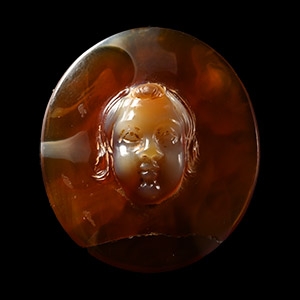
Roman Carnelian Cameo with Young Cupid
1st-2nd century A.D.Sold for (Inc. bp): £2,600
Lenticular-section disc with central recess to reverse; obverse with integral facing mask of Cupid modelled in the half-round; repaired. 6.11 grams, 31 mm
Acquired from a London gallery, 1970s. From the collection of an London antiquarian.
